Back to Network









4
Shared Docs
4
Same-Page
4 / 4
Mentions
Document Mentions (4 shared documents)
2 mentions1 same-page
Page ?Same page
d systems—1* order Cybernetics— moved to the Cybernetics of observing systems—2"™ order Cybernetics—or “the Cybernetics of Cybernetics”, as coined by Heinz von Foerster, who joined the Macy conferences in the mid 1950s, and spearheaded the new movement. Cybernetics, rather than disappearing, was becoming metabolized
ons” (as Kant put it) presented to them. It is important that we keep it that way, which will take some doing. One of the flaws in Weizenbaum’s book Computer Power and Human Reason, something I tried in vain to convince him of in many hours of discussion, is that he could never decide which of two theses he wanted to defend: AJ
2 mentions1 same-page
Page ?Same page
ge making, creativity, and the use of programming as artistic tools. The deep connections between science and art had already been noted by the late Heinz von Foerster, one of the architects of cybernetics, who worked with Norbert Wiener from the mid-1940s and in the 1960s founded the field of second-order cyberneti
e” software, hardware, and wetware; the Fair Access to Science and Technology Research Act (FASTR); and the Open Humans Foundation. In his 1976 book Computer Power and Human Reason, Joseph Weizenbaum argued that machines should not replace Homo in situations requiring respect, dignity, or care, while others (author Pamela McCord
2 mentions1 same-page
Page ?Same page
d systems—1* order Cybernetics— moved to the Cybernetics of observing systems—2"™ order Cybernetics—or “the Cybernetics of Cybernetics”, as coined by Heinz von Foerster, who joined the Macy conferences in the mid 1950s, and spearheaded the new movement. Cybernetics, rather than disappearing, was becoming metabolized
ons” (as Kant put it) presented to them. It is important that we keep it that way, which will take some doing. One of the flaws in Weizenbaum’s book Computer Power and Human Reason, something I tried in vain to convince him of in many hours of discussion, is that he could never decide which of two theses he wanted to defend: AJ
Sponsored
2 mentions1 same-page
Page ?Same page
ge making, creativity, and the use of programming as artistic tools. The deep connections between science and art had already been noted by the late Heinz von Foerster, one of the architects of cybernetics, who worked with Norbert Wiener from the mid-1940s and in the 1960s founded the field of second-order cyberneti
e” software, hardware, and wetware; the Fair Access to Science and Technology Research Act (FASTR); and the Open Humans Foundation. In his 1976 book Computer Power and Human Reason, Joseph Weizenbaum argued that machines should not replace Homo in situations requiring respect, dignity, or care, while others (author Pamela McCord
Sponsored
Mutual Connections (688)
Entities connected to both Heinz von Foerster and Computer Power and Human Reason
Julie K. Brown
PERSON7 w/ Heinz·5 w/ Computer
Martha Stewart
PERSON6 w/ Heinz·5 w/ Computer
George W. Bush
PERSON6 w/ Heinz·5 w/ Computer
John Brockman
PERSON6 w/ Heinz·4 w/ Computer
Marc Rich
PERSON5 w/ Heinz·5 w/ Computer
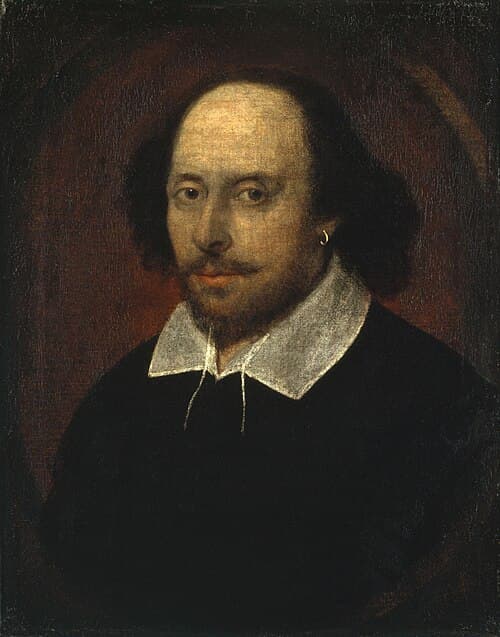
William Shakespeare
PERSON6 w/ Heinz·4 w/ Computer
Alan Dershowitz
PERSON5 w/ Heinz·5 w/ Computer
Earth
LOCATION4 w/ Heinz·5 w/ Computer
BA
Bateson
PERSON5 w/ Heinz·4 w/ Computer
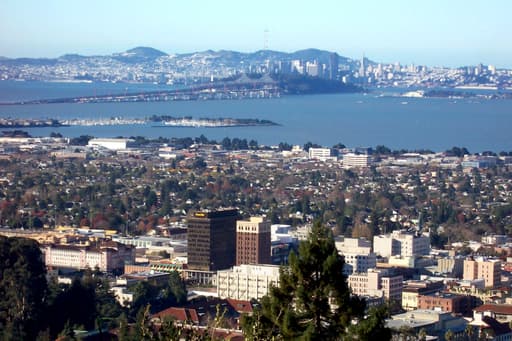
Berkeley
LOCATION5 w/ Heinz·4 w/ Computer
Prince Andrew
PERSON4 w/ Heinz·5 w/ Computer
Stephen Hawking
PERSON4 w/ Heinz·5 w/ Computer
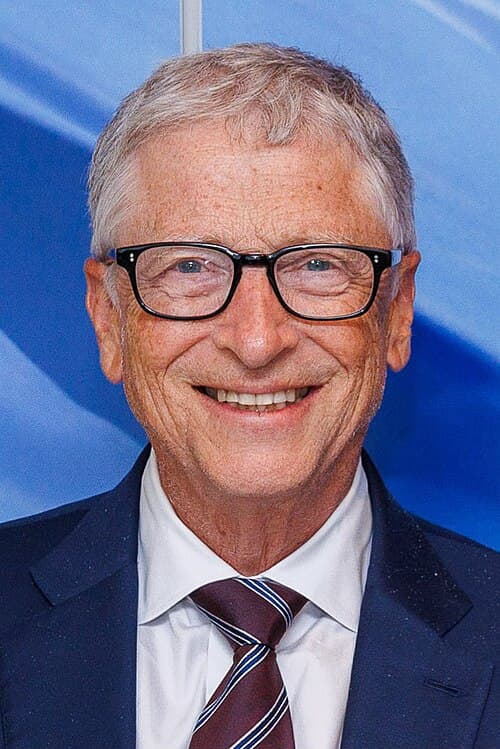
Bill Gates
PERSON4 w/ Heinz·5 w/ Computer
Feynman
PERSON4 w/ Heinz·5 w/ Computer
Samantha Power
PERSON4 w/ Heinz·5 w/ Computer
Richard Feynman
PERSON4 w/ Heinz·5 w/ Computer
Marvin Minsky
PERSON4 w/ Heinz·5 w/ Computer
Deep Blue
PERSON4 w/ Heinz·5 w/ Computer
LB
Leon Black
PERSON4 w/ Heinz·5 w/ Computer
WI
Wiener
PERSON5 w/ Heinz·4 w/ Computer