Back to Network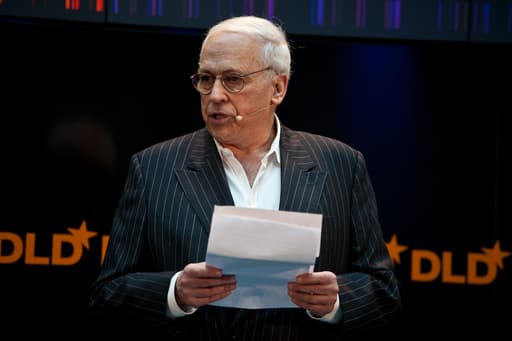





5
Shared Docs
5
Same-Page
5 / 5
Mentions
Document Mentions (5 shared documents)
2 mentions1 same-page
Page ?Same page
Rauschenberg, Andy Warhol. several kinetic and "happenings" artists, avant- garde film-makers and dramatists, the Velvet Underground, and composer John Cage. This immersion in New York's arts scene also led to deep interest in science and technology Many of the pieces at the festival were informed by
a passionate advocate of both science and the arts, whose website, Edge, is a salon for the world's finest minds. On the facing page they discuss Marshall McLuhan, elitism and the future of the internet T o say that John Brockman is a literary agent is like saying that David Hockney is a photographer. For
2 mentions1 same-page
Page ?Same page
nt-garde program at the Poetry Center at the 92nd St Y in New York. Preceding and following Brockman on the program, respectively, were evenings by John Cage and Jorge Luis Borges. This was the era of ficeThe Living Theatre,fi of Antonin AnaudaTMs ficetheatre of cruelty,fi and the management of the Poetry
is highly experimental, but also its format and layout. Each page contains a single paragraph comprised partly of quotes from works by figures from Marshall McLuhan to Ludwig Wittgenstein, Samuel Beckett and E. E. Cummings, that is disconnected from its predecessor. A front-page review in the San Francisco Revi
2 mentions1 same-page
Page ?Same page
Rauschenberg, Andy Warhol, several kinetic and "happenings" artists, avant- garde film-makers and dramatists, the Velvet Underground, and composer John Cage. This immersion in New York's arts scene also led todeep interest in science and technology. Many of the pieces at the festival were informed by
a passionate advocate of both science and the arts, whose website, Edge, is a salon for the world's finest minds. On the facing page they discuss Marshall McLuhan, elitism and the future of the internet T . o say that John Brockman is a literary agent is like saying that David Hockney is a photographer.
Sponsored
2 mentions1 same-page
Page ?Same page
self-regulating control, laid out in Norbert Wiener’s foundational text of 1948. I can date my own serious exposure to it to 1966, when the composer John Cage invited me and four or five other young arts people to join him for a series of dinners—an ongoing seminar about media, communications, art, music, a
n ongoing seminar about media, communications, art, music, and philosophy that focused on Cage’s interest in the ideas of Wiener, Claude Shannon, and Marshall McLuhan, all of whom had currency in the New York art circles in which I was then moving. In particular, Cage had picked up on McLuhan’s idea that by inventi
Sponsored
Mutual Connections (446)
Entities connected to both John Cage and Marshall McLuhan
John Brockman
PERSON8 w/ John·6 w/ Marshall
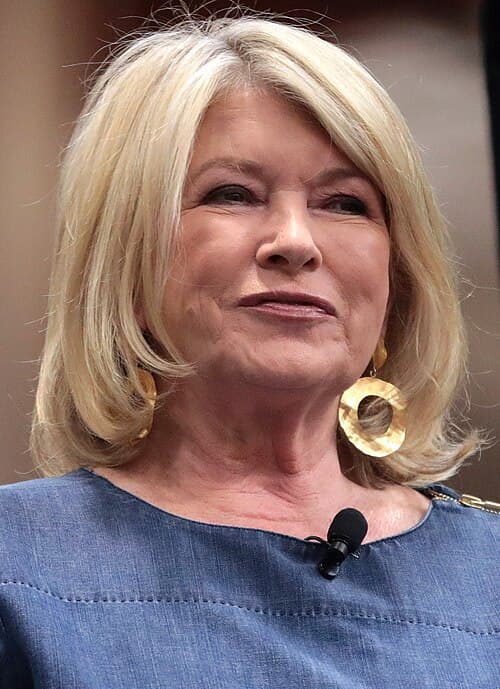
Martha Stewart
PERSON5 w/ John·6 w/ Marshall
Stewart Brand
PERSON5 w/ John·6 w/ Marshall
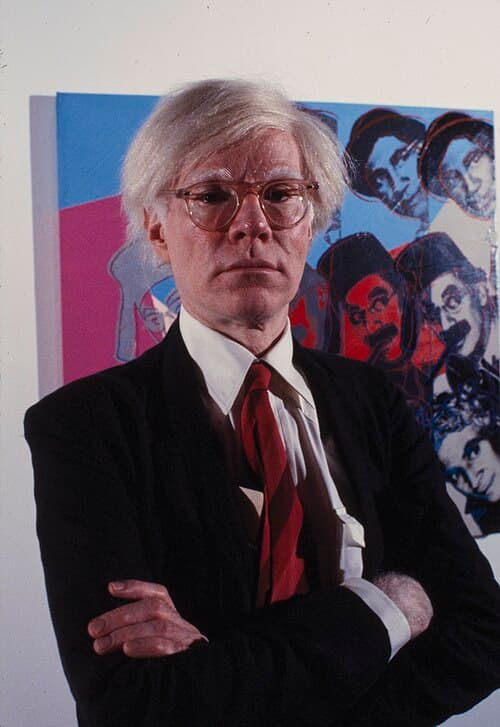
Andy Warhol
PERSON5 w/ John·5 w/ Marshall
George W. Bush
PERSON4 w/ John·6 w/ Marshall
Michael Douglas
PERSON4 w/ John·4 w/ Marshall
Steven Pinker
PERSON4 w/ John·4 w/ Marshall
Wilbur Ross
PERSON4 w/ John·4 w/ Marshall
McLuhan
PERSON4 w/ John·4 w/ Marshall
George Dyson
PERSON4 w/ John·4 w/ Marshall
Hans Ulrich Obrist
PERSON4 w/ John·3 w/ Marshall
LB
Leon Black
PERSON3 w/ John·3 w/ Marshall
WR
Walter Rosenblith
PERSON4 w/ John·2 w/ Marshall
GS
Gerd Stern
PERSON3 w/ John·3 w/ Marshall
Margaret Mead
PERSON3 w/ John·3 w/ Marshall
Gregory Bateson
PERSON3 w/ John·3 w/ Marshall
Richard Feynman
PERSON3 w/ John·3 w/ Marshall
BA
Bateson
PERSON3 w/ John·3 w/ Marshall
Alan Watts
PERSON3 w/ John·3 w/ Marshall
Alan Dershowitz
PERSON3 w/ John·3 w/ Marshall