Back to Network















4
Shared Docs
4
Same-Page
4 / 4
Mentions
Document Mentions (4 shared documents)
2 mentions1 same-page
Page ?Same page
that is because a computer very quickly begins to behave somewhat in the way a programmer intends it to, programming is very seductive.” The mistake, Weizenbaum warned, was to think that easy programming of a machine was really a predictor of anything other than getting a machine to follow commands. It didn’t
networks; never will. At the same time a new, rising generation lashes us into connected and amazing meshes. We welcome this connection. Centered in Menlo Park or Seattle or Zhonguancun or Shenzhen, these figures understand networks perfectly, but not yet much else. Old and new, each group works anyhow on ou
2 mentions1 same-page
Page ?Same page
systems we are using. In 1965 the MIT computer scientist Joseph Weizenbaum found himself, somewhat unexpectedly, considering this same problem. 175 Weizenbaum had written a primitive computer program to perform what is now known as natural language processing, essentially a bit of code designed to translate
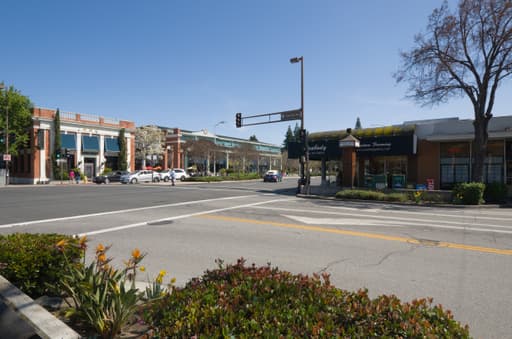
e work is done in rooms within rooms within rooms. To drive along the dulled, anodyne asphalt stretch of road that runs in front of Sand Hill Road in Menlo Park almost hurts your head: Inside the offices on revolutions are dreamed, debated and funded. And it looks, for the most part, like a row of mildly pros
2 mentions1 same-page
Page ?Same page
Age is also the Dysinformation Age. What can we do? We need to rethink our priorities with the help of the passionate but flawed analyses of Wiener, Weizenbaum, and the other serious critics of our technophilia. A key phrase, it seems to me, is Wiener’s almost offhand observation, above, that “these machines
m from my breath fogged up the window into the cold room. Wiping it off, I saw “the” computer. I fell in love. Later, in the Fall of 1967, I went to Menlo Park to spend time with Stewart Brand, whom I had met in New York in 1965 when he was a satellite member of the USCO group of artists. Now, with his wife
Sponsored
Mutual Connections (492)
Entities connected to both Weizenbaum and Menlo Park
Jeffrey Epstein
PERSON2 w/ Weizenbaum·66 w/ Menlo
Marc Rich
PERSON4 w/ Weizenbaum·17 w/ Menlo
George W. Bush
PERSON5 w/ Weizenbaum·13 w/ Menlo
Prince Andrew
PERSON5 w/ Weizenbaum·11 w/ Menlo
Stephen Hawking
PERSON5 w/ Weizenbaum·10 w/ Menlo
Michael Douglas
PERSON4 w/ Weizenbaum·10 w/ Menlo
Julie K. Brown
PERSON4 w/ Weizenbaum·10 w/ Menlo
Donald Trump
PERSON3 w/ Weizenbaum·11 w/ Menlo
Eric Trump
PERSON4 w/ Weizenbaum·9 w/ Menlo
Harvey Weinstein
PERSON4 w/ Weizenbaum·9 w/ Menlo
Alan Dershowitz
PERSON5 w/ Weizenbaum·8 w/ Menlo
LB
Leon Black
PERSON5 w/ Weizenbaum·8 w/ Menlo
Prince Charles
PERSON3 w/ Weizenbaum·9 w/ Menlo
Samantha Power
PERSON4 w/ Weizenbaum·8 w/ Menlo
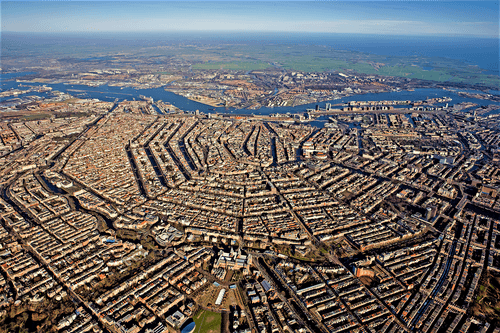
Amsterdam
LOCATION4 w/ Weizenbaum·8 w/ Menlo
Robert Gates
PERSON4 w/ Weizenbaum·7 w/ Menlo
Woody Allen
PERSON2 w/ Weizenbaum·9 w/ Menlo
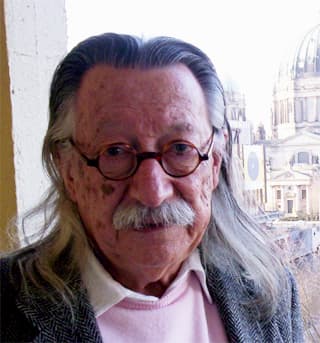
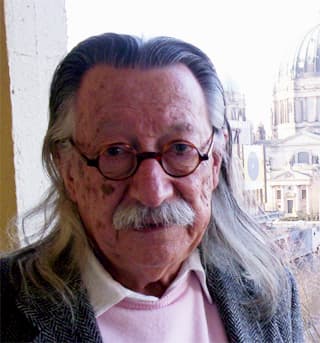
Joseph Weizenbaum
PERSON4 w/ Weizenbaum·7 w/ Menlo
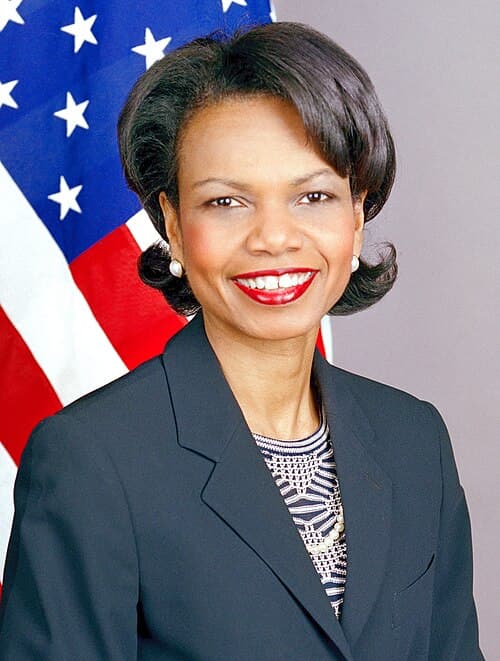
Condoleezza Rice
PERSON3 w/ Weizenbaum·8 w/ Menlo
Marvin Minsky
PERSON4 w/ Weizenbaum·6 w/ Menlo