Back to Network











3
Shared Docs
3
Same-Page
3 / 3
Mentions
Document Mentions (3 shared documents)
2 mentions1 same-page
Page ?Same page
sed edition. Penguin, 2001. Jr, Frederick P. Brooks. The Mythical Man Month and Other Essays on Software Engineering. 2nd ed. Addison Wesley, 1995. Kurzweil, Ray. How to Create a Mind: The Secret of Human Thought Revealed. Penguin, 2012. Matiyasevich, Yuri. HILBERT’S TENTH PROBLEM: What Can We Do with Di
rly Journal of Mechanics and Applied Mathematics 1, no. 1 (1948): 287-308. Turing, Alan Mathison. “On Computable Numbers, with an Application to the Entscheidungsproblem.” J. of Math 58 (1936): 345-63. ———. “Systems of Logic Based on Ordinals.” Proceedings of the London Mathematical Society 2, no. 1 (1939): 161-228.
2 mentions1 same-page
Page ?Same page
blication of Ray Kurzweil’s The Singularity is Near, the idea of technological advance leading to superintelligence is back in force. Some believers, Kurzweil included, regard this singularity as an opportunity: Humans can merge their brains with the superintelligence and thereby live forever. Others, such
e. Turing contributed a fundamental model of computation—now known as a Turing Machine—in his paper “On Computable Numbers with an Application to the Entscheidungsproblem,” written and revised in 1936 and published in 1937. In these machines, a linear tape of symbols from a finite alphabet encodes the input for a compu
Sponsored
Mutual Connections (427)
Entities connected to both Kurzweil and Entscheidungsproblem
Alan Dershowitz
PERSON6 w/ Kurzweil·5 w/ Entscheidungsproblem
Marvin Minsky
PERSON6 w/ Kurzweil·4 w/ Entscheidungsproblem
Marc Rich
PERSON8 w/ Kurzweil·2 w/ Entscheidungsproblem
Eric Trump
PERSON5 w/ Kurzweil·4 w/ Entscheidungsproblem
Prince Andrew
PERSON5 w/ Kurzweil·4 w/ Entscheidungsproblem
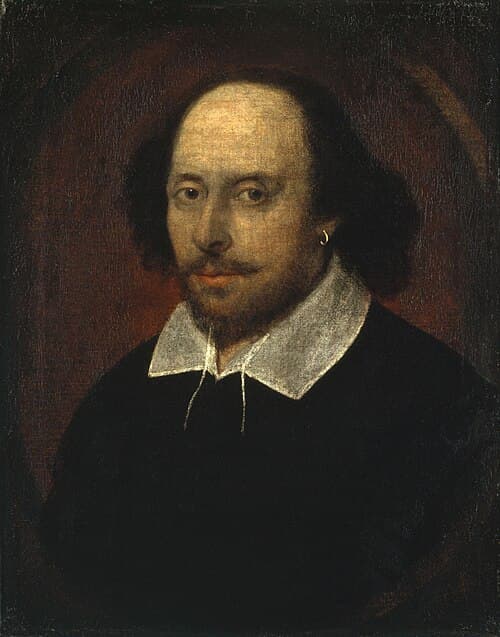
William Shakespeare
PERSON4 w/ Kurzweil·4 w/ Entscheidungsproblem
Quantum
ORGANIZATION4 w/ Kurzweil·4 w/ Entscheidungsproblem
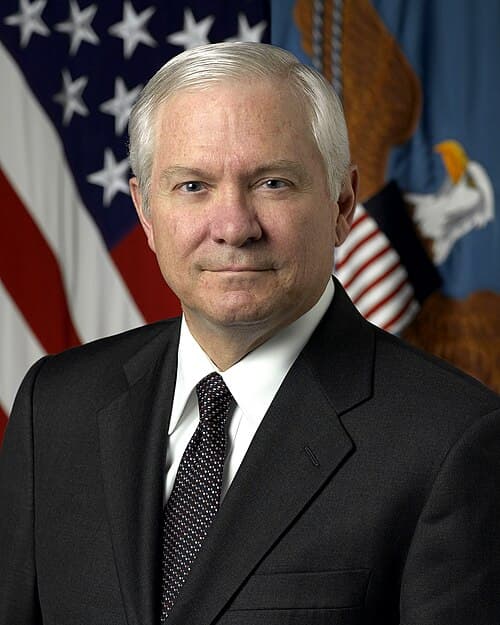
Robert Gates
PERSON3 w/ Kurzweil·5 w/ Entscheidungsproblem
Michael Douglas
PERSON4 w/ Kurzweil·4 w/ Entscheidungsproblem
Stephen Hawking
PERSON4 w/ Kurzweil·4 w/ Entscheidungsproblem
George W. Bush
PERSON3 w/ Kurzweil·5 w/ Entscheidungsproblem
LB
Leon Black
PERSON4 w/ Kurzweil·4 w/ Entscheidungsproblem
Garry Kasparov
PERSON4 w/ Kurzweil·3 w/ Entscheidungsproblem
Joe Biden
PERSON4 w/ Kurzweil·3 w/ Entscheidungsproblem
Jeopardy
ORGANIZATION5 w/ Kurzweil·2 w/ Entscheidungsproblem
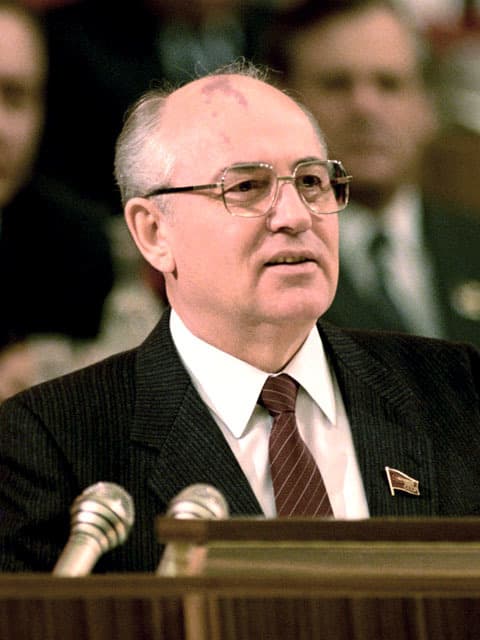
Gorbachev
PERSON4 w/ Kurzweil·3 w/ Entscheidungsproblem
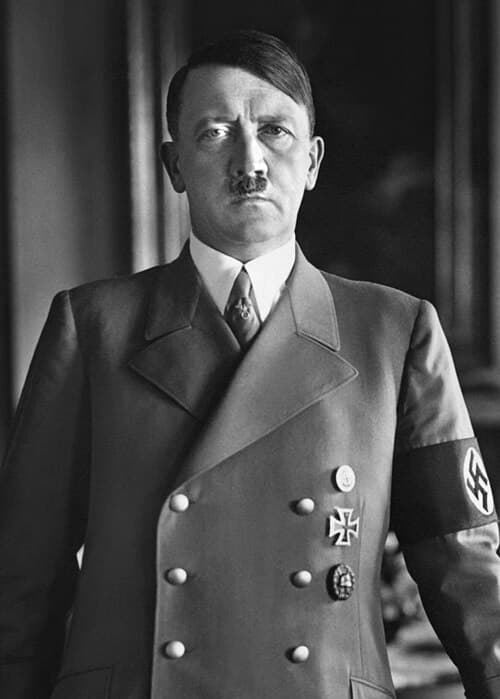
Adolf Hitler
PERSON3 w/ Kurzweil·4 w/ Entscheidungsproblem
Feynman
PERSON4 w/ Kurzweil·3 w/ Entscheidungsproblem
Cambridge University
ORGANIZATION4 w/ Kurzweil·3 w/ Entscheidungsproblem
Brooks
PERSON3 w/ Kurzweil·4 w/ Entscheidungsproblem