Back to Network

















3
Shared Docs
3
Same-Page
7 / 3
Mentions
Document Mentions (3 shared documents)
5 mentions1 same-page
Page ?Same page
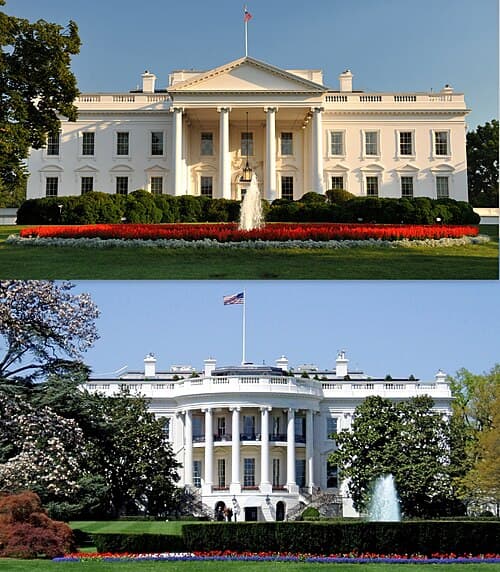
virtual policy, it has also been more open to the media than any White House in recent memory. In the beginning, I sought a level of formal access to this White House, something of a fly-on- the-wall status. The president himself encouraged this idea. But, given the many fiefdoms in the Trump White House that came
heeding Senate leader Mitch McConnell’s prescription that “this president will sign whatever is put in front of him,” while also taking advantage of the White House’s lack of political and legislative experience and outsourcing as much policy as possible to Capitol Hill. In the early weeks of the administration, P
om he had never met before, for positions whose importance Trump did not particularly understand. Ailes, a veteran of the Nixon, Reagan, and Bush 41 White Houses, was growing worried by the president-elect’s lack of immediate focus on a White House structure that could serve and protect him. He tried to impres
cific ideas about how to turn his themes and vitriol into policy, nor a team that could reasonably unite behind him. HOUSE_OVERSIGHT_019969 In most White Houses, policy and action flow down, with staff trying to implement what the president wants—or, at the very least, what the chief of staff says the preside
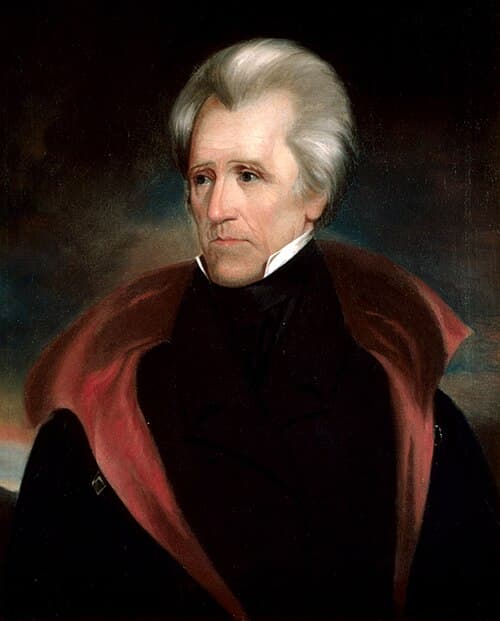
had been there many times before with her father, beginning at age nine. Trump showed them some of the memorabilia and, eagerly, his new portrait of Andrew Jackson—the president whom Steve Bannon had made the totem figure of the new administration. “So how do you think the first week has gone?” Trump asked the
3 mentions1 same-page
Page ?Same page
thirty, Ryan called the president to say he was short fifteen to twenty votes and needed to pull the vote. Bannon, backed by Mulvaney, who had become the White House’s Hill operative, continued to urge an immediate vote. A defeat here would be a major defeat for the Republican leadership. That suited Bannon just fin
ore and more seemed to be. Meanwhile, virtually everybody believed that a large measure of the fault lay in Reince Priebus, who had failed to create a White House that could protect the president from himself—or from Bannon or from his own children. At the same time, believing that the fundamental problem lay i
k, I'll scratch yours. He was, in his mind, the ultimate tactician, always knowing what the other guy wanted. Steve Bannon had pressed him to invoke Andrew Jackson as his populist model, and he had loaded up on Jackson books (they remained unread). But his real beau ideal was Lyndon Johnson. LBJ was a big man wh
2 mentions1 same-page
Page ?Same page
Ameri- cans. higher-quality care.' And around those goals, there are lots of ways to get there? Some of those ways, though, run counter to the White House's earlier posi- tions and those of Obama's political base. While supporters from his left have advocated a government-run option — championed by an
Jefferson-Jackson in honor of our third and seventh presidents. Thomas Jefferson was the principal author of the Declaration of hider pendence. Andrew Jackson helped to shaped the party and was a hero in his time. Truman used atomic bombs on Japan, killing 120,000 innocent people. Johnson escalated th
Sponsored
Mutual Connections (181)
Entities connected to both White House and Andrew Jackson
Jeffrey Epstein
PERSON308 w/ White·3 w/ Andrew
Donald Trump
PERSON198 w/ White·3 w/ Andrew
Barack Obama
PERSON181 w/ White·4 w/ Andrew
Joe Biden
PERSON168 w/ White·4 w/ Andrew
George W. Bush
PERSON151 w/ White·5 w/ Andrew
Department of Justice
ORGANIZATION147 w/ White·2 w/ Andrew
Bill Clinton
PERSON144 w/ White·4 w/ Andrew
Prince Andrew
PERSON139 w/ White·6 w/ Andrew
LB
Leon Black
PERSON138 w/ White·2 w/ Andrew
Virginia Giuffre
PERSON136 w/ White·4 w/ Andrew
Stephen Hawking
PERSON132 w/ White·2 w/ Andrew
United States
LOCATION130 w/ White·3 w/ Andrew
Michael Jackson
PERSON115 w/ White·6 w/ Andrew
Julie K. Brown
PERSON118 w/ White·2 w/ Andrew
Prince Charles
PERSON111 w/ White·3 w/ Andrew
George Mitchell
PERSON110 w/ White·2 w/ Andrew
Mike Pence
PERSON109 w/ White·2 w/ Andrew
Marc Rich
PERSON108 w/ White·3 w/ Andrew
Scarlett Johansson
PERSON108 w/ White·3 w/ Andrew
Vladimir Putin
PERSON104 w/ White·2 w/ Andrew