Back to Network

















4
Shared Docs
4
Same-Page
4 / 4
Mentions
Document Mentions (4 shared documents)
2 mentions1 same-page
Page ?Same page
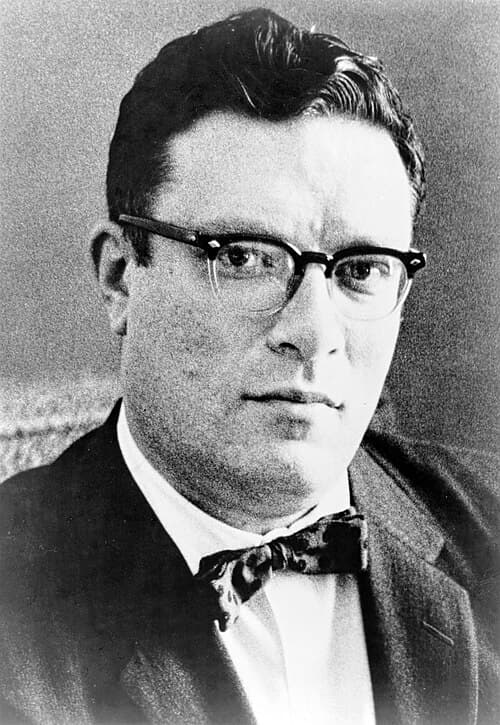
ion does not conflict with the First or Second Law. The Zeroth Law: A robot may not harm humanity, or, by inaction, allow humanity to come to harm.” Isaac Asimov, I, Robot HOUSE_OVERSIGHT_015694 Deep Blue York, watching a chess match. It’s no ordinary match. Two men sit opposite each other. One, a neatly s
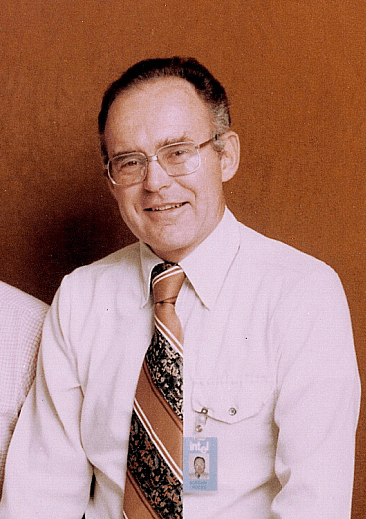
r the world’ science fiction genre — is that computers are improving exponentially fast in line with Moores Law, and the parity point is coming soon. Gordon Moore founded Intel with Andy Grove, and ran the engineering department there for more than 20 years. According to Moore's Law, the power of a computer dou
2 mentions1 same-page
Page ?Same page
tered. This challenge, which sounds like something out of science fiction, is known by technologists by a name that does sound like a short story by Isaac Asimov: “The Confinement Problem”. The computer scientist Butler Lampson named this in 1973 as a sort of task for computer security experts - possibly their
LA to New York would be about 1,000 per week, jet airline pioneers assumed. Would more than a few hundred engineers really want their own computers, Gordon Moore asked at a dinner party shortly after Intel proposed putting his chips in the first PCs. Yes, it turned out. Billions more. Highway designers call th
2 mentions1 same-page
Page ?Same page
nal aptitude is suppressed in deference to the mediocre lowest common denominator of society. Thought experiments like John Searle’s Chinese Room and Isaac Asimov’s Three Laws of Robotics all appeal to the sorts of intuitions plaguing human brains that Daniel Kahneman, Amos Tversky, and others have demonstrated.
ystopian scenarios prevail; we generally end up muddling along somewhere in between. But history also suggests that we don’t have to wait on history. Gordon Moore in 1965 was able to use five years of the doubling of the specifications of integrated circuits to project what turned out to be fifty years of expon
Sponsored
2 mentions1 same-page
Page ?Same page
nal aptitude is suppressed in deference to the mediocre lowest common denominator of society. Thought experiments like John Searle’s Chinese Room and Isaac Asimov’s Three Laws of Robotics all appeal to the sorts of intuitions plaguing human brains that Daniel Kahneman, Amos Tversky, and others have demonstrated.
ystopian scenarios prevail; we generally end up muddling along somewhere in between. But history also suggests that we don’t have to wait on history. Gordon Moore in 1965 was able to use five years of the doubling of the specifications of integrated circuits to project what turned out to be fifty years of expon
Sponsored
Mutual Connections (402)
Entities connected to both Isaac Asimov and Gordon Moore
Harvey Weinstein
PERSON9 w/ Isaac·5 w/ Gordon
Marc Rich
PERSON6 w/ Isaac·8 w/ Gordon
Stephen Hawking
PERSON5 w/ Isaac·8 w/ Gordon
Samantha Power
PERSON5 w/ Isaac·8 w/ Gordon
Joseph Weizenbaum
PERSON4 w/ Isaac·8 w/ Gordon
LB
Leon Black
PERSON5 w/ Isaac·5 w/ Gordon
Prince Andrew
PERSON5 w/ Isaac·5 w/ Gordon
Silicon Valley
LOCATION3 w/ Isaac·7 w/ Gordon
Alan Dershowitz
PERSON4 w/ Isaac·5 w/ Gordon
Renaissance
ORGANIZATION4 w/ Isaac·5 w/ Gordon
Bill Gates
PERSON3 w/ Isaac·6 w/ Gordon
Prince Charles
PERSON3 w/ Isaac·6 w/ Gordon
Berkeley
LOCATION7 w/ Isaac·2 w/ Gordon
Alan Turing
PERSON4 w/ Isaac·5 w/ Gordon
Robert Gates
PERSON3 w/ Isaac·6 w/ Gordon
Cambridge University
ORGANIZATION3 w/ Isaac·6 w/ Gordon
DB
Doug Band
PERSON4 w/ Isaac·5 w/ Gordon
George W. Bush
PERSON5 w/ Isaac·4 w/ Gordon
John F. Kennedy
PERSON6 w/ Isaac·3 w/ Gordon
Conway
PERSON4 w/ Isaac·4 w/ Gordon