Back to Network




















6
Shared Docs
5
Same-Page
11 / 6
Mentions
Document Mentions (6 shared documents)
4 mentions1 same-page
Page ?Same page
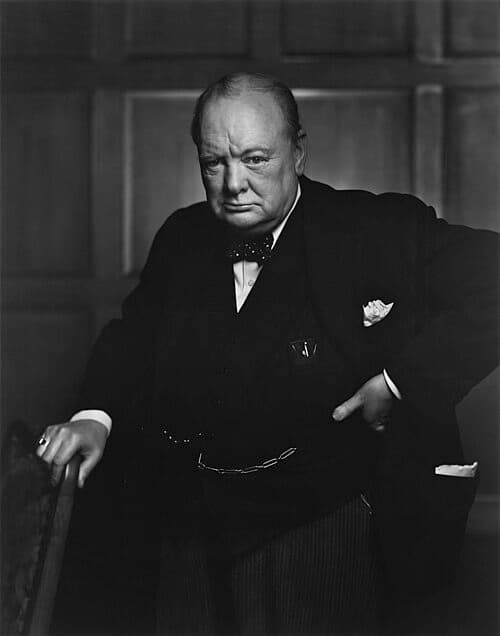
Street shortly before his U.S. trip, he is looking fit and relaxed—the very antithesis of the man whose portrait glares down from his office wall. Winston Churchill overate, guzzled champagne and brandy, smoked Cuban cigars, and liked nothing better than to work into the EFTA_R1_00225770 EFTA01840714 small h
ox [of official papers] at 5:45 a.m. My grandmother always said it's the hours before midnight that count. My hours are completely the opposite of Churchill's." He plays tennis every Sunday and goes for a run through Hyde Park once a week. Only rarely do the pressures of the job disturb his sleep. And
t to see the spread of democracy and rights and freedoms that we enjoy here." It is in the realm of foreign policy that Cameron is most obviously Churchillian. Like Tony Blair, he is drawn to the idea of military intervention where human rights as well as national interest are at stake. It was he, not Pre
d Nations that declared EFTA_R1_00225757 EFTA01840701 Zionism to be a form of racism. The shah even came to oppose the U.S. military presence in the Persian Gulf. Neighborhood Hegemony Iran in the last years of the shah manifested a striving for local hegemony that transcended the country's strongest allian
3 mentions1 same-page
Page ?Same page
ally oil and gas deposits—is essential to prop up national wealth, power and prestige. This is hardly a new phenomenon. Early in the last century, Winston Churchill was perhaps the first prominent leader to appreciate the strategic importance of oil. As First Lord of the Admiralty, he converted British warships
w phenomenon. Early in the last century, Winston Churchill was perhaps the first prominent leader to appreci
ell as in the strategic planning of the Axis powers during World War II. It also explains America's long-term drive to remain the dominant power in the Persian Gulf that culminated in the first Gulf War of 1990-91 and its inevitable sequel, the 2003 invasion of Iraq. The years since World War II have seen a var
3 mentions1 same-page
Page ?Same page
e mutual respect. British Prime Minister Winston Churchill's attempt to undo this in a meeting he immediate
k of any previous experience with Western culture and technology, the two leaders managed to forge a genuine mutual respect. British Prime Minister Winston Churchill's attempt to undo this in a meeting he immediately arranged soon after that turned out to be quite counter-productive, as he was seen as "arrogant"
s staggered into civil war and military coup. China is stepping up territorial claims in the waters off East Asia. Longtime allies in Europe and in the Persian Gulf are worried by the inconsistency of a president who came to office promising the end of the United States' post-Sept. 11 wars. Now Ukraine has eme
Sponsored
3 mentions1 same-page
Page ?Same page
w phenomenon. Early in the last century, Winston Churchill was perhaps the first prominent leader to apprec
ially oil and gas deposits—is essential to prop up national wealth, power and prestige. This is hardly a new phenomenon. Early in the last century, Winston Churchill was perhaps the first prominent leader to appreciate the strategic importance of oil. As First Lord of the Admiralty, he converted British warship
ll as in the strategic planning of the Axis powers during World War II. It also explains America's long-term drive to remain the dominant power in the Persian Gulf that culminated in the first Gulf War of 1990-91 and its inevitable sequel, the 2003 invasion of Iraq. The years since World War II have seen a va
2 mentions1 same-page
Page ?Same page
avrilo Princip, the 19-year-old Bosnian Serb nationalist whose assassination of Archduke Franz Ferdinand in Sarajevo on June 28, 1914, ignited what Churchill called "the hardest, the cruelest and the least-rewarded" of all wars. Yes, the Great War, the end of empires and the old order, was triggered by
interests are in conflict with each other. Economically, Russia has benefited tremendously from the international boycott against Iran. Tension in the Persian Gulf and Iran's difficulty selling its oil in international markets has supported the high price of this commodity, which is critical for a Russian econ
Page HOUSE_OVERSIGHT_018111
r defense and coastal defense missiles. These conventional capabilities provide Iran a substantial ability for a local fight in the Strait of Hormuz, the Persian Gulf and along its borders.10 Iran “leans” on the Persian Gulf states from a military and political perspective. Shi‘a populations in Bahrain and Saudi Ar
Page: HOUSE_OVERSIGHT_018111 →Page HOUSE_OVERSIGHT_018118
Both courses are fraught and logically open-ended. Thus the fear of potentially negative consequences from a war should not necessarily rule one out. Winston Churchill, reflecting on British policy before World War II, wrote: If the circumstances are such as to warrant it, force may be used. And if this be so, it s
Page: HOUSE_OVERSIGHT_018118 →Sponsored
Mutual Connections (679)
Entities connected to both Winston Churchill and the Persian Gulf
Jeffrey Epstein
PERSON118 w/ Winston·40 w/ the
Barack Obama
PERSON51 w/ Winston·72 w/ the
George W. Bush
PERSON60 w/ Winston·54 w/ the
United States
LOCATION36 w/ Winston·59 w/ the
Bill Clinton
PERSON45 w/ Winston·46 w/ the
Tehran
LOCATION20 w/ Winston·59 w/ the
Benjamin Netanyahu
PERSON32 w/ Winston·43 w/ the
Bashar al-Assad
PERSON26 w/ Winston·48 w/ the
Marc Rich
PERSON39 w/ Winston·34 w/ the
Lebanon
LOCATION22 w/ Winston·50 w/ the
Donald Trump
PERSON33 w/ Winston·31 w/ the
Hosni Mubarak
PERSON24 w/ Winston·37 w/ the
Saddam Hussein
PERSON20 w/ Winston·37 w/ the
Prince Andrew
PERSON36 w/ Winston·19 w/ the
Vladimir Putin
PERSON30 w/ Winston·25 w/ the
Yemen
LOCATION18 w/ Winston·36 w/ the
Middle East
LOCATION17 w/ Winston·35 w/ the
Damascus
LOCATION18 w/ Winston·33 w/ the
Hillary Clinton
PERSON17 w/ Winston·34 w/ the
Jerusalem
LOCATION24 w/ Winston·26 w/ the