Back to Network
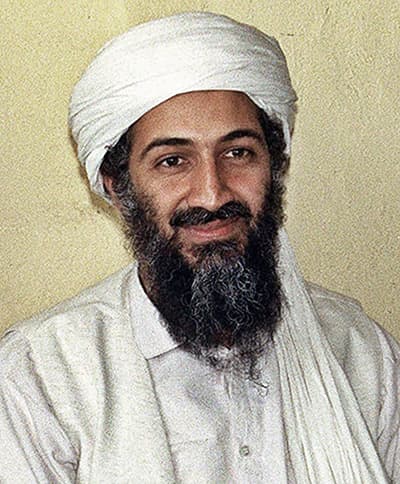


















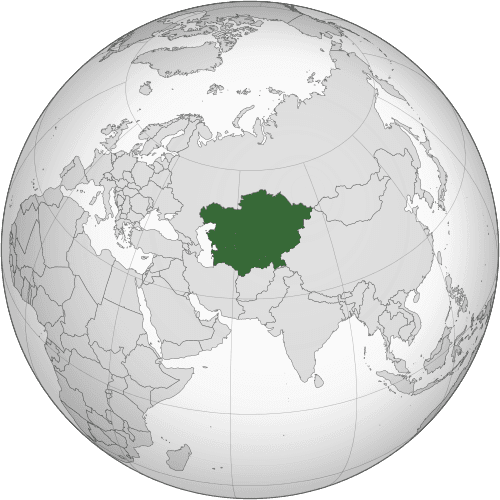
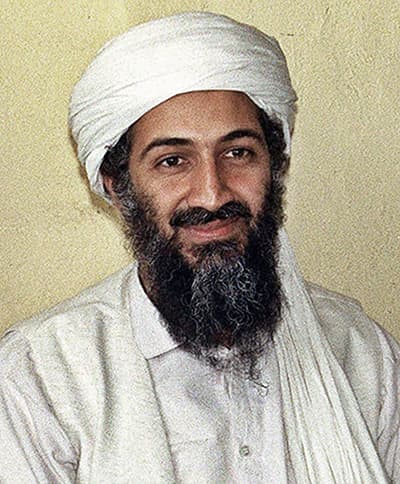
7
Shared Docs
7
Same-Page
7 / 7
Mentions
Document Mentions (7 shared documents)
2 mentions1 same-page
Page ?Same page
re Turkish presence is wide in Kurdistan, to Syria via the opposition forces, Lebanon in the future and Tunisia, not to mention Turkish presence in Central Asia and the Balkans. Moreover, it will not be easy to compete with the role that the Gulf Cooperation Council states have started to play after they le
esitated to publicly criticize spy agencies at home or abroad, admonishing Pakistan's Inter-Services Intelligence for apparently failing to detect bin Laden's compound or calling U.S. intelligence on the Arab Spring "way behind our times." 30. James Miller At the beginning of this year, Jim Miller was n
2 mentions1 same-page
Page ?Same page
the Arab and Muslim world. When Ronald Reagan was elected president, Central Command, which oversees U.S. military operations in the Middle East and Central Asia, did not even exist. All of this changed in 1990, when Saddam Hussein invaded Kuwait, and President George H. W. Bush dispatched 700,000 troops to
e United States was involved militarily all across the world in ways al-Qaeda interpreted as oppressive to Muslims. Still, it's no coincidence that bin Laden and company shifted their focus away from the U.S.S.R. after Soviet troops left Afghanistan and toward the United States after American troops enter
2 mentions1 same-page
Page ?Same page
the private sector on a range of regional and global security challenges. IPI also carries out work in and on Africa, the Middle East, Europe, and Central Asia. With a staff from more than twenty countries and a broad range of academic fields, IPI partners with regional organizations, think tanks, universi
atitis vaccination campaign in its hunt for Osama bin Laden. The warlord, Hafiz Gul Bahadur, has banned all
Sponsored
2 mentions1 same-page
Page ?Same page
pe and the National Endowment for Democracy. The same kind of determination has yet to be mustered in response to Stalin's imitators in Belarus and Central Asia, not to mention his star pupil in his old Kremlin stomping grounds. Article 7. EFTA00700306 The National Interest Why Russia Roots for Obama A
a politician's touch, but a tin ear: when Osama bin Laden was killed, he lamented the fall of "a Muslim an
2 mentions1 same-page
Page ?Same page
eing treated as a regional power. It has the necessary demography (population, 77.8 million), a pivotal geographic location (between the West Asia, Central Asia and South Asia), and a strong and ancient identity that makes an impact on Iran's environment more than likely.2 This can only feed a sense of natio
my' to be opposed all the time. The goal of Osama bin Laden's organisation was to have its own routes out of
2 mentions1 same-page
Page ?Same page
orld, has made inroads in Tatarstan, especially among the young. Migrants from the republics of the north Caucasus and the post-Soviet countries of Central Asia have also spread more conservative interpretations of Islam. Estimates of the number of Salafists in Tatarstan vary. A local mufti, Farid Salman, s
ar lots from Charlotte about the killing of Osama bin Laden and the withdrawal of U.S. troops from Iraq. Th
Sponsored
2 mentions1 same-page
Page ?Same page
in the heart of Asia." But it is not in the interest of Russia to have China serene on its western borders, positioned to increase its influence in Central Asia and control the extraction of valuable natural resources there. Neither is it in the interest of the United States (or Russia) to see China embolde
e campaign and the covert raid that killed Osama bin Laden, nor is Islamabad's failure to take on difficult
Sponsored
Mutual Connections (689)
Entities connected to both Central Asia and Bin Laden
Barack Obama
PERSON34 w/ Central·81 w/ Bin
Osama bin Laden
PERSON10 w/ Central·104 w/ Bin
George W. Bush
PERSON33 w/ Central·77 w/ Bin
United States
LOCATION32 w/ Central·77 w/ Bin
Jeffrey Epstein
PERSON29 w/ Central·73 w/ Bin
Bill Clinton
PERSON17 w/ Central·67 w/ Bin
Bashar al-Assad
PERSON29 w/ Central·46 w/ Bin
Marc Rich
PERSON24 w/ Central·49 w/ Bin
Department of Justice
ORGANIZATION15 w/ Central·53 w/ Bin
Benjamin Netanyahu
PERSON21 w/ Central·47 w/ Bin
Tehran
LOCATION24 w/ Central·44 w/ Bin
Julie K. Brown
PERSON8 w/ Central·56 w/ Bin
Saddam Hussein
PERSON18 w/ Central·44 w/ Bin
Prince Andrew
PERSON13 w/ Central·49 w/ Bin
Lebanon
LOCATION25 w/ Central·36 w/ Bin
Donald Trump
PERSON14 w/ Central·46 w/ Bin
Joe Biden
PERSON13 w/ Central·47 w/ Bin
Virginia Giuffre
PERSON11 w/ Central·48 w/ Bin
John F. Kennedy
PERSON12 w/ Central·45 w/ Bin
Middle East
LOCATION22 w/ Central·34 w/ Bin