Back to Network


















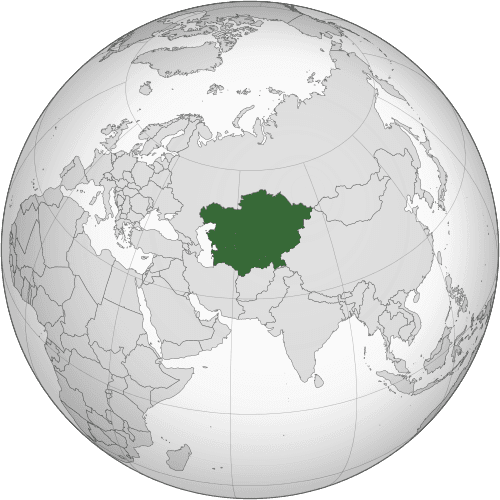
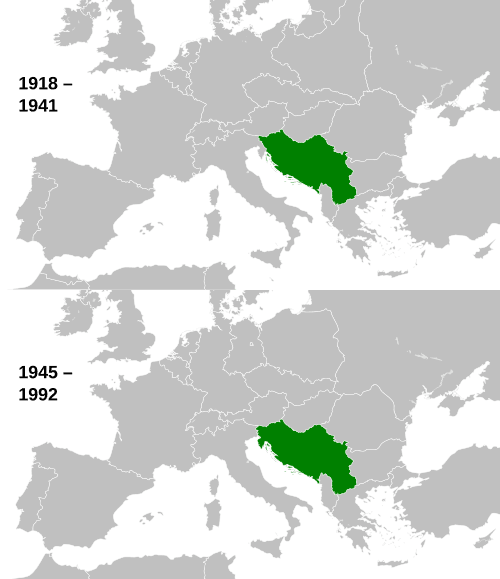
5
Shared Docs
5
Same-Page
5 / 5
Mentions
Document Mentions (5 shared documents)
2 mentions1 same-page
Page ?Same page
blame. Ilan Berman is Vice President of the American Foreign Policy Council in Washington, DC. An expert on regional security in the Middle East, Central Asia, and the Russian Federation, he has consulted for both the U.S. Central Intelligence Agency and the U.S. Department of Defense. EFTA_R1_02031718
ction of civilian infrastructure, and devastating outbreaks of sectarian violence of a kind that, as we should have learned from the dissolution of Yugoslavia, can readily follow the death or removal of a nationalist dictator. But the effects of war on the US and its allies may end up being almost as tra
2 mentions1 same-page
Page ?Same page
blame. Ilan Berman is Vice President of the American Foreign Policy Council in Washington, DC. An expert on regional security in the Middle East, Central Asia, and the Russian Federation, he has consulted for both the U.S. Central Intelligence Agency and the U.S. Department of Defense. EFTA_R1_02031774
ction of civilian infrastructure, and devastating outbreaks of sectarian violence of a kind that, as we should have learned from the dissolution of Yugoslavia, can readily follow the death or removal of a nationalist dictator. But the effects of war on the US and its allies may end up being almost as tra
2 mentions1 same-page
Page ?Same page
breakaway republics returned (in some cases more willingly than others) to the fold. By 1939, when Soviet troops invaded the Baltic Republics, from Central Asia to the Baltic Sea, almost all of the far- flung dominions of the Romanovs were once more under a single flag. Only Poland and Finland were able to r
engage from Europe three times since the end of the Cold War, and each time the disengagement failed. The Clinton administration tried to outsource Yugoslavia to the Europeans in the 1990s and was ultimately pulled into the Balkans. George W. Bush tried to conduct foreign policy around and over the heads
Sponsored
2 mentions1 same-page
Page ?Same page
examples of the Soviet Union and Yugoslavia. When the Soviet state collapsed, it led to a rash of ethnic and regional wars across the Caucasus and Central Asia -- tens of thousands of people were killed in Tajikistan alone -- while in Yugoslavia, ethnic war resulted in 140,000 lost lives. Remember that the
hip in the Middle East carries the potential to send shivers throughout Central Asian authoritarian states. As for the Americans, they don't want a Yugoslavia-style situation where they are under pressure to militarily intervene. One can also argue that from a human rights perspective, chaos can be worse
2 mentions1 same-page
Page ?Same page
t for NATO in the post-Cold War generation and the current administration. Now huge waves of mass migration from Africa, the Middle East, and even Central Asia have beset the EU, and we believe they will not stop without direct and forceful EU intervention to stabilize these troubled regions. This has gen
and cultures due to the horrors and ethnic cleansings during and after the war. This is likewise partly true of the successor states to the former Yugoslavia. They all signed on enthusiastically to the European project in expectation of sharing the bounty of European prosperity, governance institutions,
Sponsored
Mutual Connections (458)
Entities connected to both Central Asia and Yugoslavia
Jeffrey Epstein
PERSON29 w/ Central·57 w/ Yugoslavia
Marc Rich
PERSON24 w/ Central·43 w/ Yugoslavia
George W. Bush
PERSON33 w/ Central·34 w/ Yugoslavia
United States
LOCATION32 w/ Central·31 w/ Yugoslavia
Donald Trump
PERSON14 w/ Central·46 w/ Yugoslavia
Bill Clinton
PERSON17 w/ Central·40 w/ Yugoslavia
Barack Obama
PERSON34 w/ Central·20 w/ Yugoslavia
Alan Dershowitz
PERSON6 w/ Central·44 w/ Yugoslavia
Prince Andrew
PERSON13 w/ Central·32 w/ Yugoslavia
Bashar al-Assad
PERSON29 w/ Central·16 w/ Yugoslavia
Ghislaine Maxwell
PERSON6 w/ Central·37 w/ Yugoslavia
Joe Biden
PERSON13 w/ Central·29 w/ Yugoslavia
LB
Leon Black
PERSON12 w/ Central·30 w/ Yugoslavia
Michael Douglas
PERSON10 w/ Central·30 w/ Yugoslavia
Hillary Clinton
PERSON16 w/ Central·24 w/ Yugoslavia
John F. Kennedy
PERSON12 w/ Central·26 w/ Yugoslavia
Middle East
LOCATION22 w/ Central·16 w/ Yugoslavia
Prince Charles
PERSON11 w/ Central·26 w/ Yugoslavia
Lebanon
LOCATION25 w/ Central·11 w/ Yugoslavia
Vladimir Putin
PERSON27 w/ Central·9 w/ Yugoslavia