Back to Network



















10
Shared Docs
10
Same-Page
11 / 10
Mentions
Document Mentions (10 shared documents)
3 mentions1 same-page
Page ?
has been in power for two decades, presiding over Central Asia's most vibrant economy. Human rights activists, how
Page HOUSE_OVERSIGHT_031153Same page
he dispute. [*] Mr. Nazarbayev, 70, [*Ja former steel worker and Soviet-era Communist Party leader, has been in power for two decades, presiding over Central Asia's most vibrant economy. Human rights activists, however, have long accused him of persecuting dissidents and political opponents. Mr. Aliyev, 48, [*]ha
Page: HOUSE_OVERSIGHT_031153 →eir alliance with his government. The Obama administration has done just that. Through comments in secret diplomatic cables, the former ambassador to Kazakhstan made clear his wariness of being drawn in. "Both sides — the government and Aliyev — seek to manipulate us to their own advantage," Richard E. Hoagla
Page: HOUSE_OVERSIGHT_031153 →2 mentions1 same-page
Page ?Same page
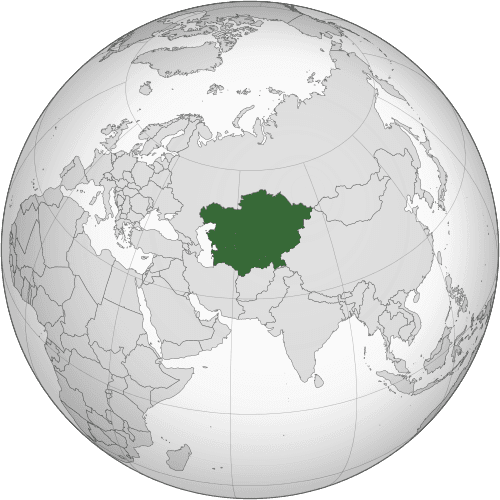
sions? Take a look at the Caspian Sea area map and the strategic equations come into relief. Iran acts as a southern bottleneck to the geography of Central Asia. It could offer the West access to the region's resources that would bypass Russia. If Iran EFTA00660533 reverted to pro-Western alignment, the h
gion's resources that would bypass Russia. If Iran EFTA00660533 reverted to pro-Western alignment, the huge reserves of oil and gas landlocked in Kazakhstan and Turkmenistan and the like could flow directly out to the world without a veto from Moscow. According to an Oct. 16, 2008, Wall Street Journal r
2 mentions1 same-page
Page ?Same page
Sharon Allen Howard Alper Edmond Alphandery Mohammed Alshaya Jose Maria Alvarez Pallete Aly Aziz Executive Director Director, Middle East and Central Asia Department Business Editor Founder Chairman and Chief Executive Officer Chief Executive Officer Chief Executive Officer Group Vice-President.
sek Holdings (Pte) Limited Samruk-Kazyna JSC Liberty Mutual Group Heidrick & Struggles Westpac Banking Corporation BT Group Plc Israel India Kazakhstan USA USA Australia United Kingdom APG Asset Management Netherlands The Atlantic Council of the USA United States UBS Investment Bank United
Sponsored
2 mentions1 same-page
Page ?Same page
ill not be a cure-all, but it can help clear the air and avert some tensions on troubling issues. Security and narcotics threats in Afghanistan and Central Asia as NATO forces leave Afghanistan are urgent issues. Preventing terrorist attacks at the 2014 Sochi Olympics is another. EFTA00675622 This is not
ambassador to Armenia and Georgia. William Courtney was special assistant to the President for Russia, Ukraine, and Eurasia, and U.S. ambassador to Kazakhstan and Georgia. Kenneth Yalowitz served as U.S. ambassador to Belarus and Georgia. Article 5. EFTA00675623 Al-Monitor Why Palestinians Should Not
2 mentions1 same-page
Page ?Same page
ga-Ural areas was also not excluded. The proliferation of the Arab "virus" would be the Kremlin's worst nightmare. Fear Of Revolution Spreading To Central Asia Russia's second source of anxiety lies in the possibility that Arab revolutions might spread to Central Asia. Russian elites regard this area as p
limits. Indeed, these leaders are quite unwilling to countenance genuine reforms and their responses to the Arab revolutions have been dismissive. Kazakhstan's President, Nursultan Nazarbayev, initiated an instant election rather than a palpably stage-managed referendum to give him life tenure because th
2 mentions1 same-page
Page ?Same page
ions? Take a look at the Caspian Sea area map and the strategic equations come into relief. Iran acts as a southern bottleneck to the geography of Central Asia. It could offer the West access to the region's resources that would bypass Russia. If Iran reverted to pro-Western alignment, the huge reserves of
cess to the region's resources that would bypass Russia. If Iran reverted to pro-Western alignment, the huge reserves of oil and gas landlocked in Kazakhstan and Turkmenistan and the like could flow directly out to the world without a veto from Moscow. According to an Oct. 16, 2008, Wall Street Journal r
Sponsored
2 mentions1 same-page
Page ?Same page
ion of upstream positions in Kazakhstan and Turkmenistan and the opening of a Turkmen-Chinese gas pipeline as signs of Sino-Russian competition in Central Asia, these moves supported Moscow's interest in keeping Central Asian hydrocarbons from flowing west and undermining Russia's market dominance in Europ
s set to grow its oil exports to China significantly in coming years. While some analysts cite Chinese firms' acquisition of upstream positions in Kazakhstan and Turkmenistan and the opening of a Turkmen-Chinese gas pipeline as signs of Sino-Russian competition in Central Asia, these moves supported Mosc
2 mentions1 same-page
Page ?Same page
an, Iran and Mongolia holding "observer" status. Today Turkey—along with Belarus and Sri Lanka—rates as a "dialogue partner." Certainly Russia and Central Asia are important markets for Turkish construction, food and tourism industries. Its trade in the region grew to $62 billion in 2012. But the marketpla
entral Asia, the SCO's primary area of operations. Waiting for visas in Bishkek, we found ourselves jostling with Turkish truckers getting visas to Kazakhstan, whilst in the city's downtown, eager students at the Kyrgyz-Turkish Manas University told us how exciting it would be to visit Turkey. In neighbo
2 mentions1 same-page
Page ?Same page
t for NATO in the post-Cold War generation and the current administration. Now huge waves of mass migration from Africa, the Middle East, and even Central Asia have beset the EU, and we believe they will not stop without direct and forceful EU intervention to stabilize these troubled regions. This has gen
rtugal Ireland United Kingdom Denmark Norway Sweden Switzerland Canada Australia New Zealand EEMEA Czech Republic Egypt Hungary Israel Kazakhstan Nigeria Poland Romania Russia Saudi Arabia South Africa Turkey Ukraine United Arab Emirates Asia (ex-Japan) China Hong Kong India Indon
Sponsored
2 mentions1 same-page
Page ?Same page
Online event, 10:00 AM The historic C5+1 summit in Washington—at which President Donald Trump will host the heads of state from the five nations of Central Asia (Kazakhstan, Kyrgyzstan, Tajikistan, Turkmenistan, and Uzbekistan)—will aim to create new momentum for American engagement in the region. • Hudson
10:00 AM The historic C5+1 summit in Washington—at which President Donald Trump will host the heads of state from the five nations of Central Asia (Kazakhstan, Kyrgyzstan, Tajikistan, Turkmenistan, and Uzbekistan)—will aim to create new momentum for American engagement in the region. • Hudson Institute: L
Sponsored
Mutual Connections (600)
Entities connected to both Central Asia and Kazakhstan
Jeffrey Epstein
PERSON29 w/ Central·145 w/ Kazakhstan
Barack Obama
PERSON34 w/ Central·50 w/ Kazakhstan
George W. Bush
PERSON33 w/ Central·36 w/ Kazakhstan
United States
LOCATION32 w/ Central·35 w/ Kazakhstan
Vladimir Putin
PERSON27 w/ Central·37 w/ Kazakhstan
Marc Rich
PERSON24 w/ Central·34 w/ Kazakhstan
Terje Rod-Larsen
PERSON29 w/ Central·29 w/ Kazakhstan
Donald Trump
PERSON14 w/ Central·44 w/ Kazakhstan
Prince Andrew
PERSON13 w/ Central·40 w/ Kazakhstan
Bashar al-Assad
PERSON29 w/ Central·24 w/ Kazakhstan
Lebanon
LOCATION25 w/ Central·26 w/ Kazakhstan
Bill Clinton
PERSON17 w/ Central·31 w/ Kazakhstan
Tehran
LOCATION24 w/ Central·24 w/ Kazakhstan
Middle East
LOCATION22 w/ Central·18 w/ Kazakhstan
Bloomberg L.P.
ORGANIZATION13 w/ Central·26 w/ Kazakhstan
Benjamin Netanyahu
PERSON21 w/ Central·17 w/ Kazakhstan
Tunisia
LOCATION18 w/ Central·20 w/ Kazakhstan
Philippines
LOCATION18 w/ Central·19 w/ Kazakhstan
Samantha Power
PERSON18 w/ Central·19 w/ Kazakhstan
Prince Charles
PERSON11 w/ Central·24 w/ Kazakhstan