Back to Network



















4
Shared Docs
4
Same-Page
5 / 4
Mentions
Document Mentions (4 shared documents)
3 mentions1 same-page
Page ?Same page
stance itself to some extent from Washington. In some areas, notably in calls for the international community to offer substantive aid to the anti- Assad opposition in Syria, the Morsi government found itself in partial agreement with U.S. policy preferences. However, there were also troubling signs
this point, a prolonged stalemate is the only outcome that would not be damaging to American interests. Indeed, it would be disastrous if President Bashar al-Assad's regime were to emerge victorious after fully suppressing the EFTA_R1_00441201 EFTA01964453 rebellion and restoring its control over the entire c
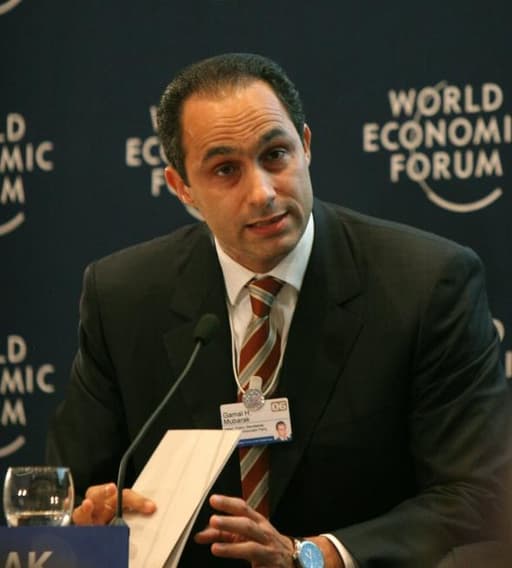
icate the Taiwan model: to have elderly autocrats lay the foundations for liberalizing heirs to undertake reforms. Hopes for change now rested with Gamal Mubarak in Egypt and Saif-al- Islam Gadhafi in Libya being able to take the reins of power. This strategy continued during the first years of the Obama adm
2 mentions1 same-page
Page ?Same page
talks in Geneva aimed at resolving the £yrian civil war. This came only months after the threat of US military force against Damascus convinced the Assad regime to abandon its chemical weapons programme. In both the Far East and Europe, the Obama administration is pushing ambitious trade initiatives
an interview with Akher Sa'a before the January 2011 Revolution, the then Muslim Brotherhood Supreme Guide said that he would have no problem with Gamal Mubarak running for EFTA00662877 president. He went on to praise President Mubarak in glowing terms. Echoing his sentiments, Morsi said: "We have kept el
2 mentions1 same-page
Page ?Same page
ddam Hussein and Muammar el-Qaddafi and Hafez al-Assad in Syria and Zine el-Abidine Ben Ali in Tunisia.
— quit Arab lands. In Tunisia, a hairdresser-turned-despot's wife, Leila Ben Ali, now pronounced on all public matters; in Egypt the despot's son, Gamal Mubarak, brazenly staked a claim to power over 80 million people; in Syria, Hafez al-Assad had pulled off a stunning feat, turning a once-rebellious republ
Sponsored
Mutual Connections (88)
Entities connected to both Bashar al-Assad and Gamal Mubarak
Barack Obama
PERSON235 w/ Bashar·5 w/ Gamal
George W. Bush
PERSON176 w/ Bashar·4 w/ Gamal
United States
LOCATION171 w/ Bashar·2 w/ Gamal
Lebanon
LOCATION166 w/ Bashar·3 w/ Gamal
Tehran
LOCATION149 w/ Bashar·4 w/ Gamal
Bill Clinton
PERSON143 w/ Bashar·2 w/ Gamal
Damascus
LOCATION137 w/ Bashar·2 w/ Gamal
Hosni Mubarak
PERSON122 w/ Bashar·5 w/ Gamal
Middle East
LOCATION114 w/ Bashar·4 w/ Gamal
Tunisia
LOCATION112 w/ Bashar·4 w/ Gamal
Yemen
LOCATION108 w/ Bashar·4 w/ Gamal
Cairo
LOCATION108 w/ Bashar·4 w/ Gamal
Saddam Hussein
PERSON108 w/ Bashar·3 w/ Gamal
Marc Rich
PERSON105 w/ Bashar·3 w/ Gamal
Jeffrey Epstein
PERSON105 w/ Bashar·2 w/ Gamal
Vladimir Putin
PERSON96 w/ Bashar·2 w/ Gamal
Hillary Clinton
PERSON96 w/ Bashar·2 w/ Gamal
Department of Justice
ORGANIZATION76 w/ Bashar·3 w/ Gamal
Donald Trump
PERSON76 w/ Bashar·3 w/ Gamal
Fatah
ORGANIZATION75 w/ Bashar·2 w/ Gamal