Back to Network



















3
Shared Docs
1
Same-Page
9 / 3
Mentions
Document Mentions (3 shared documents)
3 mentions1 same-page
Page ?Same page
er Beinart May 16, 2011 -- Why did thousands of Palestinians yesterday converge upon Israel's borders? Partly because Syria's war-criminal leader, Bashar al-Assad, and his ally, Hezbollah, wanted them to. But there's more to it than that. Palestinians also marched from Jordan and Egypt, whose governments did
ere was violence at the Lebanese and Syrian borders. This fact alone makes it clear that what happened was mostly manufactured by Hezbollah and the Assad regime. The king of Jordan was opposed to trouble, so there were demonstrations but no border breaches or violence along the Jordan River and its
Nakba Day to divert attention from the revolt in Syria, so they organized trouble. Several days ago Assad's cousin and partner in financial crime Rami Makhlouf issued a threat, saying, "If there is no stability here, there's no way there will be stability in Israel." So this Nakba Day was different because
Page HOUSE_OVERSIGHT_030074
oratory, you couldn't have done much better. Syria presents a profoundly different situation. U.S. policy has always been driven by the hope that the Assads would change and the fear of what might replace them if they fell. Three additional realities ensured a U.S. response quite different from the one fo
Page: HOUSE_OVERSIGHT_030074 →Page HOUSE_OVERSIGHT_030077
of Syrian statements on Tuesday. Its correspondent in Beirut, Anthony Shadid, landed interviews with presidential adviser Bouthaina Shaaban and with Rami Makhlouf, the powerful maternal cousin of President Bashar Assad, who represents the financial front of the regime. Shadid was allowed into Syria for only a f
Page: HOUSE_OVERSIGHT_030077 →Page HOUSE_OVERSIGHT_030079
ng different. There simply is no reform option, and there never was. Genuine reform means dislodging the bricks holding up Assad- Makhlouf authority. Bashar Assad's open-ended presidency, the crony capitalism practiced by his cousin and other members of Syria's elite, the abuse practiced by the all-powerful secur
Page: HOUSE_OVERSIGHT_030079 →Page HOUSE_OVERSIGHT_024963
cal life and for that of the regime put in place in 1970 by his father, the late President Hafez al-Assad. Forty-one years in power The rule of the Assads, father and son, has now lasted 41 years, a score comparable to that of other long-lasting Arab autocrats, each apparently determined to be a préside
Page: HOUSE_OVERSIGHT_024963 →Arab autocrats, each apparently determined to be a président-a-vie. In no other part of the world have so many rulers clung so assiduously to power. Bashar appears genuinely to have believed that the Arab nationalist ideology he inherited, his opposition to Israel and his support for resistance movements
Page: HOUSE_OVERSIGHT_024963 →Page HOUSE_OVERSIGHT_024965
developed a taste for control -- control over the media, over the university, over the economy (through cronies such as his exorbitantly rich cousin Rami Makhlouf), control over society at large. Free expression is not allowed. Political decision-making is restricted to a tight circle around the president and s
Page: HOUSE_OVERSIGHT_024965 →Page HOUSE_OVERSIGHT_024966
tly financed a London-based network of Bashar’s opponents to the tune of $12m between 2005 and 2010. A continuous whole It is probably fair to view Bashar al-Assad’s term of office and that of his father as a single continuous whole. Not only did Hafez al-Assad decide that Bashar should succeed him, but he also be
Page: HOUSE_OVERSIGHT_024966 →Sponsored
Mutual Connections (37)
Entities connected to both Bashar al-Assad and Rami Makhlouf
Barack Obama
PERSON235 w/ Bashar·3 w/ Rami
George W. Bush
PERSON176 w/ Bashar·3 w/ Rami
United States
LOCATION171 w/ Bashar·2 w/ Rami
Lebanon
LOCATION166 w/ Bashar·3 w/ Rami
Benjamin Netanyahu
PERSON154 w/ Bashar·3 w/ Rami
Tehran
LOCATION149 w/ Bashar·2 w/ Rami
Bill Clinton
PERSON143 w/ Bashar·2 w/ Rami
Damascus
LOCATION137 w/ Bashar·3 w/ Rami
Hosni Mubarak
PERSON122 w/ Bashar·3 w/ Rami
Tunisia
LOCATION112 w/ Bashar·2 w/ Rami
Yemen
LOCATION108 w/ Bashar·3 w/ Rami
Saddam Hussein
PERSON108 w/ Bashar·2 w/ Rami
Cairo
LOCATION108 w/ Bashar·2 w/ Rami
Hillary Clinton
PERSON96 w/ Bashar·2 w/ Rami
Vladimir Putin
PERSON96 w/ Bashar·2 w/ Rami
Bahrain
LOCATION75 w/ Bashar·2 w/ Rami
West Bank
LOCATION69 w/ Bashar·2 w/ Rami
Ronald Reagan
PERSON57 w/ Bashar·2 w/ Rami
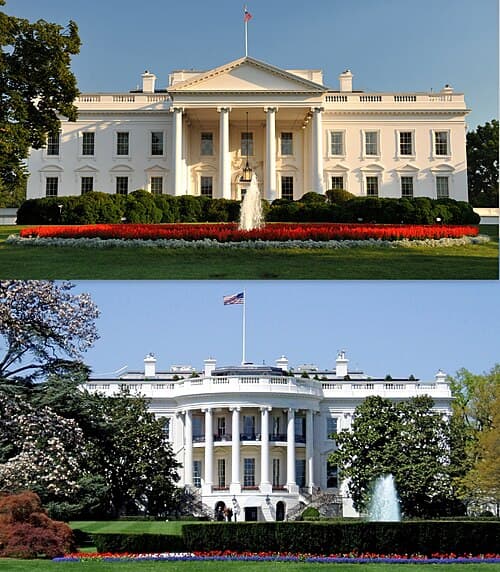
White House
ORGANIZATION56 w/ Bashar·2 w/ Rami
Muslim Brotherhood
ORGANIZATION49 w/ Bashar·2 w/ Rami