Back to Network

















5
Shared Docs
5
Same-Page
5 / 6
Mentions
Document Mentions (5 shared documents)
3 mentions1 same-page
Page ?Same page
o influenced the revolution two years ago. And it's now, two years ago replaced Thomas Jefferson, the author of the Declaration of Independence with Thomas Aquinas. Anybody at a good religious college would know that wasn't true. BILL MOYERS: How do you explain the political agility of fundamentalists to get t
. And anyway, this Protestant ministers came to Lincoln and they wanted to amend the Constitution to replace "We the people" not with God, but with Jesus Christ. And Lincoln said, "Well. I will do what my conscience and my sense of my duty to my country command." And what his choice to do was absolutely not
o replace "We the people" not with God, but with Jesus Christ. And Lincoln said, "Well. I will do what m
2 mentions1 same-page
Page ?Same page
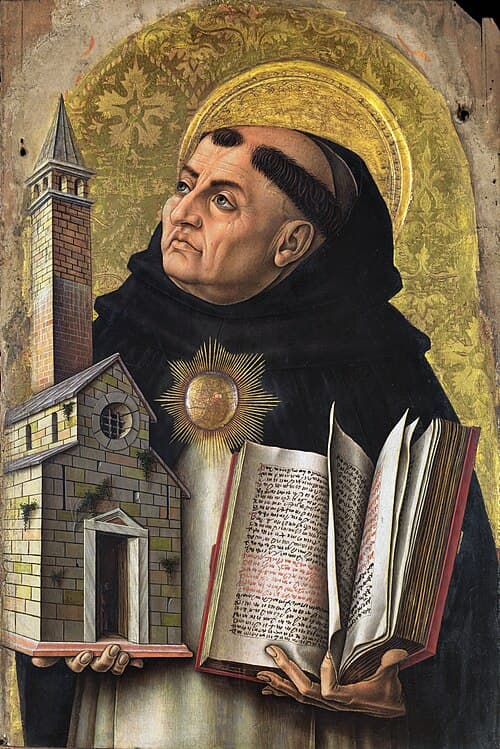
yond other individuals. In the next chapter, theologian Don Browning also embraces the concept of inclusive fitness and, through the writings of Thomas Aquinas, shows how religion serves the human need for meaning and connection through the ethics they advocate, the congregations they form, the instituti
ily ethic — with its implicit psycho-biology - in the household codes of Ephesians and I Colossians, 4 and the gospel of John's identification of Jesus with the Platonic and Stoic idea of the pre-existent "Word." 5 A more intentional religious humanism can be found in Augustine's use of the neo-P
2 mentions1 same-page
Page ?Same page
al importance of belief for such investigation, see the essays by W. Clark Gilpin and Tanya Luhrmann in this volume. See Luhrmann in this volume. Thomas Aquinas is one prominent theologian in the Christian tradition who highlights this idea: "creation ... is the very dependency of the created act of being
th me. It just came and I had absolutely no control over it. I pulled over to the side of the road—I remember thinking that I was so in love with Jesus at that moment that no one else on the planet could come close. After about twenty minutes of real intensity the feeling subsided somewhat, but t
Sponsored
2 mentions1 same-page
Page ?Same page
e public consideration of the nature of reality itself, apart from its material manifestations. The theme of the life’s work of the Dominican priest, Thomas Aquinas, made master of theology by papal dispensation in 1259, involved the existential recognition of this dichotomy of existence, esse, and essence, natur
oth for a tooth hypertension, the talon principle of the Old Testament and Koran. New Testament forgiveness would yield low blood pressure health and Jesus was a healer. It was about this time in the early 1950’s that Northwestern University social psychologist, Jim Olds, found that rats could be trained
2 mentions1 same-page
Page ?Same page
such investigation, see the essays by W. Clark Gilpin and Tanya Luhrmann in this volume. Pa at Q »e |127 ¢ 1 . . See Luhrmann in this volume. * Thomas Aquinas is one prominent theologian in the Christian tradition who highlights this idea: “creation... is the very dependency of the created act of being upon
r with me. It just came and I had absolutely no control over it. I pulled over to the side of the road—I remember thinking that I was so in love with Jesus at that moment that no one else on the planet could come close. After about twenty minutes of real intensity the feeling subsided somewhat, but the p
Sponsored
Mutual Connections (260)
Entities connected to both Thomas Aquinas and Jesus Christ
Jeffrey Epstein
PERSON4 w/ Thomas·251 w/ Jesus
Donald Trump
PERSON2 w/ Thomas·105 w/ Jesus
Prince Andrew
PERSON4 w/ Thomas·83 w/ Jesus
George W. Bush
PERSON7 w/ Thomas·77 w/ Jesus
Prince Charles
PERSON3 w/ Thomas·80 w/ Jesus
LB
Leon Black
PERSON2 w/ Thomas·70 w/ Jesus
Marc Rich
PERSON6 w/ Thomas·61 w/ Jesus
Julie K. Brown
PERSON3 w/ Thomas·62 w/ Jesus
Barack Obama
PERSON3 w/ Thomas·62 w/ Jesus
Michael Jackson
PERSON3 w/ Thomas·56 w/ Jesus
United States
LOCATION3 w/ Thomas·54 w/ Jesus
ET
Emmy Taylor
PERSON4 w/ Thomas·52 w/ Jesus
John F. Kennedy
PERSON2 w/ Thomas·54 w/ Jesus
Eric Trump
PERSON2 w/ Thomas·54 w/ Jesus
Stephen Hawking
PERSON5 w/ Thomas·49 w/ Jesus
Lawrence Krauss
PERSON5 w/ Thomas·45 w/ Jesus
Samantha Power
PERSON4 w/ Thomas·46 w/ Jesus
Oliver Stone
PERSON2 w/ Thomas·47 w/ Jesus
CW
Courtney Wild
PERSON2 w/ Thomas·47 w/ Jesus
Harvey Weinstein
PERSON3 w/ Thomas·42 w/ Jesus