Back to Network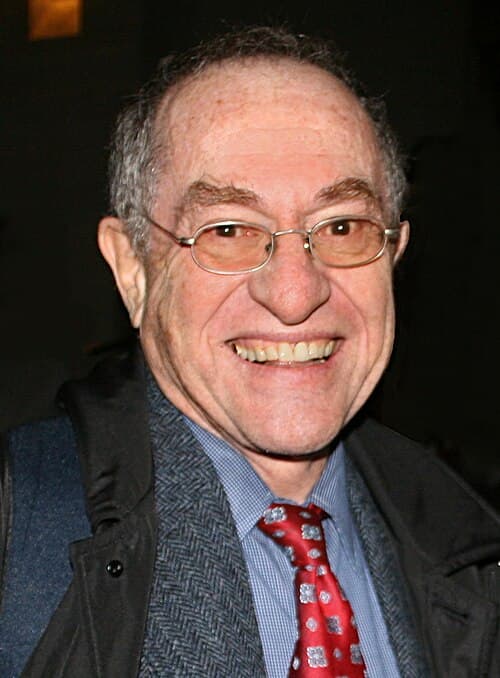





5
Shared Docs
5
Same-Page
5 / 5
Mentions
Document Mentions (5 shared documents)
2 mentions1 same-page
Page ?Same page
ivity versus 312 program equivalence problem 250 programmer 235, 238, 263 programming geniuses 271 super-programmers 266 progressive cipher 214 proof Feynman’s proof 157 indirect 244 mathematical 156 philosophical 246 Index 415 PSPACE problem 168 Pulitzer Prize 365, 367 purpose on the planet 9 puzzle tw
computation: Computing Beyond the Church- Turing Barrier. Softcover reprint of hardcover 1st ed. 2008. Springer, 2010. Chapter 13 Shannon, C.E., and Warren Weaver. The Mathematical Theory of Communication. University of Illinois Press, 1949. Chapter 14 Boden, Margaret A. The Creative Mind: Myths and Mechanism
2 mentions1 same-page
Page ?Same page
to spend time with physicists, the reason being that they think about the universe, 1.e. everything. And no physicist was reputed to be articulate as Feynman. I couldn’t wait to meet him. I accepted. That said, I am not a scientist, and I had never entertained the idea of getting on a stage and delivering
Doubt and Certainty in Science in which he said that we create tools and we mold ourselves through our use of them. The other text he recommended was Warren Weaver and Claude Shannon’s 1949 paper “Recent Contributions to the Mathematical Theory of Communication,” which begins: “The word communication will be use
2 mentions1 same-page
Page ?Same page
ard Feynman, at which the celebrated physicist remarked, “That is positively the dopiest idea I ever heard.” Maybe “despite” is the wrong word, since Feynman had a well-known predilection for playing with dopey ideas. In the event, he showed up on the day the company was incorporated and stayed on, for sum
had published a pair of lengthy articles in the Be// System Technical Journal. Introducing the new work to a broad readership in 1949, mathematician Warren Weaver explained that in Shannon’s formulation, “the word information...is used in a special sense that must not be confused with its ordinary usage. In par
Sponsored
2 mentions1 same-page
Page ?Same page
to spend time with physicists, the reason being that they think about the universe, 1.e. everything. And no physicist was reputed to be articulate as Feynman. I couldn’t wait to meet him. I accepted. That said, I am not a scientist, and I had never entertained the idea of getting on a stage and delivering
Doubt and Certainty in Science in which he said that we create tools and we mold ourselves through our use of them. The other text he recommended was Warren Weaver and Claude Shannon’s 1949 paper “Recent Contributions to the Mathematical Theory of Communication,” which begins: “The word communication will be use
2 mentions1 same-page
Page ?Same page
ard Feynman, at which the celebrated physicist remarked, “That is positively the dopiest idea I ever heard.” Maybe “despite” is the wrong word, since Feynman had a well-known predilection for playing with dopey ideas. In the event, he showed up on the day the company was incorporated and stayed on, for sum
had published a pair of lengthy articles in the Be// System Technical Journal. Introducing the new work to a broad readership in 1949, mathematician Warren Weaver explained that in Shannon’s formulation, “the word information...is used in a special sense that must not be confused with its ordinary usage. In par
Sponsored
Mutual Connections (701)
Entities connected to both Feynman and Warren Weaver
Alan Dershowitz
PERSON15 w/ Feynman·6 w/ Warren
Quantum
ORGANIZATION13 w/ Feynman·6 w/ Warren
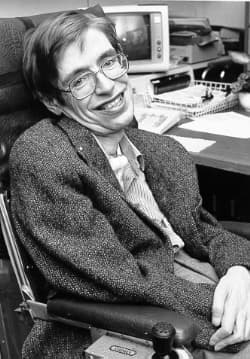
Stephen Hawking
PERSON13 w/ Feynman·6 w/ Warren
Harvey Weinstein
PERSON14 w/ Feynman·5 w/ Warren
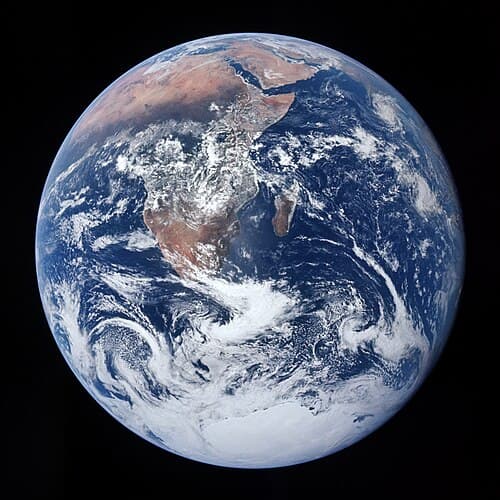
Earth
LOCATION14 w/ Feynman·4 w/ Warren
Eric Trump
PERSON11 w/ Feynman·6 w/ Warren
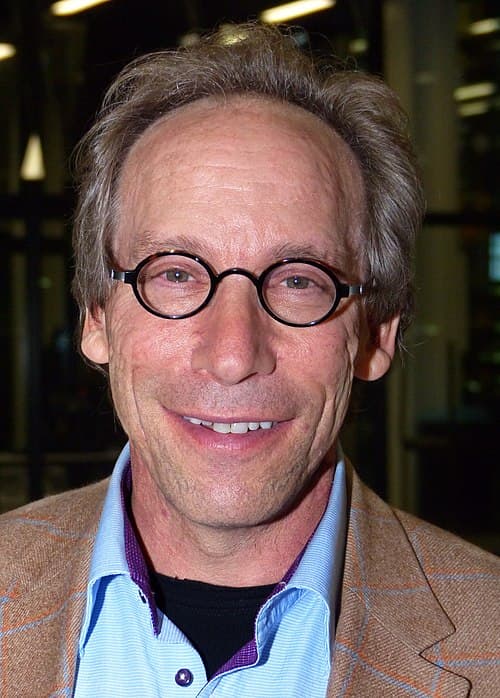
Lawrence Krauss
PERSON14 w/ Feynman·2 w/ Warren
Marc Rich
PERSON11 w/ Feynman·5 w/ Warren
Richard Feynman
PERSON12 w/ Feynman·4 w/ Warren
Prince Andrew
PERSON10 w/ Feynman·6 w/ Warren
Julie K. Brown
PERSON10 w/ Feynman·5 w/ Warren
LB
Leon Black
PERSON9 w/ Feynman·6 w/ Warren
Ghislaine Maxwell
PERSON10 w/ Feynman·5 w/ Warren
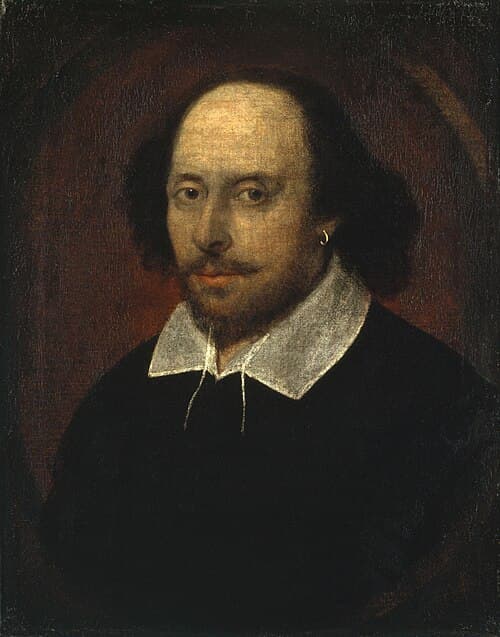
William Shakespeare
PERSON9 w/ Feynman·6 w/ Warren
George W. Bush
PERSON9 w/ Feynman·6 w/ Warren
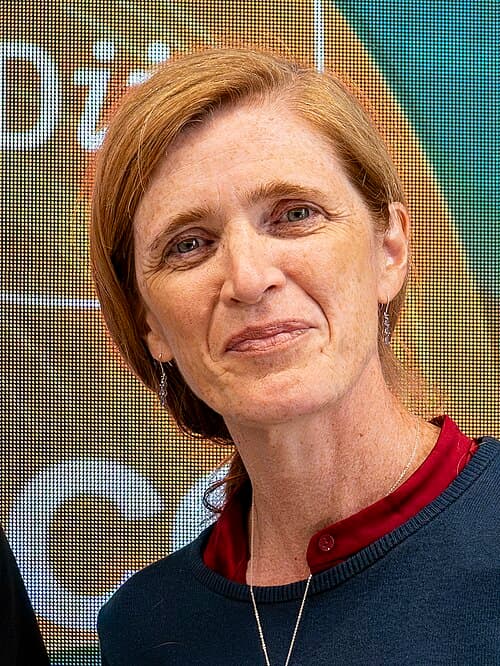
Samantha Power
PERSON10 w/ Feynman·5 w/ Warren
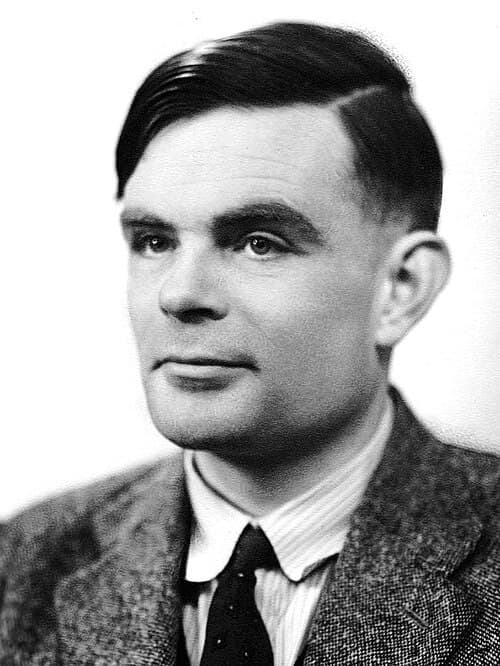
Turing
PERSON10 w/ Feynman·4 w/ Warren
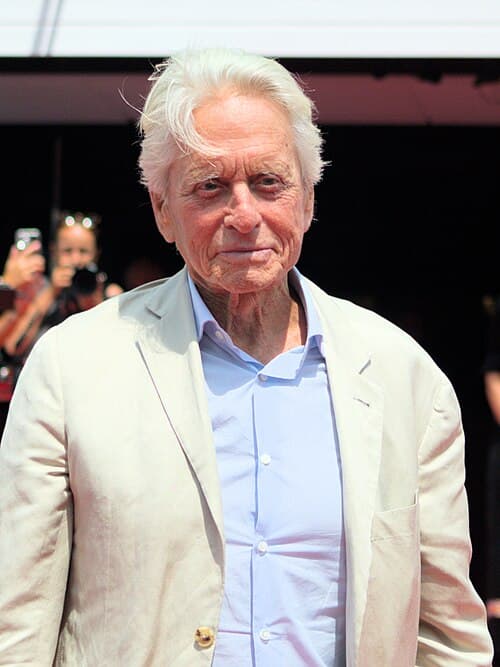
Michael Douglas
PERSON10 w/ Feynman·4 w/ Warren
DB
Doug Band
PERSON9 w/ Feynman·5 w/ Warren
Cambridge University
ORGANIZATION8 w/ Feynman·5 w/ Warren