Back to Network


6
Shared Docs
6
Same-Page
6 / 6
Mentions
Document Mentions (6 shared documents)
2 mentions1 same-page
Page ?Same page
ns had perfected their calculations to predict the motion of Venus and it proved reliable over a whole century? Would this constitute understanding? Feynman would say no: the Mayan understanding was not complete. It was only black box equivalent to our modern understanding over a limited period. We known
ans think creatively, computers do not. * ‘The process of understanding and communication is complex, much more complex than the digital theorems of Claude Shannon and Harry Nyquist. « Understanding is hard. « The communication of understanding is even harder. HOUSE_OVERSIGHT_015687 CONTENTS Preface
2 mentions1 same-page
Page ?Same page
s in it taking the shortest route possible from its initial to final position. The related 1650 Fermat’s “principle of least time” is about light. As Feynman explains in his Lectures in Physics, “...out of all possible paths that light might take from one point another, light takes the path that requires t
pacity, with respect to their characterization, quantification and measurement. To get to the end from close to the beginning, we recall that it was Claude Shannon and his followers who both mathematically proved and experimentally verified that a receiver must have more entropy, less already fixed knowl
2 mentions1 same-page
Page ?Same page
to spend time with physicists, the reason being that they think about the universe, 1.e. everything. And no physicist was reputed to be articulate as Feynman. I couldn’t wait to meet him. I accepted. That said, I am not a scientist, and I had never entertained the idea of getting on a stage and delivering
n Turing wondered what it would take for machines to become intelligent. John von Neumann wondered what it would take for machines to self-reproduce. Claude Shannon wondered what it would take for machines to communicate reliably, no matter how much noise intervened. Norbert Wiener wondered how long it wo
Sponsored
2 mentions1 same-page
Page ?Same page
ard Feynman, at which the celebrated physicist remarked, “That is positively the dopiest idea I ever heard.” Maybe “despite” is the wrong word, since Feynman had a well-known predilection for playing with dopey ideas. In the event, he showed up on the day the company was incorporated and stayed on, for sum
, “A Scientist Rebels,” Zhe Atlantic Monthly, January 1947. 31 Warren Weaver, “Recent Contributions to the Mathematical Theory of Communication,” in Claude Shannon & Warren Weaver, The Mathematical Theory of Communication (Urbana, IL: University of Illinois Press, 1949), p. 8 (emphasis in original). Shan
2 mentions1 same-page
Page ?Same page
to spend time with physicists, the reason being that they think about the universe, 1.e. everything. And no physicist was reputed to be articulate as Feynman. I couldn’t wait to meet him. I accepted. That said, I am not a scientist, and I had never entertained the idea of getting on a stage and delivering
n Turing wondered what it would take for machines to become intelligent. John von Neumann wondered what it would take for machines to self-reproduce. Claude Shannon wondered what it would take for machines to communicate reliably, no matter how much noise intervened. Norbert Wiener wondered how long it wo
2 mentions1 same-page
Page ?Same page
ard Feynman, at which the celebrated physicist remarked, “That is positively the dopiest idea I ever heard.” Maybe “despite” is the wrong word, since Feynman had a well-known predilection for playing with dopey ideas. In the event, he showed up on the day the company was incorporated and stayed on, for sum
, “A Scientist Rebels,” Zhe Atlantic Monthly, January 1947. 31 Warren Weaver, “Recent Contributions to the Mathematical Theory of Communication,” in Claude Shannon & Warren Weaver, The Mathematical Theory of Communication (Urbana, IL: University of Illinois Press, 1949), p. 8 (emphasis in original). Shan
Sponsored
Mutual Connections (723)
Entities connected to both Feynman and Claude
Jeffrey Epstein
PERSON32 w/ Feynman·22 w/ Claude
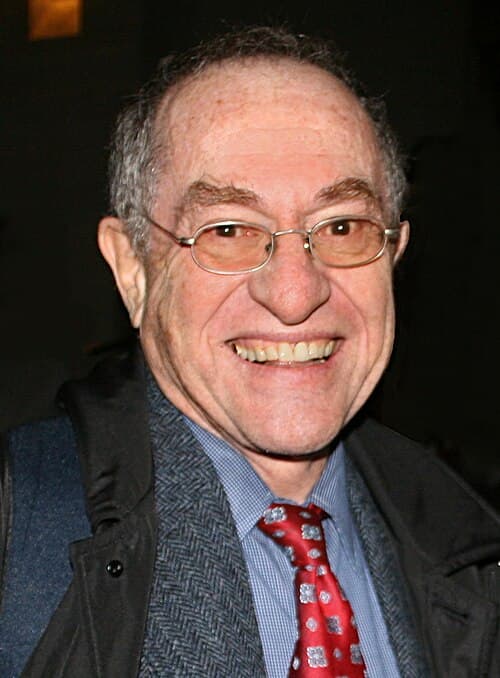
Alan Dershowitz
PERSON15 w/ Feynman·9 w/ Claude
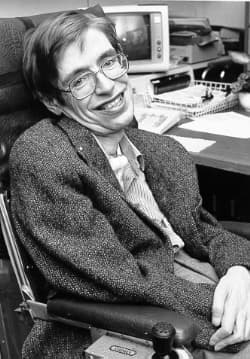
Stephen Hawking
PERSON13 w/ Feynman·10 w/ Claude
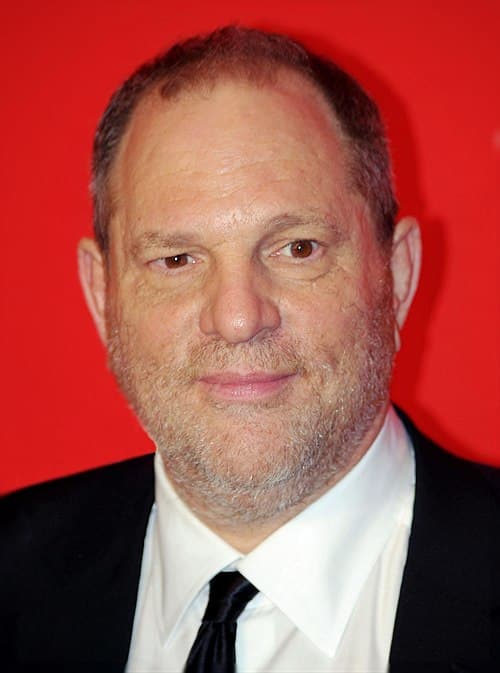
Harvey Weinstein
PERSON14 w/ Feynman·7 w/ Claude
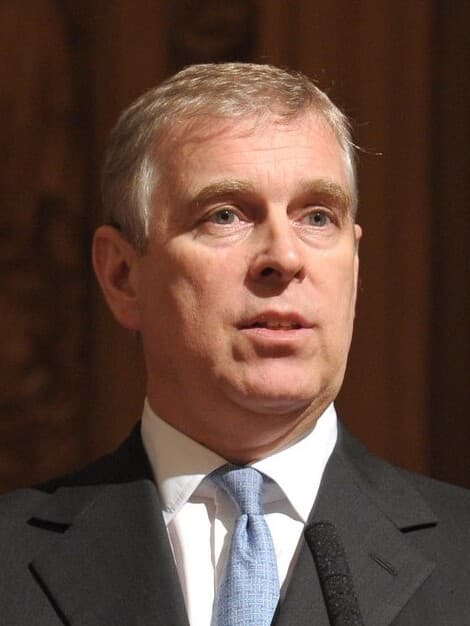
Prince Andrew
PERSON10 w/ Feynman·10 w/ Claude
Marc Rich
PERSON11 w/ Feynman·9 w/ Claude
Earth
LOCATION14 w/ Feynman·6 w/ Claude
Eric Trump
PERSON11 w/ Feynman·9 w/ Claude
Julie K. Brown
PERSON10 w/ Feynman·10 w/ Claude
Ghislaine Maxwell
PERSON10 w/ Feynman·9 w/ Claude
Lawrence Krauss
PERSON14 w/ Feynman·5 w/ Claude
Quantum
ORGANIZATION13 w/ Feynman·5 w/ Claude
LB
Leon Black
PERSON9 w/ Feynman·8 w/ Claude
George W. Bush
PERSON9 w/ Feynman·8 w/ Claude
Richard Feynman
PERSON12 w/ Feynman·5 w/ Claude
DB
Doug Band
PERSON9 w/ Feynman·8 w/ Claude
Michael Douglas
PERSON10 w/ Feynman·5 w/ Claude
Prince Charles
PERSON8 w/ Feynman·7 w/ Claude
Turing
PERSON10 w/ Feynman·5 w/ Claude
Samantha Power
PERSON10 w/ Feynman·5 w/ Claude