Back to Network




4
Shared Docs
4
Same-Page
8 / 4
Mentions
Document Mentions (4 shared documents)
3 mentions1 same-page
Page ?Same page
the press by an administration already girded for combat. How depressing to look back on those days and see not just the obvious -- Douglas Feith, Donald Rumsfeld, Dick Cheney, Condoleezza Rice; those who promised America would be "greeted as liberators" (Cheney), and who threatened nuclear "mushroom clouds" (
onald Rumsfeld and his deputy Paul Wolfowitz suggested the war could be done on the cheap and that it would largely pay for itself. In October 2003, Rumsfeld told a press conference about President Bush's request for $21 billion for Iraq and Afghan reconstruction that "the $20 billion the president reque
effects of austerity on weak economies. And this is still nothing like a boom. Krugman says that fiscal fearmongering is a major industry inside the Beltway, especially among those looking for excuses to do what they really want, namely dismantle Medicare, Medicaid and Social Security. People whose care
3 mentions1 same-page
Page ?Same page
g infantries and saturation bombing, and apparently capable of regenerating itself at minimal expense. From the perspective of Secretary of Defense Donald Rumsfeld and his White House cronies, this would not do. Since the US was accustomed to fighting other nation-states — geopolitical entities containing such
such identifiable targets as capital cities, airports, military bases, and munitions plants — we would have to find a nation-state to fight, or as Rumsfeld put it, a "target-rich environment". Iraq, pumped up by alleged stockpiles of "weapons of mass destruction" became the designated surrogate for an
error attacks. The causal link between that event and our chosen enemy, Iraq, was, however, imperceptible to all but the most dedicated inside-the- Beltway intellectuals. Nineteen men had hijacked aeroplanes and flown them into the Pentagon and the World Trade Centre — 15 of them Saudi Arabians, none o
3 mentions1 same-page
Page ?Same page
g infantries and saturation bombing, and apparently capable of regenerating itself at minimal expense. From the perspective of Secretary of Defense Donald Rumsfeld and his White House cronies, this would not do. Since the US was accustomed to fighting other nation-states — geopolitical entities containing such
such identifiable targets as capital cities, airports, military bases, and munitions plants — we would have to find a nation-state to fight, or as Rumsfeld put it, a "target-rich environment". Iraq, pumped up by alleged stockpiles of "weapons of mass destruction" became the designated surrogate for an
error attacks. The causal link between that event and our chosen enemy, Iraq, was, however, imperceptible to all but the most dedicated inside-the- Beltway intellectuals. Nineteen men had hijacked aeroplanes and flown them into the Pentagon and the World Trade Centre — 15 of them Saudi Arabians, none o
Sponsored
3 mentions1 same-page
Page ?Same page
Haldeman and Alexander Haig; Gerald Ford’s Donald Rumsfeld and Dick Cheney; Jimmy Carter’s Hamilton Jordan;
ief operating officer, or even prime minister. Larger-than-life chiefs have included Richard Nixon’s H. R. Haldeman and Alexander Haig; Gerald Ford’s Donald Rumsfeld and Dick Cheney; Jimmy Carter’s Hamilton Jordan; Ronald Reagan’s James Baker; George H. W. Bush’s return of James Baker; Bill Clinton’s Leon Panetta,
in practice, this strategy merely favors governors over senators. Every serious candidate, no matter how much he or she disses Washington, relies on Beltway insiders for counsel and support. But with Trump, hardly a person in his innermost circle had ever worked in politics at the national level—his close
Sponsored
Mutual Connections (250)
Entities connected to both Donald Rumsfeld and Beltway
George W. Bush
PERSON47 w/ Donald·11 w/ Beltway
Barack Obama
PERSON40 w/ Donald·10 w/ Beltway
Bill Clinton
PERSON37 w/ Donald·10 w/ Beltway
United States
LOCATION31 w/ Donald·9 w/ Beltway
Hillary Clinton
PERSON34 w/ Donald·5 w/ Beltway
Donald Trump
PERSON32 w/ Donald·7 w/ Beltway
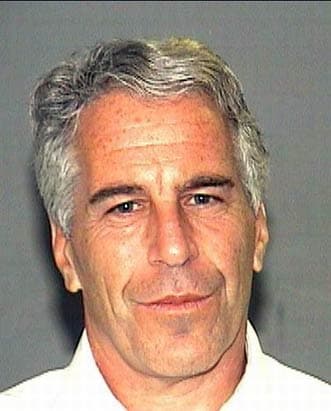
Jeffrey Epstein
PERSON31 w/ Donald·7 w/ Beltway
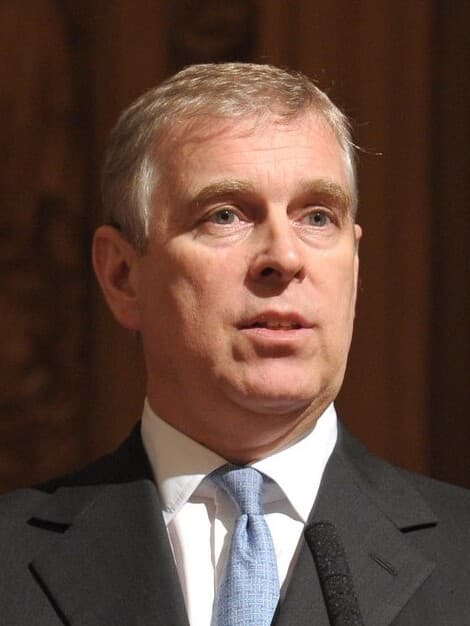
Prince Andrew
PERSON24 w/ Donald·8 w/ Beltway
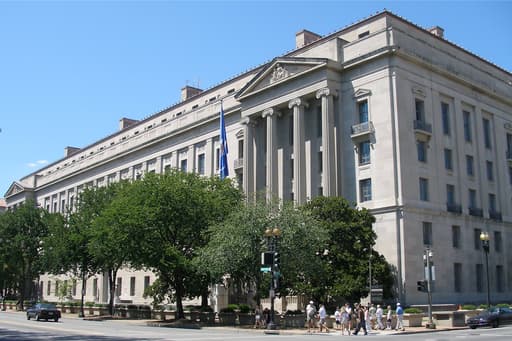
Department of Justice
ORGANIZATION28 w/ Donald·4 w/ Beltway
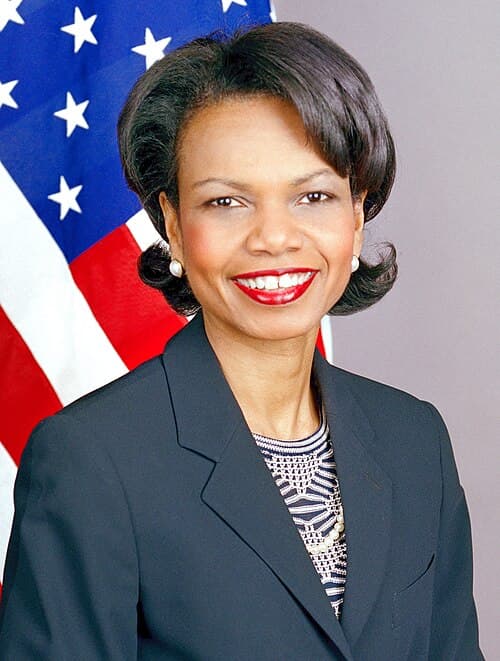
Condoleezza Rice
PERSON26 w/ Donald·4 w/ Beltway
Prince Charles
PERSON24 w/ Donald·5 w/ Beltway
Eric Trump
PERSON22 w/ Donald·5 w/ Beltway
Joe Biden
PERSON21 w/ Donald·5 w/ Beltway
Stephen Hawking
PERSON22 w/ Donald·3 w/ Beltway
Marc Rich
PERSON18 w/ Donald·7 w/ Beltway
Saddam Hussein
PERSON20 w/ Donald·4 w/ Beltway
Julie K. Brown
PERSON17 w/ Donald·6 w/ Beltway
John F. Kennedy
PERSON21 w/ Donald·2 w/ Beltway
George Mitchell
PERSON18 w/ Donald·4 w/ Beltway
Ghislaine Maxwell
PERSON17 w/ Donald·5 w/ Beltway