Back to Network















5
Shared Docs
5
Same-Page
10 / 5
Mentions
Document Mentions (5 shared documents)
3 mentions1 same-page
Page ?Same page
ring Test. In October 1950, the British journal Mind published an essay by Alan M. Turing titled, "Computing Machinery and Intelligence," in which Turing proposed an operational definition for "intelligence" [2]. This definition would come to be called "the Turing Test." Turing himself called it "the
t different one in which the interrogator was to attempt to determine the gender of two contestants, one male the other female. Interesting because Turing was homosexual and perhaps accustomed to such an imitation game. But in the matter of intelligence, such an operational definition made some sense
y "Ws° • evaluations with Monte-Carlo rollouts. Our uitar-sha browsing g p loud, soft, complex, plain. Not a single track." ed coloring program AlphaGo integrates these components purpose-built software robots like those that play checkers, chess, backgammon, and Go. These are intended to show that
3 mentions1 same-page
Page ?Same page
at they tend to favor or ignore. Surely (ding!)?, any man who could beat a woman at being perceived to be a woman would be an intelligent agent. What Turing did not foresee is the power of deep-learning AI to acquire this wealth of information in an exploitable form without having to understand it. Turing
the CIRL framework, one can formulate and solve the off-switch problem—that is, the problem of how to prevent a robot from disabling its off-switch. (Turing may rest easier.) A robot that’s uncertain about human preferences actually benefits from being switched off, because it understands that the human w
o communicate with other humans, learn from them, instruct them, and motivate them in our own native language. If our robots will all be as opaque as AlphaGo, we won’t be able to hold a meaningful conversation with them, and that would be unfortunate. We will need to retrain them whenever we make a slight
3 mentions1 same-page
Page ?Same page
a topic absent from a typical computer-science education: the physical configuration of a 118 HOUSE_OVERSIGHT_016921 computation. Von Neumann and Turing posed their questions as theoretical studies, because it was beyond the technology of their day to realize them. But with the convergence of communic
ce in terms of feedback, exploring the cultural rather than engineering uptake of this idea. She begins with primary readings by Wiener, Shannon, and Turing and then pivots from the scientists and engineers to the work and ideas of artists, feminists, postmodern theorists. Her goal: to come up with a new
rs relied a great deal on intuition and a feel for position, so proficiency was thought to require a particularly human kind of intelligence. But the AlphaGo program produced by DeepMind, after being trained on thousands of high-level Go games played by humans and then millions of games with itself, was ab
Sponsored
3 mentions1 same-page
Page ?Same page
at they tend to favor or ignore. Surely (ding!)?, any man who could beat a woman at being perceived to be a woman would be an intelligent agent. What Turing did not foresee is the power of deep-learning AI to acquire this wealth of information in an exploitable form without having to understand it. Turing
the CIRL framework, one can formulate and solve the off-switch problem—that is, the problem of how to prevent a robot from disabling its off-switch. (Turing may rest easier.) A robot that’s uncertain about human preferences actually benefits from being switched off, because it understands that the human w
o communicate with other humans, learn from them, instruct them, and motivate them in our own native language. If our robots will all be as opaque as AlphaGo, we won’t be able to hold a meaningful conversation with them, and that would be unfortunate. We will need to retrain them whenever we make a slight
3 mentions1 same-page
Page ?Same page
a topic absent from a typical computer-science education: the physical configuration of a 118 HOUSE_OVERSIGHT_016338 computation. Von Neumann and Turing posed their questions as theoretical studies, because it was beyond the technology of their day to realize them. But with the convergence of communic
ce in terms of feedback, exploring the cultural rather than engineering uptake of this idea. She begins with primary readings by Wiener, Shannon, and Turing and then pivots from the scientists and engineers to the work and ideas of artists, feminists, postmodern theorists. Her goal: to come up with a new
rs relied a great deal on intuition and a feel for position, so proficiency was thought to require a particularly human kind of intelligence. But the AlphaGo program produced by DeepMind, after being trained on thousands of high-level Go games played by humans and then millions of games with itself, was ab
Sponsored
Mutual Connections (690)
Entities connected to both Turing and AlphaGo
Jeffrey Epstein
PERSON44 w/ Turing·5 w/ AlphaGo
Stephen Hawking
PERSON29 w/ Turing·6 w/ AlphaGo
Alan Dershowitz
PERSON27 w/ Turing·5 w/ AlphaGo
Samantha Power
PERSON19 w/ Turing·5 w/ AlphaGo
Earth
LOCATION18 w/ Turing·4 w/ AlphaGo
George W. Bush
PERSON18 w/ Turing·4 w/ AlphaGo
Marvin Minsky
PERSON18 w/ Turing·4 w/ AlphaGo
Harvey Weinstein
PERSON17 w/ Turing·4 w/ AlphaGo
Seth Lloyd
PERSON18 w/ Turing·2 w/ AlphaGo
Wilbur Ross
PERSON16 w/ Turing·4 w/ AlphaGo
Marc Rich
PERSON16 w/ Turing·4 w/ AlphaGo
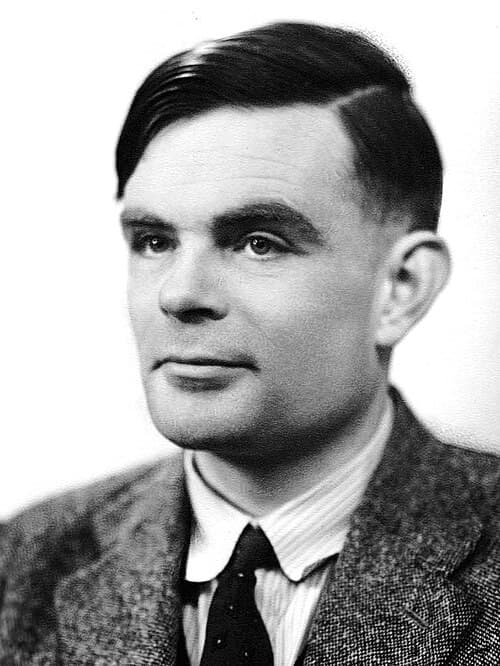
Alan Turing
PERSON17 w/ Turing·2 w/ AlphaGo
Bill Gates
PERSON15 w/ Turing·4 w/ AlphaGo
Robert Gates
PERSON14 w/ Turing·5 w/ AlphaGo
Elon Musk
PERSON13 w/ Turing·5 w/ AlphaGo
John Brockman
PERSON13 w/ Turing·5 w/ AlphaGo
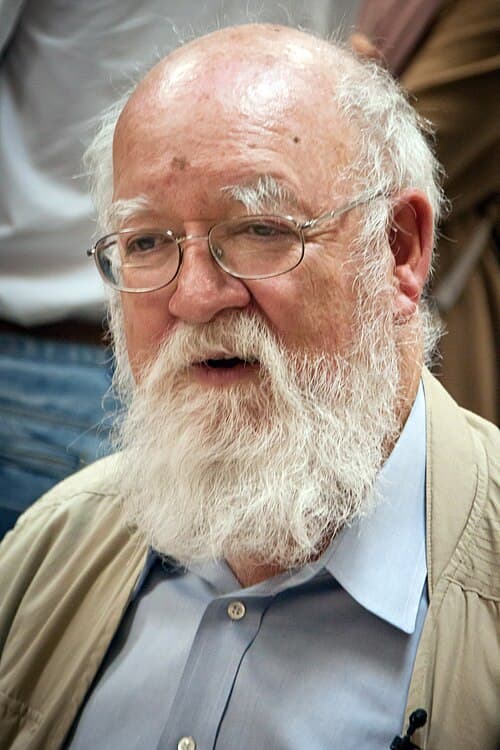
Daniel Dennett
PERSON14 w/ Turing·4 w/ AlphaGo
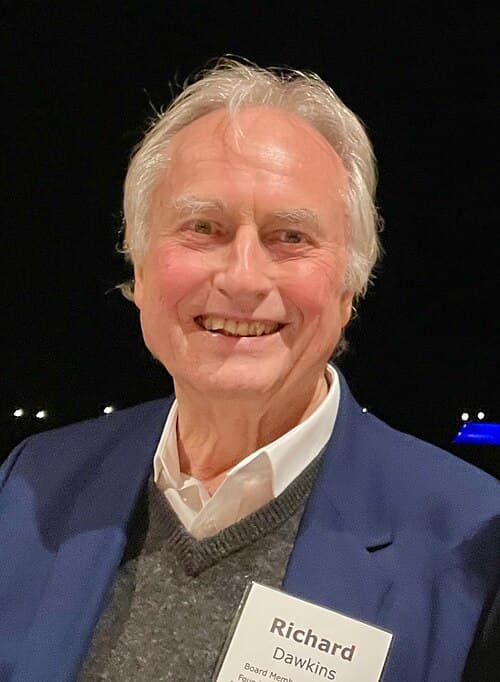
Richard Dawkins
PERSON15 w/ Turing·2 w/ AlphaGo
Danny Hillis
PERSON12 w/ Turing·5 w/ AlphaGo
Prince Andrew
PERSON13 w/ Turing·4 w/ AlphaGo