Back to Network















5
Shared Docs
5
Same-Page
9 / 5
Mentions
Document Mentions (5 shared documents)
3 mentions1 same-page
Page ?Same page
ring Test. In October 1950, the British journal Mind published an essay by Alan M. Turing titled, "Computing Machinery and Intelligence," in which Turing proposed an operational definition for "intelligence" [2]. This definition would come to be called "the Turing Test." Turing himself called it "the
t different one in which the interrogator was to attempt to determine the gender of two contestants, one male the other female. Interesting because Turing was homosexual and perhaps accustomed to such an imitation game. But in the matter of intelligence, such an operational definition made some sense
/www.theverge.com/2016/3/13/11184328/alphago-deep- mind-go-match-4-result (221 The Martian (2015 movie). http://www.imdb.comititlei U36593881 (231 John Searle. Minds, Brains, and Programs, Behavioral and Brain Sciences. 1980. EFTA_R1_02074950 EFTA02702519 Appendix deep in the dark— the power of snow
3 mentions1 same-page
Page ?Same page
abbage — but he was the first to fully understand its power. When we talk about computers today we mean machines, but it is worth noting computers in Turing’s time were more often humans using pencil and paper. The mechanical computers before Turing were elementary at best. Rudimentary calculating machi
not Turing complete and his Analytical Engine has never been built. 19" Century Calculators HOUSE_OVERSIGHT_015706 Mind over Computer 17 In 1935, Turing was made a Fellow of King’s College, Cambridge, and became interested in whether mathematical proofs could be found automatically. He wanted to know
nicating with a Chinese speaker. The analogy to a computer is clear. The book is software and the man blindly following instructions is the hardware. John Searle, who devised the thought experiment uses it to show computers can never understand because there is no place in a mechanistic system for understandin
3 mentions1 same-page
Page ?Same page
at they tend to favor or ignore. Surely (ding!)?, any man who could beat a woman at being perceived to be a woman would be an intelligent agent. What Turing did not foresee is the power of deep-learning AI to acquire this wealth of information in an exploitable form without having to understand it. Turing
the CIRL framework, one can formulate and solve the off-switch problem—that is, the problem of how to prevent a robot from disabling its off-switch. (Turing may rest easier.) A robot that’s uncertain about human preferences actually benefits from being switched off, because it understands that the human w
the stream of consciousness in the massively parallel cerebral cortex. That uncompromising computationalism has been opposed by philosophers such as John Searle, David Chalmers, and the late Jerry Fodor, who have protested that the most important aspects of consciousness—intentionality and subjective qualia—c
Sponsored
3 mentions1 same-page
Page ?Same page
at they tend to favor or ignore. Surely (ding!)?, any man who could beat a woman at being perceived to be a woman would be an intelligent agent. What Turing did not foresee is the power of deep-learning AI to acquire this wealth of information in an exploitable form without having to understand it. Turing
the CIRL framework, one can formulate and solve the off-switch problem—that is, the problem of how to prevent a robot from disabling its off-switch. (Turing may rest easier.) A robot that’s uncertain about human preferences actually benefits from being switched off, because it understands that the human w
the stream of consciousness in the massively parallel cerebral cortex. That uncompromising computationalism has been opposed by philosophers such as John Searle, David Chalmers, and the late Jerry Fodor, who have protested that the most important aspects of consciousness—intentionality and subjective qualia—c
2 mentions1 same-page
Page ?Same page
n humans are generally intelligent, because their basic operations encompass Turing complete computation, and they can externalize their results in Turing complete languages. Given enough time and resources, it seems inevitable that we will model the function of our minds as well, and universal artifi
and its computational generalizations, we cannot possibly find a way out. However, there is a very strong intuition, which motivates Roger Penrose, John Searle, and perhaps even Noam Chomsky, that there must be some kind of metacomputational operator, something that is more than computation and hypercomput
Sponsored
Mutual Connections (437)
Entities connected to both Turing and John Searle
Jeffrey Epstein
PERSON44 w/ Turing·7 w/ John
Stephen Hawking
PERSON29 w/ Turing·5 w/ John
Alan Dershowitz
PERSON27 w/ Turing·5 w/ John
Samantha Power
PERSON19 w/ Turing·4 w/ John
Marvin Minsky
PERSON18 w/ Turing·3 w/ John
George W. Bush
PERSON18 w/ Turing·3 w/ John
Earth
LOCATION18 w/ Turing·3 w/ John
Seth Lloyd
PERSON18 w/ Turing·3 w/ John
Harvey Weinstein
PERSON17 w/ Turing·3 w/ John
Penrose
PERSON17 w/ Turing·3 w/ John
Marc Rich
PERSON16 w/ Turing·4 w/ John
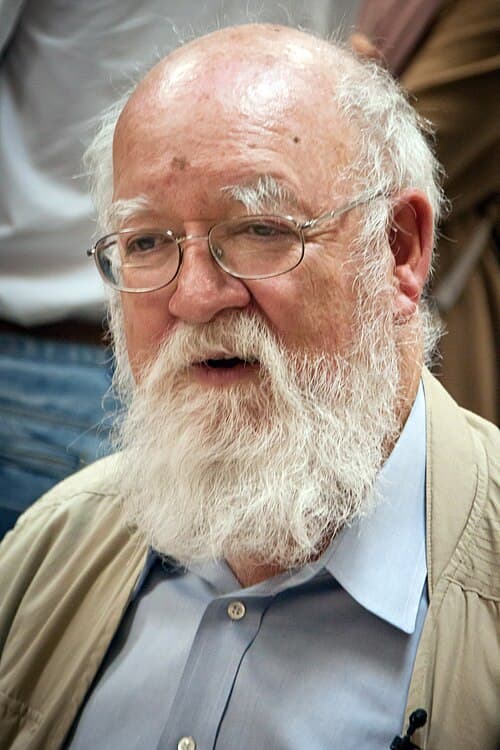
Daniel Dennett
PERSON14 w/ Turing·4 w/ John
Wilbur Ross
PERSON16 w/ Turing·2 w/ John
Prince Charles
PERSON15 w/ Turing·3 w/ John
Crick
PERSON15 w/ Turing·2 w/ John
Michael Douglas
PERSON13 w/ Turing·4 w/ John
Robert Gates
PERSON14 w/ Turing·3 w/ John
Prince Andrew
PERSON13 w/ Turing·4 w/ John
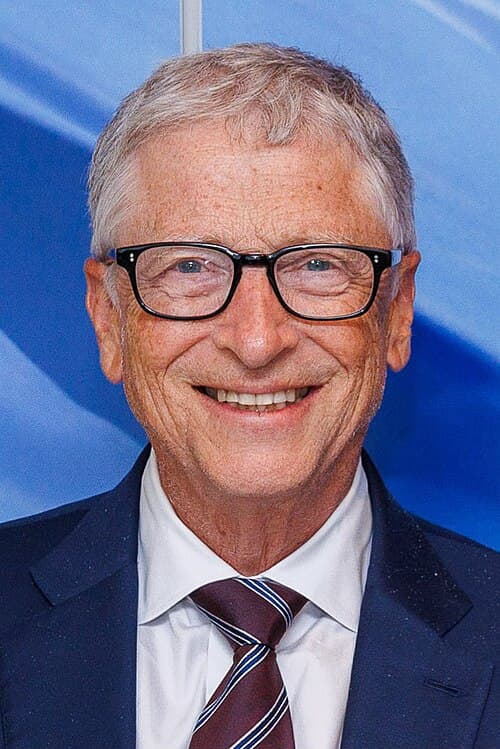
Bill Gates
PERSON15 w/ Turing·2 w/ John
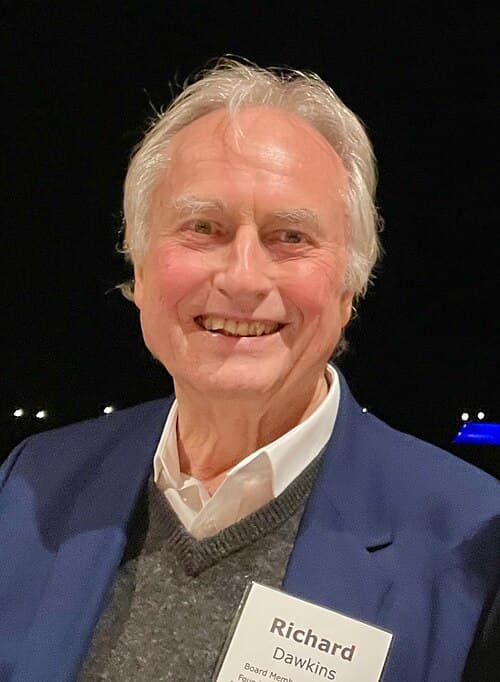
Richard Dawkins
PERSON15 w/ Turing·2 w/ John