Back to Network





4
Shared Docs
4
Same-Page
4 / 6
Mentions
Document Mentions (4 shared documents)
3 mentions1 same-page
Page ?Same page
the same Atom from different perspectives may be grouped into CompositeTruthValue objects. • Universal Intelligence: A technical term introduced by Shane Legg and Marcus Hutter, describing (roughly speaking) the average capability of a system to carry out computable goals in computable environments, where
vironment, without requiring anywhere near a complete simulation of realistic physics. EFTA00624075 300 16 AC1 Preschool Fig. 16.1: Part 1 of a Piagetan conservation of volume experiment: a child observes that two glasses obviously have the same amount of milk in them, and then sees the content of on
, etc. And, as typical, not necessarily representative examples of tasks psychologists use to mea- sure cognitive development (drawn mainly from the Piagetan tradition, without implying any assertion that this is the only tradition worth pursuing), consider the following: 1. Which row has more circles- A
3 mentions1 same-page
Page ?Same page
the same Atom from different perspectives may be grouped into CompositeTruthValue objects. e Universal Intelligence: A technical term introduced by Shane Legg and Marcus Hutter, describing (roughly speaking) the average capability of a system to carry out computable goals in computable environments, where g
, etc. And, as typical, not necessarily representative examples of tasks psychologists use to mea- sure cognitive development (drawn mainly from the Piagetan tradition, without implying any assertion that this is the only tradition worth pursuing), consider the following: 1. Which row has more circles- A
nt, without requiring anywhere near a complete simulation of realistic physics. HOUSE_OVERSIGHT_013215 300 16 AGI Preschool Fig. 16.1: Part 1 of a Piagetan conservation of volume experiment: a child observes that two glasses obviously have the same amount of milk in them, and then sees the content of one
2 mentions1 same-page
Page ?Same page
mathematical rigor. Perhaps the most carefully- wrought formalization of intelligence so far is the theory of "universal intelligence" presented by Shane Legg and Marcus Hater in ILI I0714, which draws on ideas from algorithmic information theory. Universal intelligence captures a certain aspect of the "i
led "cognitive complete- ness" is necessary and sufficient for efficient general intelligence at the level of an inteligent adult human (e.g. at the Piagetan formal level IP ia531). Of course, the above considerations are very, far from a rigorous mathematical proof (or even precise formulation) of this
Sponsored
2 mentions1 same-page
Page ?Same page
f mathematical rigor. Perhaps the most carefully- wrought formalization of intelligence so far is the theory of “universal intelligence” presented by Shane Legg and Marcus Hutter in [LI07b], which draws on ideas from algorithmic information theory. Universal intelligence captures a certain aspect of the “int
lled “cognitive complete- ness” is necessary and sufficient for efficient general intelligence at the level of an inteligent adult human (e.g. at the Piagetan formal level [Pia53]). Of course, the above considerations are very far from a rigorous mathematical proof (or even precise formulation) of this hyp
Sponsored
Mutual Connections (658)
Entities connected to both Shane Legg and Piagetan
OpenCog
ORGANIZATION8 w/ Shane·6 w/ Piagetan
CogPrime
ORGANIZATION7 w/ Shane·6 w/ Piagetan
Marc Rich
PERSON7 w/ Shane·6 w/ Piagetan
George W. Bush
PERSON7 w/ Shane·6 w/ Piagetan
Marvin Minsky
PERSON7 w/ Shane·4 w/ Piagetan
DeSTIN
ORGANIZATION7 w/ Shane·4 w/ Piagetan
ConceptNodes
ORGANIZATION5 w/ Shane·6 w/ Piagetan
Michael Douglas
PERSON7 w/ Shane·4 w/ Piagetan
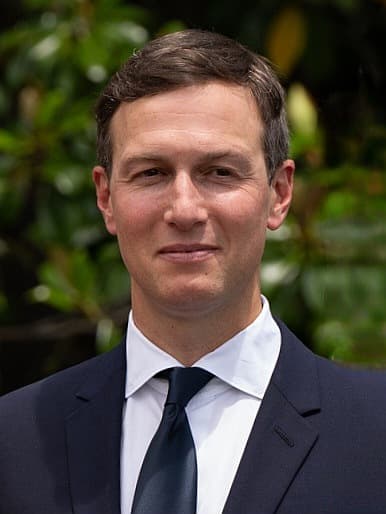
Jared Kushner
PERSON6 w/ Shane·4 w/ Piagetan
Stephen Hawking
PERSON5 w/ Shane·4 w/ Piagetan
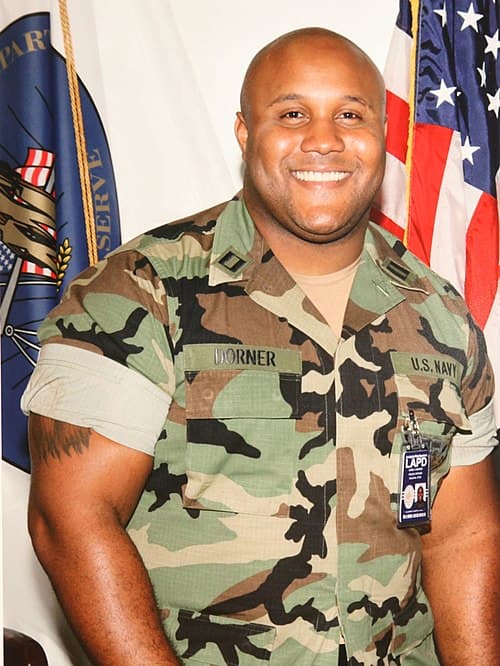
Dorner
ORGANIZATION5 w/ Shane·4 w/ Piagetan
the Procedure Repository
ORGANIZATION5 w/ Shane·4 w/ Piagetan
Hebbian Learning
ORGANIZATION5 w/ Shane·4 w/ Piagetan
MI
MindAgents
PERSON5 w/ Shane·4 w/ Piagetan
BH
Bill Hibbard
PERSON4 w/ Shane·4 w/ Piagetan
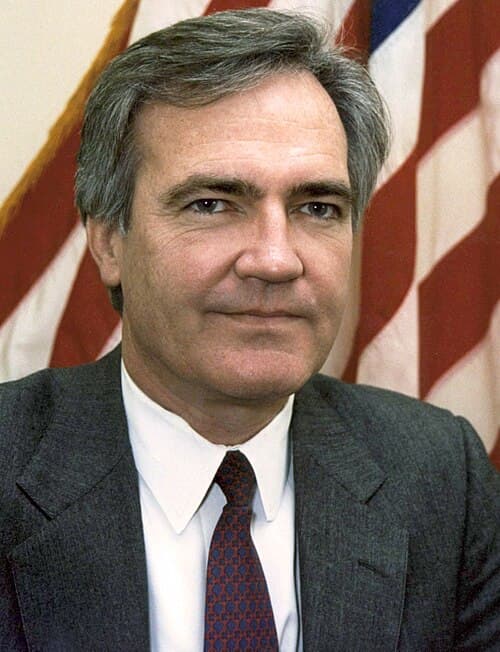
Vince Foster
PERSON4 w/ Shane·4 w/ Piagetan
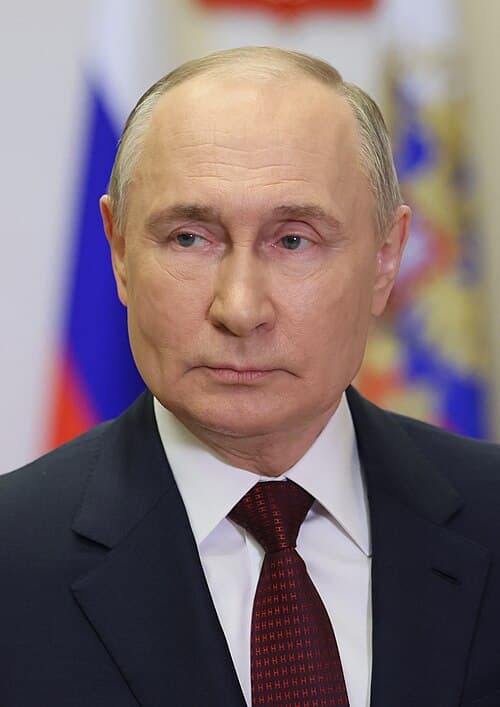
Vladimir Putin
PERSON4 w/ Shane·4 w/ Piagetan
Python
ORGANIZATION4 w/ Shane·4 w/ Piagetan
Joel Pitt
PERSON4 w/ Shane·4 w/ Piagetan
SB
Stephan Vladimir Bugaj
PERSON4 w/ Shane·4 w/ Piagetan