Back to Network




















8
Shared Docs
6
Same-Page
8 / 8
Mentions
Document Mentions (8 shared documents)
2 mentions1 same-page
Page ?Same page
al Security Staff's senior director for the central region, EFTA00712787 which includes the Middle East, Persian Gulf, Afghanistan, Pakistan, and South Asia. The bulk of Ross's career, however, has been dedicated to the Israeli-Palestinian peace process, and his work on this front remains highly controv
, Vice President Joe Biden, in 2009 and took up a post as senior director on the National Security Staff, with responsibilities for Iran, Iraq, and the Persian Gulf. Back in 2001, Talwar argued in Foreign Affairs, that the Bush administration should "abandon the containment strategy [toward Iran] it inherited a
2 mentions1 same-page
Page ?Same page
cedes cases "are an imperfect measure, and uneven records and testing mask the scope of outbreaks, especially in parts of Africa, Latin America and South Asia," but "fewer patients are showing up at hospitals in many countries with the highest rates of infection, giving experts confidence that the decline
iscusses 'opportunities for U.S.-EU cooperation under a new U.S. administration'; /1:00 AM • Dem Sen. Chris Murphy discusses U.S. foreign policy in the Persian Gulf (virtual) - Council on Foreign Relations hosts Democratic Sen. Chris Murphy, who discusses s the future of U.S. EFTA00148075 foreign policy in th
2 mentions1 same-page
Page ?Same page
inked to Dawood Ibrahim, the reputed kingpin of the Mumbai underworld "D- company," who is believed to have links with jihadist groups operating in South Asia and the Persian Gulf. However, Ibrahim has never targeted Mumbai's merchants, and he has been outside of Mumbai for years. The Indian Mujahideen, a
d Ibrahim, the reputed kingpin of the Mumbai underworld "D- company," who is believed to have links with jihadist groups operating in South Asia and the Persian Gulf. However, Ibrahim has never targeted Mumbai's merchants, and he has been outside of Mumbai for years. The Indian Mujahideen, a group that has never
Sponsored
2 mentions1 same-page
Page ?Same page
of the country, its EFTA_R1_00441193 EFTA01964445 vulnerabilities and the determination of a number of groups emanating from the Middle East and South Asia to inflict catastrophic damage on the United States. Reducing U.S. dependence on Arab hydrocarbons: B In 2011, the U.S. imported 45% of the liquid
Think the United States is fairing badly in the Middle East? Convinced that our policy is chaotic, confused and contradictory, from North Africa to the Persian Gulf? EFTA_R1_00441192 EFTA01964444 Think again. It may not be politically correct to admit it, but when it comes to furthering America's core nation
2 mentions1 same-page
Page ?Same page
pprochement between Iran and the U.S. will have to acknowledge Iran's centrality in its region -- just as the U.S. eventually recognized India's in South Asia after a series of futile alliances with Pakistan. But the U.S. has never been further away from this possibility, as Republican candidates line up
d Nations that declared EFTA_R1_00225757 EFTA01840701 Zionism to be a form of racism. The shah even came to oppose the U.S. military presence in the Persian Gulf. Neighborhood Hegemony Iran in the last years of the shah manifested a striving for local hegemony that transcended the country's strongest allian
2 mentions1 same-page
Page ?Same page
, a former State Department and National Security Council official, was a special assistant to President Obama for the Middle East, Afghanistan and South Asia from 2009 to 2011. Ankle 2. Los Angeles Times On Iran, a stark choice Benny Morris February 14, 2012 -- Most people in the Arab world, accordin
Iran will lose its only state ally in the Arab world and its conduit for arming the militant group Hezbollah in Lebanon. Iran's Arab neighbors in the Persian Gulf, and even the United Nations General Assembly, no longer hesitate to criticize Tehran. Gone is the fear of Iranian intimidation, as the Saudis dem
Sponsored
Page HOUSE_OVERSIGHT_029715
ces south to invade Kuwait. So if it's conventional wisdom that the United States will not, or should not, intervene militarily in the Middle East or South Asia after it draws down forces in Iraq and Afghanistan, it's also likely dead wrong. What is true, however, is that political and military trajectories i
Page: HOUSE_OVERSIGHT_029715 →Page HOUSE_OVERSIGHT_029720
on will make for nasty forced entries into HOUSE_OVERSIGHT_029719 --- PAGE BREAK --- narrow maritime confines like the Suez Canal, the Red Sea, and the Persian Gulf. But the likely proliferation of nuclear weapons - and ballistic missile delivery systems - will pose even more formidable challenges to conventional
Page: HOUSE_OVERSIGHT_029720 →Page HOUSE_OVERSIGHT_029802
ces south to invade Kuwait. So if it's conventional wisdom that the United States will not, or should not, intervene militarily in the Middle East or South Asia after it draws down forces in Iraq and Afghanistan, it's also likely dead wrong. What is true, however, is that political and military trajectories i
Page: HOUSE_OVERSIGHT_029802 →Page HOUSE_OVERSIGHT_029807
on will make for nasty forced entries into HOUSE_OVERSIGHT_029806 --- PAGE BREAK --- narrow maritime confines like the Suez Canal, the Red Sea, and the Persian Gulf. But the likely proliferation of nuclear weapons - and ballistic missile delivery systems - will pose even more formidable challenges to conventional
Page: HOUSE_OVERSIGHT_029807 →Sponsored
Mutual Connections (727)
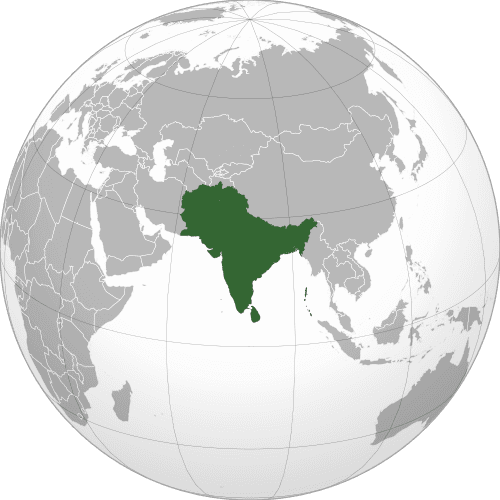
Entities connected to both South Asia and the Persian Gulf
Barack Obama
PERSON32 w/ South·72 w/ the
United States
LOCATION34 w/ South·59 w/ the
Tehran
LOCATION27 w/ South·59 w/ the
George W. Bush
PERSON26 w/ South·54 w/ the
Lebanon
LOCATION22 w/ South·50 w/ the
Middle East
LOCATION34 w/ South·35 w/ the
Bashar al-Assad
PERSON21 w/ South·48 w/ the
Bill Clinton
PERSON19 w/ South·46 w/ the
Jeffrey Epstein
PERSON24 w/ South·40 w/ the
Benjamin Netanyahu
PERSON18 w/ South·43 w/ the
Marc Rich
PERSON24 w/ South·34 w/ the
Yemen
LOCATION18 w/ South·36 w/ the
Terje Rod-Larsen
PERSON24 w/ South·29 w/ the
Hosni Mubarak
PERSON16 w/ South·37 w/ the
Saddam Hussein
PERSON16 w/ South·37 w/ the
Donald Trump
PERSON21 w/ South·31 w/ the
Damascus
LOCATION17 w/ South·33 w/ the
Tunisia
LOCATION20 w/ South·29 w/ the
Cairo
LOCATION22 w/ South·26 w/ the
Hillary Clinton
PERSON13 w/ South·34 w/ the