Back to Network

















4
Shared Docs
4
Same-Page
7 / 4
Mentions
Document Mentions (4 shared documents)
3 mentions1 same-page
Page ?Same page
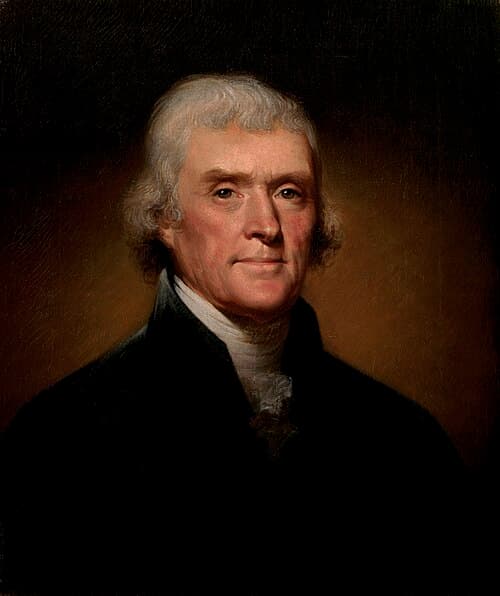
quality What did the thirty-three-year-old Thomas Jefferson mean in 1776 when he wrote, “We hold these Truths
n be more impartial, calm, and consistent and less abusive or mischievous than people in such positions. Equality What did the thirty-three-year-old Thomas Jefferson mean in 1776 when he wrote, “We hold these Truths to be self-evident, that all Men are created equal, that they are endowed 169 HOUSE_OVERSIGHT_016
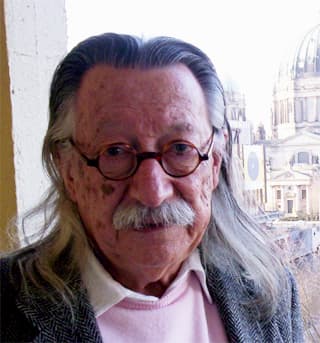
e; the Fair Access to Science and Technology Research Act (FASTR); and the Open Humans Foundation. In his 1976 book Computer Power and Human Reason, Joseph Weizenbaum argued that machines should not replace Homo in situations requiring respect, dignity, or care, while others (author Pamela McCorduck and computer sc
3 mentions1 same-page
Page ?Same page
eper about the position of the dominant national power of the era? About the nature of our age? 3. A few days before Christmas of December of 1787, Thomas Jefferson sat down in Paris to write a letter to James Madison.*? Madison was on the other side of the Atlantic, in Philadelphia, and struggling with refinemen
and summer just passed. The two men were frequent correspondents. They wrote to each other with an easy familiarity, revolutionary to revolutionary. Jefferson was then 44, and had settled hungrily into his role as the American minister in France, “violently smitten,” as he wrote, by the charms of The Contin
lding - this is fine. Wonderful even. But it’s also not enough. “It happens that programming is a relatively easy craft to learn,” the MIT scientist Joseph Weizenbaum observed in the 1970s, as computers emerged into academic life. “Almost anyone with a reasonably ordered mind can become a good programmer with just
3 mentions1 same-page
Page ?Same page
quality What did the thirty-three-year-old Thomas Jefferson mean in 1776 when he wrote, “We hold these Truths
n be more impartial, calm, and consistent and less abusive or mischievous than people in such positions. Equality What did the thirty-three-year-old Thomas Jefferson mean in 1776 when he wrote, “We hold these Truths to be self-evident, that all Men are created equal, that they are endowed 169 HOUSE_OVERSIGHT_016
e; the Fair Access to Science and Technology Research Act (FASTR); and the Open Humans Foundation. In his 1976 book Computer Power and Human Reason, Joseph Weizenbaum argued that machines should not replace Homo in situations requiring respect, dignity, or care, while others (author Pamela McCorduck and computer sc
Sponsored
2 mentions1 same-page
Page ?Same page
to be that history was made in public: Big visible wars and social shifts and revolutions. Pericles in the Athenian square; the churning protests of Jefferson’s Paris or the massing of armies. Now, however, subtle manipulations of technology, invisible to most of us and maybe even accidental, maybe weird, w
government (or our enemies) behave. We are, ina sense, being engineered by the damn opaque systems we are using. In 1965 the MIT computer scientist Joseph Weizenbaum found himself, somewhat unexpectedly, considering this same problem. 175 Weizenbaum had written a primitive computer program to perform what is now k
Sponsored
Mutual Connections (535)
Entities connected to both Thomas Jefferson and Joseph Weizenbaum
Jeffrey Epstein
PERSON297 w/ Thomas·2 w/ Joseph
George W. Bush
PERSON158 w/ Thomas·6 w/ Joseph
Julie K. Brown
PERSON139 w/ Thomas·5 w/ Joseph
Prince Andrew
PERSON137 w/ Thomas·7 w/ Joseph
Marc Rich
PERSON127 w/ Thomas·10 w/ Joseph
Donald Trump
PERSON121 w/ Thomas·2 w/ Joseph
Department of Justice
ORGANIZATION115 w/ Thomas·3 w/ Joseph
LB
Leon Black
PERSON107 w/ Thomas·7 w/ Joseph
Virginia Giuffre
PERSON109 w/ Thomas·3 w/ Joseph
Stephen Hawking
PERSON95 w/ Thomas·10 w/ Joseph
Prince Charles
PERSON97 w/ Thomas·6 w/ Joseph
Ghislaine Maxwell
PERSON98 w/ Thomas·4 w/ Joseph
Samantha Power
PERSON92 w/ Thomas·10 w/ Joseph
Joe Biden
PERSON92 w/ Thomas·4 w/ Joseph
Barack Obama
PERSON87 w/ Thomas·5 w/ Joseph
John F. Kennedy
PERSON87 w/ Thomas·3 w/ Joseph
Michael Jackson
PERSON80 w/ Thomas·2 w/ Joseph
Eric Trump
PERSON70 w/ Thomas·5 w/ Joseph
Alan Dershowitz
PERSON68 w/ Thomas·7 w/ Joseph
Oliver Stone
PERSON68 w/ Thomas·4 w/ Joseph