Back to People & Entities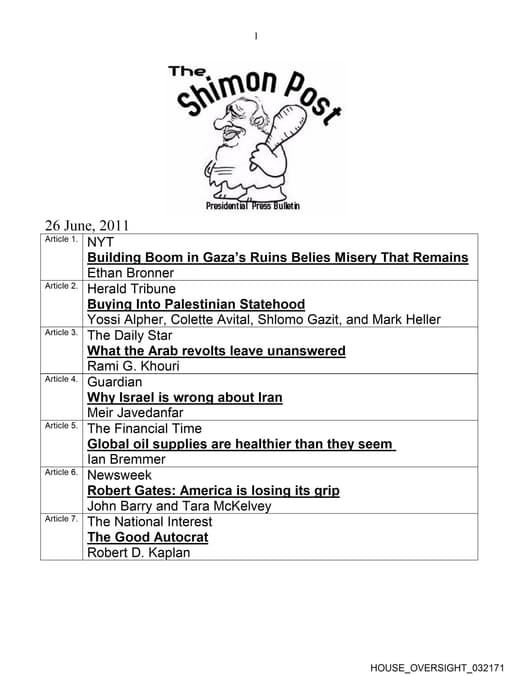



Document Mentions (8)
26 June.doc
1 mentionHOUSE_OVERSIGHT_032171 - HOUSE_OVERSIGHT_032203
Jun 26, 2011Source: House Oversight Committee
in the Middle East, monarchy has found a way over the decades and centuries to engender a political legitimacy of its own, allowing leaders like King Mohammed VI in Morocco, King Abdullah in Jordan and Sultan Qaboos bin Said in Oman to grant their subjects a wide berth of individual liberties without fear of b
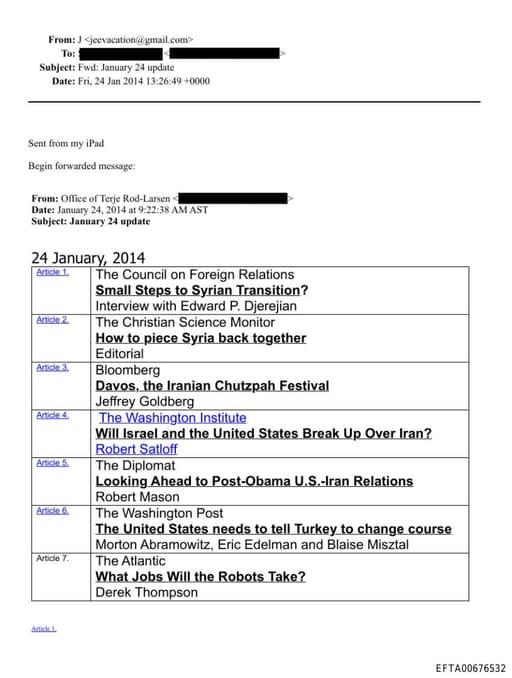
Page: HOUSE_OVERSIGHT_032196 →EFTA00676532.pdf
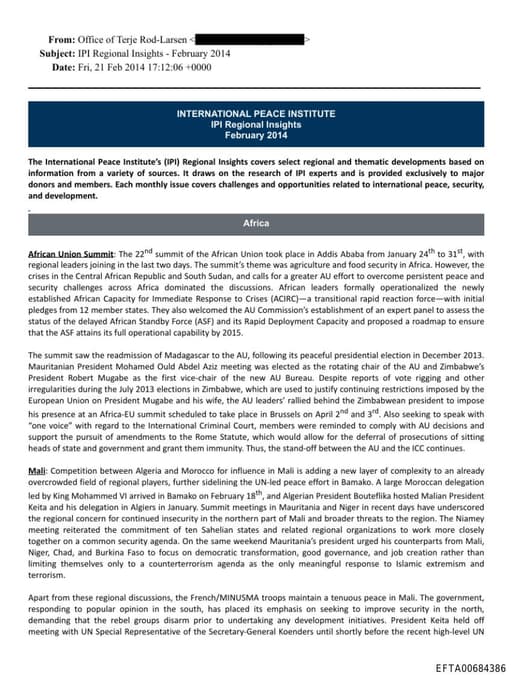
1 mentionEFTA00676532
his words never matched his deeds. Many observers thought he would get out ahead of the young Syrian peoples' call for reforms, akin to what King Mohammed VI of Morocco did. Instead, he listened to the ruling clan and confronted peaceful protestors with the armed might of the Syrian military and security
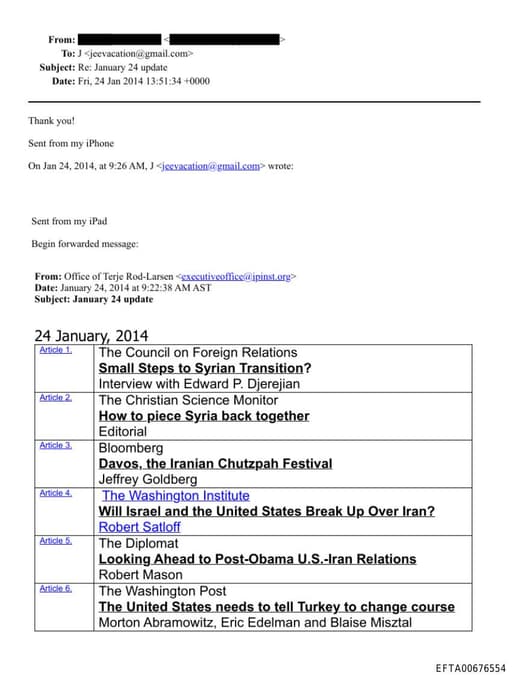
EFTA00676554.pdf
1 mentionEFTA00676554
his words never matched his deeds. Many observers thought he would get out ahead of the young Syrian peoples' call for reforms, akin to what King Mohammed VI of Morocco did. Instead, he listened to the ruling clan and confronted peaceful protestors with the armed might of the EFTA00676557 Syrian milita
Sponsored
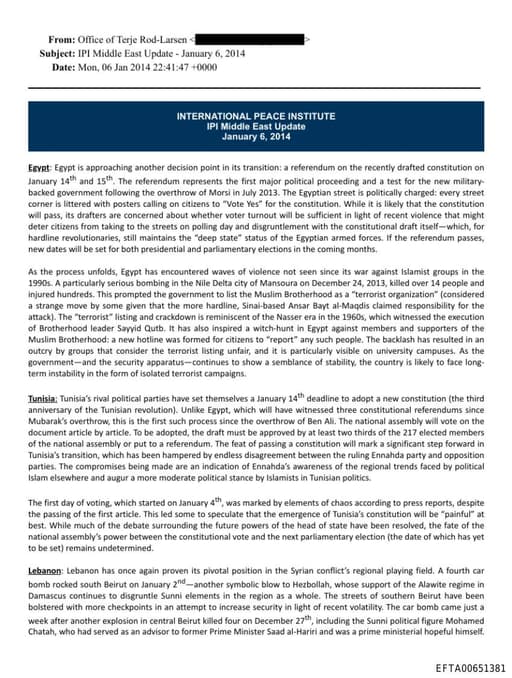
EFTA00651381.pdf
1 mentionEFTA00651381
ing nuclear-related sanctions in November 2011. Morocco and Qatar: Emir Tamim bin Hamad Al Thani paid a visit to Morocco and held meetings with King Mohammed VI and the elected government just before the new year. This visit brought together two of the Middle East's youngest leaders: Sheikh Tamim is in his
EFTA00684386.pdf
1 mentionEFTA00684386
to an already overcrowded field of regional players, further sidelining the UN-led peace effort in Bamako. A large Moroccan delegation led by King Mohammed VI arrived in Bamako on February le, and Algerian President Bouteflika hosted Malian President Keita and his delegation in Algiers in January. Summit m
EFTA00686798.pdf
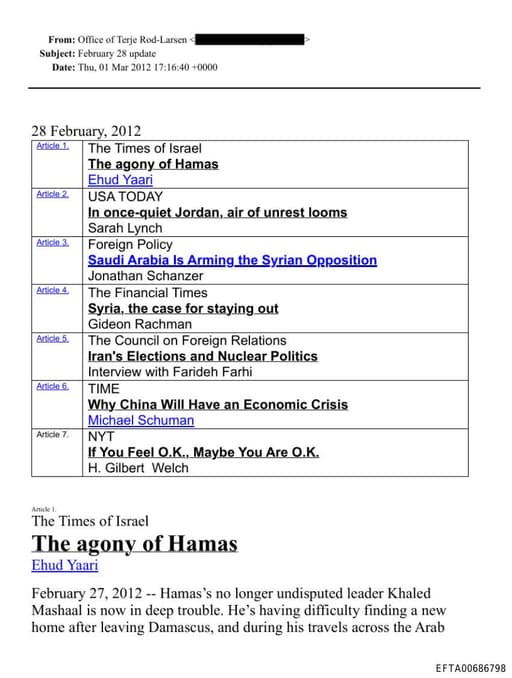
1 mentionEFTA00686798
what happened in Morocco as well," says Marina Ottaway of the Carnegie Endowment for International Peace about the North African nation whose King Mohammed VI retained control after implementing reforms last year. Analysts say the situation in Jordan is shakier than it seems. "In the short term, things a
Sponsored
EFTA02690064.pdf
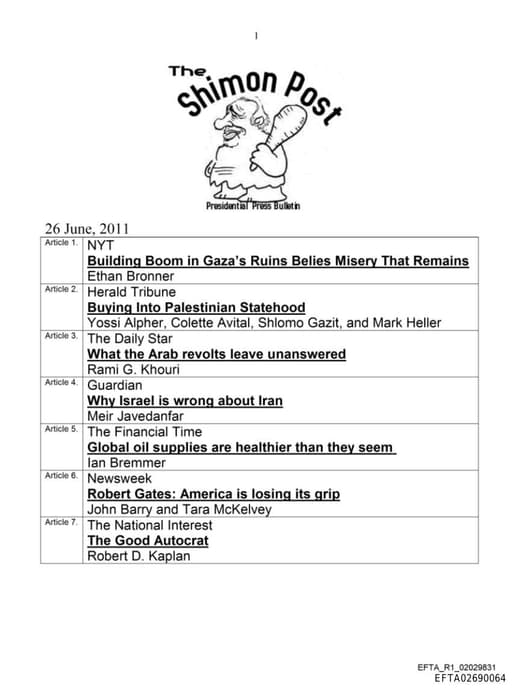
1 mentionEFTA02690064
the Middle East, monarchy has found a way over the decades and centuries to engender a political legitimacy of its own, allowing leaders like King Mohammed VI in Morocco, King Abdullah in Jordan and Sultan Qaboos bin Said in Oman to grant their subjects a wide berth of individual liberties without fear of
EFTA02691163.pdf
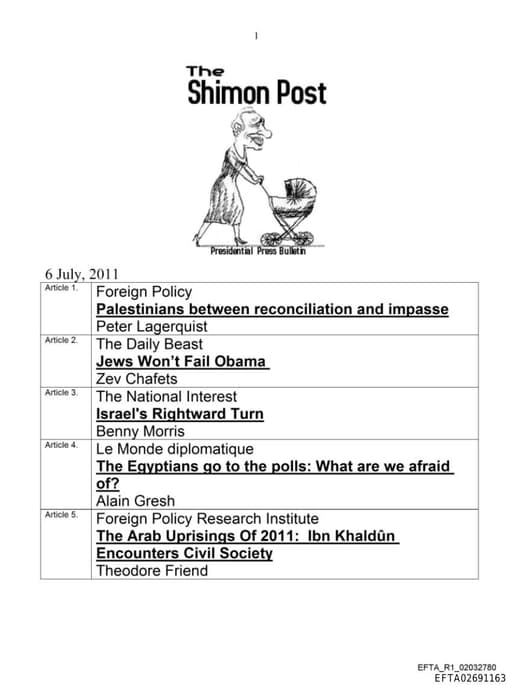
1 mentionEFTA02691163
cisive trend than piquancy as a defining moment in the endangered history of Arab royalties. The most effective monarchical coping comes from King Mohammed VI of Morocco, who from the beginning of his reign in 1999 has tried to anticipate the people's needs, liberalizing the family code and rights for wom
Sponsored
Connected Entities(20 of 189)
Morocco
LocationSovereign state in North Africa
8 docs8 co-mentions
Barack Obama
PersonPresident of the United States from 2009 to 2017
6 docs6 co-mentions
Yemen
LocationCountry in West Asia
6 docs6 co-mentions
Tehran
LocationCapital city of Iran
6 docs6 co-mentions
Bashar al-Assad
PersonPresident of Syria from 2000 to 2024
6 docs6 co-mentions
Tunisia
LocationCountry in North Africa
5 docs5 co-mentions
Lebanon
LocationCountry in West Asia
5 docs5 co-mentions
George W. Bush
PersonPresident of the United States from 2001 to 2009
5 docs5 co-mentions
Condoleezza Rice
PersonAmerican diplomat and political scientist (born 1954)
4 docs4 co-mentions
Cairo
LocationCapital city of Egypt
4 docs4 co-mentions
Jerusalem
LocationCity in the Middle East, holy to the three Abrahamic religions
4 docs4 co-mentions
Khamenei
PersonSurname reference in Epstein-related documents
4 docs4 co-mentions
Sinai
LocationPeninsula in the Middle East
4 docs4 co-mentions
Terje Rod-Larsen
PersonNorwegian diplomat
4 docs4 co-mentions
Bill Clinton
PersonPresident of the United States from 1993 to 2001 (born 1946)
4 docs4 co-mentions
Robert Gates
PersonCIA director, U.S. Secretary of Defense, and university president
4 docs4 co-mentions
Hosni Mubarak
PersonPresident of Egypt from 1981 to 2011
4 docs4 co-mentions
Hillary Clinton
PersonAmerican politician and diplomat (born 1947)
4 docs4 co-mentions
Marc Rich
PersonAmerican commodities trader (1934–2013)
4 docs4 co-mentions
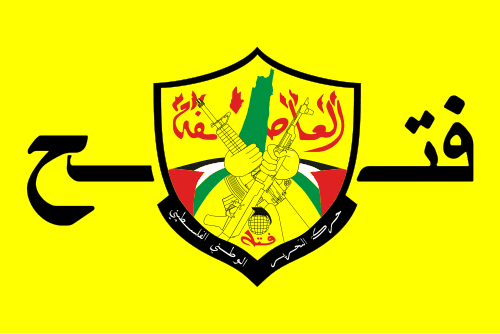
Fatah
OrganizationPalestinian nationalist political party
4 docs4 co-mentions