Back to People & Entities




Jerry Fodor
Person
21
Total Mentions
21
Documents
431
Connected Entities
American philosopher (1935–2017)
Document Mentions (20 of 21)
HOUSE_OVERSIGHT_030328 - HOUSE_OVERSIGHT_030329
1 mentionSource: House Oversight Committee
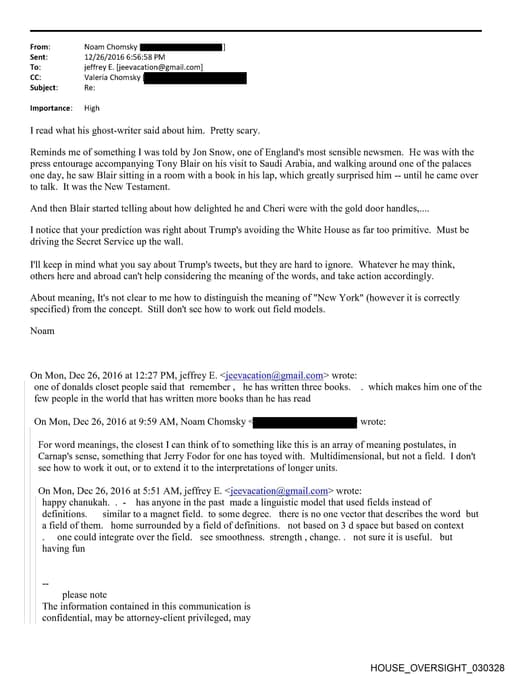
ky • wrote: For word meanings, the closest I can think of to something like this is an array of meaning postulates, in Carnap's sense, something that Jerry Fodor for one has toyed with. Multidimensional, but not a field. I don't see how to work it out, or to extend it to the interpretations of longer units. On
Page: HOUSE_OVERSIGHT_030328 →EFTA00849688.pdf
1 mentionEFTA00849688
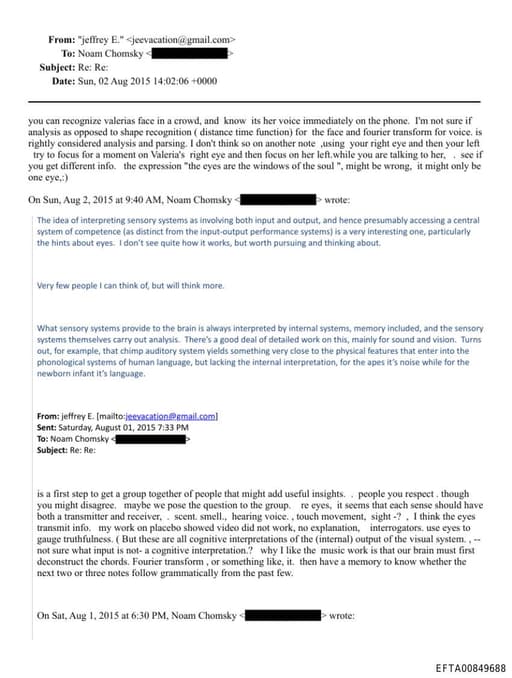
ssing system. The arguments against it seem to me very power. I'll attach a recent paper about it, a contribution to a volume of essays dedicated to Jerry Fodor and focusing on his conception of language as processing (input modules). His version is far more sophisticated than the signal processing approach
EFTA00849699.pdf
1 mentionEFTA00849699
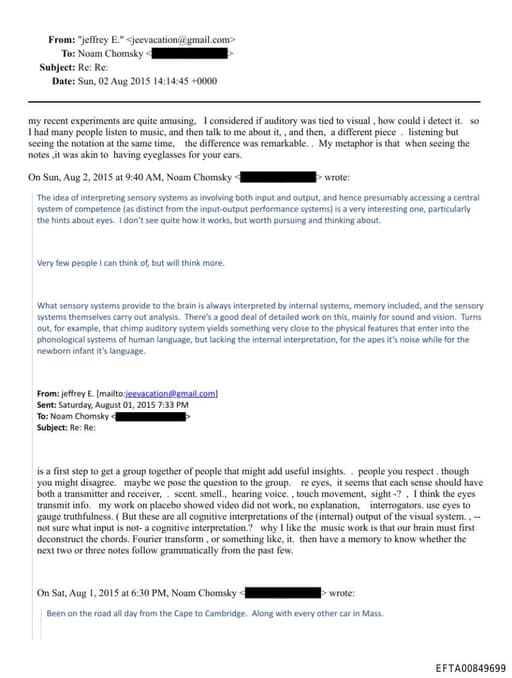
ssing system. The arguments against it seem to me very power. I'll attach a recent paper about it, a contribution to a volume of essays dedicated to Jerry Fodor and focusing on his conception of language as processing (input modules). His version is far more sophisticated than the signal processing approach
Sponsored
EFTA00849735.pdf
1 mentionEFTA00849735
ssing system. The arguments against it seem to me very power. I'll attach a recent paper about it, a contribution to a volume of essays dedicated to Jerry Fodor and focusing on his conception of language as processing (input modules). His version is far more sophisticated than the signal processing approach
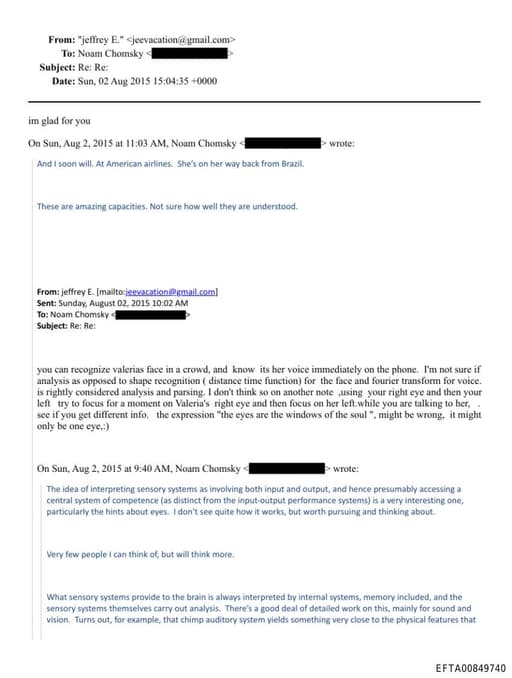
EFTA00849740.pdf
1 mentionEFTA00849740
ssing system. The arguments against it seem to me very power. I'll attach a recent paper about it, a contribution to a volume of essays dedicated to Jerry Fodor and focusing on his conception of language as processing (input modules). His version is far more sophisticated than the signal processing approach
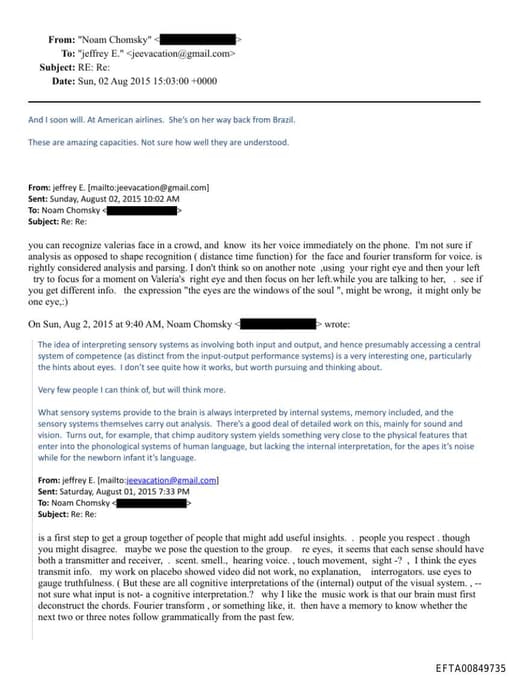
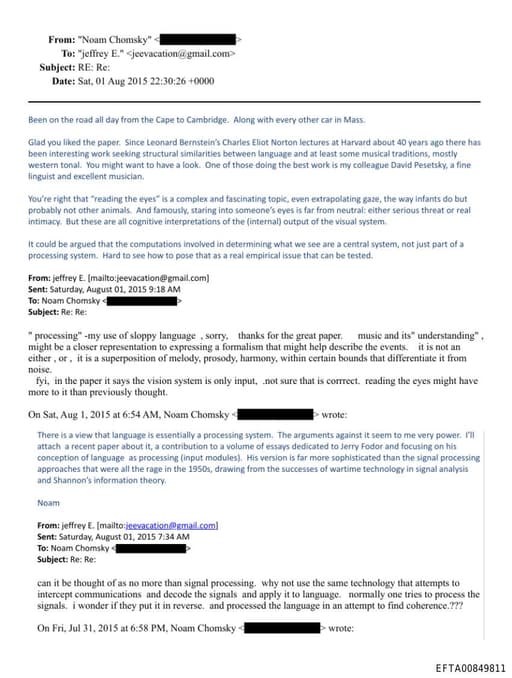
EFTA00849811.pdf
1 mentionEFTA00849811
ssing system. The arguments against it seem to me very power. I'll attach a recent paper about it, a contribution to a volume of essays dedicated to Jerry Fodor and focusing on his conception of language as processing (input modules). His version is far more sophisticated than the signal processing approach
Sponsored
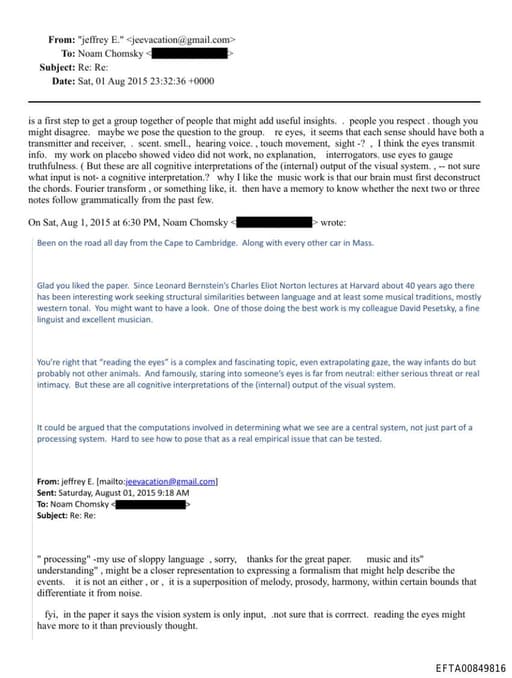
EFTA00849816.pdf
1 mentionEFTA00849816
ssing system. The arguments against it seem to me very power. I'll attach a recent paper about it, a contribution to a volume of essays dedicated to Jerry Fodor and focusing on his conception of language as processing (input modules). His version is far more sophisticated than the signal processing approach
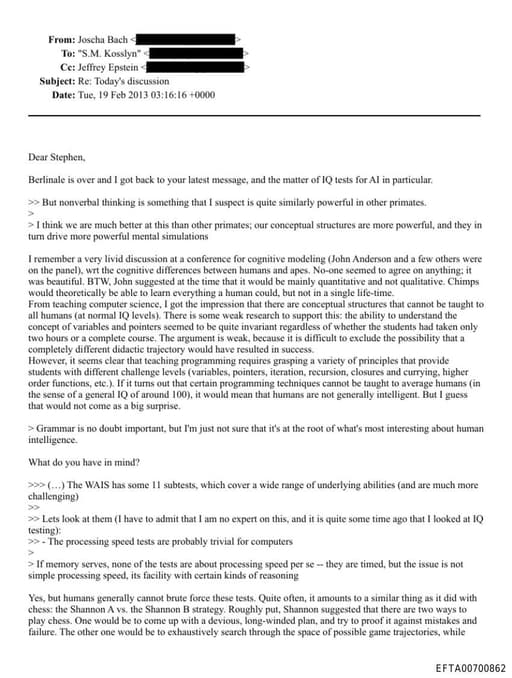
EFTA00700862.pdf
1 mentionEFTA00700862
tly represented. But apart from that bit, I think that Roger Schank had that one right, too, and it is where the classical linguists (and especially Jerry Fodor right up until today) went wrong: meaning is not outside of the representations, at the receiving end of some metaphysical arrow (or rather, if it
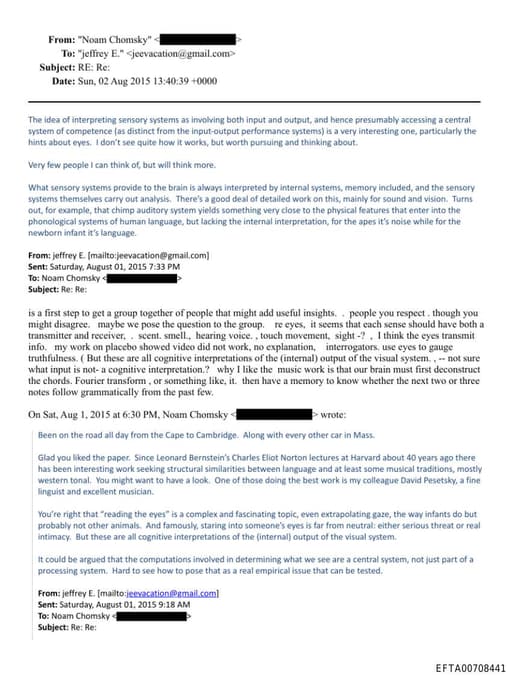
EFTA00708441.pdf
1 mentionEFTA00708441
ssing system. The arguments against it seem to me very power. I'll attach a recent paper about it, a contribution to a volume of essays dedicated to Jerry Fodor and focusing on his conception of language as processing (input modules). His version is far more sophisticated than the signal processing approach
Sponsored
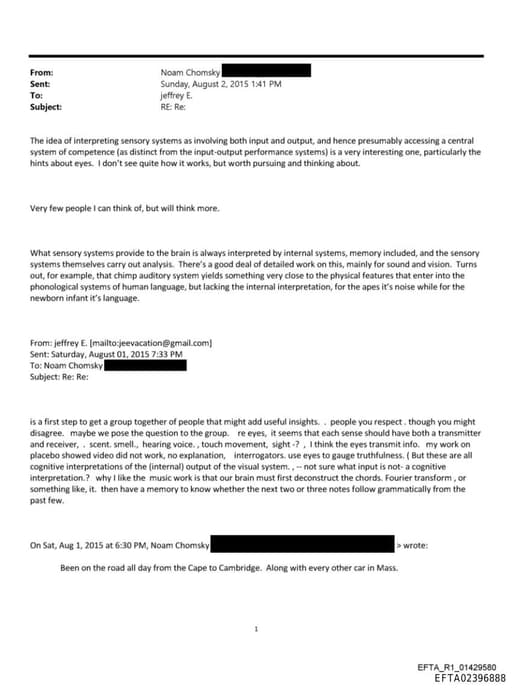
EFTA02396888.pdf
1 mentionEFTA02396888
ssing system. The arguments against it seem to me very power. I'll attach a recent paper about it, a contribution to a volume of essays dedicated to Jerry Fodor and focusing on his conception of language as processing (input modules). His version is far more sophisticated than the signal processing approach
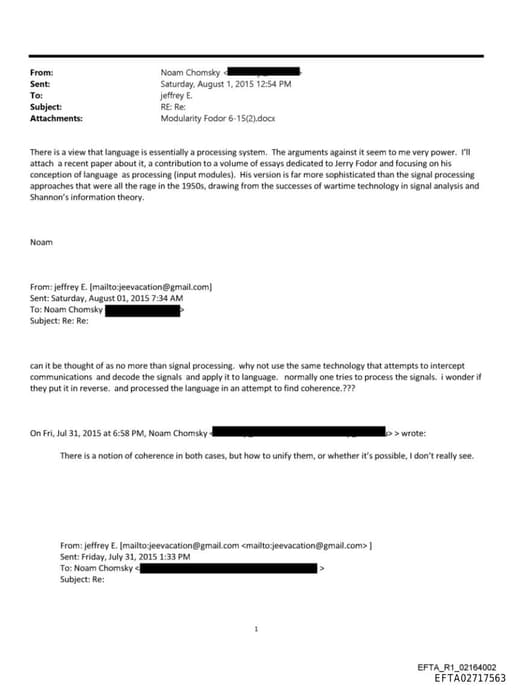
EFTA02717563.pdf
1 mentionEFTA02717563
ssing system. The arguments against it seem to me very power. I'll attach a recent paper about it, a contribution to a volume of essays dedicated to Jerry Fodor and focusing on his conception of language as processing (input modules). His version is far more sophisticated than the signal processing approach
EFTA02491130.pdf
1 mentionEFTA02491130
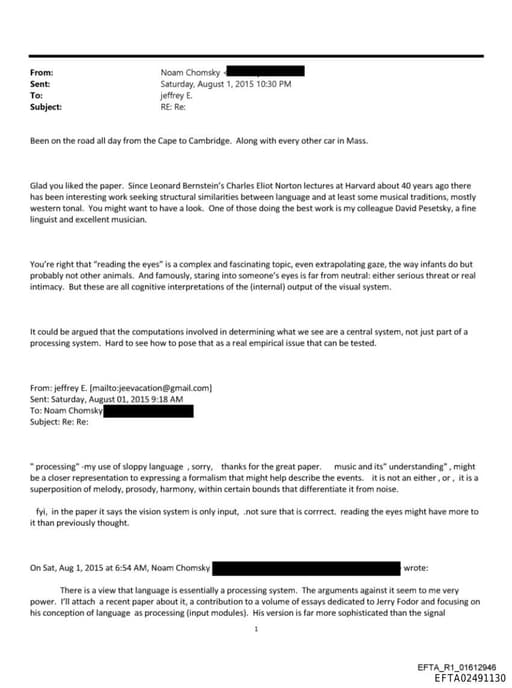
ssing system. The arguments against it seem to me very power. I'll attach a recent paper about it, a contribution to a volume of essays dedicated to Jerry Fodor and focusing on his conception of language as processing (input modules). His version is far more sophisticated than the signal EFTA_R1_01612946 E
Sponsored
EFTA02491312.pdf
1 mentionEFTA02491312
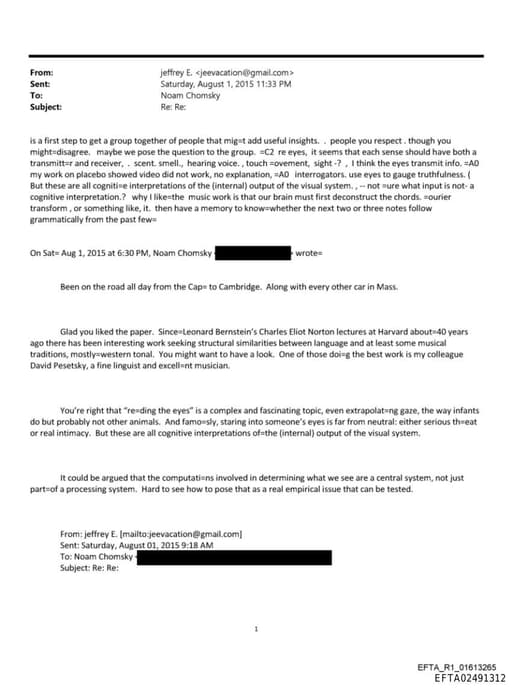
ssing system. The arguments against it seem to me very power. I'll attach a recent paper about it, a =ontribution to a volume of essays dedicated to Jerry Fodor and focusing on=his conception of language as processing (input modules). His =ersion is far more sophisticated than the signal processing approach
EFTA02491410.pdf
1 mentionEFTA02491410
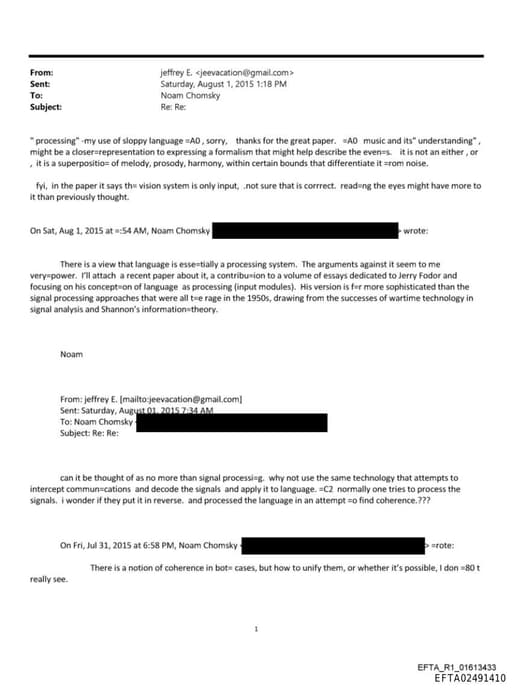
ssing system. The arguments against it seem to me very=power. I'll attach a recent paper about it, a contribu=ion to a volume of essays dedicated to Jerry Fodor and focusing on his concept=on of language as processing (input modules). His version is f=r more sophisticated than the signal processing approach
EFTA02491512.pdf
1 mentionEFTA02491512
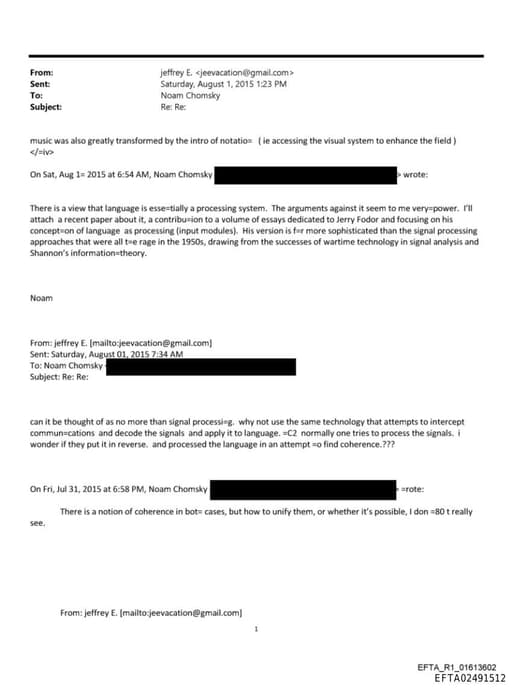
ssing system. The arguments against it seem to me very=power. I'll attach a recent paper about it, a contribu=ion to a volume of essays dedicated to Jerry Fodor and focusing on his concept=on of language as processing (input modules). His version is f=r more sophisticated than the signal processing approach
Sponsored
EFTA02664783.pdf
1 mentionEFTA02664783
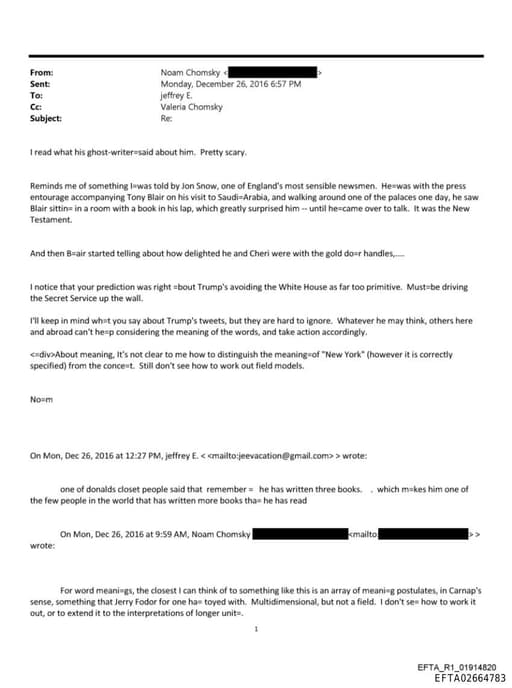
ote: > > For word meani=gs, the closest I can think of to something like this is an array of meani=g postulates, in Carnap's sense, something that Jerry Fodor for one ha= toyed with. Multidimensional, but not a field. I don't se= how to work it out, or to extend it to the interpretations of longer unit=.
EFTA02666160.pdf
1 mentionEFTA02666160
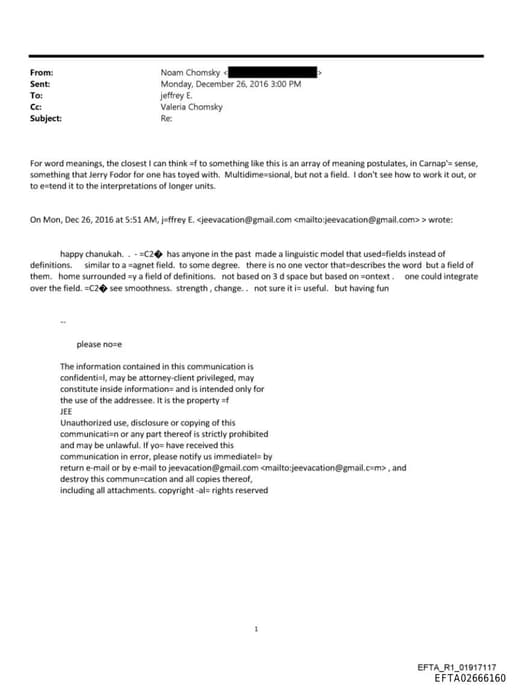
ect: Re: For word meanings, the closest I can think =f to something like this is an array of meaning postulates, in Carnap'= sense, something that Jerry Fodor for one has toyed with. Multidime=sional, but not a field. I don't see how to work it out, or to e=tend it to the interpretations of longer units.
EFTA02491357.pdf (email 2: Re: Re:)
1 mentionEFTA02491357_email_002
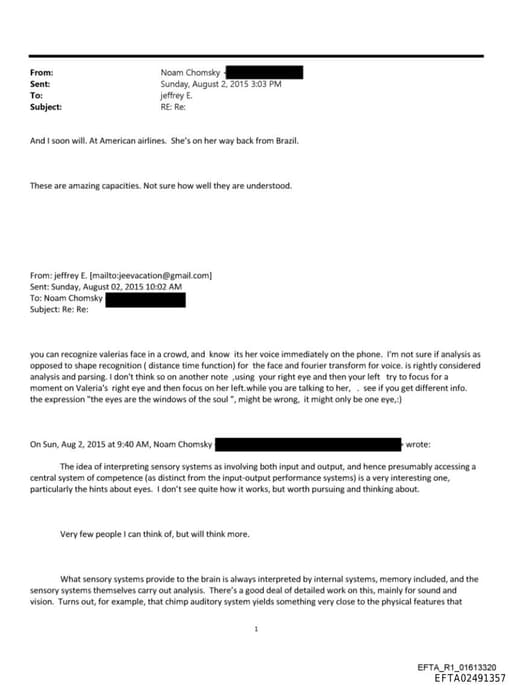
ssing system. The arguments against it seem to me very power. I'll attach a recent paper about it, a contribution to a volume of essays dedicated to Jerry Fodor and focusing on his conception of language as processing (input modules). His version is far more sophisticated than the signal processing approach
Sponsored
EFTA02492331.pdf (email 1: Re: Re:)
1 mentionEFTA02492331
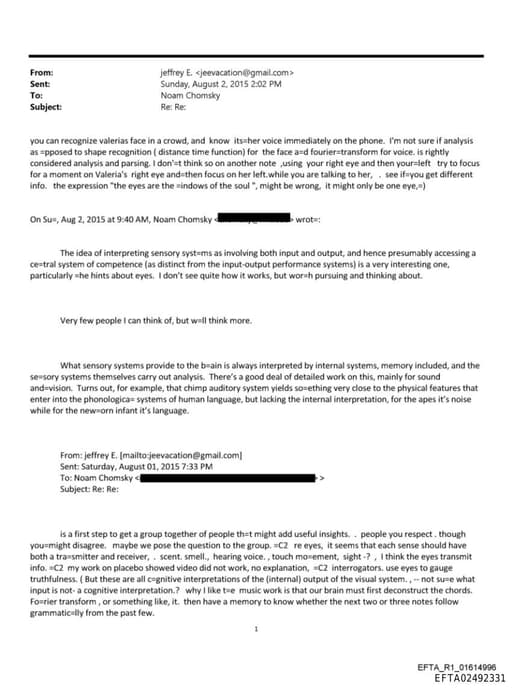
ssing system. The arguments against it seem to me very power. I'll attach a recent paper about it, a =ontribution to a volume of essays dedicated to Jerry Fodor and focusing on=his conception of language as processing (input modules). His =ersion is far more sophisticated than the signal processing approach
Brockman_DeepThinking.MS.pdf
1 mentionHOUSE_OVERSIGHT_016804_sub_001 - HOUSE_OVERSIGHT_016903
Source: House Oversight Committee
ely parallel cerebral cortex. That uncompromising computationalism has been opposed by philosophers such as John Searle, David Chalmers, and the late Jerry Fodor, who have protested that the most important aspects of consciousness—intentionality and subjective qualia—cannot be computed. Twenty-five years ago,
Sponsored
Connected Entities(20 of 431)
Jeffrey Epstein
PersonAmerican sex offender and financier (1953–2019)
19 docs19 co-mentions
Noam Chomsky
PersonAmerican linguist and activist (born 1928)
18 docs18 co-mentions
LB
Leonard Bernstein's
PersonPerson referenced in documents
12 docs12 co-mentions
CN
Charles Eliot Norton
PersonPerson referenced in documents
12 docs12 co-mentions
Prince Charles
PersonKing of the United Kingdom and other Commonwealth realms since 2022 (born 1948)
12 docs12 co-mentions
DP
David Pesetsky
PersonPerson referenced in documents
10 docs10 co-mentions
Valeria Chomsky
PersonBrazilian translator and linguist, wife of Noam Chomsky (married 2014)
6 docs6 co-mentions
Prince Andrew
PersonThird child of Queen Elizabeth II and Prince Philip, Duke of Edinburgh (born 1960)
3 docs3 co-mentions
Marc Rich
PersonAmerican commodities trader (1934–2013)
3 docs3 co-mentions
Stephen Hawking
PersonBritish theoretical physicist, cosmologist and author (1942–2018)
3 docs3 co-mentions
DB
Doug Band
PersonAmerican presidential advisor
2 docs2 co-mentions
Eric Trump
PersonAmerican businessman and reality television personality (born 1984)
2 docs2 co-mentions
Harvey Weinstein
PersonAmerican film producer and sex offender (born 1952)
2 docs2 co-mentions
Midas
PersonKing with the power to turn whatever he touches to gold
2 docs2 co-mentions
Woody Allen
PersonAmerican filmmaker, actor and comedian (born 1935)
2 docs2 co-mentions
Oliver Stone
PersonAmerican film director, screenwriter, and producer (born 1946)
2 docs2 co-mentions
Elon Musk
PersonBusinessman and entrepreneur (born 1971)
2 docs2 co-mentions
Samantha Power
PersonIrish-American academic, author and diplomat
2 docs2 co-mentions
ST
Stevens
PersonArtist
2 docs2 co-mentions
Cambridge University
OrganizationOrganization referenced in documents
2 docs2 co-mentions