EFTA02491357_email_002
Document Information
Bates Range
EFTA02491357_email_002
Pages
2
Original Filename
EFTA02491357.pdf (email 2: Re: Re:)
Document Content
Page 1 - EFTA02491357_002
enter into the phonological systems of human language, but lacking the internal interpretation, for the apes it's noise while for the newborn infant it's language. From: jeffrey E. [mailto:[email protected] <mailto:[email protected]> ] Sent: Saturday, August 01 2015 7:33 PM To: Noam Chomsky Subject: Re: Re: is a first step to get a group together of people that might add useful insights. . people you respect . though you might disagree. maybe we pose the question to the group. re eyes, it seems that each sense should have both a transmitter and receiver, . scent. smell., hearing voice. , touch movement, sight -? , I think the eyes transmit info. my work on placebo showed video did not work, no explanation, interrogators. use eyes to gauge truthfulness. ( But these are all cognitive interpretations of the (internal) output of the visual system. , -- not sure what input is not- a cognitive interpretation.? why I like the music work is that our brain must first deconstruct the chords. Fourier transform , or something like, it. then have a memory to know whether the next two or three notes follow grammatically from the past few. On Sat, Aug 1, 2015 at 6:30 PM, Noam Chomsky > wrote: Been on the road all day from the Cape to Cambridge. Along with every other car in Mass. Glad you liked the paper. Since Leonard Bernstein's Charles Eliot Norton lectures at Harvard about 40 years ago there has been interesting work seeking structural similarities between language and at least some musical traditions, mostly western tonal. You might want to have a look. One of those doing the best work is my colleague David Pesetsky, a fine linguist and excellent musician. You're right that "reading the eyes" is a complex and fascinating topic, even extrapolating gaze, the way infants do but probably not other animals. And famously, staring into someone's eyes is far from neutral: either serious threat or real intimacy. But these are all cognitive interpretations of the (internal) output of the visual system. It could be argued that the computations involved in determining what we see are a central system, not just part of a processing system. Hard to see how to pose that as a real empirical issue that can be tested. From: jeffrey E. [mailto:[email protected] <mailto:[email protected]> ] Sent: Saturday, August 01, 2015 9:18 AM To: Noam Chomsky Subject: Re: Re: 2 EFTA_R1_01613321 EFTA02491358
Page 2 - EFTA02491357_003
" processing" -my use of sloppy language , sorry, thanks for the great paper. music and its" understanding" , might be a closer representation to expressing a formalism that might help describe the events. it is not an either , or , it is a superposition of melody, prosody, harmony, within certain bounds that differentiate it from noise. fyi, in the paper it says the vision system is only input, .not sure that is corrrect. reading the eyes might have more to it than previously thought. On Sat, Aug 1, 2015 at 6:54 AM, Noam Chomsky wrote: There is a view that language is essentially a processing system. The arguments against it seem to me very power. I'll attach a recent paper about it, a contribution to a volume of essays dedicated to Jerry Fodor and focusing on his conception of language as processing (input modules). His version is far more sophisticated than the signal processing approaches that were all the rage in the 1950s, drawing from the successes of wartime technology in signal analysis and Shannon's information theory. Noam From: Jeffrey E. [mailto:[email protected] <mailto:[email protected]> ] Sent: Saturday, August 01, 2015 7:34 AM To: Noam Chomsky Subject: Re: Re: can it be thought of as no more than signal processing. why not use the same technology that attempts to intercept communications and decode the signals and apply it to language. normally one tries to process the signals. i wonder if they put it in reverse. and processed the language in an attempt to find coherence.??? On Fri, Jul 31, 2015 at 6:58 PM, Noam Chomsky > wrote: There is a notion of coherence in both cases, but how to unify them, or whether it's possible, I don't really see. 3 EFTA_R1_01613322 EFTA02491359
Entities Mentioned
CN
Charles Eliot Norton
PERSON
Person referenced in documents
DP
David Pesetsky
PERSON
Person referenced in documents

Jeffrey Epstein
PERSON • 2 mentions
American sex offender and financier (1953–2019)
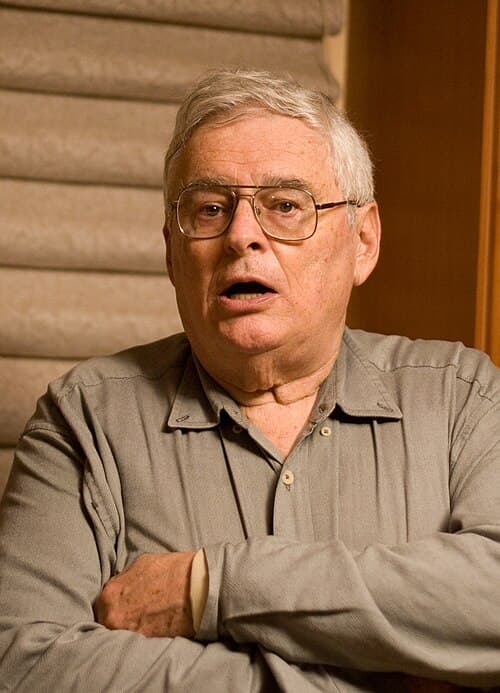
Jerry Fodor
PERSON
American philosopher (1935–2017)
LB
Leonard Bernstein's
PERSON
Person referenced in documents
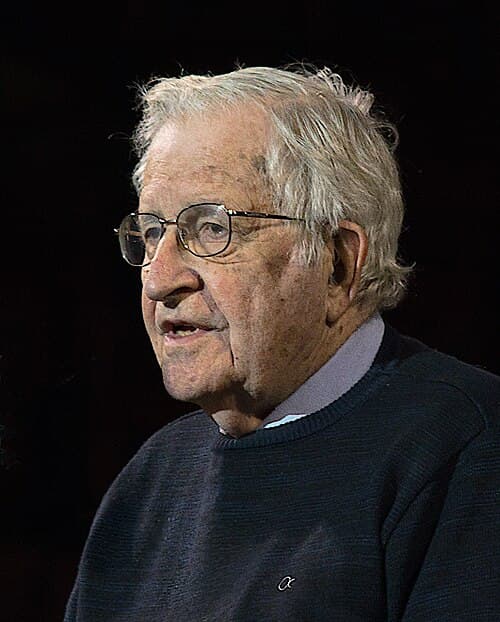
Noam Chomsky
PERSON • 2 mentions
American linguist and activist (born 1928)
Prince Charles
PERSON
King of the United Kingdom and other Commonwealth realms since 2022 (born 1948)
Statistics
Pages:2
Entities:7
Sponsored