Back to People & Entities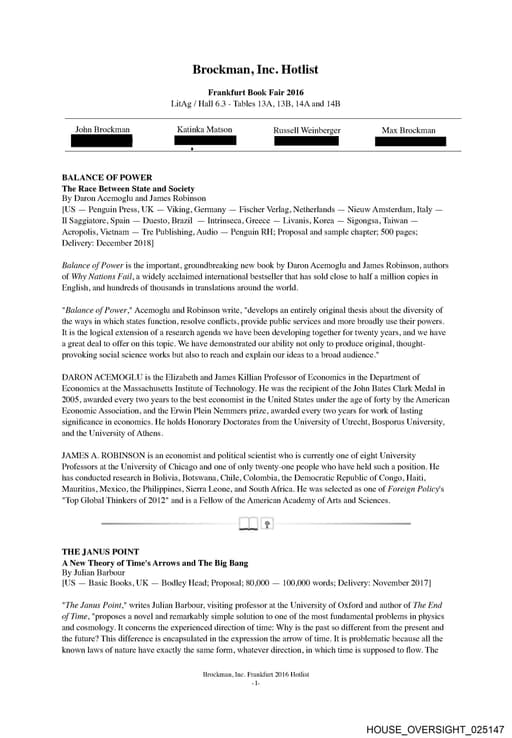








MI
Milgram
Person
8
Total Mentions
5
Documents
394
Connected Entities
Surname reference in documents
Document Mentions (5)
Brockman_DeepThinking.MS.pdf
2 mentionsHOUSE_OVERSIGHT_016804_sub_002 - HOUSE_OVERSIGHT_016995
Source: House Oversight Committee
ntally, she construed the team’s mission as deciding how to put “dangerous people” in jail while releasing the non- dangerous. “The reason for this,” Milgram contended, “is the way we make decisions. Judges have the best intentions when they make these decisions about risk, but they’re making them subjecti
d in on this topic, supported by experiments at Eindhoven University in 2005 noting how susceptible humans are to a robot-as-victim equivalent of the Milgram experiments done at Yale beginning in 1961. Given the many rights of corporations, including ownership of property, it seems likely that other machin
Brockman_DeepThinking.MS.pdf
2 mentionsHOUSE_OVERSIGHT_016221_sub_002 - HOUSE_OVERSIGHT_016412
Source: House Oversight Committee
ntally, she construed the team’s mission as deciding how to put “dangerous people” in jail while releasing the non- dangerous. “The reason for this,” Milgram contended, “is the way we make decisions. Judges have the best intentions when they make these decisions about risk, but they’re making them subjecti
d in on this topic, supported by experiments at Eindhoven University in 2005 noting how susceptible humans are to a robot-as-victim equivalent of the Milgram experiments done at Yale beginning in 1961. Given the many rights of corporations, including ownership of property, it seems likely that other machin
Evilicious.pdf
2 mentionsHOUSE_OVERSIGHT_012747_sub_002 - HOUSE_OVERSIGHT_012897
Source: House Oversight Committee
etic make-up and personal experience either facilitated their willingness to follow authority and ideology or prevented it. Many subjects in both the Milgram and Zimbardo studies refused to follow the orders or rules of the game. Those who refused tended to identify more with the victim and less with the a
utledge. Kiernan, B. (2007). Blood and Soil: A world history of genocide and extermination from Sparta to Darfur. New Haven: Yale University Press. Milgram, S. (1974). Obedience to Authority: An experimental view. New York: Harper & Row Publishers, Inc. McCullough, M. (2008). Beyond Revenge: The evoluti
Sponsored
HOUSE_OVERSIGHT_025147 - HOUSE_OVERSIGHT_025162
1 mentionSource: House Oversight Committee
ial psychologists. "They take the famous Asch conformity experiments, in which participants believe a group over the evidence of their own eyes; and Milgram obedience experiments, in which participants agree to electrocute one another at the experimenter’s request to show that people are sheep. "Psycholo
Page: HOUSE_OVERSIGHT_025155 →EFTA00160591.pdf
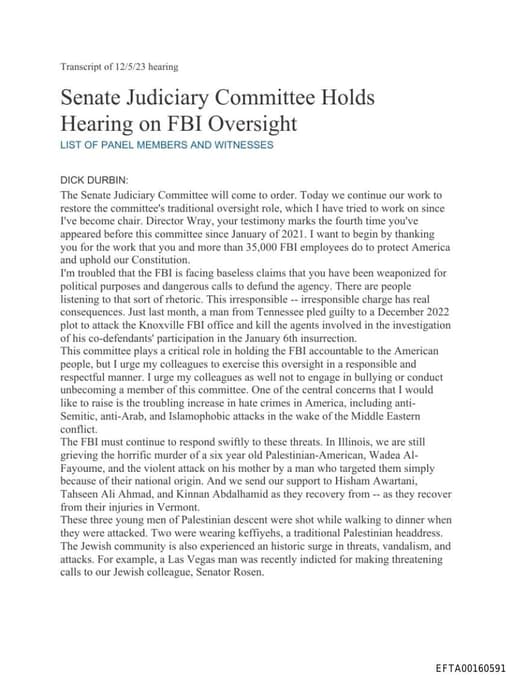
1 mentionEFTA00160591
ree to which online activity is -- is inextricably intertwined with the fentanyl epidemic, and that's in a variety of ways. And I know Administrator Milgram at DEA, for example, has a number of initiatives focused on this as well. Certainly, we on the FBI's end are focused on, for example, darknet marke
Sponsored
Connected Entities(20 of 394)
Vietnam
LocationCountry in Southeast Asia
4 docs4 co-mentions
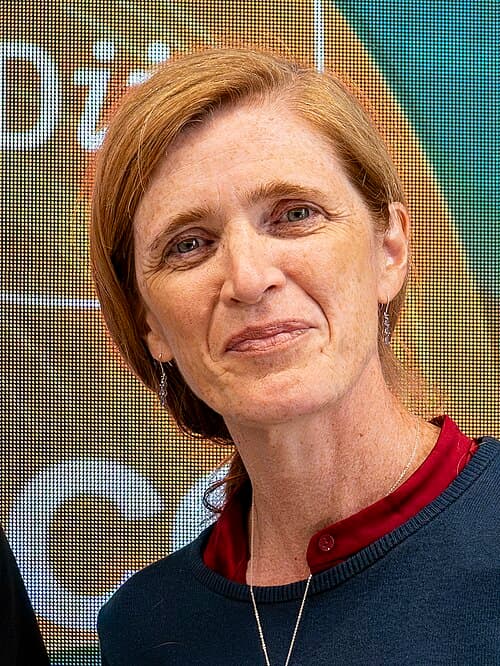
Samantha Power
PersonIrish-American academic, author and diplomat
4 docs4 co-mentions
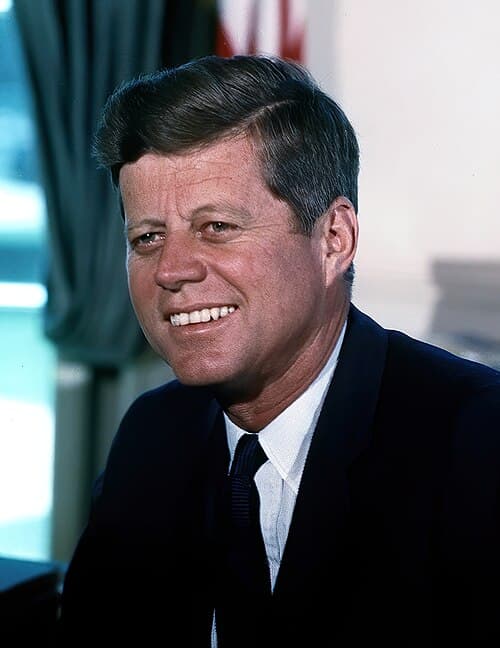
John F. Kennedy
PersonPresident of the United States from 1961 to 1963 (1917–1963)
4 docs4 co-mentions
Julie K. Brown
PersonAmerican journalist
4 docs4 co-mentions
University of Oxford
OrganizationCollegiate research university in Oxford, England
4 docs4 co-mentions
George W. Bush
PersonPresident of the United States from 2001 to 2009
4 docs4 co-mentions
LB
Leon Black
PersonAmerican billionaire businessman (born 1951)
4 docs4 co-mentions
Earth
LocationThird planet from the Sun in the Solar System
3 docs3 co-mentions
Noam Chomsky
PersonAmerican linguist and activist (born 1928)
3 docs3 co-mentions
Nigeria
LocationSovereign state in West Africa
3 docs3 co-mentions
John Brockman
PersonAmerican literary agent
3 docs3 co-mentions
Richard Dawkins
PersonEnglish ethologist, evolutionary biologist and author (born 1941)
3 docs3 co-mentions
Dennett
PersonSurname reference in documents
3 docs3 co-mentions
Cheng
PersonSurname reference in Epstein-related documents
3 docs3 co-mentions
Bill Gates
PersonAmerican businessman, investor, and philanthropist (born 1955)
3 docs3 co-mentions
Descartes
PersonSurname reference in documents
3 docs3 co-mentions
Leibniz
PersonSurname reference in documents
3 docs3 co-mentions
Barack Obama
PersonPresident of the United States from 2009 to 2017
3 docs3 co-mentions
Robert Gates
PersonCIA director, U.S. Secretary of Defense, and university president
3 docs3 co-mentions
Marc Rich
PersonAmerican commodities trader (1934–2013)
3 docs3 co-mentions