HOUSE_OVERSIGHT_014721 - HOUSE_OVERSIGHT_014730
No Subject
Document HOUSE_OVERSIGHT_014721 is a report from the House Oversight Committee discussing market perceptions of economic risks associated with the Trump administration.
This 10-page government record analyzes investor concerns regarding stagflation, potential trade wars, and tax reform under Donald Trump's presidency, suggesting that the market may be overestimating the risks. The report, intended for internal use at Merrill Lynch, recommends a trading strategy based on the expectation of a stronger USD. It references events expected around February 28, 2017.
Key Highlights
- •Discusses the 'Trump risk premium' and its impact on financial markets.
- •Analyzes the potential effects of trade wars and tax reform on inflation and the USD.
- •Recommends a trading strategy involving EUR put/USD call options based on the expectation of a stronger USD.
- •Mentions Merrill Lynch and Bank of America as key organizations.
Frequently Asked Questions
Books for Further Reading
Document Information
Bates Range
HOUSE_OVERSIGHT_014721 - HOUSE_OVERSIGHT_014730
Pages
10
Source
House Oversight Committee
Date
February 13, 2017
Original Filename
Woo - Cause and Effect - 13-Feb-2017.pdf
File Size
550.10 KB
Document Content
Page 1 - HOUSE_OVERSIGHT_014721
Unauthorized redistribution of this report is prohibited. This report is intended for [email protected] Cause and Effect Fade the Trump risk premium — buy USD Concerns over stagflation return In our view, the most interesting and important development in the global financial market so far this year has been the divergence between rising US inflation breakevens and falling US real yields. Rightly or wrongly, investors appear to have become concerned about upside risk to inflation and downside risk to growth. The Trump risk premium Informal surveys of our clients suggest that stagflation concerns are being fed by growing pessimism about the new Trump administration. Investors seem to think that potential trade wars and a border adjustment tax (BAT) would boost inflation while repealing Obamacare and the controversy regarding the BAT could delay the highly anticipated tax reform. Perception versus reality In this report, we argue why the Trump risk premium may be too high. The administration’s dealing with both China and Mexico in recent weeks suggests to us that the near-term risk of open trade wars has abated. We are also less concerned that Obamacare will take precedence over tax reform. Most crucially, we think the overall tax reform is less dependent on the BAT than usually thought. Our scenario analysis shows that what has been getting priced into the market since January (higher inflation, lower USD) may be actually the least likely path for the BAT. In more plausible scenarios, the USD does quite well and inflation breakevens should be either unchanged or lower. How to trade it? We could get details on the tax reform as early as the new president’s speech to joint session of Congress on February 28, 2017. We think this could validate our view of a stronger USD. Taking advantage of clean positioning and the decline in implied FX vol lately, we recommend buying a 6w ATM EUR put/USD call (spot reference at 1.0615}, costing 1.1% EUR. A 6-week option will cover also the March Fed meeting and the Dutch election (both on March 15) that could also work in favour of the trade. A risk to the trade is that is weak February data takes the possibility of a March Fed hike off the table completely. A list of open trades and those closed in the last 12 months can be found in our Global Liquid Markets Weekly. Trading ideas and investment strategies discussed herein may give rise to significant risk and are not suitable for all investors. Investors should have experience in FX markets and the financial resources to absorb any losses arising from applying these ideas or strategies. BofA Merrill Lynch does and seeks to do business with issuers covered in its research reports. As a result, investors should be aware that the firm may have a conflict of interest that could affect the objectivity of this report. Investors should consider this report as only a single factor in making their investment decision. Refer to important disclosures on page 9 to 10. Analyst Certification on page 8. 11710696 Timestamp: 13 February 2017 06:00AM EST Bankof America Merrill Lynch 13 February 2017 FX and Rates Global e e The First Days David Woo FX, Rates & EM Strategist MLPF&S +1 646 855 5442 [email protected] Global Rates & Currencies Research HOUSE_OVERSIGHT_014721
Page 2 - HOUSE_OVERSIGHT_014722
Concerns over stagflation return On the surface, this has been an uneventful year for the US rates market so far. At the start of January, the market was pricing two Fed hikes for the year. Six weeks later, the market is still pricing only two Fed hikes for the year. The yield on the bellwether 10y US Treasuries started the year at 2.44%. Six weeks later, it is at 2.41%, unchanged for all practical purposes. As usual, the surface view is deceiving. The seeming collapse in volatility belies the dramatic changes in the composition and term structure of rates. Since the December FOMC meeting, real yields and inflation breakevens have diverged in remarkable fashion. Year to date, 5y real yields have declined by 16bp while 5y inflation breakevens have risen by 12bp (Chart 1); the 5s-30s real curve is 1O0bp steeper while the breakeven curve is 10bp flatter. Chart 1: 5y real yields and 5y inflation breakevens (%) 2.5 2 1.5 1 0.5 0 0.5 10/1/2016 10/26/2016 += 11/20/2016 += 12/15/2016 + —1/9/2017 2/3/2017 = 5y real yields (%) = ===~=5y infl BE (%) Source: BofA Merrill Lynch Global Research The effect of the divergence between real yields and inflation breakevens has been felt across financial markets. For example, the USD, which trades with real rather than nominal yields, has declined in tandem with real yields (Chart 2). In contrast, gold, which usually thrives on inflation concerns, has been surging lately. Chart 2: DXY and 5y real yields (%) Chart 3: 5y real yields versus 5y inflation breakevens (%) 104 0.3 4 103 0.2 102 01 3 101 0 2 "0 4 { E1 2 OT QE3 98 Oe 0 o7 -0.3 96 -0.4 “1 95 -0.5 -2 94 -0.6 3 10/1/2016 = 11/1/2016 §= 12/1/2016 ~— 1/1/2017 2/1/2017 3/1/2009 3/1/2010 3/1/2011 3/1/2012 3/1/2013 a==———DXY (LHS) = ===5y real yields (RHS) a= 5y real yields (%) = ====5y infl BE (%) Source: BofA Merrill Lynch Global Research Source: BofA Merrill Lynch Global Research We have seen price action like this before. Indeed, it was quite common during the QE period (Chart 3). However, QE is neither on the horizon nor on investors’ minds right now. So what is really going on? Under normal circumstances, inflation breakevens are a reflection of investors’ inflation expectations while real yields a proxy for their growth 2 Cause and Effect | 13 February 2017 BankofAmerica <2” Merrill Lynch HOUSE_OVERSIGHT_014722
Page 3 - HOUSE_OVERSIGHT_014723
expectations. The divergence between inflation breakevens and real yields seem to suggest that investors have become more concerned about upside risk to inflation but downside risk to growth. Interestingly, this shift in investor sentiment runs counter to incoming data which are painting a picture of benign inflation but growth acceleration. Indeed, wage growth remains lackluster while the Fed’s favorite measure of inflation core PCE has slowed to the lowest level in more than a year (Chart 4). In contrast, both employment data and survey data suggest economic growth is on a tear (Figure 5). The Atlanta Fed’s GDPNow model is currently tracking 2.7% GDP growth for Q1. If it is not the data, what is driving the market’s apparent increased concerns about stagflation? Whatever these concerned may be, are they justified? We seek to answer these two critical questions in this report. Chart 4: Core PCE (3m/3m, SA, AR, %) Chart 5: GDP growth and aggregate hours worked (Q/Q, SA, AR, %) 2.5 R 2.3 4 2.1 1.9 2 1.7 1.5 0 1.3 1.1 2 0.9 Mar-10 Jul-14 Nov-12 Mar-14 Jul-15 Nov-16 0.7 2S@eSOrT THT NNNMMATH HW HW @ = eal GDP growth (AR, %) e¢¢ he 5 heb He Soest FS Sot te tga === aggregate hours worked (AR, %) SSe2Ze2F8S687Z83323 ——= aggregate hours worked, Jan (AR, %) Source: BofA Merrill Lynch Global Research Source: BofA Merrill Lynch Global Research The Trump risk premium Our informal survey of clients in the past two weeks suggests that stagflation concerns are being fed by growing pessimism about the new Trump administration. Clients tell us that their pessimism reflects four main concerns: Downside risk to growth 1. Many investors are concerned that the new administration will get bogged down by its promise to repeal and replace Obamacare, resulting in a significant delay in pushing through fiscal reform 2. This concern is reinforced by the perception that the GOP is divided over the proposed border adjustment tax (BAT), a key element of the tax reform proposal Upside risk to inflation 3. A growing number of investors are worried that potential trade wars with Mexico and China could lead to tariffs and higher prices 4. Many investors are also concerned that the BAT will force retailers to raise prices With many investors having loaded up on Trump trades after the elections (The battle lines are drawn, January 23, their willingness to continue to give the benefit of doubt to the new administration appears to be wearing thin. We would advise patience as there Bankof America <> Merrill Lynch Cause and Effect | 13 February 2017 3 HOUSE_OVERSIGHT_014723
Sponsored
Page 4 - HOUSE_OVERSIGHT_014724
are reasons to think that the worst may be already behind us and that the higher rates/higher USD trades will soon resume. We make our case in the following sections. Trade wars: near-term risk drops Developments over the past three weeks have led us to conclude that the risk of trade wars with Mexico and China has abated significantly, at least for the short-term: ¢ China: We take some comfort in the fact that the only item in his 100 day plan that President Trump has reneged on is his promise to label China as a currency manipulator on his first day as president (Table 1). In his interview with the WS) on January 13, Trump said that he “would talk to them first”. He added: “Certainly they are manipulators. But I’m not looking to do that.” This and the fact that Trump changed tack on Taiwan last week by telling the Chinese president he would honor the “One China” policy suggest to us a pragmatic approach to dealing with China. ¢ Mexico: We are relieved by the climbing-down by the administration after the Mexican president cancelled his trip to Washington over Trump’s insistence that Mexico pay for the wall. Reince Priebus, the influential White House Chief of Staff, suggested that there is a “buffet of options” to pay for the wall, including by going after the drug cartels. The Mexican foreign minister welcomed the overture by saying that “It's a signal that ... must be welcomed because we are already seeing how the discussion is changing”. Table 1: Trump’s 100 day plan (On the first day of my term of office, my administration will immediately pursue the following): A hiring freeze on all federal employees to reduce the federal workforce through attrition Done A requirement that for every new federal regulation, two existing regulations must be eliminated. Done A five-year ban on White House and Congressional officials becoming lobbyists after they leave government service. Done A lifetime ban on White House officials lobbying on behalf of a foreign government. Done I will announce my intention to renegotiate NAFTA or withdraw from the deal under Article 2205 Done | will announce our withdrawal from the Trans-Pacific Partnership. Done Lift the Obama-Clinton roadblocks and allow vital energy infrastructure projects, like the Keystone Pipeline, to move forward. Done Begin the process of selecting a replacement for Justice Scalia from one of the 20 judges on my list Done Cancel all federal funding to sanctuary cities. Done Suspend immigration from terror-prone regions where vetting cannot safely occur. All vetting of people coming into our country will be considered “extreme vetting.” Done Begin removing the more than two million criminal illegal immigrants from the country and cancel visas to foreign countries that won't take them back Done | will direct the Secretary of the Treasury to label China a currency manipulator. Not Done | will direct the Secretary of Commerce and U.S. Trade Representative to identify all foreign trading abuses that unfairly impact American workers and direct them to use every tool under American and international law to end those abuses immediately. Not Done Propose a constitutional amendment to impose term limits on all members of Congress. Not Done Acomplete ban on foreign lobbyists raising money for American elections. Not Done Cancel billions in payments to U.N. climate change programs and use the money to fix America’s water and environmental infrastructure. Not Done | will lift the restrictions on the production of $50 trillion dollars’ worth of job-producing American energy reserves, including shale, oil, natural gas and clean coal. Not Done Source: Donaldtrump.com/centract; BofA Merrill Lynch Global Research ACA reforms: not before fiscal reforms In an interview on February 5, Trump walked back his promise to replace Obamacare in short order, saying that the process is “complicated” and “maybe it’ll take till sometime into next year.” In contrast, asked if Americans should expect a tax cut this year, he said: “| think before the end of the year | would like to say yes.” In our view, the prevailing pessimism that Obamacare will take precedence over tax cuts is not consistent with three key facts on the table: * The Republicans, with only 52 seats in the Senate, do not have the votes to replace Obamacare. ¢ It is by now a broadly shared view among Republican leadership that to repeal Obamacare without replacing it would be very risky politically. e There is no consensus among Republicans about how to replace Obamacare. For example, 31 states took up federal funding to expand Medicaid under Obamacare Bankof America 4 Cause and Effect | 13 February 2017 Merrill Lynch HOUSE_OVERSIGHT_014724
Page 5 - HOUSE_OVERSIGHT_014725
and 119 House Republicans represent these states. Repealing Obamacare without replacing it would entail either a significant cut in the funding of the program or that the state tax payers will have to pick up the bills. Either is likely to hurt Republican support in these states. Tax reform: BAT won’t kill it The proposed border adjustment tax in the Ryan-Brady plan has been attracting a lot of attention lately. Although we have concerns about some specific aspects of the proposal (which we will discuss later), the popular view that it could be a deal breaker for the whole tax reform initiative seems to us difficult to substantiate. Below are some key facts that are worth noting: « — It has been thirty years since the US last overhauled its tax code. Most mainstream economists agree that it needs a serious update. * Tax reform requires strong political consensus. The Republicans, by gaining control of the Presidency and retaining their control of both houses of Congress in the November elections, are in a strong position to push through major tax reform. * The tax reform proposal from House Republicans has already gone through extensive consultations and enjoys broad support within the House Republican Conference. e One of the key commitments of the Trump campaign is tax cuts and simplification to boost growth. « The US today has the highest marginal corporate income tax rate among OECD countries. « Another major difference between the US and other major economies is that US corporations are taxed on their world-wide income as opposed to territorial income. In 2000, 17 out of the current 34 OECD members had a world-wide system. By 2010, only 7 did. e | The combination of high corporate income tax rate and a world-wide income tax system has two unintended consequences. One, US companies currently hold more than $2trn in capital overseas. Two, an increasing number of US companies are acquiring smaller foreign companies with the purpose of relocating their headquarters outside the US (ie, inversion). Between 2003 and 2011, there were only 7 such transactions. From 2012 and 2015, 27 such transactions were completed. « The valued added tax (VAT) system has been gaining popularity over the past twenty years. Today, more than 160 countries have a VAT. The U.S. is the only OECD country that doesn’t. « — The fact that the US does not have a VAT system puts US produced goods at a disadvantage. VAT is “border adjusted” - meaning that when a good is exported the producer gets a rebate while imports are subject to VAT. These facts together make it very apparent that both the case for tax reform and support for tax reform are very strong. Paul Ryan said on January 26 after the Republican retreat in Philadelphia that they “aspire” to pass tax reforms by August. Bankof America <> Merrill Lynch Cause and Effect | 13 February 2017 5 HOUSE_OVERSIGHT_014725
Page 6 - HOUSE_OVERSIGHT_014726
4 BAT scenarios To us, the key question is not when tax reform will pass (likely sooner than what is priced in). Far more important for financial markets in our view, especially for the rates and FX markets, is what tax reform means for inflation. The recent divergence between inflation breakevens and real yields reflects to a large part to the increasing consensus that tax reform will be stagflationary. We are less sure this will be the case and this is why. In our view, there are four possible paths in terms of how the border adjustment tax proposal could play out: e Scenario 1: This is the baseline of the Republican architects of the proposal who see a 25% appreciation of the USD to offset the 20% new tax on imports. In this scenario, because of the USD appreciation the inflationary impact of the border adjustment tax will be limited. In fact, it is very likely in this scenario that the second round effects of the USD appreciation (for example on commodity prices and emerging markets) will stoke deflationary fears. e Scenario 2: In this scenario, we would get the BAT as proposed but the USD does not go up because the new administration sees a strong USD as incompatible with its trade policy. We suspect this scenario has become the baseline for the market. We disagree this is the most probable outcome. In our view, it would be difficult if not impossible for Republican leadership to push through tax changes that would lead to potentially very unpopular price hikes ahead of the mid-term elections next year. e Scenario 3: In this scenario the BAT would not make it into the tax reform and the proposed corporate tax cut is financed by running up the fiscal deficit. This could be easier to sell politically than Scenario 2, especially given that the Republicans plan to deliver personal income tax cuts at the same time. In this scenario, the USD will rally as the Fed continues to hike and rate differential drives the USD higher. Chart 6: The four different fates of the border adjustment tax proposal Scenario 1: Ryan-Brady proposal Medium probability: +25% USD increase = Little increase USD{ 17, BEL | in inflatian Scenario 2: Ryan-Brady proposal + Low probability: little USD increase = Big increase in —_— USDt |, BET Tt Inflatinn BAT Scenario 3: No BAT + bigger fiscal Medium probability: deficit = Little increase in inflation | USD?, BE| Scenario 4: VAT instead of BAT = Medium probability: 41\\ Smaller increase in inflation > USD* 1, BET | Source: BofA Merrill Lynch Global Research BankofAmerica <2” 6 Cause and Effect | 13 February 2017 Merrill Lynch HOUSE_OVERSIGHT_014726
Sponsored
Page 7 - HOUSE_OVERSIGHT_014727
e Scenario 4: The current BAT proposal has some obvious issues. Because wages are deductible from taxable income, it essentially taxes domestically produced goods as a share of value added but taxes imports as a share of their total value. This is a clear discrimination that would certainly invite WTO dispute and that could potentially give future non-Republican administrations the excuse to overturn the tax reform. Moreover, the fact that under the current proposal some exporters will potentially pay no taxes does not seem fair to us. Remember, in most countries with a VAT system, there is also a corporate income tax. In this scenario, we assume that after negotiations we get a true VAT that is both WTO compliant as well as being revenue neutral. The USD would do better in this scenario compared to Scenario 3 because the VAT would help level the playing fields between US and foreign produced goods and the US trade balance should improve. How to trade it? We view the recent weakening of the USD and rising inflation breakevens as mutually inconsistent, since we think Scenario 2 is not a viable political outcome. The fact that all other scenarios are associated with a stronger USD and lower to flat inflation breakevens is supportive of our bullish USD view. The market needs more clarity on the details of the fiscal reform proposal to determine the outlook for the USD and rates. It is possible that details may be unveiled as early as the president’s speech to the joint session of Congress on February 28, 2017. We think it could validate our view of a stronger USD. Taking advantage of clean positioning and the decline in implied FX vol lately, we recommend buying a 6w ATM EUR put/USD call (spot reference at 1.0630). A 6-week option will cover also the March Fed meeting and the Dutch election (both on March 15} that can both potentially work in favour of the trade. We think the market is underpricing the risk of a Fed hike in March and better-than- expected results by the Freedom Party in the Dutch election could intensify concerns of a second-round Le Pen win in May. The latter suggests that over the next 2-3 months it may be easier to buy the USD than to pay US rates and easier to sell EUR/USD than to buy USD/JPY. Bankof America <> Merrill Lynch Cause and Effect | 13 February 2017 7 HOUSE_OVERSIGHT_014727
Page 8 - HOUSE_OVERSIGHT_014728
Options Risk Statement Potential Risk at Expiry & Options Limited Duration Risk Unlike owning or shorting a stock, employing any listed options strategy is by definition governed by a finite duration. The most severe risks associated with general options trading are total loss of capital invested and delivery/assignment risk... all of which can occur in a short period. Investor suitability The use of standardized options and other related derivatives instruments are considered unsuitable for many investors. Investors considering such strategies are encouraged to become familiar with the "Characteristics and Risks of Standardized Options" (an OCC authored white paper on options risks). U.S. investors should consult with a FINRA Registered Options Principal. For detailed information regarding risks involved with investing in listed options: http://Awww.theocc.com/about/publications/character-risks.jsp Analyst Certification |, David Woo, hereby certify that the views expressed in this research report accurately reflect my personal views about the subject securities and issuers. | also certify that no part of my compensation was, is, or will be, directly or indirectly, related to the specific recommendations or view expressed in this research report. Bankof America 8 Cause and Effect | 13 February 2017 Merrill Lynch HOUSE_OVERSIGHT_014728
Page 9 - HOUSE_OVERSIGHT_014729
Disclosures Important Disclosures BofA Merrill Lynch Research Personnel (including the analyst(s) responsible for this report) receive compensation based upon, among other factors, the overall profitability of Bank of America Corporation, including profits derived from investment banking. The analyst(s) responsible for this report may also receive compensation based upon, among other factors, the overall profitability of the Bank’s sales and trading businesses relating to the class of securities or financial instruments for which such analyst is responsible. BofA Merrill Lynch Global Credit Research analysts regularly interact with sales and trading desk personnel in connection with their research, including to ascertain pricing and liquidity in the fixed income markets. Other Important Disclosures Prices are indicative and for information purposes only. Except as otherwise stated in the report, for the purpose of any recommendation in relation to: (i) an equity security, the price referenced is the publicly traded price of the security as of close of business on the day prior to the date of the report or, if the report is indicative of the traded price as of the date and time of the report; or (ii) a debt security (including equity preferred and CDS), prices are from various sources including Bank of America Merrill Lynch trading desks. ce) Ww INVESTMENT. 6) The date and time of completion of the production of any recommendation in this report shall be the date and time of dissemination o This report may refer to fixed income securities that may not be offered or sold in one or more states or jurisdictions. Readers of this re her mention of such securities is not a solicitation or offer to transact in such securities. Investors should contact their BofA Merrill Lynch Wealth Management financial advisor for information relating to fixed income securities Rule 144A securities may be offered or sold only to persons in the US. who are Qualified Institutional Buyers within the meaning of Rul ECURITIES DISCUSSED HEREIN MAY BE RATED BELOW INVESTMENT GRADE AND SHOULD THEREFORE ONLY BE CONSIDERED FOR | published during intraday trading, the price referenced is indicative as of the date and time of the report and are this report as recorded in the report timestamp. port are advised that any discussion, recommendation or representative or Merrill Lynch Financial Global le 144A under the Securities Act of 1933, as amended. CLUSION IN ACCOUNTS QUALIFIED FOR SPECULATIVE Recipients who are not institutional investors or market professionals should seek the advice of their independent financial advisor before considering information in this report in connection with any investment decision, or for anecessary explanation of its contents. The securities discussed in this report may be traded over-the-counter. Retail sales and/or distribution of this report may be made only ins registration or have been qualified for sale. fficers of MLPF&S or one or more of its affiliates (other than research analysts} may have a financial interest in securities of the issuer(s) or in related investments. This report, and the securities discussed herein, may not be eligible for distribution or sale in all countries or to certain categories of investors. ates where these securities are exempt from BofA Merrill Lynch Global Research policies relating to conflicts of interest are described at http://go.bofa.com/coi. "BofA Merrill Lynch’ includes Merrill Lynch, Pierce, Fenner & Smith Incorporated ("MLPF&S’) and its affiliates. Investors should contact their BofA Merrill Lynch representative or Merrill Lynch Global Wealth Management financial advisor if they have questions concerning this report. "BofA Merrill Lynch” and "Merrill Lynch” are each global brands for BofA Merrill Lynch Global Research. Information relating to Non-US affiliates of BofA Merrill Lynch and Distribution of Affiliate Research Reports: South Africa ( PRA}; Merrill Lynch (Aus Pacific) Limited, regulate Singapore (MAS); Merrill CV, Casa de Bolsa, regula japan): Merri Financial Supervisory Service; regulated by srael Limited, DIFC): Merrill Lynch In Comisi6n Nacional del errill Lynch Kingdom o This research report: has FCA and the PRA} by MLI retail clients (as defin imited regulation by Lynch (Japan), a regis by HKSFC (research repor inte Indi Ban regulated by MAS. Bank o Lice! any regulated ea t ne of its affiliates involved in This research report has been responsibility for research reports security discussed in the report should do so through M respect of any matters relating to report should contact Merrill Lyne research report. General Investment Related Taiwan Readers: Neither the information nor any opinion expressed herein constitutes an offer or aso LPF&S distributes, or may in Pty) Ltd., regulated by The Financial Service Bo ralia): d by th Lynch ed by he Securities and by Israel Securities Authori ernationa ercado De Saudi Ara been ap Uk} and Bank of America din the ru FCA and ered securi 5 containing any in nded for issuance or distribu ia}; and is issued and distri Limited (Merchant Bank} America N.A, Aust! nse 235132 (MLEA) distribute this repor' Authority. No approval is required DIFQ is authorized and regula rules. Bank of America Merrill Lynch Internati he future distribute, researc e Hong Kong Securities and errill Lynch (Taiwan): Merrill Exchange Board of India; PT y; Merri (DIFC Branch), regulated b Va proved for publication and es of the FCA and PRA - detai ies dealer u forma jon ed in Singa LIBLMB} an bu pore to ins ( ralian Brandl in Australia preparing this research rep for publication or distri by the DFSA. Research onal Limited prepared and issued by ML of its non-US affiliates ited Disclosures: ores; Merrill Lynch (Brazil}: Bank 0 bia Company, regulated by the Capital Market Au errill Lynch Interna ria y de Valores; Merrill Lynch he Financial Services Agency errill Lynch (Indonesia): PT | Lynch (Russia): O00 Merrill y the Dubai errill hori ed K America M is distributed in the Uni nang h reports of the following non-US a ard; MLI (UK}: Merrill Lynch Internati Lynch Securities (Taiwan) Ltd., regu Financial Services Authority (DI he FCA and iliates I Lyne ment (Argentina): > Merri ated b errill Lynch Lynch Securi Lynch Banco onal, regulated by the Financial Conduct Au errill Lynch Equities (Australia) Limited, regulated by the Australian Securities and Investments Commissio Futures Commission (HKSFQ; Merri Canada): Merrill Lynch Canada Inc, regulated by the Inves he Comisi6n Nacional Banca Lynch Japan Securities Co, Ltd, regulated by ndustry Regu Lynch (Seou in the US (short name: legal name, regulator): Merrill Lynch (South Africa): Merrill Lynch hority (FCA) and the Prudential Regulation Authority n; Merrill Lynch (Hong Kong): Merrill Lynch (Asia Lynch (Singapore) Pte Ltd, regulated by the Monetary Authority of atory Organization of Canada; Merrill Lynch (Mexico): Merrill Lynch Mexico, SA de Lynch Argentina SA, regulated by Comisién Nacional de Valores; Merrill Lynch }: Merrill Lynch International Incorporated (Seoul Branch) regulated by the Futures Bureau; DSP Merrill Lynch (India): DSP Merrill Lynch Limited, ndonesia, regulated by Otoritas Jasa Keuangan (OJK); Merrill Lynch (Israel): Merrill Lynch ies, Moscow, regulated by the Central Bank of the Russian Federation; Merrill Lynch FSA); Merrill Lynch (Spain): Merrill Lynch Capital Markets Espana, S.AS.V., regulated by ultiplo S.A, regulated by Comissdo de Valores Mobiliarios; Merrill Lynch KSA Company, h (Singapore): Merril erril y the Securities and y. ) ingdom (UK ional Limited, which are authorized the PRA) by Merrill Lynch International Bank Limited, London s about the extent of our regulation by nder the Financial Instruments and Excl ion in relation to, or advice on, fu 0, or use by, any person in Hong Kong); is issued and distrib itutional investors and/or accredited investors (each as d id Merrill Lynch (Singapore) (Company Registra h (ARBN 064 874 531), AFS only to ‘Wholesale’ clients as defin ort is an Authorised Deposit- Taking Institution un bution of this report in Brazil and i reports prepared and issued by Merrill Lynch , Frankfurt Branch (BAMLI Frankfurt PF&S and/or one or more of its no distributed to MLPF&S clients int PF&S and not such foreign affiliates. Hong Kong recipients of this research report should contact Merrill dealing in securities (and not futures contracts) or provision of speci h International Bank Limited (Merchant Bank} and/or Merrill Lynch (S e Act in Japan ures contracts are not intended for issuance or distribu uted ion 5 local dis } distribu n-US affilia he US. Any PRA are availa os F 06872E an License 412901 (BANA Aus ed by s./61G0 0 professional clients and eligible counterparties (as each is defined in the rules of the by the PRA and regulated by the FCA and the PRA, and Is distributed in the UK to Branch, which is authorized by the Central Bank of Ireland and subject to e from us on request; has been considered and distributed in Japan by and distributed in Hong Kong by Merrill Lynch (Hong Kong) which is regu jon in Hong Kong and are not directed to, or Lynch (Taiwan); is issued and distributed in India by DSP Merrill Advisers Regulations) by Merrill Lynch Interna dd 198602883D respectively). MLIBLMB and Merrill Lynch (Singapore) are ralia) and Merrill Lynch Equities (Australia) Limited (ABN 65 006 276 795), AFS the Corporations Act 2001. With the exception of BANA Australia, neither MLEA nor der the Banking Act 1959 nor regulated by the Australian Prudential Regulation ribution is by Merrill Lynch (Brazil) in accordance with applicable regulations. Merrill Lynch (DIFC) are done so in accordance with the requirements of the DFSA conduct of business es this report in Germany and is regulated by BaFin. tes. MLPF&S is the distributor of this research report in th US person recelving this research report and wishing to e errill ated sis issued in Taiwan by Merrill efined under the Financia Lynch jonal e US and accepts fu fect any transaction in any Lynch (Asia Pacific} Limited in not futures contracts). Singapore recipients of this research of any matters arising from, or in connection with, this ic advice on securities (and ingapore) Pte Ltd in respec icitation of an offer to transact in any securities or other financial instrument. No part of this report may be used or reproduced or quoted in any manner whatsoever in Taiwan by the press or any other person without the express written consent of BofA Merrill Lynch. Bankof America Merrill Lynch Cause and Effect | 13 February 2017 9 HOUSE_OVERSIGHT_014729
Sponsored
Page 10 - HOUSE_OVERSIGHT_014730
This research report provides general information only. Neither the information nor any opinion expressed constitutes an offer or an invitation to make an offer, to buy or sell any securities or other financial instrument or any derivative related to such securities or instruments (e.g, options, futures, warrants, and contracts for differences). This report is not intended to provide personal investment advice and it does not take into account the specific investment o! ppropriateness of investing in financial instruments and re prospects may not be realized. Any decision to purchase or subscribe for securities in any offering must be based solely on existing public information on such financial advice regarding the a that statements regarding futu security or the in Securities and ot deposits or other obligations 0 among others, m instruments may be difficult to income from suc lose their entire principal inves Futures and options are not ap disclosure documents. Investm BofA Merrill Lyne! action may be limited by regulations prohibiting or restricting "shortse executing any short idea con This report may contain a trading idea or recommendation which hat presents a transaction opportunity, but does not have any im ideas and recommenda Foreign currency rates of exc effectively assume currency risk. UK Readers: The protec ocated outside of the U LPF&S or one of its aff ime, hold a trading posi BofA Merrill Lynch, through business units other than Bo with, and reach cifferen methods of th recipient of th In the event tl therew! ith ML Copyright an Copyright 20 recommenda information k BofA researe hould iny Bo n pub Ss a ove his re h repo consu ic info rofessionals in other busi Any in The in any af submi ormation herein (o may contain links to t contained on such iliation with ting any personal information to them. BofA Merrill Lynch is not responsib All opinions, project errill Lynch Global Research and certain business groups. As a resul ormation in the prospectus or other offering document issued in con her financial instruments discussed in this report, or recommended, o any insured depository institution (inc! nterparty default risk and liquidity risk. va h securities and other financial instruments, if any, may fluctuate and ment. Past performance is not necessarily a guide to fu propriate for all investors. Such financia en arket risk, cou h is aware tha ained in this report. high pact on the analyst's lyst's ra , price o| ions may differ directionally from the ana hange may adversely affect the value ions nited Kingdom. BofA Merrill Lynch Global Researc iliates is a regular issuer of traded financial instru tion (long or short) in the securities and financial A Merril conclusions from, the information presented in @ persons who prepared them, and BofA Merrill Lynch is un is report. hat the recipient received this report pursuant to a contract ments linked port. ncluding transactions in any securities mentioned in this re d General Information regarding Research Reports: nown to, professionals in other business areas of BofA Merri t their o' rmation. Facts and views presented in this material that rela ness areas of BofA Merrill Lynch in connection with the legal s affiliates or their research analysts has any au icy prohibits rese h rating, recommendation or investment thesis. ating to the tax status of financial instruments discussed herein i on their particular circumstances from an independent tax pro her than disclosure information relating to BofA Merrill Ly hird- hird-party websi BofA Merrill Lyne es is not part of this report and is not incorpora e ions and estimates constitute the judgment of the author as of re d a uding, Bank of A jo security, financial instrument or derivative is suitable for all investors. In some cases, securities and other financial ue or sell and reliable information about the value or strategies explained in this report may not be appro} provided by the U.K. regulatory regime, including the Financial Services Scheme, do not apply in general to instruments discussed in this report. Lynch Global Research, may have issued and may in the future issue his report. Such ideas or recommendations reflect the different time frames, assumptions, views and analytical der no obligation to ensure that such other trading ideas or recommendations are brought to between the recipient and MLPF&S for t PF&S may be deemed to be acting as an investment adviser, such status relates, if at all, solely to the beyond the delivery of this report (unless otherwise agreed specifically in transactions, i writing by MLPF&S). MLPF&S is and con 7 Bank of America Corporation. All rights reserved. This research report is prepared for the use of Bo disclosed, in whole or in part, or in any form or manner, without the express written consent of BofA Merrill Lynch. and client websites and other portals by BofA Merrill Lynch and are not pu constitutes your agreement not to redistribute, retransmit, or disclose to others the con ions, estimates or price targets) without first obtaining expressed permiss Materials prepared by BofA Merrill Lynch Global Research personnel are ba blicly-available materials. Any unauthorized use or disclosure is prohi sed on public i I Lynch, includ , BofA Merrill Lynch does not disclose certain client relationships witl rts. To the extent this report discusses any legal proceeding or issues, it has not been prepared as nor is it intended to express any legal conclusion, opinion or advice. Investors wn legal advisers as to issues of law relating to the subject matter of this report. BofA Merrill Lynch Global Research perso A Merrill Lynch entity and/or its directors, officers and employees may be plaintif' e to any such act, circumstance or opinion contained in t ating to securities, financial instruments and/or issuers that are no longer curren r Extended Review. In each case, investors s not rely on the analyses and investment opinion(s) pertaining to such issuer (or i ion of any kind. Sales persons and financial advisors affiliated with MLPF&S or any of its affiliates may not bjectives, financial situation and the particular needs of any specific implementing investment strategies discussed or recommended in nection with such offering, and not on this report. fered or sold by Merrill Lynch, are not insured by the Federal Deposi merica, N.A.). Investments in general and, derivatives, in particular, in risks related to the security or financial instrument may be difficult person. Investors should seek this report and should understand Insurance Corporation and are not volve numerous risks, including, ‘0 obtain. Investors should note that hat price or value of such securities and instruments may rise or fal ure performance. Levels and basis for taxation may change. particular “Overweight” or “Underweight” rating to securities that may have been recommended inues to ac ‘A Merrill Lynch clients and may not be re BofA Merrill Lynch research reports are d bited. Receip ents, opinions, conclusion, or information contained in this report ion from an authorized officer of BofA Merrill Lynch. nformation. Facts and views presented in this material ing investment banking personnel. BofA Merrill Lynch have not be nnel’s know proceedings have not been reviewed by, discussed with, and mayn proceedings or matters relevant to such proceedings. port has been prepared independently of any issuer of securities mentioned herein and not in connection with any proposed offering of securities or as agent of ities. None of MLPF&S, any of i Research po containing suc ormation re seek tax advice based hority whatsoever to make any representation or warranty on behalf of the issuer(s}. Bo arch personnel from disclosing a recommendation, investment rating, or investment thesis for review by an issuer prior to the pub s not intended to provide tax advice or to be used by anyone to provide tax advi essional. nch and its affiliates) was obtained from various sources and we do not guaran party websites. BofA Merrill Lynch is not responsible for the content of any third-party website or any linked content contained in a third- ed by reference into this report. The inc h. Access to any third-party website is at your own risk, and you should always review the terms and privacy policies at third-par' or such terms and privacy policies and expressly disclaims any liability for them. he date of the report and are subject toc notice. BofA Merrill Lynch is under no obligation to update this report and BofA Merrill Lynch's ability to publish research ont periods. You should therefore assume that BofA Merrill Lynch will not update any Certain outstanding reports may contain discussions and/or investment opinions recent research report relating to an issuer prior to making an investment decision. nsome cases, an issuer may be classified as Restricted or may be Under Review o its security and/or financial instruments} to be suspended or withdrawn and shou inancial instruments) nor should the analyses or opinion(s) be considered a solici solicit purchases of securities or financial instruments that are Restricted or Under Review and may only solicit securities under Extended Review in accordance with either BofA Merrill Lynch nor any officer or employee of BofA Merrill Lynch accepts any liability whatsoever for any direct, indirect or consequential damages or losses arising from any use of his report or its contents. hange without notice. Prices a he subject issuer(s) in the futu his report. hould consider any investmen this report. Investors in such sec! business coordinated by BofA h policies relating to conflicts of interest are described at http://go.bofa.com/coi. in this report. MLPF&S or one o usion of a link in this report does not imply any and, in some cases, investors may instruments may expire worthless. Before investing in futures or options, clients must receive the appropriate risk priate at all times. Costs of such strategies do not include commission or margin expenses. the implementation of the ideas expressed in this report may depend upon an investor's ability to "short" securities or other financial instruments and that such ling" in many jurisdictions. Investors are urged to seek advice regarding the applicability of such regulations prior to ights a specific identified near-term catalyst or event impacting a security, issuer, industry sector or the market generally which is based on a three month trade horizon). Trading ing ona security or issuer because they reflect the impact of a near-term catalyst or event. r Income of any security or financial instrument mentioned in urities and instruments errill Lynch entities its affiliates may, at any rading ideas or recommendations that are inconsistent he attention of any he provision of research services for a separate fee, and in connection person with whom MLPF&S has contracted directly and does not extend solely as a broker-dealer in connection with tl he execution of any distributed, retransmitted or istributed simultaneously to internal t and review of this research report (including any investment en reviewed by, and may not reflect has established information barriers between h, or compensation received rom, such issuers in ledge of legal proceedings in which s, defendants, co-defendants or co-plaintiffs with or involving issuers mentioned in this report is based ot reflect information known to, any issuer of any A Merrill Lynch ication of a research ce. Investors are urged to cal part ts accuracy. This report y website. Content endorsement by or es before y websi Iso are su re is subj bject to change without ect to applicable quiet . Always refer to the most t opinion relating to such issuer (or 5 securities and/or irm policies. 10 Cause and Effect | 13 February 2017 HOUS BankofAmerica <2” Merrill Lynch E_OVERSIGHT_014730
Entities Mentioned

Antonin Scalia
PERSON
Associate Justice of the Supreme Court of the United States from 1986 to 2016

Barack Obama
PERSON
President of the United States from 2009 to 2017
Bill Clinton
PERSON
President of the United States from 1993 to 2001 (born 1946)
DW
David Woo
PERSON
CEO of David Woo Unbound
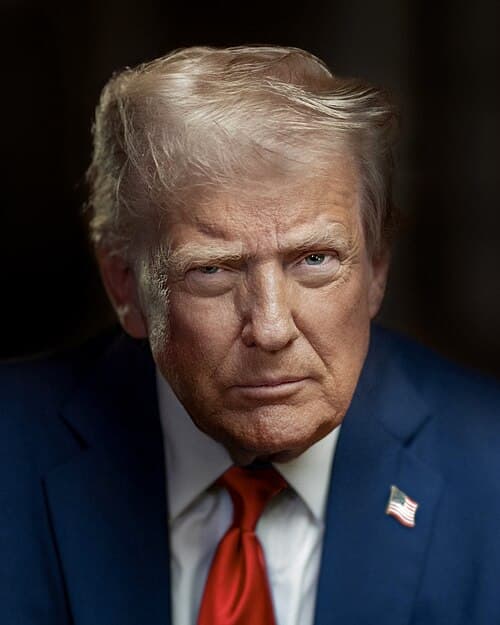
Donald Trump
PERSON • 2 mentions
President of the United States (2017–2021, 2025–present)

Marine Le Pen
PERSON
French politician (born 1968)
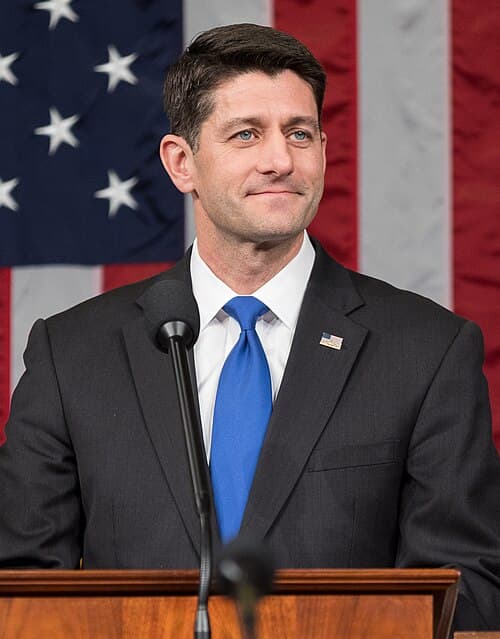
Paul Ryan
PERSON • 2 mentions
Speaker of the United States House of Representatives from 2015 to 2019

Reince Priebus
PERSON
Chairman of the Republican National Committee from 2011 to 2017

Atlanta Fed
ORGANIZATION
Capital city of Georgia, United States
BAMLI Frankfurt
ORGANIZATION
Organization referenced in documents

BANA Australia
ORGANIZATION
Country in Oceania
Bank of America
ORGANIZATION • 2 mentions
American multinational banking and financial services corporation
Bank of America Corporation
ORGANIZATION
American multinational banking and financial services corporation
BofA Merri
ORGANIZATION
American multinational banking and financial services corporation
BofA Merrill Lynch
ORGANIZATION
American investing and wealth management division of Bank of America
BofA Merrill Lynch Global Credit Research
ORGANIZATION
Organization referenced in documents
Casa de Bolsa
ORGANIZATION
Organization referenced in documents
Comisi6n Nacional del
ORGANIZATION
Organization referenced in documents

Comisién Nacional de Valores
ORGANIZATION
Uruguayan football club based in Montevideo, Uruguay
Comissdo de Valores Mobiliarios
ORGANIZATION
Organization referenced in documents

DIFC Branch
ORGANIZATION
Town in Newfoundland and Labrador
DSP Merrill Lynch Limited
ORGANIZATION
Organization referenced in documents
Financial Services Authority
ORGANIZATION
Former quasi-judicial body in the UK
Insurance Corporation
ORGANIZATION
Organization referenced in documents

Investm
ORGANIZATION
Commitment of resources to achieve later benefits
Israel Securities Authori
ORGANIZATION
Organization referenced in documents
Lynch Argentina SA
ORGANIZATION
Organization referenced in documents

Medicaid
ORGANIZATION
United States social health care program for families and individuals with limited resources

Merri
ORGANIZATION
Commune in Orne, France
Merrill Lynch
ORGANIZATION • 5 mentions
American investing and wealth management division of Bank of America
Merrill Lynch Canada Inc
ORGANIZATION
Organization referenced in documents
Merrill Lynch Capital Markets Espana
ORGANIZATION
Organization referenced in documents
Merrill Lynch Equities (Australia) Limited
ORGANIZATION
Organization referenced in documents

Merrill Lynch Global Wealth Management
ORGANIZATION
Investment management and financial planning service
Merrill Lynch Interna
ORGANIZATION
Organization referenced in documents
Merrill Lynch International Bank Limited
ORGANIZATION
Organization referenced in documents
Merrill Lynch International Incorporated
ORGANIZATION
Organization referenced in documents
Merrill Lynch KSA Company
ORGANIZATION
Organization referenced in documents
Otoritas Jasa Keuangan
ORGANIZATION
Organization referenced in documents
Pierce, Fenner & Smith Incorporated
ORGANIZATION
Merrill Lynch (Pierce, Fenner & Smith)
SA de
ORGANIZATION
Organization referenced in documents
the Central Bank of Ireland
ORGANIZATION
Organization referenced in documents
the Central Bank of the Russian Federation
ORGANIZATION
Organization referenced in documents
the Prudential Regulation Authority
ORGANIZATION
Organization referenced in documents
the U.S. Trade Representative
ORGANIZATION
Organization referenced in documents

Frankfurt
LOCATION
City in Hesse, Germany

Massachusetts
LOCATION
State of the United States of America

Philadelphia
LOCATION
1993 film by Jonathan Demme
Singa
LOCATION
Figure from the mythology of the Batak people of North Sumatra
srael Limited
LOCATION
Location referenced in documents
Statistics
Pages:10
Entities:50
Avg. OCR:93.2%
Sponsored