EFTA00205974_email_002
Document Information
Bates Range
EFTA00205974_email_002
Pages
2
Original Filename
EFTA00205974.pdf (email 2: RE: Jane Does 1 and 21 United States - Hearing on Friday, Au)
Document Content
Page 1 - EFTA00205974_002
I ;V\ From: M, (USAFLS) Sent: Wednesda , Au ust 17, 2011 2:50 PM To: . (USAFLS) Cc: (USAFLS) Subject: RE: Jane Does 1 and 21 United States - Hearing on Friday, August 12, 2011, at 2:00 p.m. I think it's a good idea to seek leave to submit additional briefing on the issue of impairing prosecutorial discretion if CVRA rights are found to attach prior to the filing of a formal charge. I would be careful with the waiver of sovereign immunity argument. Only Congress can waive the sovereign immunity of the United States, and it does so through enactment of statutes. If the government's filing of a formal criminal charge constitutes a waiver of sovereign immunity, that would only be so because a federal statute so provides. I am aware of none. Title 28, United States Code, section 1345, confers subject matter jurisdiction on the federal courts where the United States brings the civil action. This does not constitute a waiver of sovereign immunity to any counterclaim the defendant wants to file. Thus, submitting to the jurisdiction of the court, by filing a lawsuit as a plaintiff, does not open up the federal government to a counterclaim. I believe the same logic would apply in the criminal context. Also, actions for specific relief, e.g. injunctive relief, against U.S. Government officials have been allowed under the theory that the claim being made is that the federal government official acted beyond his or her statutory authority, e.g. ultra vires. Since the official is acting beyond his statutory authority, the official's actions are considered individual, and not sovereign actions. Larson I Domestic & Foreign Commerce Corp. 337 U.S. 682 (1949). Thus, the action is against the individual official, not the sovereign. As to why a formal charge is necessary before CVRA rights attach, it seems logical that the statute should allow the Attorney General and those acting on his behalf, to exercise unfettered prosecutorial discretion in terms of accepting a case for prosecution, who to charge, what to charge, and when to charge. We should be allowed to do all those things without having to consult with any victims of the offenses. However, once we have exercised our prosecutorial discretion, and formally charged someone, then it becomes less a restriction on our prosecutorial discretion to make us do things like consult, notify victims of hearings, and addressing the court when necessary. Once a case is charged, the government has far less discretion, since our actions are now governed by the Federal Rules of Criminal Procedure, caselaw, and rules of the federal courts. From: (USAFLS) Sent: Tuesda August 16, 2011 5:32 PM To: USAFLS) Cc: (USAFLS) Subject: RE: Jane Does 1 and 2 I. United States - Hearing on Friday, August 12, 2011, at 2:00 p.m. Hi and 1 have been bouncing some ideas around and wanted to share them with you before we shared them with the whole group. It seems that there were two points that were left hanging that were not completely answered during the argument. One was Judge Marra's repeated questions about "how would this really impact the EFTA00205975
Page 2 - EFTA00205974_003
government's discretion," alternatively phrased as, "couldn't you just have picked up the phone and called them?" The second was Cassell's claim that "the floodgates hadn't opened" since the decision in In re Dean. As to the first, I don't think that Judge Marra truly grasped the magnitude of what he was suggesting and certain examples would seem to bring the issue into clearer focus. For example, the position of the movants would require AUSAs (not agents, not victim-witness coordinators, not secretaries), to personally "consult" with every victim in advance of declining a case or deferring to a state prosecution. Imagine how burdensome this would be in cases like these: • A credit card "skimmer" case, where the defendant may have "skimmed" the credit card numbers of hundreds of victims. • A child pornography case, where the defendant may have up to a million images of child pornography on his computer. • A theft of mail case where the defendant may have stolen dozens or hundreds of pieces of mail. • A white collar fraud case with a large number of victims. The court also should consider a situation, like the one here, where one of the "victims" is essentially in the defense camp. By consulting with him/her, especially in a case where we plan to defer to the State, we would be disclosing what could be a confidential investigation. The Court asked Cassell "how far back does it go?" The distinction between pre-charge and post-charge is the clearest line, and a line is necessary. It also is an appropriate line for two reasons. First, as I mentioned during the hearing, the United States has sovereign immunity from suit. We waive that immunity when we submit to the court's jurisdiction — via the filing of a criminal complaint or an indictment. Thus, drawing the line at the point of filing a charge is consistent with separation of powers principles. Second, prior to the filing of a public charge, there are constitutional due process principles (as incorporated in part in Rule 6(e)) governing the defendant's right not to be publicly accused of a crime without the opportunity to defend himself. By waiting until there is a public charge, there can be no claim of violation of grand jury secrecy. Also by waiting until there is a public charge, there can be no claim of the type of "conflict of interest" that has arisen in this case — where Epstein could manufacture a claim that we are investigating him due to pressure brought to bear by the victims' suit. As to the second point, Cassell's claim that the "floodgates hadn't opened," I beg to differ. I spent about 4 hours yesterday going through district court filings on Lexis Courtlink, and although I wasn't able to review each and every one, I did find several good examples: • Thibeaux I. Doherty, 08-CV-61848, S.D. Fla. (Judge Cohn). Plaintiff sued 2 U.S. District Judges, several AUSAs, the clerk of court, and 2 U.S. Magistrate Judges claiming that they committed the crime of obstruction of justice in connection with his 2255 Petition. The plaintiff asked for relief pursuant to 3771(d)(3). • Piskanini Cameron, 11-CV-76 (W.D. Pa.) Plaintiff sued the Superintendent and Warden of the Prison along with the Pennsylvania Board of Probation and Parole. Plaintiff asked the court to order the USAO to "meet and confer with this crime victim to determine the procedure and need to initial Federal Criminal Prosecutions against petitioner's retaliators." • Hentges I. State of Minnesota, et al., 10-CV-4081 (D. Minn.) Plaintiff sued State of Minnesota, Minnesota Attorney General, 2 Minnesota trial court judges, 1 Minnesota appellate judges, the child support enforcement unit officers in Colorado and Minnesota, and various County Attorneys. Plaintiff demanded immediate "federal protection, including restraining orders" and issuance of arrest warrants, and crime victim compensation. Plaintiff claimed that the defendants violated 18 USC 514 "Presentation of Fictitious Obligations" by forcing him to pay child support that he claimed he had EFTA00205976
Entities Mentioned
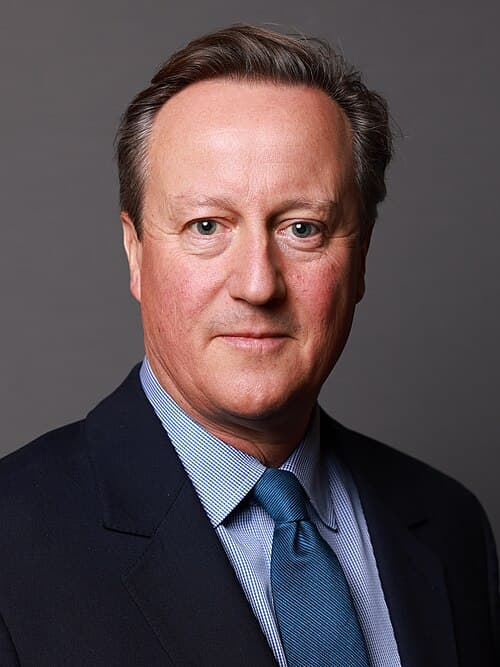
David Cameron
PERSON
British politician (born 1966)
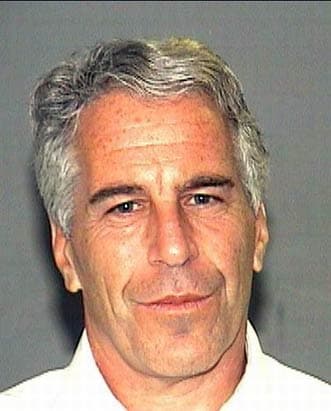
Jeffrey Epstein
PERSON
American sex offender and financier (1953–2019)
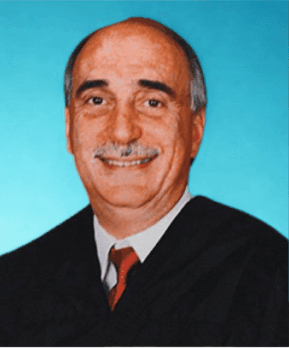
Kenneth Marra
PERSON • 2 mentions
American judge
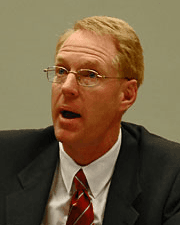
Paul Cassell
PERSON
United States federal judge
PC
Piskanini Cameron
PERSON
Name reference in documents
Federal Criminal Prosecutions
ORGANIZATION
Organization referenced in documents
Larson I Domestic & Foreign Commerce Corp.
ORGANIZATION
Organization referenced in documents
Lexis Courtlink
ORGANIZATION
Organization referenced in documents
the Pennsylvania Board of Probation
ORGANIZATION
Organization referenced in documents
U.S. Government
ORGANIZATION
Organization referenced in documents
Colorado
LOCATION
State of the United States of America
I. United States - Hearing
LOCATION
Location referenced in documents

Minnesota
LOCATION
State of the United States of America
Statistics
Pages:2
Entities:13
Sponsored