EFTA00637798
Document Information
Bates Range
EFTA00637798
Pages
1
Original Filename
EFTA00637798.pdf (email 1: RE: Re:)
Document Content
Page 1 - EFTA00637798_001
From: "Noam Chomsky" To: "Jeffrey E." -4 Subject: RE: Re: Date: Wed, 24 Jun 2015 21:50:49 +0000 The third problem can be posed — though few will understand it. The first two can be posed but there is no known way to address them — the first for reasons that Dick Lewontin explained in his important paper on evolution of cognition (which those who write about the topic refuse to read), the second because it reaches to issues that are total mysteries even in much simpler domains — perhaps, though many don't to contemplate the fact, because of limits of human cognitive capacity. Puppet and puppeteer, again. There are lots of narrower problems that can be posed, but there are issues of general import. What was very special, maybe unique, about Hilbert in 1900 was the advances in the field had reached the point so that questions had that miraculous combination of being (1) potentially within reach and (2) of very great import for the field of mathematics. That's hard to achieve. Will think more about it — repeating the Hebrew words to myself. Did you learn them as a kid in Hebrew school? Noam From: jeffrey E. [mailto: Sent: Wednesday, June 24, 2015 5:09 PM To: Noam Chomsky Subject: Re: Re: I understand the limitations of questions too far from the boundary of contemporary thought but as you speak hebrew. i will paraphrase the reason you should consider posing the questions now. -- If not now. when? On Wed, Jun 24, 2015 at 3:59 PM, Noam Chomsky < wrote: The main questions that interest me are about origin of the language faculty, which, I think, created modern humans, the most unusual, nutty, and remarkable of all biological phenomena. There are two problems that seem beyond reach: the origin of elementary human concepts, which appear to be radically different from anything in the animal world; and the "creative aspect of language use," the phenomenon that astonished Galileo, Descartes, and other leading figures since. The third problem has to do with what we've been calling "the Basic Property" of language: a recursive procedure that generates an infinite array of hierarchically structured expressions interpreted at the interfaces, primarily the conceptual-intentional interface, providing a "language of thought." The most fundamental question here is to what extent the Strong Minimalist Thesis (SMT) holds, that is, to what extent has nature produced a perfect solution to the Basic Property, which underlies our creative capacities in language (and probably much else). That problem can be addressed, and has been, I think with some success. Very generous proposal. Made good sense for Hilbert in 1900, given the advances of the past century. These enabled him to formulate problems of deep mathematical significance in a form that was not too far from contemporary understanding. But my feeling is that the cognitive sciences is nowhere near that stage. It's possible to pose many narrower problems, and that's in fact what people work on from grad school on to the limits of research. But understanding, I think, has probably not reached the stage where one can sensibly do what Hilbert did. Others incidentally disagree — as is usually the case. EFTA00637798
Entities Mentioned
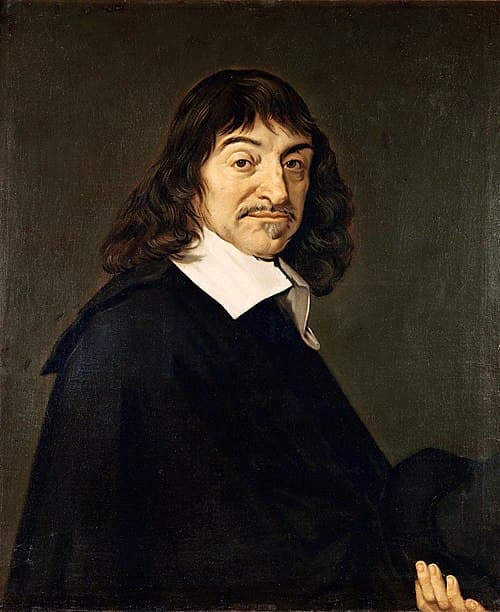
Descartes
PERSON
Surname reference in documents
DL
Dick Lewontin
PERSON
Person referenced in documents

Hilbert
PERSON
Surname reference in Epstein-related documents

Jeffrey Epstein
PERSON • 2 mentions
American sex offender and financier (1953–2019)
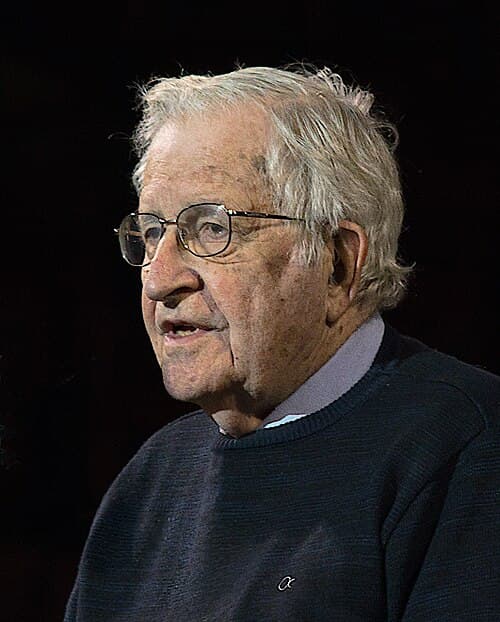
Noam Chomsky
PERSON • 2 mentions
American linguist and activist (born 1928)
the Basic Property
ORGANIZATION
Organization referenced in documents
the Strong Minimalist Thesis
ORGANIZATION
Organization referenced in documents
Statistics
Pages:1
Entities:7
Sponsored