EFTA00040963_email_045
Document Information
Bates Range
EFTA00040963_email_045
Pages
36
Original Filename
EFTA00040963.pdf (email 45: RE: Questions regarding MCC placement)
Document Content
Page 1 - EFTA00040963_596
Lake The AUSA is hoping to get an answer by Thursday. Thank you From: Sent: Tuesday, October 8, 201910:18 AM To: Subject: RE: Questions regarding MCC placement Hi Deputy Thanks again for speaking with us yesterday. While we wait for the medical summary from the UK, I've attached a report from an expert hired by attorneys, which outlines the following conditions: • High cholesterol (takes Simvastatin) • Hypertension (takes Amlodipine) • Blood tests suggest Mottiwala is pre-diabetic • Takes aspirin to prevent blood clots • Fatty deposits on liver, due to alcohol consumption • History of depression, including at least two overdoses (Diazepam) • Taking Sertraline for depression (previously took Mirtazapine) • Suicidal thoughts (scored 47 of Beck Depression Inventory) • Anxiety disorder • Scored 59 on Impact of Events Scale-Revised, suggestive of a diagnosis of PTSD Thanks, Assistant United States Attorney United States Office Southern District of New York One Saint Plaza New York New York 10007 P: F: Page 9047 EFTA00041558
Page 2 - EFTA00040963_597
Properties Property Value MessagelD 5D9C8D6E.BRODOM 1.BROADM1.200.20000133.1.5 2321.1 From (USMS)" Display Name (USMS)" EMIR UUID 20EFB819-24BD-0000-8ADF-000000000000 Reply To Test (USMS) (BOP) To Subject FW: Questions regarding MCC placement Scheduled date 2019-1008 l2:5510 Creation dale 2019-10-08 125503 Modified date 2019-10-08 132130 Delivered dale 2019.10-08123596 Message she 1330 Attachments she 0 Total she 0 Attachments 3 Attachment TEXT.htm Name TEXT.Inm Content ID SD9C8747.BRODOMI.BROADM1.200.2000083.1.5 [email protected] [email protected] DM1.200.20000B5.1.93175.I@OPSD9C8D6EBR ODOMI.BROADMI.100.1306.56E. 1.A34211.1@149 64B642BRODOM 1.BROADMI.1C0.130656E. 1.1'3. l@l3 Is Inline fake Type file Size 13514 CA 224abeed4:166061107811e89301d1S21 Hash 721F5CDCDAEB363DFC3FSFOIBD84C303BED96199 A.SR,YSB99E0FF18B9DF8D4571E67689E Attachment 762612569MOTIWALA Dr Cumming Report [viewedtpdf Name 762612569MOTIWALA Dr Cunning Report [viewed].pdf Content ID 5D9C8747.BRODOMLBROADM1.2012000083.1.5 231C.1€455D903D6E.BRODOMLBROADMI.200.2 000083.1.52321.1€13D9C8D6EBRODOMLBROA [email protected] ODOMLBROADM1.100. I 306i6F.I.A342B.1@ 1:40 64B642-BRODOM LBROADM I. 1 00.130656E.1.F3. IC)13 Is Inline fake Type It Sin 172204 CA falaf77clae6839417bd8168051e1413 Hash D089199A828DFDF7BA45BFtuU9tFADCE3C2D7E142A8EF50BADA9DFCE49E7A5446182C474 Attachment Mine.822 Name Mirne.822 Content ID 5D9C8747.BRODOMLBROADMI.2032000083.1.5 [email protected] 000083.1.52321.1Q 1 5D9C8D6E.BRODOM LBROA DM1.200.2000065.I.93175. I @49:5D9C8D6E.BR ODOM I.BROADM I. 1 00.1VI656E. LA342B. I@1:49 64B642.BRODOM LBROADM I. I00. I W56E I.F3. l(4)13 Is In0ne fake Type fib Size 261713 CA 7215fa6932dc49854e2a61a8fa51a96a Hash 459F1B47D354209425C112303840B158C723219E CC7A89865A7EB7C27D I8F120DBFC4FOE Recipients Recipient Display Name Email Distribution Type TO Recipient Type User Expire 0 Delay delivery until 0 Delegated false Archived fake Read fake Deleted fake Opened true Completed fake Page 9048 EFTA00041559
Page 3 - EFTA00040963_598
Security Normal Box type Inbox Return notification .hen opened false Re turn notification 'hen deleted fake Return notification ashen completed fake Return notification 'Olen declined fake Return notification .hen accepted fake Archive %'ersion 5.3 Internal ID 5D9C8D6E.BRODOMLBROADM1.203.2000083.1.52321.1@1:5D903D6EBRODOMLBROADMI.200.20 [email protected] DM1.100.130846C LA342B.1@1:496413642.BRO DOMI.BROADMI.100.130656F I.F3.I@I3 Source received Class Public Account Nicole [email protected] Location II) 1540842508334 Class Name GW.MESSAGEMAIL Enclosing Folders 0 Page 9049 EFTA00041560
Sponsored
Page 4 - EFTA00040963_599
Audits Date i Action i Auditor Note Page 9050 EFTA00041561
Page 5 - EFTA00040963_600
Mail Attachment 762612569MOTIWALA Dr Cumming Report [viewed].pdf Page 9051 EFTA00041562
Page 6 - EFTA00040963_601
Psychiatric Court Report (In Confidence) Name Prison number A5973EF URN Number 86SX2789218 Date of birth 6 November 1966 (aged 52) Date of report 25 June 2019 Introduction 1. I prepare this report at the request of The Crown Prosecution Service. I am a medical practitioner, employed by The South London & Maudsley NHS Foundation Trust and work as Consultant Forensic Psychiatrist. I am approved under Section 12(2) of The Mental Health Act 1983 (2007 amended). 2. I have been a qualified medical practitioner since 1988 and a consultant psychiatrist since 1998. Until April 2015, I worked for around 19 years' full time at HMP Belmarsh. In that time, I assessed and examined around two thousand defendants charged with homicide and thousands of prisoners charged with other offences. I have extensive experience as an expert witness in both preparing medicolegal reports and attending court. For around two decades I have been regularly instructed by courts, defence, Government Legal, Treasury Solicitors and The Crown Prosecution Service on a range of criminal cases but especially cases such as homicide, terrorism and other serious and high-profile offences. This includes giving evidence on mental health issues such as fitness to plead, diminished responsibility, insanity and sentencing with appearances at The Magistrates Court, The Crown Court, Coroners Court and The High Court/Court of Appeal. 3. I also undertake regular work on civil cases and prison related issues. I have been asked to prepare reports The Ministry of Justice, The Department of Health and other government departments. I have been asked to prepare reports for coroners, The Treasury Solicitors on deaths in custody and on near deaths under Article 2 — this includes the D inquiry. I have been asked by the Department of Health and The Prison Service to review several prison related issues. I am now the clinical lead for Criminal Justice Liaison and Diversion Services for The South London & Maudsley NHS Foundation Trust. I provide services at Camberwell Green Magistrates Court, Croydon Magistrates Court and various police stations in South London. I was in the past clinical lead for three other court liaison and diversion services in South London. For three years, I worked one day a week at The Central Criminal Court, where I gave advice and helped challenging cases through the court. I am well respected and in good standing within courts across London and known to Judges, solicitors and counsel at all levels. Psychiatric report on I URN: 86SX27892§18 1 EFTA00041563
Sponsored
Page 7 - EFTA00040963_602
4. My areas of specialism and expertise are in mental health services in prisons, Forensic psychiatry, general adult psychiatry, substance misuse and neurodevelopmental psychiatry. 5. To prepare this report I have used as a basis an interview with Mr on 20 June 2019 and the following: • Statements and depositions surrounding the index offence. • A list of previous convictions • Copies of medical records from HMP Wandsworth • Family medical records from Pakistan • Medical records of Mr from Pakistan • Psychiatric reports prepared by Professor Neuropsychiatry dated 16 May 2019 and 22 June 2019 • Supplementary documents (see appendix) , Emeritus Professor of 6. I understand that Mr is charged with conspiracy to launder money and conspiracy to collect credit extension by extortionate means and is sought for extradition to the United States of America for trial Background 7. I went through with Mr the background history provided.ofessor to confirm this was correct. Thus, he confirmed that his father Mr Moti died in 2011 at the age of 70 from congestive cardiac failure following a myocardial infarction and stroke. Prior to this his father had suffered from high blood pressure, diabetes as well as depression and anxiety with the comment from Mr that he believed his father had seen a psychiatrist and suffered from asthma. He had been close to his father and said that they shared a business and had commented that his parents lived separate lives as his father was often travelling. He commented that his mother was more of a housewife with little in the way of education. 8. His mother, is aged 78 and lives in Karachi; she had been his first wife and lives with Mr and his second wife. There is reference in the report of Professor that she had recently had a silent heart attack and in the past a cardiac angioplasty with the comment that she suffered from high blood pressure and diabetes. He added when I saw her that her heart showed 30% efficiency. She also had seen a psychiatrist for depression in the past and he reported a good relationship with her. He said, 'she is everything to me, sacrificed for me.' He told me that he speaks to her each day on the phone and said that she often cries. 9. He has an older brother and a sister; his brother, is 53 and involved in the family business. Of this he told me that it involved stocks and shares and had been running as such since 1953 and explained that it was founded by his grandfather, which his father Psychiatric report on I URN: 86SX27892§18 2 EFTA00041564
Page 8 - EFTA00040963_603
then took over. His brother is married with three children and suffers from depression and potentially had seen a psychiatrist in the past and Mr commented, 'due to the pressure. His sister, is 54 and separated from her husband but had four children. He said that one child had encephalitis and died in 2013. As with others in the family, she suffered from high blood pressure, diabetes and depression — for the latter she has seen a psychiatrist and was on anti-depressants. 10. He was born and grew up in Karachi and had a comfortable and affluent lifestyle; he was close to both parents but saw more his mother as his father was often travelling. There is no reported history of any traumas or abusive experiences as a child. 11. He attended a primary and private missionary secondary school; he found school reasonable but was quiet and academic, though played sports and in various teams. He took his matriculation and then higher examinations with the latter in science and pre- medical subjects. 12. After leaving school at 18 he went to Hyderabad Dental College for 3 years out of a 4-year course and had at the same time being continuing with his own business which ultimately led him to leave college and prioritise his business and family interests. He had told Professor that he had dealt in stocks and shares from the age of 15/16 and not particularly interested in dental work. 13. From 1988 to 1995 he worked abroad and introduced private clients to companies such as Merrill Lynch for which he received a commission. He later developed an office in Hong Kong and in 1995 set up a factory in Dubai making insulation for air conditioning units and retained a residence there from around 1989. 14. In 1997 he stood for election in Pakistan but lost by a small margin and had told Professor that he did not like the political way of life and explained that there was a lot of corruption and so left politics to return to business in 1998. He had outlined that his business developed into Real Estate in both Pakistan and Dubai. He said that he was involved in development and buying and selling whilst making commissions. He said that he made good money and lived comfortably but had a lot of people to support and later told me that he had limited savings. I asked what he did for pleasure and he said this was mainly going to casinos, restaurants, time with the family, the beach and so forth. 15. He divides his time between Dubai and Karachi with usually two periods of 5 days each month in Dubai but also has travelled extensively and outlined the various countries he had been in such as Cyprus before he came to the UK at the time of his arrest. He said that he works 16 to 18 hours a day and from the moment he wakes up to when he goes to sleep; he said that he works 365 days a week. He said that the only break is when he travels adding that the stress is too much. He told me that he likes the work but also is bound/tied to it and due to the family complexities, he must keep going. He said that his Psychiatric report on I URN: 86SX27892§18 3 EFTA00041565
Page 9 - EFTA00040963_604
brother works in the business for his own family but also his three families and his sister and other in-laws connected to his second wife. 16. He had first come to the UK in July 1981 with his father and then several subsequent short breaks and said that these were mainly pleasure. He had been to the USA twice; once in 1986 for 6 months and the second occasion was in 2011 for only a few days whilst visiting London and visiting a friend in Atlantic city. 17. When he was arrested, he had been in the UK for an 8-day holiday and was due to fly back to Pakistan two days later and for the festival of Eid. 18. He was first married to (now 47) in 1996 through a Moslem ceremony and civil registration with reports from Mr that it was a love marriage but precipitated when she became pregnant. He has reported that the relationship developed more into a friendship and described her as not well educated. The two have a son,. who is currently a college student and taking his higher school exams. He has said that his son has had problems with substance misuse and has led to two periods in rehab. Differences in how to bring up their son had led to difficulties between Mr and his wife. The two live in one of his homes in Karachi and he would visit them regularly when he was in Pakistan. 19. He was next married to (now 36) in 2004 and once more through a Moslem ceremony and civil registration; again, he said this was a love marriage. He and had two children, (son) aged 12 and (daughter) aged 8 with the comment that his son has congenital hydrocephalus and had a shunt to relieve the CSF pressure. At the time of his arrest he had come to the UK with his medical documents to seek a second opinion. 20. He also has a third wife, who he developed a relationship with whilst married to with Mr commenting that he now has three wives and remains married to all. had been an air hostess with Pakistan International Airlines. They have two children, aged 2 (daughter) and Hadi (son) aged 8 months adding that he travelled shortly after his birth and saw him for only 1 hour. His third wife also lives in Pakistan and he had reportedly visited all wives each day and would spend some time with each with reports that he employs around 40 to 50 people who look after his families. He told me that family is very important to him Past psychiatric history — account from Mr 21. Mr told me that his mental health difficulties became apparent in 1991 when his business was booming, and he was introducing clients to large firms and working as an agent/worker to various major companies. There was a jolt in the market, and he suffered a financial blow and a loss of respect within the community he was working in. He informed me of the concept of Memon and added, 'the Jews of the East' and how in his Psychiatric report on I URN: 86SX27892§18 4 EFTA00041566
Sponsored
Page 10 - EFTA00040963_605
position, it meant that he had to fulfil financial commitments despite the hardship on himself. He said that he had been taught to be dedicated by his father and for example would always be early at homes and even before they woke up. 22. At that time, he felt low in mood and did not want to see anyone and began to isolate himself; he also experienced anxiety and had less self-respect. He said that for 6 months he had thoughts of taking his own life and isolated himself and can recall being in a room the whole day, sneaking out at night. He eventually managed to fulfil his commitments and over time turn things around through loans and small commissions. He said that he went to see a psychiatrist but only went on perhaps one or two occasions and was put on a tranquilliser adding that he was suffering from insomnia. 23. He said that he had problems on and off until 2008, when there was a big market crash and at the same time problems with his wife and adding that his wife did not let him see him due to having a second wife. He said that financial problems also occurred, and his father had a stroke. He felt under considerable stress. He said that the world around him began to fall apart and this then impacted on his health. He commented that he was already suffering from hypertension. He told me he went to see a psychiatrist and was put on an anti-depressant and propped up by motivation from his second wife. 24. He reported that his mood was low from 2008 until today. He said that he had periods when his mood is better and more in control. He said that this is partly the reason why he would take short breaks to help him relax. He commented that he has never been out of his home country (Pakistan) for more than 15 days in his life. He said that he has been on an anti-depressant since 2008. 25. He told me that he would see a psychiatrist intermittently and occasional follow ups such as every 6 months but would go more often if he felt worse. 26. He told me that there were in fact 3 overdoses in 2008, 2011 (following his death) and 2015. He said that on each occasion he had taken an overdose of medication combined with alcohol. He told me 'of course I wonted to die' when I asked if he had intended to take his own life. He said that in 2011, he had been with Malia and who took him to the hospital and on the last occasion, he had been drinking a bottle of spirits and added that he had regular blackouts. 27. Mr also has a range of physical health issues and told me that he has some blockages within his coronary arteries and said that he also has a fatty liver which he thought was partly related to alcohol. 28. He told me that in the UK he was on a statin and a blood thinner (aspirin); he was also on medication for his blood pressure. He was on Olanzapine and Mirtazapine. He said that he was not at the time of his arrest taking the anti-depressant and said that he had felt Psychiatric report on I URN: 86SX27892§18 5 EFTA00041567
Page 11 - EFTA00040963_606
better. I asked why he was taking an anti-psychotic and he said that this was prescribed in Karachi. Past psychiatric history — account from records 29. I have read through previous records and the summary from Professor including the recent report which summarises the witness statement of Dr Consultant Psychiatrist at the Rahim Hospital in Karachi. In that report Dr he had agreed with the report and opinion of Professor . Dr was surprised to hear that Mr was in prison and went on to say that he had seen Mr around 20 times since 2008 and that he was severely depressed and a suicide risk adding that he had tried to take his life on at leastiievious occasions. Professor also outlines some handwritten notes from Dr which I have amalgamated into my report. states that 30. Professor has also spoken to Dr on the telephone and again re-iterated that Mr is suffering from severe depression and anxiety. He said that Mr was sometimes non compliant with treatment and financial crises and domestic issues had led to the suicide attempts; additionally he commented that his alcohol intake had increased over time. After outlining symptoms, he believed that Mr would deteriorate if extradited and prone to get depressed if he did not see his son with the comment that he had talked about cutting his wrists. He was certain that he would attempt suicide if he was extradited. 2008 31. On 10 July 2008 he presented with some physical health complaints including shortness of breath, abdominal pain and palpitations; this led to various investigations and the following day had an exercise stress test which had to be stopped. A resting ECG was normal as was an ultrasound though some fatty changes to his liver was seen. 32. On 3 September 2008 he was discharged from hospital following an overdose of prescribed medication; at that he had been on Haloperidol (5mg TDS), procyclidine and ranitidine. He was given a stomach wash out and admitted for observation and discharged the following day. It was that he would have psychiatric follow up. The hand written notes from Dr outlined that he had seen him for the first time that year having been referred through the department of medicine following a suicide attempt after some heavy business losses. He was agitated with negative thoughts and was diagnosed with depression and anxiety. 2009 33. On 21 February 2009 he complained of abdominal pain, loss ofle ite and weight loss. The hand written notes from Dr outlined that he saw Mr= on 10 March 2O09 Psychiatric report on I URN: 86SX27892§18 6 EFTA00041568
Page 12 - EFTA00040963_607
when he was agitated but had insight; he continued to complain of conflicts at home, poor sleep, aches and palpitation. Dr saw him again on 20 September of the same year when he was again severely depressed due to family problems. 2010 34. The hand written notes from Dr outlined that on 28 March 2010, Mr admitted to frequent suicidal thoughts partly due to marital problems; he had become more agitated and only able to sleep for 3.5 hours at a time. He continued to complain of mood swings; his previous treatment was continued. On 1 July 2010, he presented with heartburn, abdominal pain and pain on passing urine. On 5 July 2010, his cholesterol was found to be raised. Dr saw Mr again that year on 30 September 2010 when he once more had negative thoughts but also an inability to control his anger and the comment that he was frequently shouting at family members. His alcohol and smoking had increased and he once more had body aches and frequency of passing urine. 2011 35. The hand written notes from Dr outlined that he was seen on 20 March 2011 when again he was severely depressed and following the death of his nephew. He had been intoxicated at his funeral; he was non compliant with medication. Dr saw him again that year on 6 September following an overdose of drugs and alcohol. It was seen as an impulsive overdose and was in denial and again conflict with the family was noted. His father had also died and he was suffering from poor sleep. 2012 36. The hand written notes from Dr outlined that he saw Mr on 9 September when again he had poor sleep and ontoing family problems. He was still drinking and remained concerned about his son. Further mood swings and aggression was noted on 14 October 2012; Mr said that the medication was not helping and had had a manic episode when he almost slapped his wife. His Haloperidol (an anti-psychotic) was increased to 5mg three times daily. 2013 37. The hand written notes from Dr outlined that Mr was seen on 16 April when he blamed his family for his aggression and negativity. He was compliant with his medication. On 19 July 2013, he presented with gastric disturbance, abdominal pain, nausea and vomiting. On 24 July 2013 his liver function tests were abnormal in the form of a raised gamma GT as well as raised cholesterol and other lipid function tests. He saw Dr next on 20 October 2013 when he was noted to be 'severely depressed, doesn't respond to simple questions...has little or no interest in interacting with people.' He said that everyone made him agitated and continued to have problems with his family. Psychiatric report on I URN: 86SX27892§18 7 EFTA00041569
Sponsored
Page 13 - EFTA00040963_608
2014 38. The hand written notes from Dr outlined that Mr was seen on 5 April 2014 when he asked for his medication to be increased; family fights remained an issue and also had concern about his drug habit. He had difficulties in controlling his impulsivity (I believe to alcohol). Dr saw him on 12 December 2014 when he remained depressed and was avoiding his family. 2015 39. On 6 June 2015, Mr was admitted following a drug overdose (with reports he had been on haloperidol, olanzapine, haloperidol, clonazepam and omeprazole) and again given a washout. He was found to be confused, agitated and aggressive. He was prescribed haloperidol intravenously and admitted for observation. On 6 July 2015 he saw Dr and once more complained of depression and anxiety; the overdose of benzodiazepenes was noted. He was admitted for observation but refused to talk about his family. His alcohol intake had increased and he was suffering from palpitations. 2016 40. The hand written notes from Dr outlined that Mr was seen on 15 February 2016 when again he had symptoms of depression, anxiety, palpitations, insomnia and chest pain. On 25 June 2016 he again presented with frequency of micturition, weakness, joint pain and palpitation. A history of depression and anxiety was noted. On 29 June 2016 he was investigated for diabetes and showed an elevated blood glucose. On 31 October 2016 he saw a psychiatrist, Dr who noted that he had depression, high blood pressure and cholesterol. It was noted that he had shortness of breath on exertion as well as palpitations and chest pain on his left side. 41. Following a referral to see a cardiologist, he had a further exercise stress test on 4 November 2016 and again had to be terminated due to shortness of breath and fatigue. An ECG and echocardiogram were completed, the latter showed a mild concentric hypertrophy of his left ventricle. 2017 42. On 12 September 2017, Mr reported heartburn and epigastric pain and on 11 November 2017 he had a cardiac angiogram which showed mild to moderate diffuse plaques in the left middle coronary artery and moderate mixed plaque in the left ascending artery as well as mild disease in four other arteries. The hand written notes from Dr outlined that he saw Mr on 12 November 2017 with complaints of heartburn and exertional palpitations. 2018 Psychiatric report on I URN: 86SX27892§18 8 EFTA00041570
Page 14 - EFTA00040963_609
43. On 17 July 2018 he presented with depression as well as anxiety, high blood pressure, anorexia and heartburn. The hand written notes from Dr outlined that on that day he seemed paranoid and only focussing on negative things. He remained concerned about his drug habit and complained that the current dose of medication was not working. 44. Additional to the records, Professor has also reviewed witness statements from family including his mother , brother. sister and all three wives. These are not repeated here but in summary his mother said that her son had been plagued with illness, particularly depression and that the family all suffered. She went on to outline his personality and attitude to life, again commenting that he had made attempts on his life. She said that the family were in a financial crisis and had recently had a heart attack. 45. His brother said that Mr was the engine of the family and selfless; he said that his depression was severe and again confirmed the attempts on his life. Mr had asked for his body to be repatriated. 46. His sister said that Mr was the glue of the family and looked after all financially. She said that they were close and he was law abiding and again suffered from depression with the comment that at times he was so low that he had tried to end his life. 47. His first wife said that Mr was selfless and had a close relationship with him; once more she said that he had depression and was not that strong. His second wife, confirmed many of the issues which have already been outlines about their son and how Mr mental health had deteriorated since his father died in 2011 and a strong family history of depression. She said that her husband tried to conceal his depression and in 2018 and shortly before his arrest had confided to her that he had thoughts of ending his life. She said that he was very low and was petrified he would take his own life. 48. His third wife, said that her husband was well respected and again confirmed he had suffered from depression. She had recalled finding him slumped unconscious with an empty bottle of pills in around July 2015 and following a feud with his previous wife. She said that he was rushed to hospital. She said that since he had been arrested he had become more and more upset and down. She was worried she would lose their home. Use of alcohol and illegal drugs 49. Mr has not used illegal drugs but had drank alcohol (despite being against his religion) to relieve stress. In the preceding 5 years he had been drinking around half a bottle of spirits each day or beer if spirits were not available. Professor had reported that he had fatty deposits in his liver and had also suffered from blackouts. There is no sign of dependency and I noted that he tended to start drinking at around 10 Psychiatric report on I URN: 86SX27892§18 9 EFTA00041571
Page 15 - EFTA00040963_610
pm and said that he would not sleep until around 0600 adding 'because of the stress and insomnia.' Forensic History 50. I noted that Mr has never been in trouble with the law and indeed has never had a driving certificate. Index offence — account from Mr 51. I asked Mr what his understanding was of the charges against him. He seemed to demonstrate knowledge of the allegations against him and thus he reflected that he could not be sure that the evidence about meeting informants was not made up. He said that what he knows about D-Company is from the news. He told me that he was shocked about the allegations against him and said, 'there was one guy whom I met who was trying to lure me into something illegal, but I reported it to the authorities.' He told me that he has found it difficult to concentrate on the papers which he had been provided with. 52. I asked Mr what it would mean if he were found guilty. He demonstrated a clear knowledge and fear about the consequences of being found guilty and told me he would get 20 to 25 years or life without parole for one of the offences. I asked Mr what a ur was. He told me that they are there to try the case and give a verdict. I asked Mr what the function of the judge was. He told me that he tries the case and agreed that he gave the sentence. He told me that he due in court in early July for the main hearing and trial at Westminster Magistrates Court. 53. He told me that the claims that he has been involved with D Company is, '100 percent rubbish'. He told me that he is not involved with any such organisation. He told me that he has always been open about his travels and thus before London was in Cyprus and listed the various countries, he had been in. I went through the various issues and he said that is all false 54. He said that he feels confident that he can prove his innocence and added, 't am not involved in any illegal activity' and he questioned that he did not trust the USA and added 'the whole world does not trust them' and believed he would have an unfair trial and also cited the Prison conditions in the USA. He said also, 'the racism, the food, the prison conditions, the isolation, the torture' and said that he would be physically tortured. He said, 'they will kill you for nothing'. He said that there is justice in the UK and a country where his rights would not be deprived. 55. He said that his knowledge is not based on personal experience but what he has read in the news and what he has been told. He told me, 'everyone knows; it is on open secret.' Psychiatric report on I URN: 86SX27892§18 10 EFTA00041572
Sponsored
Page 16 - EFTA00040963_611
56. I asked about what would happen if the deportation was inevitable and he said that he would take his own life and added, 'that is the only choice.' He cited a recent supreme court ruling in which appeals had been denied. He said that you cannot defend abusive process in the court of law in the USA. He told me that he is objecting to the extradition due to not getting a fair trial, and that he is innocent as well as complaints about the prison conditions and that it will impact on his mental health. He also cited his human rights. Index offence — account from statements 57. Mr is charged with conspiracy to launder money and conspiracy to collect credit extension by extortionate means and is sought for extradition to the United States of America for trial. 58. The documents are extensive but in summary, it is alleged that Mr (referred to as ) is a lieutenant in D-Company, an international criminal organisation based in Pakistan, India and the United Arab Emirates. The leader and his top lieutenant Anis Ibrahim have been in fugitives since 1993 when D Company was linked to the coordinated bombings in Mumbai. It is alleged that Mr main responsibility is conducting money laundering and extortionate debt collections for D Company Mr is reported to travel extensively and conducts meetings on behalf of 59. Mr has been investigated and is alleged to have spoken to 3 confidential FBI sources. The first CS-1 posed as a representative of La Cosa Nostra and Russian organised crime entities based in New York. CS-1 and CS-2 attemiaito facilitate criminal dealings between those groups and D Company. CS-1 met Mr in the United States in 2011 and subsequently visited with Mr in Pakistan in December 2011 and May 2012. During their meetings in Pakistan in December 2011, CS-1 explained that the criminal organizations for which he works are involved in narcotics trafficking that generates large amounts of cash. Mr offered to assist CS-1 in launderi. proceeds of his organized crime associates' narcotics trafficking. In turn, Mr introduced CS-1 to a co-conspirator ("CC-I"), who Mr explained is the lead money launderer for D-Company. 60. Since returnin to the United States from Pakistan in late 2011, CS-1 has communicated with Mr and CC-1 via telephone and email in furtherance of the money-laundering scheme described above. To date, CS-1 has laundered approximately $1,400,000 of purported narcotics proceeds with the assistance of Mr and CC-1. The evidence of the money laundering scheme includes: [1) multiple recorded calls between CS-1 and Mr and between CS-1 and CC-1; [2] dozens of emails between CS-1 and CC-1; [3] the deposit receipts for the cash deposits in the United States; and [4] the fraudulent receipts meant to make the round-trip money laundering transactions appear to have resulted from legitimate transactions. Psychiatric report on I URN: 86SX27892§18 11 EFTA00041573
Page 17 - EFTA00040963_612
61. During the meetings in Pakistan in December 2011, Mr and CS-I also discussed Mr ■ involvement in extortionate debt collections by D-Company. Mr explained that, for a fee, D-Company uses its power and ca acity for violence to resolve business disputes. In meetings with CS-1 and CS-2, Mr has discussed various extortionate debt collections by D-Company both in the United States and abroad. 62. Mr explained that D-Company uses its reputation for violence and ability to reach family members in Pakistan and India to resolve disputes stemming from business deals (either licit or illicit) by pressuring the debtor parties to make their payments. D-Company collects a fee of up to 50 percent of the amount collected for its role in resolving the dispute. 63. In May 2012, Mr helped a D-Company associate based in New York ("CC-2") collect a debt of$80,000 from two lower-level D-Company associates based in New Jersey. Mr then demanded an approximately 40-percent payment from CC-2 for having helped to collect the debt. Mr used his status in D-Company to intimidate the targets of both collections and induce the targets to pay the money the owed. In addition, during a meeting with CS-2 in the United States in 2011, Mr referenced D- involvement in extortions in the United States generally, and his role in a extortionate debt collection in Florida in 2010. The FBI has identified the debtor who was targeted by Mr and has spoken to a confidential source in Florida ("CS-3"); who was part of a three-way call in 2010 between Mr and the debtor. 64. In that call, Mr made it clear that he was with D-Company and told the debtor that if the debtor did not pay, Mr would do "what had to be done." In discussin the Florida deEtt collection with CS-2 during the Atlantic City meeting in 2011, Mr explained that D-Company had identified the father-in-law of the debtor who lived "back home" [India or Pakistan] and Mr associates had gone to the house of the father- in-law two or three times [to intimidate the father-in-law]. 65. The father-in-law had then pressured the debtor to pay. Durin CS- first trip to Pakistan in December 2011, CS-1 explicitly discussed with Mr and CC-1 interest in importing heroin from Pakistan to New York. After those conversations, CS-I discussed the details of the heroin importation with CC-I. During a subsequent trip to Pakistan, CC-1 introduced CS-1 to a heroin and hashish supplier. In 2014, CC-1 arranged for a two-kilogram sample shipment of heroin to be sent to New York via Toronto, Canada. Over a series of calls, CS-1 confirmed that CC-1 and his associates would ship multiple kilograms of heroin to CS-1 as a sample of their narcotics supply. CC-1 and the CS-1 discussed price, transportation logistics, and tracking number. Ultimately, CS-1 was notified that four kilograms of heroin had been sent instead of two. 66. As detailed Mr knowledge of the subsequent four-kilogram delivery is corroborated by multiple recorded conversations, following the delivery, where Mr demands repayment. Psychiatric report on I URN: 86SX27892§18 12 EFTA00041574
Page 18 - EFTA00040963_613
67. After the heroin was delivered in Toronto on or about June 4, 2014, it was seized and tested by Canadian law enforcement working in conjunction with the FBI. Thereafter, in order to avoid paying for the drugs, CS-1 explained to CC-1 and Mr that the quality was so bad that CS-1 was unable to sell it. In several recorded calls, CS-1 and Mr discuss the money that CS- 1 owes Mr for the heroin. CS-1 tells Mr inability to pay off the drug debt, to which Mr responded by invoking and threatening CS- MI life if CS-1 did not pay. Ultimately, CS-I paid a partial payment of approximately $19,500 o Mr at a bank account provided. Progress in custody 2018 68. Mr was remanded into HMP Wandsworth on 17 August 2018 and it was identified that he had a variety of medication on him in a dispensing box. He later told the GP that he had arrived in the UK on the 11 August 2018 and thus had no GP in the UK. He said that he suffered from high blood pressure and was on medication for this (Amlodipine) but denied any other medical or psychiatric issue. He was observed to be calm, easy to engage, made good eye contact and no thoughts of self-harm. 69. Following some screening on 23 August 2018 he was deemed suitable to manage his own medication. Again, on 30 August 2018 he was noted to have high blood pressure. He said that otherwise he was fine. 70. His medication of Amlodipine and Aspirin was continued. He reported a stuffy nose on 6 November 2018 and had some routine blood tests on 6 December 2018. He had other appointments with a GP on 18 December 2018 where some blood tests were completed such as for diabetes and cholesterol. 2019 71. Subsequent appointments with primary care were in the context of physical health complaints and the first mention of mental health issues is on 17 January 2019 when he reported that he had a history of depression and had been on anti-depressants in the past. He said that he felt low and anxious about potential extradition to the USA. The GP commented that he was calm, easy to engage, made good eye contact and showed normal speech with no thoughts of self-harm. He was commenced on the anti-depressant Mirtazapine. 72. He reported a painful thumb on 7 February 2019 and on 14 February 2019 told a nurse that the anti-depressant was not working and that he had been on a higher dose in the community — the nurse requested that his anti-depressant was increased to 30mg. This appears not to have taken place and in any event on 5 March 2019 he complained of side Psychiatric report on I URN: 86SX27892§18 13 EFTA00041575
Sponsored
Page 19 - EFTA00040963_614
effects in the form of feeling tired and lethargic and told the nurse that he still felt low in mood and had negative thoughts. The nurse commented that he made good eye contact, showed a good rapport and no evidence of being distracted and no thoughts of self-harm. His anti-depressant was increased at that time. 73. However, on 12 March 2019, he refused to take his medication as he was fasting but agreed to resume the following day. I noted that the prison medical records from this point on have not been provided. Mental State Examination (20 June 2019) 74. Mr engaged well with the assessment and concentrated well, correcting minor details in my report and that of Professor . He smiled at a few points in the interview and there was no evidence of psychomotor retardation or agitation. His speech was of normal rate and volume and overall, he did not appear significantly depressed, though his mood did seem to dip when asked about the case and particularly that extradition might be inevitable. 75. He told me that everything about prison is difficult but said that the disrespect is the worse and every single minute is torture. He told me that he has not seen a psychiatrist in the prison and his mental health has been managed by a GP (though he has asked to see a psychiatrist). He produced some slips to demonstrate that despite his request to see one and how his appointments have clashed. He showed me a letter of complaint. He laughed when he told me that he is the Healthcare representative and the irony of not being able to see a psychiatrist himself. I noted that he became more subdued when talking about this and his family. He told me that his concentration is poor (though this did not seem evident in the consultation). 76. I asked about his experience of prison; he said that he has been in prison for some 10 months and commented that prison was disrespectful, and he never expected to queue for food or clean his cell. He told me that his current predicament is the worst period of his life and he added, 'too much depression and anxiety, I don't deserve what lam going through' and when I asked about going to the USA he told me, 'if they sent me there it would be the last nail in the coffin' and reflected how his family would suffer. He told me, 'they are doing this to me, it is so unfair, my mother is unwell, my family needs me the most.' 77. He told me that he struggled with being locked up 24 hours a day and coping with the shouting and banging, adding that this was especially so when he is suffering from depression and anxiety. He told me that he felt traumatised and cited how he would be handcuffed when he went to court. He told me that it has caused a loss of self-respect and added, 'always in my life, I have been law abiding' and described how he had tried to be a role model and mediate in other problems but now feels helpless and hopeless. Psychiatric report on I URN: 86SX27892§18 14 EFTA00041576
Page 20 - EFTA00040963_615
78. He told me that he remains in his cell all the time and does not go out for association or exercise and said that he also feels terrified in the cell and having to look at the same thing. He has not had any visitors to see him and the difficulties in getting visas 79. He told me that his mood is becoming worse and felt that it is the worst it has ever been. He told me that he often cries when he is praying and uses religion to help divert his thoughts. He told me that he has ongoing negative thoughts and feels hopeless, worthless and can see no future. Though he seemed to concentrate well in the interview, he told me that there is nothing he can to do to take his mind off things and though he might watch TV he does not concentrate. He told me that he has also lost his appetite and thus some weight and estimated 8 to 9 Kilos. He said that he does not like the food and additionally has no interest or enjoyment in it. He is on the phone through the day and night to his family and has a phone in his cell. 80. In terms of his sleep he said that he has poor sleep and finds it difficult to get to sleep, often being awake until the early hours and sometimes awake when the morning comes or is disturbed from sleeping by the sounds of the prison. He said that he tries to get some sleep in the day. He told me that he feels very tired, low energy levels and fatigue. He also has feelings of worthlessness and added, 'you cannot do anything' and, feel a good for nothing.' 81. In terms of his concentration he said that it used to be a lot better but his time in prison has affected his ability to make decisions and added that he has many people depending upon him. He told me that no one can look after his business and added, am the engine of the train and if lam not there it will fall apart.' He commented that he has few savings and must work each day to support his family and added, 'you have to be there' (for the clients). 82. I asked thoughts of death or suicide; he told me that he has daily negative thoughts and such thoughts were, 'coming into my mind all the time' and this was partly the reason why he wanted to see a psychiatrist in prison. When I asked about specific plans, he smiled and said, 1/ will discuss it with you when the time comes.' He said, 'when things are getting out of control you have to...' 83. I asked about auditory hallucinations and he said no; he said that he felt paranoid due to the panic he feels the way he is handled in the prison. He said that he is startled by the noises and said that only a few weeks ago, someone hung themselves and had been after medication himself. I noted that he did not appear startled when I smacked down a pen. 84. He reflected that he is surrounded by hearing people getting long sentences and has seen and experienced people self-harming around him in other cells. He said that he has not self-harmed but sometimes he has banged his head or hand hard when it is too much. Psychiatric report on I URN: 86SX27892§18 15 EFTA00041577
Page 21 - EFTA00040963_616
85. He said that when he wakes, he then begins to feel anxious and he has flashbacks to the time when he was arrested and taken to the police station. He gave an account of this and said he was sleeping in his hotel (a suite at The Hilton in Paddington) after having had a good dinner and night with his wife, explaining that they were due to return to Pakistan. At 1000 the police burst into the room; he said that it was a shock and added that the people had guns and he was taken to the police station and then the court some 12 to 14 hours later, before on to HMP Wandsworth. He commented on how he had to share a cell, 'with someone I don't know, a druggie or hood and I con never forget, the way they handled it bang you up here bang you up there, bang handcuffs, bang you up in a cell.' He said that it is a shock and he has flashbacks and nightmares as to what had happened and added, 'every single day.' He said that the whole experience of prison reminds him as to what had happened. I noted that he did not startle when I hit a pen on the table Opinion and recommendations 86. Mr is a 52-year-old man charged with conspiracy to launder money and conspiracy to collect credit extension by extortionate means and is sought for extradition to the United States of America for trial Diagnosis 87. Depression: Mr has a history of depression dating back over a decade; in the main his condition has been managed through outpatient services (though there is reference to being admitted but no detail on this) and principally seeing a psychiatrist with reports from Mr that he has been on an anti-depressant for over a decade now. There is also reports from Mr of overdoses on three occasions which is supported by documentation from Pakistan and strong confirmation from his family that he had suffered from depression and had made attempts on his life. I noted from reviewing the records that the management of his depression has been through the use of an anti- depressant and an anti-psychotic. The latter is unusual, and I would expect being utilised for its sedative and anti-anxiety effect. 88. There appears to be a reasonable family history of depression and additionally a relationship between his symptoms and the stress that he feels under at any one time (and this probably explains his use of alcohol to help manage that stress). In that respect it would be logical to expect the stress of prison to impact on his mental health. 89. Earlier in my report, I have outlined the current profile of difficulties but in summary he presents with many of the symptoms, which one might expect in depression. I have underlined the symptoms relevant to Mr and in relation to the diagnosis using DSM (Diagnostic Statistical Manual Version 5) where it is known as major depressive disorder. This is a condition in which the individual experiences a depressed mood for most of the day, nearly every day as indicated by either subjective report or observation made by others such as appearing tearful. There is a markedly diminished interest or pleasure in all Psychiatric report on I URN: 86SX27892§18 16 EFTA00041578
Sponsored
Page 22 - EFTA00040963_617
or almost all activities most of the day, nearly every day. There is a significant weight loss or sometimes weight gain as well as a decrease or increase in appetite nearly every day. Insomnia or hypersomnia occur as well as psychomotor agitation or retardation. The individual experiences fatigue and loss of energy as well as feelings of worthlessness or excessive or inappropriate guilt nearly every day. There is a diminished ability to think or concentrate, indecisiveness nearly every day as well as recurrent thoughts of death, recurrent suicidal ideation with or without a specific plan or suicidal attempt or specific plans for committing suicide. These symptoms cause clinically significant distress or impairment in social, occupational or other important areas of functioning. The episode is not attributable to the physiological effects of substance or to another medical condition. 90. In terms of his current functioning, I also utilised some self-report questionnaires to help give some perspective on his symptoms. I firstly asked him to complete the Becks Depression Inventory — Version 2. The BDI-II is a self-report questionnaire with a series of responses in a number of domains, which go towards a total score. There are 3 bands, minimal (0-13), mild (14-19), Moderate (20-28) and severe (29-63). Mr scores 48 i.e. within the upper end of the severe group. I also asked him to complete the PHQ-9 and the GAD-7. The former is an easy to use self-re ort questionnaire, which has a 61% sensitivity and 94% specificity in adults. Mr showed a result of 25 indicating severe depression (0-4 none, 5-9 mild, 10-14 moderate and 20-27 severe). The GAD-7 is a measurement of anxiety, scores of 5, 10, and 15 are taken as the cut-off points for mild, moderate and severe anxiety, respectively. When used as a screening tool, further evaluation is recommended when the score is 10 or greater. Using the threshold score of 10, the GAD-7 has a sensitivity of 89% and a specificity of 82% for GAD. With Mr this showed a result of 19, indicating severe anxiety. 91. PTSD: Mr has also reported being traumatised by the nature of his arrest in the Hilton Hotel (see paragraph 87). The essential features of PTSD are the development of characteristic features following exposure to one or more traumatic events. There is the emergence of intrusive symptoms (memories, distressing dreams, dissociative reactions, intense or prolonged psychological distress and physiological reactions) as well as avoidance of stimuli associated with the trauma. Patients with the condition may have negative alterations in cognitions and mood (an inability to remember an important aspect of the trauma, negative beliefs about oneself, distorted cognitions, a persistent negative emotional state such as fear/anger/guilt/shame, a markedly diminished interest in significant activities, feelings of detachment and inability to experience positive emotions. Finally, there are marked alterations in arousal and reactivity such as irritable behaviour, reckless or self-destructive behaviour, hypervigilance, an exaggerated startle response, problems with concentration and sleep disturbance. The duration of the symptoms is more than one month, it should cause clinically significant distress or impairment in social, occupational or other areas of important functioning 92. To ascertain what is currently present, I utilised a well validated tool, the Impacts of Event Scale- Revised - again, there should be caution, as the reports of symptoms are all largely Psychiatric report on I URN: 86SX27892§18 17 EFTA00041579
Page 23 - EFTA00040963_618
self-reported. This tool, measures difficulties in the preceding 7 days. Mr scored high on most of the items in the scale. It is subdivided into subscales of avoidance, intrusion and hyperarousal. In the latter, he scored for Intrusion (31), avoidance (22) and hyperarousal (21). The total score was 74 out of a maximum of 88. This would indicate significant PTSD with the recognition that overall scores of 24 represents partial PTSD and 33 or more indicating PTSD is present. 93. In terms of his current symptom profile, Mr has reported a range of symptoms which I have outlined above. The use of self-report questionnaires seems to indicate that his symptoms of anxiety, depression and PTSD are severe. It would be wrong to rely solely on self-report questionnaires and to take into account context and clinical impression. I found that clinically the reports of severe symptomatology were not evident in the interview in comparison to many I have seen in prison. I found that within the interview he engaged well and did not appear overtly or obviously depressed and was able to concentrate throughout without issue and as noted, there were points where he smiled and showed a reactive mood. I noted that the medical records from the prison have confirmed that his care has been managed entirely by primary mental health care (i.e. a GP) and he has not been thought to have required the input of seconds mental health care services in the prison such as in-reach or a psychiatrist. Thou h Mr has asked to see a psychiatrist, the gate keeping mechanism of nurses and has not felt this necessary. I also noted there has never been a time when he has required to be on an ACCT (Assessment Care Custody and Teamwork - a document to monitor and manage self-harm/risk). 94. Thus in terms of his current presentation, though his reports of symptoms suggest they are severe, clinically I found that this is largely self-reported and is not supported by the prison clinical records and not evident in the interview I had with him. I would accept that having only met Mr on one occasion, my perception of his illness may not be accurate, for example if he is concealing more symptoms. 95. In consideration of his previous reports of how stress and financial pressures affected him, it would be reasonable to consider that the symptoms he does experience most likely relate to the prospect of extradition and the potential outcome in the USA. I would expect that most individuals facing an uncertain future and removal to a system which is unfamiliar and perhaps harsh, would be troubled and impact on their mental health to cause depression and anxiety. 96. I did not find his symptoms unique and in my experience, his clinical presentation is seen reasonably often in prison and not of a nature or degree to require any significant intervention beyond what is being provided. I noted that he is on an anti-depressant and even if he were to see a psychiatrist, this would likely lead to some changes in medication management but with the acceptance that medication will have a limited value whilst the pressures of bein in prison and extradition remain. Thus, it would be unusual to expect anyone in Mr position to be cheerful and happy. However, cognisant of the Psychiatric report on I URN: 86SX27892§18 18 EFTA00041580
Page 24 - EFTA00040963_619
concerns about his mental health from the family, I believe that in consideration of the reported severity, it would be prudent to inform the prison and facilitate more supervision at this time. 97. Having worked in a high security prison for almost two decades, I have a reasonably strong perspective on how prison affects an individual in terms of their mental health. Perhaps not surprisingly there is a wide range of responses but in the main there are relatively few who would find it a positive experience, apart from those where they are extricated from spiralling drug problems or where the containing effect of prison is beneficial. 98. Taking this into account, it would be reasonable to assert that prison impacts on the majority of people and significantly mental health. Setting aside the concept of people being held in prison who are innocent, in my experience, uncertainty is a key factor. This is seen in those who have an indeterminate sentence or in the past, those on a control order. Many prisoners highlight that prison provides a landscape of no control and powerlessness. Thus, with Mr experiencing a sense of uncertainty combined with loss of control is especially relevant in terms of someone who has been a hardworking man, who has always been in control of his life and responsible for the lives of others. I would add that the argument for a person being in optimum mental health should be balanced with the argument that sometimes, getting on with a matter is also positive as the uncertainty comes to an end. I have often observed this in those who with the prospect of a trial or a sentence, find that once the trial is underway or a sentence is finally passed, then they 'know where they stand' though I would accept with Mr that the movement to the USA is simply another step and not necessarily a resolution. 99. Prisons in the UK and around the world vary enormously in their structure, regime, environment, facilities, levels of occupation and so forth and it is fair to say that there are good and bad examples of prisons throughout the world. Prisons have different processes and facilities aligned to their country, resources, history, legislation and economies to manage prisoners. 100. Healthcare is one such variable in prison; throughout Europe and the world, healthcare remains a challenge. In particular mental health is a specific issue which is widely recognised and overall rates of mental ill health in prison are of broadly similar levels around the world. There are various models in how mental health care is delivered and it is reasonable to say that there is not a consensus on what works best. Regulatory bodies around the world continue to highlight difficulties and in England and Wales, there are regular concerning reports from the Prison Inspectorate in England and Wales which highlight problems with prisons and inadequacies of health care and indeed Mr has highlighted his struggle to see a psychiatrist in HMP Wandsworth. 101. I would not wish to challenge any of the papers Professor has cited in terms of sensory deprivation; they are exactly that, scientific papers. Again, I have no comment to Psychiatric report on I URN: 86SX27892§18 19 EFTA00041581
Sponsored
Page 25 - EFTA00040963_620
make on the findings in that literature. In an ideal world, prisons would be healthy environments which have no impact on an individual, but that is not the case and they are and always will be adverse. 102. The issue of isolation and segregation is not unique to the USA and can occur in all countries depending on the facility and regime. The UK is no exception, with reports in prisons in England and Wales of being 'banged up' for 22 hours a day or more and for some long periods in a segregation unit. There are many examples of this in various literature and for the potential for sensory deprivation to occur in prisons around the world. It is reasonable to say that though certain prison regimes and levels of isolation can cause an effect of sensory deprivation it is not necessarily equivalent. The definition of what exactly is isolation and deprivation needs to be understood; for example, what role does having a TV, access to books, visits from family and le al representatives and exercise have in such a definition. Literature cited by Professor such as refers to specific and controversial work in that area and for example the use of sensory deprivation tanks. I would not argue that isolation and sensory deprivation does not occur — it is noted that around 80,000 are subject to solitary confinement each year in the USA and at levels of being in a cell 23 hours a day. There are many reasons why this might occur and what his might mean and whether that equates with sensory deprivation. Overall, I believe there should be caution in drawing too many conclusions about what can go on, which might occur and how that effect might impinge on an individual. 103. I noted paragraphs 8 and 9 in the opinion section of Professor report. Earlier in the report Professor had reviewed the statement of and , which outlines where Mr might be held and particularly bein held in solitary confinement in a federal prison. I have of course not seen such a prison ) and have no reason to challenge the opinion and description of the facilities and likely difficulties. 104. I noted the statement of and both comment on the conditions pre-trial and post conviction, the various levels of security and their prediction about how and where he will be managed. They also comment on the potential outcome with such comments 'i convicted' and the potential of life imprisonment in a maximum secure facility. has indicated that whilst awaiting trial Mr will likely be held in MDC (Metropolitan Detention Centre) or MCC (Metropolitan Correctional Centre) in New York and is also his view that, 'it is almost certain Mr will not be given bail.' Additionally, he comments that in view of the potential connections to terrorism he would be subject to Special Administrative Measures ( ) which often includes the use of solitary confinement. 105. I noted in the declaration of that there is a further description of the conditions in the prisons in New York. There is also reference to one psychiatrist who divides his/her time between MDC and MCC with responsibility for 2,500 people, as well as long waiting times to see health care and comments, 'given all this, I believe Mr Psychiatric report on I URN: 86SX27892§18 20 EFTA00041582
Page 26 - EFTA00040963_621
health would be at serious risk at MCC.' The report also provides a description of health complaints and issues in the special housing units. I have no specific comment on these remarks and would suggest that it is for the federal prison authorities to provide a defence to these assertions (see below). 106. In this context I have seen the various program documents from the Federal Bureau of Prisons (BOP) correctional facilities and the statements from the medical director and the chief psychologist. I am aware of course that policy and procedure documents sometimes have limited weight and practical application. 107. In many respects, Mr conceptualises the difficulties facing a psychiatrist working in prison. Thus there is a recognition that prison is adverse and can impact on a mental health and that those with an existing mental health disorder might deteriorate further. This is widely known and potentially universally accepted in the UK and across the world. It is also acknowledged that the regime, uncertainty and consequences weigh heavily on a person and their mental health and that harsher regimes can have a more powerful effect. This observation is of course balanced by the recognition that if the individual was released or the charges dropped then that mental health would likely improve, though some will come to be affected for years to come. The psychiatrist and prison mental health services have a role to assist in mitigating as best he or she can the effect that imprisonment has on an individual; however, there will be limitations as to what can be achieved. Despite all these concerns about how prison impacts on mental health, there is of course still a need for prisons and it would be facile to suggest that because prisons affect mental health, they should not exist. 108. Prisons by their nature are often hostile and adverse environments and around the world there will be criticisms raised in each country; even in the UK our prison inspectorate will highlight specific difficulties including levels of mental health disorder, healthcare inadequacies, rodent infestation, time out of cell and suicide. I noted that suicide rate has been highlighted as an issue in federal prisons but a recent paper by Professor Seena Fazel has found that overall, the rate of prison suicides in prisons in England and Wales is greater that the USA (though I noted the specific rates being higher in the USA in those in solitary confinement). 109. I noted the statements of Dr M, who is the BOP medical director and who has signed a statement dated 12 June 2019. In his statement he has reviewed the report of Professor and has commented on both the general provision of medical and mental health care and more specifically the capability of the prison.) to manage Mr individual needs, diagnoses and medication. He has stated that in his opinion BOP, 'will be able to provide a ro riatel for his health care needs.' The statement of Dr is supported by Dr chief psychologist at MCC. Though not referring to Mr specifically, the statement again describes the structure and approach to managing mental health in the prison and comments that, 'MCC and MDC are well equipped to manage mentally ill inmates including those with bipolar disorder, schizophrenia, Psychiatric report on I URN: 86SX27892§18 21 EFTA00041583
Page 27 - EFTA00040963_622
de ression and PTSD.' Finally, after reading the statements of and he states in response to concerns in those documents, 'it is my opinion that the BOP is equipped to safely house defendant 110. Mr has been very clear that if an attempt at extradition is attempted he will make an attempt on his life. Noting a previous history of self-harm and suicide attempts, would indicate that his risk is greater than the average prisoner and the risk should be given appropriate weight. It is more likely to occur in the UK and prior to the actual extradition and thus, if extradition is supported, the court, prison transport and prison will need appropriate awareness and recognition to help mitigate that risk. As in the UK, the prison system in the USA will have appropriate measures and structures to help manage that risk and although such a risk cannot be eliminated, knowing of the risk and his current intention means that managing that risk should be possible and I note the specific comment in that regard by Dr 111. In summary, though Mr is depressed, I did not find his presentation severe in my assessment of him and at this stage can be and has been managed in prison well (it would be useful to have some more up to date prison medical records). Even if my judgement was incorrect and his condition was severe, I remain of the view that his care can be managed in prison. 112. If I were to be responsible for his care in prison, I would not at this stage be recommending his admission to the Healthcare Centre/inpatient unit at HMP Wandsworth and similarly I would not be recommending his removal from prison to hospital, through The Mental Health Act (this provision of course does not apply in the USA). I might adjust his medication and implement other approaches such as counselling, support and structure but overall, setting aside what he is charged with, Mr is not unusual in terms of his symptom profile. I would not necessarily wish to indicate at this time what issues would cause me to change my approach to admission to the Healthcare Centre/inpatient unit or transfer to hospital, as I do not wish to provide a template for Mr Taking account of his emphasis on taking his own life before extradition, I would recommend that the prison review him for consideration of opening an ACCT (Assessment Care Custody and Teamwork - a document to monitor and manage self harm/risk). 113. There is concern that his mental state might deteriorate if he were to be transferred to a prison in the USA; in my opinion this is a reasonable expectation but only in the sense that it would likely apply to most people who are about to be extradited. I would accept that his deterioration might be greater but again should be manageable in a USA prison. The USA is not a third world country and indeed quite the opposite. Being transferred to a prison in the USA does not mean he is excluded from healthcare input and indeed should be able to access services in some shape or form. Medication will be available and I would expect that his current regime (or an equivalent) will be continued. Noting that in the UK his care has been managed at a primary care level, it is possible that this also may suffice. Psychiatric report on I URN: 86SX27892§18 22 EFTA00041584
Sponsored
Page 28 - EFTA00040963_623
114. The documents from and provide a gloorm2erspective on the conditions in the USA but I contrast this with the statements of Dr and Dr- -; It is not my role to determine which is correct but would comment that there is a reality that if a person is alleged to have committed a serious offence then the consequences can be also be serious. Countries around the world have individual approaches to manage those they consider dangerous (in its widest sense) and it is simplistic to assume that rigid and what appear to be harsh regimes are simply punitive but may be based and developed on a recognition of managing risk. In this context, it is for the prison to provide health care and mitigate risk and deterioration as best it can in such environments. The statements from the above authorities indicate that they have confidence that his mental health and self-harm/suicide risk can be managed. Dr MB BS FRCPsych Consultant Forensic Psychiatrist Approved under Section 12(2) of the Mental Health Act 1983 (2007 amended) Psychiatric report on I URN: 86SX27892§18 23 EFTA00041585
Page 29 - EFTA00040963_624
DECLARATION: I, DR DECLARE THAT: 1. I understand that my duty is to help the court to achieve the overriding objective by giving independent assistance by way of objective, unbiased opinion on matters within my expertise, both in preparing reports and giving oral evidence. I understand that this duty overrides any obligation to the party by whom I am engaged or the person who has paid or is liable to pay me. I confirm that I have complied with and will continue to comply with that duty. 2. I confirm that I have not entered into any arrangement where the amount or payment of my fees is in any way dependent on the outcome of the case. 3. I know of no conflict of interest of any kind, other than any which I have disclosed in my report. 4. I do not consider that any interest which I have disclosed affects my suitability as an expert witness on any issues on which I have given evidence. 5. I will advise the party by whom I am instructed if, between the date of my report and the trial, there is any change in circumstances which affect my answers to points 3 and 4 above. 6. I have shown the sources of all information I have used. 7. I have exercised reasonable care and skill in order to be accurate and complete in preparing this report. 8. I have endeavoured to include in my report those matters, of which I have knowledge or of which I have been made aware, that might adversely affect the validity of my opinion. I have clearly stated any qualifications to my opinion. 9. I have not, without forming an independent view, included or excluded anything which has been suggested to me by others including my instructing lawyers. 10. I will notify those instructing me immediately and confirm in writing if for any reason my existing report requires any correction or qualification. 11. I have read Part 33 of the Criminal Procedure rules and I have complied with its requirements. 12. I confirm that I have acted in accordance with the Code of Practice for Experts. 13. I will notify those instructing me immediately and confirm in writing if for any reason my existing report requires any correction or qualification. STATEMENT OF TRUTH I confirm that the contents of this report are true to the best of my knowledge and belief and that I make this report knowing that, if it is tendered in evidence, I would be liable to prosecution if I have wilfully stated anvthinn which I know to be false or that I do not believe to be true. Psychiatric report on I URN: 86SX27892§18 24 EFTA00041586
Page 30 - EFTA00040963_625
Google Alert - federal prisoners From Google Alerts To Date 2019/08/17 17:05 Subject: Google Alert - federal prisoners Attachments: TEXT.htm, Mime.822 federal prisoners --- August 17, 2019 NEWS Montgomery County negotiates pay for housing federal inmates in jail Montgomery Advertiser Montgomery County is looking to make 23% more money off housing federal inmates in the jail. The county gets paid $48 dollars per inmate per day to ... death in federal prison is ruled a suicide Mon Telegraph Multimillionaire sex offender Jeffrey Epstein died as a result of a suicide by hanging, the New York City medical examiner concluded Friday - affirrring Inmate 76318-054: The Last Days of Jeffrey Epstein - The New York Times Rats and raw sewage: Jeffrey Epstein jail blighted by 'horrible' conditions - The Guardian Jeffrey autopsy concludes his death was a suicide by hanging - Washington Post Full Coverage Flag as irrelevant Jeffrey death in federal prison is ruled a suicide Jamestown Sun The multimillionaire sex offender died in federal custody a week ago, spurring multiple investigations and inciting a raft of conspiracy theories. Charge against Alabama corrections officer accused of illegal activity dropped Montgomery Advertiser arrest was announced in the wake of a federal investigation of Alabama prisons this spring, which included accounts of unchecked ... Page 9076 EFTA00041587
Sponsored
Page 31 - EFTA00040963_626
Chandra Bozelko: Freedom means getting a piece of the PIE program Sault Ste. Marie Evening News Approdmately 2,200 additional federal inmates were released on July 19, based on new calculations of their sentences under the FIRST STEP Act. Stonington police keeping eye on home of correction officer in ICE protest incident theday.com The Wyatt detention facility, which houses federal prisoners and ICE detainees, is privately operated. The warden did not return two phone messages ... New York bomb scare as two pressure cookers are 'planted in packed train station by hoaxer to ... The Irish Sun He was taken into federal custody and charged with terrorism offences for ... Donald Trump recently announced executions of federal prisoners is to ... biggest jailer needs to do something about suicides Big News Network (press release) (blog) In jails and prisons at both the state and federal level, the suicide rate was increasing when the Justice Department last reported its data from 2014. US judge orders parole changes for juveniles jailed for life KoamNewsNow.com (press release) (blog) JEFFERSON CITY, Mo. - A federal judge is ordering sweeping changes to how treats prisoners sentenced to life behind bars ... parole board Thailand releases 17 Pakistani prisoners The News International BANGKOK: As many as 17 Pakistani prisoners jailed in various cases in ... Three officials of Federal Investigation Agency (FIA) reached ... You have received this email because you have subscribed to Google Alerts. Unsubscribe Page 9077 EFTA00041588
Page 32 - EFTA00040963_627
necovive ally aiert as n [eau Send Feedback Page 9078 EFTA00041589
Page 33 - EFTA00040963_628
Properties Property Value Slessage ID 5D5833E0.OTVDOM LOTVADM1.100.1696471. I. I 7DC5.I Message Path xrnrrash/SD5833E0.OTVDOMIDTVADMI.100.1 696471.1.17DC5.1.xml From Google Alerts Display Name Gongle Alerts Email Test Dangle Alerts To Subject Coosle Alert - federal prisoners Scheduled date 20I9-08-17 17:04/17 Creation date 2019-08.17170407 Modified date 2019-08-I8 121:B:42 Deli% end dale 2019-08-17170537 Message she 5759 Attachments sin 89055 Total size 94825 Attachments 2 Attachment TEXT.hbn Name TEXT.Istrn Content ID 5D5833E0.O1VDOM1.O7VADM1.200.2000066.1.2 [email protected] [email protected] LOTVADMI.100 .0.1.0.1@I 8 Is Inline fake Type fde Size 35836 CA Idbdre72438d0751:0121340aab9775e25 Hash 3E2SFA933F0C6EE2A71825992AB4C2E5BD606E76 F838A15ECEMI4E88D930423EA83CC030 Attachment Mine.822 Name Mine.822 Content ID 5D5833E0.OTVDOMLOTVADMI.7O12000066.1.2 [email protected] 696471.1.17DC5.1(4)19.OTVDOMI.OTVADMI.100 .0.1.0.1@l8 Is Inline fake Type fde She 53219 CA 1621c97200H581bla47c1794939caa3 Hash 4A9DCDA9CBDE1969FAE62BCAD6175B0374Et09T107 B2B3235C7FD9ECCFA8F9F2AB2891C303 Recipients I Recipient Display Name Email LIVID I 50B8260-165F-0003-A8F4-F3000400E800 Distribution Type TO Recipient Type User Expire 0 Delay delivers until 0 Delegated fake Archived fake Read false Deleted true Opened false Completed fake Security Nonnal Box type inbox Return notification %%hen opened fake Return notification %%hen deleted fake Return notification when completed fake Return notification when declined false Return notification %%hen accepted fake Archive Version 5.3 Internal ID 5D5833E0.OTVDOM LOTVADM1.1001696471. I. I [email protected]@1 8 Source recciscd Class Public Account daOP3143I.OFF4.MIMDOMI Page 9079 EFTA00041590
Sponsored
Page 34 - EFTA00040963_629
Location ID 1540843191424 Class Name GW.MESSAGE.MAIL Enclosing Folders I Folder Trash 113 9.0TVDOMLOTVADM1.100.0.1.0.1@1 8 Name Trash Type Trash System true Share Type NoiShared Page 9080 EFTA00041591
Page 35 - EFTA00040963_630
Audits Date Action Auditor Note 2019-08-23 00%07 EDT Created en=Archive Agent_I-Day Trash5 Jolun-lebs.en-GWOpenNode.cn-archivitgdAgent- ietrnai Generated by Netrre8 Inc. [ctrArchive I -Daily Trash5 Job.en-Jobs.en-GWOpenNock.en-archivingo -netrnail] 2019-09.20083004 EDT 2020-05-19 153421 EDT Exported Tag BOP01703.MXRADM I.MXRDOM I Exported by netmaineunainetmail Respotbiye 2020-05.19 1431:18 EDT Tag BOP01703.MXRADM I.MXRDOM I Fbgged Page 9081 EFTA00041592
Page 36 - EFTA00040963_631
Mail Attachment Mime.822 Page 9082 EFTA00041593
Entities Mentioned
AM
Amlodipine
PERSON
Name reference in documents
AI
Anis Ibrahim
PERSON
Name reference in documents
CB
Chandra Bozelko
PERSON
Name reference in documents
CA
Coosle Alert
PERSON
Name reference in documents

Donald Trump
PERSON • 3 mentions
President of the United States (2017–2021, 2025–present)
HW
HMP Wandsworth
PERSON
Name reference in documents

Jeffrey Epstein
PERSON • 3 mentions
American sex offender and financier (1953–2019)
LN
La Cosa Nostra
PERSON
Person referenced in documents
LI
Liaison
PERSON
Name reference in documents
MA
Malia
PERSON
Surname or name fragment in documents
MN
Marie Evening News
PERSON
Name reference in documents
MO
Mottiwala
PERSON
Name reference in documents
SS
Sault Ste
PERSON
Name reference in documents
SE
Seena
PERSON
Name reference in documents

Thomas Jefferson
PERSON
President of the United States from 1801 to 1809
TH
Thou h
PERSON
Name reference in documents
WY
Wyatt
PERSON
Surname reference in Epstein-related documents
A.SR
ORGANIZATION
Organization referenced in documents
Beck Depression Inventory
ORGANIZATION
Organization referenced in documents
Becks
ORGANIZATION
Organization referenced in documents
Big News Network
ORGANIZATION
Organization referenced in documents
Camberwell Green Magistrates Court
ORGANIZATION
Organization referenced in documents
Central Criminal Court
ORGANIZATION
Organization referenced in documents
Coroners Court
ORGANIZATION
Organization referenced in documents
Criminal Justice
ORGANIZATION
Organization referenced in documents
Crown Court
ORGANIZATION
Organization referenced in documents
D Company Mr
ORGANIZATION
Organization referenced in documents
D-Company
ORGANIZATION
Organization referenced in documents
Department of Justice
ORGANIZATION
United States Department of Justice, federal executive department responsible for law enforcement
Federal Investigation Agency
ORGANIZATION
Organization referenced in documents
FRCPsych
ORGANIZATION
Organization referenced in documents
Government Legal
ORGANIZATION
Organization referenced in documents
Hyderabad Dental College
ORGANIZATION
Organization referenced in documents
Jamestown Sun
ORGANIZATION
Organization referenced in documents
LBROADM I. I00
ORGANIZATION
Organization referenced in documents
Mental State Examination
ORGANIZATION
Organization referenced in documents
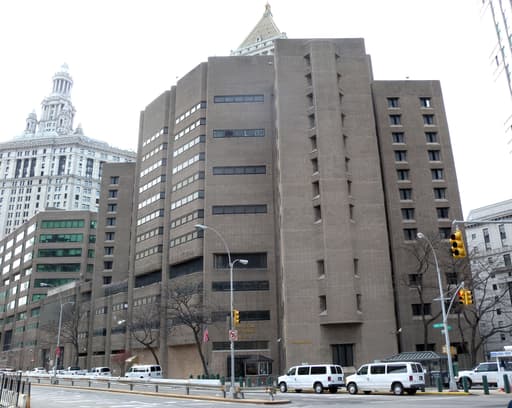
Metropolitan Correctional Center
ORGANIZATION
Metropolitan Correctional Center, New York, federal detention facility where Jeffrey Epstein died on August 10, 2019
Metropolitan Detention Centre
ORGANIZATION
Organization referenced in documents
Mirtazapine
ORGANIZATION
Organization referenced in documents
Mon Telegraph
ORGANIZATION
Organization referenced in documents
Montgomery Advertiser
ORGANIZATION
Organization referenced in documents
News International
ORGANIZATION
Organization referenced in documents
Paddington
ORGANIZATION
Organization referenced in documents
Pakistan International Airlines
ORGANIZATION
Organization referenced in documents
Prison
ORGANIZATION
Organization referenced in documents
Psychiatric Court Report
ORGANIZATION
Organization referenced in documents
Simvastatin
ORGANIZATION
Organization referenced in documents

Supreme Court
ORGANIZATION
Highest court of jurisdiction in the US
Teamwork
ORGANIZATION
Organization referenced in documents
The Crown Prosecution Service
ORGANIZATION
Organization referenced in documents
the Department of Health and The Prison Service
ORGANIZATION
Organization referenced in documents
The High Court/Court of Appeal
ORGANIZATION
Organization referenced in documents
The Irish Sun
ORGANIZATION
Organization referenced in documents
The Magistrates Court
ORGANIZATION
Organization referenced in documents
The Ministry of Justice
ORGANIZATION
Organization referenced in documents
The New York Times
ORGANIZATION
American daily newspaper (founded 1851)
the Prison Inspectorate
ORGANIZATION
Organization referenced in documents
the Rahim Hospital
ORGANIZATION
Organization referenced in documents
The South London & Maudsley NHS Foundation Trust
ORGANIZATION
Organization referenced in documents
Treasury Solicitors
ORGANIZATION
Organization referenced in documents
Westminster Magistrates Court
ORGANIZATION
Organization referenced in documents

Atlantic City
LOCATION
City in Atlantic County, New Jersey, United States
Croydon
LOCATION
Town in South London, England

Cyprus
LOCATION
Mediterranean island country in West Asia

Hong Kong
LOCATION
City and special administrative region of China
Jolun
LOCATION
Location referenced in documents

Karachi
LOCATION
Provincial capital of Sindh, Pakistan
Montgomery County
LOCATION
County in Maryland, United States

Mumbai
LOCATION
Capital city in Maharashtra, India
PHQ-9
LOCATION
Location referenced in documents
South London
LOCATION
Location referenced in documents
Southern District
LOCATION
Federal judicial district in New York City
Stonington
LOCATION
Location referenced in documents

Toronto
LOCATION
Capital and largest city of the province of Ontario, Canada

United Arab Emirates
LOCATION
Country in Western Asia

Wales
LOCATION
Country in north-west Europe, part of the United Kingdom
Statistics
Pages:36
Entities:76
Sponsored