EFTA00193954_email_261
Document Information
Bates Range
EFTA00193954_email_261
Pages
5
Original Filename
EFTA00193954.pdf (email 261: FW: confidential communication)
Document Content
Page 1 - EFTA00193954_560
Gmail - Fw: confidential communication Page 1 of 4 Gm Ann Marie Villafana< Fw: confidential communication 1 message Villafana, Ann Marie C. (USAFLS) < [email protected]> Thu, May 22, 2008 at 3:38 AM Original Message From: Acosta, Alex (USAFLS) To: Sloman, Jeff (USAFLS); Campos, Cyndee (USAFLS); Villafana, Ann Marie C. (USAFLS) Sent: Mon May 19 12:40:32 2008 Subject: FW: confidential communication For your records. From: Jay Lefkowitz [mailto:[email protected]] Sent: Monday, May 19, 2008 10:54 AM To: Acosta, Alex (USAFLS) Subject: confidential communication Dear Alex: I am writing to you because I have just received the attached letter from Drew Oosterbaan. In light of that letter, and given the critical new evidence discussed below, I would like to request a meeting with you, mindful of our July 8 deadline, at your.earliest opportunity. Given your personal involvement, in this matter to date, and the fact that at this juncture it is clear that CEOS has referred the matter back to you, I respectfully request that you not shunt me off to one of your staff. You and I have both spent a great deal of time on this matter, and I know that we both would like to resolve this matter in a way that bestows integrity both on the Department and the process. In our prior discussions, you expressed that you were "not unsympathetic" to our various federalism concerns, but stated that because you serve within the "unitary Executive," you believed your hands were tied by Main Justice. You were also extremely gracious in stating that you did not want the United States to be "unfair". Although CEOS limited its assessment to the federal statutes your Office had brought forth and to the application of those laws to the facts as presented, it is abundantly clear from Drew's letter that Main Justice is not directing this prosecution. In fact, CEOS plainly acknowledged that a federal prosecution of Mr. Epstein would involve a "novel application" of federal statutes and that our arguments against federal involvement are "compelling." Moreover, the language used by.Drew in NS concluding EFTA00194513
Page 2 - EFTA00193954_561
Gmail - Fw: confidential communication Page 3 of 4 deliberately lied about their age because they knew Mr. Epstein did not want anyone under 18 in his house directly undercuts the claim that Mr. Epstein willfully blinded himself as to their ages. Willful blindness is not a substitute for evidence of knowledge nor is it a negligence standard. It requires proof beyond reasonable doubt of deliberate intent and specific action to hide one's knowledge. There is absolutely no such evidence of that here, so it is not even a jury issue. Furthermore, willful ignorance cannot constitute the required mens rea for a crime of conspiracy or aiding and abetting. Through the recent witness statements, we have also discovered another serious issue that implicates the integrity of the federal investigation. We have learned that FBI Special Agent Kurkendayl attempted to convince these adult women, now in their twenties, that they were in fact "victims" even though the women themselves strongly disagreed with this characterization. This conduct, once again, goes to the heart of the integrity of the investigation. In a sworn statement, Ms. was highly critical of the overreaching by federal law enforceinent officers in this case. She testified—in no uncertain terms—that she does not, and never did, feel like a "victim," despite the fact that the FBI repeatedly tried to convince her otherwise. I am mindful of the fact that we have a state court date of July 8 on which either to enter a plea or to commence trial. As I review the trial options with Mr. Epstein, I certainly want to make sure I do everything within my power to obviate a need for trial through a reasonable alternative resolution. Although it is clear that CEOS is not directing a prosecution here, and has stated only that you have the authority to commence such a prosecution, I am well aware that the decision whether to proceed, subject to any further process in Washington, is now within your discretion. I think the new facts should greatly influence your decision and accordingly, I hope you will agree to meet with me, both to discuss the new evidence and to discuss .a resolution to this matter once and for all: I am available to meet with you at your earliest convenience subject to our mutual availability. Respectfully, Jay ***** *********** ****** ***********”************************ The information contained in this communication is confidential, may be attorney-client privileged, may constitute inside information, and is intended only for the use of the addressee. It is the property of Kirkland & Ellis LLP or Kirkland & Ellis International LLP. Unauthorized use, disclosure or copying of this communication or any part thereof is strictly prohibited and may be unlawful. If you have received this communication in error, please notify us immediately by return .e-mail or by e-mail to [email protected], and destroy this.communication and all copies thereof, including all attachments. EFTA00194514
Page 3 - EFTA00193954_562
05/16/2008 11:18 FAX 05/16/08 PRI 11:08 FAX UNITED STATES DEPARTMENT OF JUSTICE • Criminal Division Child Exploitation and Obscenity Section 1400 New York Avenue, NW Suite 600 Washington, DC 20530-0001 • 20005 0001/006 • O001 CEOS: (202) 514-5780 FAX: (202) 514-1793 TO: I2. Alexander Acosta, Esq. Jay Lerkowita, Esq, OFFICE NUMBER: 'FAX NUMBER: 305/530-7087' FROM: Gelber • DATFITIMEi . ilay 16, OFFICE NUMBER: (202) 514-5780 NUMBER OF PACES, EXCLUDIal THIS SHEET: 5 SPECIAL. INSTRUCTIONS: EFTA00194515
Sponsored
Page 4 - EFTA00193954_563
05/16/2008 11;18 FAX 06/16/08 FRI 11:08 FAX 0 0 3 / 0 0 El O003 As was made clear at the outset, we did not review the facts, circumstances, or terms included in the plea offer, nor any allegations that individuals involved in the investigation engaged in misconduct. Despite that agreement, we note that your letters of April 8, April 28, and May 14 focus In large part on accusations of investigative or prosecutorial misconduct. Not only do allegations of prosecutorial misconduct fall outside the boundary of our agreed review, they also fall outside the authority of the Criminal Division in the first instance. Simply, the Criminal Division does not investigate or resolve allegations of professional misconduct by federal prosecutors. For these reasons, we do not respond to the portion of those letters that discuss alleged misconduct. Based on our review of all of these materials, and after careful consideration of the issues, we conclude that U.S. Attorney Acosta could properly use his discretion to authorize prosecution in this case. We will briefly address each of the issues that you have raised. Knowledge of age. Federal child exploitation statutes differ as to whether there must be proof that the defendant was aware that the children were under the age of 18. However, even for those statutes where knowledge of age is an element of the offense, it is possible to satisfy that element with proof that the defendant was deliberately ignorant of facts which would suggest that the person was a minor. For that reason, the fact that some of the individuals allegedly lied to Mr. Epstein about their age isnot dispositivo of the issue. While there may be an open factual issue as to Mr. Epstein's knowledge, we cannot say that it would be impossible to prove knowledge of age for any such charges which require it. Therefore, Mr. Acosta could rightfully conclude that this factual issue is best resolved by a jury. Tmvel for the purpose. In the materials you prepared, you suggest that Mr. Epstein should not be charged with violating 18 U.S.C. § 2423(b) because his dominant purpose in going to Florida was not to engage in illegal sexual activity, but rather to.return.to_one of his-resideneesr While we fully undetataffdli5lifiliiiient, we also fmd that the U.S. Attorney's office has a good. faith basis fully to develop the facts on this Issue and brief the law to permit 'a court to decide whether the law properly reaches such conduct, Mr. Acosta would not be abusing his discretion If he decided to pursue such a course of action. Intent to engage In the conduct at the time of travel. Based on our review of the facts of this case, we respectfully disagree that there is no evidence concerning Mr. Epstein's intent when he traveled, and when that intent was formed. Should Mr. Acosta elect to let the case proceed so that a jury can resolve this factual issue, he would be within his discretion to do so. Use of a facility or means of interstate or foreign commerce. Much of the materials you have prepared and much of the meeting we had focused on 18 U.S.C. § 2422(b), specifically your contention that Mr. Epstein did not use the phone to coerce anyone to engage in illegal sexual activity. We understand the issue you raise concerning the statutory interpretation. As before, however, we cannot agree that there is no evidence that would support a charge under Section 2422(b), nor can we agree that there is no argument in support of the application of that statute to this case. Finally, our assessment is that the application of that statute to these facts would not be 2 EFTA00194516
Page 5 - EFTA00193954_564
05/16/2008 11:17 FAX 06/18/08 FRI 11:09 FAX U006/006 O005 the case on the merits after jeopardy has attached." USAM 9-2.031(C). Our understanding is that the state case is still pending. As such, the procedural posture of the state case does not implicate the petite policy. We recognize that the petite policy could be triggered if the state case concluded after a federal indictment was issued but prior to the commencement of any federal trial. Id. However, the policy "does not apply ... where the [state] prosecution involved only a minor part of the contemplated federal charges?' USAM 9-2.031(B). Based on our understanding of the possible federal charges and existing state charges, we do not think the petite policy would be an issue should federal proceedings take place. Federalism and Prosecutorial Discretion. All of the above issues essentially ask whether a federal prosecution can proceed. We understand, however, that you also ask whether a federal prosecution should proceed, even in the event that all of the elements of a federal offense could be proven. On this issue, you raised two arguments: that the conduct at issue here is traditionally a state concern because the activity is entirely local, and that the typical prosecution under federal child exploitation statutes have different facts than the ones implicated here. You have essentially asked us to look into whether a prosecution would so violate federal prosecutorial policy that a United States Attorney's Office should not pursue a prosecution. We do not think that is the case here for the following reasons. Simply, the commercial sexual exploitation of children is a federal concern, even when the conduct is local, and regardless of whether the defendant provided the child (the "pimp") or paid for the child (the "joie). In your materials, you refer to a letter sent by the Department of Justice to Congress in which the Department expresses concern over the expansion of federal laws to reach almost all instances of prostitution. In that portion of the letter, the Department was expressly referring to a proposed federal law that reach adult prostitution Where no force, fraud, or coercion was used. Indeed, the point beingsnade inlhattettezis that.the_Departmenes- - - - ----efforts are properly focused on the commercial sexual exploitation of children and the exploitation of adults through the use of force, fraud, or coercion. As such, there is no inconsistency between the position taken in that letter and the federal prosecution of wholly local instances of the commercial sexual exploitation of children. If Congress wanted to limit the reach of federal statutes only to those who profit from the commercial sexual exploitation of children, or only to those who actually traffic children across state lines, it could have done so. It did not. Finally, that a prosecution of Mr. Epstein might not look precisely like the cases that came before it is not dispositive. We can say with confidence that this case is consistent in principle with other federal prosecutions nationwide. As such, Mr, Acosta can soundly exercise his authority to decide to pursue a prosecution even though it might involve a novel application of a federal statute. Conclusion. After carefully considering all the factual and legal issues raised, as well as the arguments concerning the general propriety of a federal case against Mr. Epstein on these 4 EFTA00194517
Entities Mentioned
A. Marie Villafana
PERSON • 2 mentions
Former Assistant U.S. Attorney, lead federal prosecutor in the 2008 Epstein case
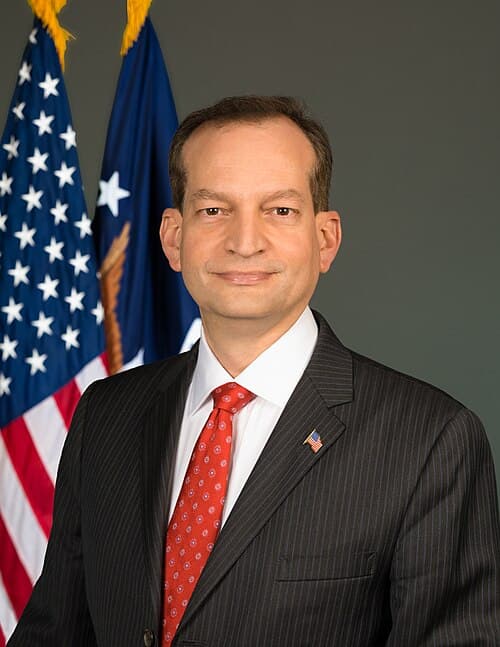
Alexander Acosta
PERSON • 2 mentions
American attorney and politician, 27th U.S. Secretary of Labor (born 1969)
CA
Campos
PERSON
Surname reference in Epstein-related documents
CY
Cyndee
PERSON
First name reference to multiple individuals in Epstein-related documents

Drew Oosterbaan
PERSON
DOJ attorney, referenced in Epstein case documents
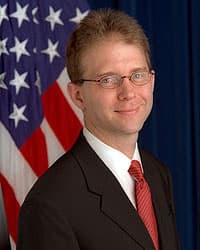
Jay Lefkowitz
PERSON • 2 mentions
American lawyer
JL
Jay Lerkowita
PERSON
Name reference in documents
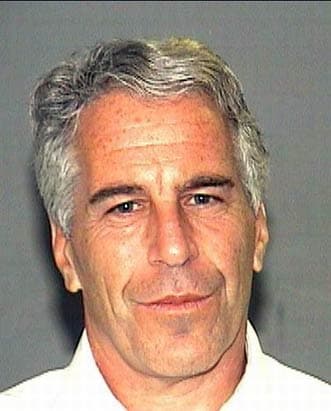
Jeffrey Epstein
PERSON • 2 mentions
American sex offender and financier (1953–2019)
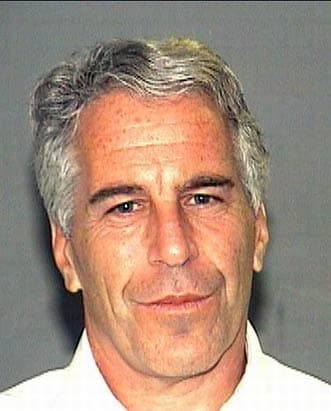
Jeffrey Sloman
PERSON
Federal prosecutor, referenced in Epstein case legal proceedings
KU
Kurkendayl
PERSON
Surname or name fragment in documents
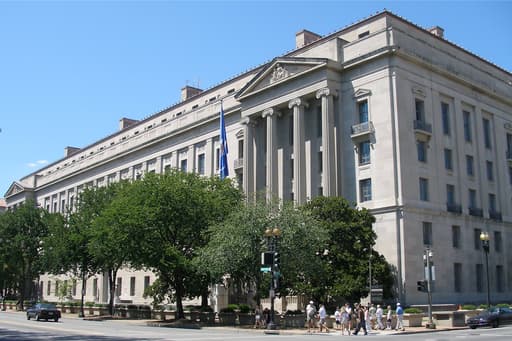
Department of Justice
ORGANIZATION
United States Department of Justice, federal executive department responsible for law enforcement
ilay 16
ORGANIZATION
Organization referenced in documents
Kirkland & Ellis International LLP
ORGANIZATION
International law firm
Kirkland & Ellis LLP
ORGANIZATION
Large law firm in the United States, based in Chicago, Illinois
Main Justice
ORGANIZATION
DOJ Main Justice building in Washington, D.C.
Tmvel
ORGANIZATION
Organization referenced in documents
Statistics
Pages:5
Entities:16
Sponsored