EFTA00028974 - EFTA00028981
Document EFTA00028974 is a legal document, specifically a reply memorandum filed in the United States District Court for the Southern District of New York.
This document is Ghislaine Maxwell's reply memorandum in support of her motion to dismiss counts one through four of the superseding indictment against her, arguing that the indictment lacks specificity. The document asserts that the government has not provided sufficient information regarding the allegations, hindering Maxwell's ability to prepare her defense. The memo cites legal precedent and argues that the government's reliance on certain cases is inapplicable to Maxwell's situation.
Key Highlights
- •Ghislaine Maxwell is attempting to dismiss counts one through four of her superseding indictment due to lack of specificity.
- •The document criticizes the government for providing irrelevant discovery while withholding basic information.
- •The case involves allegations against Ghislaine Maxwell, with Jeffrey Epstein also mentioned in the document's metadata.
Frequently Asked Questions
Books for Further Reading
Perversion of Justice: The Jeffrey Epstein Story
Julie K. Brown
Investigative journalism that broke the Epstein case open

Filthy Rich: The Jeffrey Epstein Story
James Patterson
Bestselling account of Epstein's crimes and network
Relentless Pursuit: My Fight for the Victims of Jeffrey Epstein
Bradley J. Edwards
Victims' attorney's firsthand account
Document Information
Bates Range
EFTA00028974 - EFTA00028981
Pages
8
Document Content
Page 1 - EFTA00028974
UNITED STATES DISTRICT COURT SOUTHERN DISTRICT OF NEW YORK x UNITED STATES OF AMERICA, v. GHISLAINE MAXWELL, Defendant. x 20 Cr. 330 (MN) REPLY MEMORANDUM OF GHISLAINE MAXWELL IN SUPPORT OF HER MOTION TO DISMISS COUNTS ONE THROUGH FOUR OF THE SUPERSEDING INDICTMENT FOR LACK OF SPECIFICITY Jeffrey S. Pagliuca Laura A. Menninger HADDON, MORGAN & FOREMAN P.C. Christian R. Everdell COHEN & GRESSER LLP Bobbi C. Stemheim Law Offices of Bobbi C. Stemheim Attorneys for Ghislaine Maxwell EFTA00028974
Page 2 - EFTA00028975
The government continues to stonewall Ms. Maxwell's requests for clarity about what it claims she did to justify her continued incarceration and prosecution. Although the government has dumped thousands of pages of irrelevant discovery from inapplicable time periods on Ms. Maxwell and her counsel, it refuses to provide the most basic information about the allegations in Counts One through Four: who, what, when, and how. Because Counts One through Four of the superseding indictment ("Indictment") lack the basic factual information necessary for Ms. Maxwell to prepare her defense, and the government refuses to provide any meaningful discovery, the Court should either dismiss these counts or direct the government to answer Ms. Maxwell's requests for particularity. I. The Indictment Lacks the Necessary Specificity The government attempts to justify some of the Indictment's deficiencies, e.g., lack of names and dates, through citation to obviously inapplicable cases. "First," the government offers United States v. Stringer, 730 F.3d 120, 124 (2d Cir. 2013), for the proposition that "the use of pseudonyms to refer to minor victims of the charged conduct does not warrant dismissal of the indictment." Resp. at 153. The government fails to point out, however, that Stringer was a fraud case in which the conduct was alleged to have occurred over a 7-month period. The indictment was brought within a few years, not decades, of the alleged crime, and the identity of the two people whose names were used in connection with the fraud "had been revealed in the documents disclosed by the government a year" before trial. Id. at 123. United States v. Kidd, 386 F. Supp. 3d 364, 367 (S.D.N.Y. 2019), is equally unpersuasive. Kidd was indicted in 2018 for crimes alleged to have occurred as late as 2018. The case involved two alleged victims and the government produced sufficient discovery to obviate the need for a bill of particulars. Id. at 368, 370. 1 EFTA00028975
Page 3 - EFTA00028976
The Indictment against Ms. Maxwell registers a 98 on the opacity chart. Instead of two alleged "victims," the indictment here has different categories with three people being identified as "Minor Victims," even though they are not minors. Additionally, an unknown number of unexplained categories of unidentified human beings appear in the Indictment: "multiple minor girls," "victims," "minor victims," "minor victims described herein," "some of Epstein's minor victims," and "multiple minor victims." It is a mystery if the government claims that these alleged people are the same, part of the alleged crime, or surplusage. Multiple "among other thing" and "means and methods" alleged acts are bandied about in the indictment such as: assisted, facilitated, contributed, recruit, groom, befriend, spending time, being present, help, etc. This Indictment is subject to considerable interpretation and manipulation. Ms. Maxwell cannot prepare a defense without knowing who her accusers are and whether they are limited to the alleged "Minor Victims" or the rest of the universe. "Second," the government relies on the general proposition that "Courts in the Second Circuit have consistently upheld indictments containing a range of time rather than a specific date." Resp. at 154. Again, the cited cases are easily distinguishable. Kidd involved a date range ending in the year of indictment. Moreover, the quoted general language from Kidd, 386 F. Supp. 3d 364, 369, is incomplete. The court in Kidd explains the range it is referring to by the following reference: "See United States v. Nersesian, 824 F.2d 1294, 1323 (2d Cir. 1987) (holding that 'on or about June 1984' put a defendant on notice for potential crimes in July or early August of 1984 'because the [G]ovemment is not required to prove the exact date, if a date reasonably near is established')." Id. The government fails to include this language because it is inapposite to the suggestion that there is anything "routine" about a date range beginning 27 2 EFTA00028976
Sponsored
Page 4 - EFTA00028977
years ago that may be applicable to dozens of people in multiple places including a foreign country. United States v. Vickers, No. 13-CR-128-A, 2014 WL 1838255, at *1 (W.D.N.Y. May 8, 2014), also does not help the government. This case concerned a one count indictment in 2013. It is patently clear from the opinion by the district court that the statements from the alleged victim detailing the allegation had been provided to the defendant and the court which noted that the lengthy recitation of facts in the opinion "are taken from the allegations set forth in the Affidavit of Federal Bureau of Investigation Special Agent submitted in support of the May 16, 2013 Criminal Complaint (Dkt.# 1), the Indictment (Dkt.# 8), and the government's response to the instant motions (Dkt.# 20)." 2014 WL 1838255, at *3 n.1. The dates and times of the alleged conduct would have been fairly easy to identify given the detail provided in discovery. Here, Ms. Maxwell has not been provided with any relevant statements by the government or its witnesses. The government's attempt to hide behind the general proposition that children cannot be expected to remember dates also fails. Resp. at 155. The alleged victims here are not children, they are adults. Moreover, a review of the case relied on by the government, United States v. Young, No. 08-CR-285 (KMK), 2008 WL 4178190, at *2 (S.D.N.Y. Sept. 4, 2008), demonstrates the proper way to charge these types of allegations (which is not as the government did here): Count One alleges that Defendant sexually abused Victim One, aged fourteen at the time, during the daytime on a Saturday in or about the Fall of 2006; Count Two alleges that Defendant sexually abused Victim One, aged fifteen at the time, during the daytime on a Saturday in or about September 2007; and Count Three alleges that Defendant sexually abused Victim Two, aged sixteen at the time, on an evening in or about the Summer of 2006. Stated differently, the three counts each specify a particular time of day (daytime or evening), and feature variances in date ranges stretching from roughly four days in Count Two to thirteen days in Count One to four months in Count Three. 3 EFTA00028977
Page 5 - EFTA00028978
Thus, the court found: the indictment "contains dates ranges for each count, stretching from approximately four days to four months. These date ranges are well within the boundaries permitted by the Second Circuit and other federal courts, and have been supplemented with additional details provided by the Government Id., at *4 (emphasis added). To date, the only time the government has "supplemented" any information about the accusations is when it is attempting to excuse some failure. Here, the accusers have given statements to the government. Accuser-1 gave a statement to the government in 2006. All three accusers have made claims against the Epstein Estate. Presumably, the Accusers had to tell the Estate when and where any alleged abuse by Epstein occurred. Accordingly, this is not a situation where children do not remember things. This is a situation where the government has refused to provide basic necessary information in an attempt to prejudice Ms. Maxwell's defense. "Third," the indictment is not "clear" (Resp. at 155); it was purposely drafted to maximize charges and minimize clarity. For example, the photograph of Ms. Maxwell in the indictment is not from the time-period alleged. The pictures of the various properties were not included for specificity, they were included to maximize pretrial prejudice. The indictment is full of "weasel words" which are words the meaning of which are "malleable to a point where they mean what the user wants them to mean in any given situation; they have no meaning of their own." Abstrax, Inc. v. Hewlett-Packard Co., No. 2:14-CV-158-JRG, 2014 WL 5677834, at *2 (E.D. Tex. Nov. 4, 2014). For example: "up to and including at least in or about," "contributed," "among other things," "for example in some instances," "certain victims," and "groomed and/or abused at multiple locations including the following." Ms. Maxwell is at a loss to understand what she is charged with and when it is alleged to have happened. She can guess at 4 EFTA00028978
Page 6 - EFTA00028979
names, but given the government's recent harbinger of a superseding indictment, likely to attempt to fix some of these problems, Ms. Maxwell is wasting time and money playing whack- a-mole with this Indictment. IL This Indictment Does Not Satisfy Minimal Notice Requirements In Hamling v. United States, 418 U.S. 87, 117-18 (1974), the United States Supreme Court explained the circumstances in which an indictment simply setting forth the offense in the words of the statute may not suffice: Our prior cases indicate that an indictment is sufficient if it, first, contains the elements of the offense charged and fairly informs a defendant of the charge against which [s]he must defend, and, second, enables [her] to plead an acquittal or conviction in bar of future prosecutions for the same offense. It is generally sufficient that an indictment set forth the offense in the words of the statute itself, as long as those words of themselves fully, directly, and expressly, without any uncertainty or ambiguity, set forth all the elements necessary to constitute the offence intended to be punished. Undoubtedly the language of the statute may be used in the general description of an offence, but it must be accompanied with such a statement of the facts and circumstances as will inform the accused of the specific offence, coming under the general description, with which [she] is charged. (cleaned up). The government has failed to provide an indictment that "directly," "expressly," and "without uncertainty or ambiguity" sets forth the allegations against her. The alleged facts are vague and illusory and no meaningful discovery has been provided. Accordingly, Ms. Maxwell cannot adequately defend herself, in violation of the Fifth and Sixth Amendments to the United States Constitution. CONCLUSION Because Counts One through Four of the Indictment lack the basic factual information necessary for Ms. Maxwell to prepare her defense, and the government refuses to provide any meaningful discovery, the Court should either dismiss these counts or direct the government to answer Ms. Maxwell's requests for particularity. 5 EFTA00028979
Sponsored
Page 7 - EFTA00028980
Dated: March 15, 2021 Respectfully submitted, s/ Jeffrey S. Pagliuca Jeffrey S. Pagliuca (pro hac vice) Laura A. Menninger HADDON, MORGAN & FOREMAN P.C. Christian R. Everdell COHEN & GRESSER LLP Bobbi C. Stemheim Law Offices of Bobbi C. Stemheim Attorneys for Ghislaine Maxwell 6 EFTA00028980
Page 8 - EFTA00028981
Certificate of Service I hereby certify that on March 15, 2021, I served by email, pursuant Rule 2(B) of the Court's individual practices in criminal cases, the Reply Memorandum of Ghislaine Maxwell in Support of Her Motion to Dismiss Counts One through Four of the Superseding Indictment for Lack of Specificity upon the following: U.S. U.S. Attorne 's Office, SDNY s/ Christian R. Everdeli 7 EFTA00028981
Entities Mentioned
BS
Bobbi C. Sternheim
PERSON
Defense attorney for Ghislaine Maxwell in sex trafficking trial
Christian R. Everdell
PERSON
Person referenced in documents

Ghislaine Maxwell
PERSON • 4 mentions
British socialite and sex trafficker, daughter of Robert Maxwell, accomplice of Jeffrey Epstein
HA
Hamling
PERSON
Name reference in documents
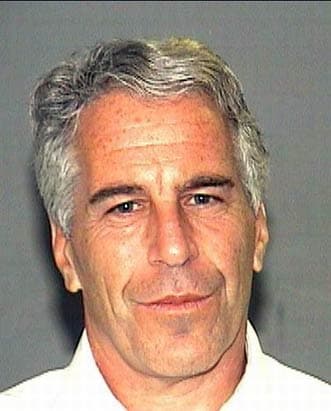
Jeffrey Epstein
PERSON • 2 mentions
American sex offender and financier (1953–2019)
JP
Jeffrey Pagliuca
PERSON
American attorney, defense lawyer for Ghislaine Maxwell during her criminal trial
LM
Laura Menninger
PERSON
American attorney, defense counsel for Ghislaine Maxwell in sex trafficking trial
NE
Nersesian
PERSON
Surname reference in documents
ST
Stringer
PERSON
Inclusion, possibly leading to a defect, in cast metal

Vickers
PERSON
Surname reference in Epstein-related documents
Abstrax, Inc.
ORGANIZATION
Organization referenced in documents
Cohen & Gresser LLP
ORGANIZATION
Law firm (Cohen & Gresser LLP)
Hewlett-Packard Co.
ORGANIZATION
Organization referenced in documents
Law Offices of
ORGANIZATION
Organization referenced in documents
MORGAN & FOREMAN P.C.
ORGANIZATION
Organization referenced in documents
Second Circuit
ORGANIZATION
U.S. Court of Appeals for the Second Circuit
the United States Supreme
ORGANIZATION
Organization referenced in documents
E.D. Tex
LOCATION
Location referenced in documents

United States
LOCATION
Country located primarily in North America
Statistics
Pages:8
Entities:19
Avg. OCR:0.9%
Sponsored