EFTA00016736 - EFTA00016740
Document EFTA00016736 is a letter from attorneys Bruce Barket and Mstein of Barket Epstein Kearon Aldea & Loturco, LLP, to Judge Kenneth K. Karas regarding the case of United States v. Nicholas Tartaglione.
The letter, dated January 13, 2020, requests an evidentiary hearing concerning the missing video surveillance footage from the Metropolitan Correctional Center (MCC) related to Jeffrey Epstein's attempted suicide in July 2019. The attorneys argue that the footage would corroborate Mr. Tartaglione's account of events and would be exculpatory. They seek to determine how the video was destroyed, who was responsible, and whether the destruction was deliberate or in bad faith.
Key Highlights
- •Request for an evidentiary hearing regarding missing video footage of Jeffrey Epstein's attempted suicide
- •Concerns about the destruction of video surveillance footage at the Metropolitan Correctional Center
- •Nicholas Tartaglione's claim that the video would support his version of events
Frequently Asked Questions

Document Information
Bates Range
EFTA00016736 - EFTA00016740
Pages
5
Document Content
Page 1 - EFTA00016736
Case 7:16-cr-00832-KMK Document 186 Filed 01/13/20 Page 1 of 5 BARKET MSTEIN BARKET EPSTEIN KEARON ALDEA 6, LOTURCO,LLP January 13, 2020 BY ECF The Honorable Kenneth K. Karas United States District Judge Southern District of New York 300 Quarropas Street White Plains, NY 10601 Re: United States v. Nicholas Tartaglione, S4 16 Cr. 832 (KMK) Dear Judge Karas: I write to request that the Court promptly conduct an evidentiary hearing to ascertain the circumstances surrounding the Government's failure to preserve the video surveillance footage at the Metropolitan Correctional Center, which captured the hallway outside of the cell that Mr. Tartaglione shared with Jeffrey Epstein at the time Mr. Epstein attempted to commit suicide between the late hours of July 22, 2019 and the early morning hours of July 23, 2019. Since the date of the incident, Mr. Tartaglione has firmly and consistently maintained that he acted appropriately in all respects, and footage of the incident, therefore, would have been exculpatory, as it would have corroborated Mr. Tartaglione's account of events. Accordingly, we ask that the Court conduct a hearing to determine (1) how the video was destroyed, who was responsible for its destruction, and why it was not preserved; (2) whether there are any witnesses who reviewed the video footage prior to its destruction who can describe what they observed, and, in turn, preserve at least some the video's exculpatory value; and (3) whether and to what extent the destruction of the video was deliberate or reckless, and whether there was any bad faith on the part of the Government in connection with the video's destruction. We have reviewed the letters filed by the Government, dated December 19, 2019 and January 9, 2020, which purport to explain why the video footage no longer insists. The explanation offered, however, is inadequate as it is non-specific, unswom, and untested. Aside from mentioning "MCC staff" and acknowledging the defense's July 25, 2019 preservation request, the Government has not provided the name of a single individual responsible for the loss of the video. Given that the information concerning the destruction of the video, like the video itself, has at all times been in the exclusive control of the Bureau of Prisons, the individuals EFTA00016736
Page 2 - EFTA00016737
Case 7:16-cr-00832-KMK Document 186 Filed 01/13/20 Page 2 of 5 responsible for the video's destruction, as well as all relevant documents, memoranda, or emails concerning the matter, are likewise completely inaccessible to the defense. As a result, the defense has no means of conducting its own independent inquiry into the circumstances under which the video has been lost, or from securing sworn affidavits from implicated individuals. In other words, absent a court-ordered evidentiary hearing, neither the defense nor the Court has any means by which to independently determine what took place and how the evidence was destroyed, despite the request to preserve it. The individuals involved in the video's destruction should therefore be ordered to appear and give testimony, and the Government should disclose to the defense any and all relevant written materials. A defendant in a capital case has a constitutionally protected right to provide the jury with mitigating evidence. Williams v. Taylor, 529 U.S. 362, 393 (2000). The Eighth Amendment prohibits the infliction of cruel and unusual punishment, and in a capital matter, while the death penalty may in certain cases be appropriate, it can only be imposed after adequate consideration of factors that might warrant mercy. Woodson v. North Carolina, 428 U.S. 280, 305 (1976); California v. Brown, 479 U.S. 538, 554 (1987). The jury, therefore, must "'not be precluded from considering, as a mitigating factor, any aspect of a defendant's character or record and any of the circumstances of the offense that the defendant proffers as a basis for a sentence less than death."' Eddings v. Oklahoma, 455 U.S. 104, 110 (1982) (quoting Lockett v. Ohio, 438 U.S. 586, 604 [1978]). See also Eddings, at 113-14 (1982) (both due process and the Eighth Amendment require that the defendant be able to present to the jury all relevant mitigating evidence during the penalty phase of a capital case). The presentation of mitigating evidence, after all, allows for the consideration of "compassionate or mitigating factors stemming from the diverse frailties of humankind ... [which is] a constitutionally indispensable part of the process of inflicting the penalty of death." Woodson, 428 U.S. at 304. In this respect, the Government's loss or destruction of evidence that mitigates punishment in a capital case -- especially where there has been an express preservation request, and an acknowledgement of that request with assurances of preservation -- requires a full factual record and, if appropriate, sanctions for the loss of the evidence. The Supreme Court held in Brady v. Maryland, 373 U.S. 83, 87 (1963), that "the suppression by the prosecution of evidence favorable to the accused upon request violates due process where the evidence is material either to guilt or to punishment, irrespective of the good faith or bad faith of the prosecution." A defendant seeking remedial relief based on the spoilation -- rather than the suppression -- of Brady material, however, must make a two-pronged showing that the evidence possessed exculpatory value "that was apparent before [it] was destroyed" and was "of such a nature that the defendant would be unable to obtain comparable evidence by other reasonably available means," California v. Trombetta, 467 U.S. 479, 489 (1984), and must also show that the government acted in bad faith. United States v. Greenburg, 835 F.3d 295, 303 (2d Cir. 2016); United States v. Rastelli, 870 F.2d 822, 833 (2d Cir. 1989). In other words, when the Government fails to preserve evidentiary material that is "potentially useful," such failure "does not violate due process 'unless a criminal defendant can show bad faith' on the part of the Government. Illinois v. Fisher, 540 U.S. 544, 547-48 (2004) (quoting Arizona v. Youngblood, 488 U.S. 51, 58 [1988]). The defense maintains that the lost surveillance footage was exculpatory with respect to any potential future penalty proceedings, and would have provided powerful evidence mitigating against the penalty of death. Alternatively, the lost 2 EFTA00016737
Page 3 - EFTA00016738
Case 7:16-cr-00832-KMK Document 186 Filed 01/13/20 Page 3 of 5 footage would also be material and relevant to rebut any aggravating evidence offered by the Government during penalty proceedings that Mr. Tartaglione was likely to be a danger in prison. Either way, even if the lost footage can only be characterized as potentially useful, the record clearly shows that evidence has been lost and that the loss is "chargeable to the state," United States v. Rahman, 189 F.3d 88, 139 (quoting Colon v. Kuhlman, 865. F.2d 29, 30 [2d Cir. 1988]), and a hearing, therefore, is required. See, e.g., United States v. Soriano, 401 F.Supp.3d 396 (E.D.N.Y. 2019) (evidentiary hearing conducted to determine circumstances under which Customs and Border Protection agents destroyed property in which drugs were found); United States v. Bufalino, 432 F.Supp. 651 (S.D.N.Y. 1977) (evidentiary hearing conducted to determine circumstances under which the government destroyed witness's taped conversation with defendant). See also United States v. Grammatikos, 633 F.2d 1013 (2d Cir.1980) ("appropriateness and extent of sanctions [where evidence is lost] depends upon a case-by-case assessment of the government's culpability for the loss, together with a realistic appraisal of its significance when viewed in light of its nature, its bearing upon critical issues in the case and the strength of the government's untainted proof').' Here, on July 23, 2019 at approximately 1:27 a.m., Jeffrey Epstein attempted to commit suicide inside of his cell at the Metropolitan Correctional Center, which, at the time, he was sharing with Mr. Tartaglione. Within 72 hours, on July 25, 2019, at 11:54 a.m., counsel sent the following email to Adam Johnson of the Bureau of Prisons ("BOP"): I write to request the preservation of all video surveillance that captures the hallway outside of Tartaglione's cell on the date and time of the Epstein incident that is currently being investigated. I believe that the date and time is July 23 during the early morning hours. Accordingly, I would ask that all video surveillance from July 22 at 11 pm to July 23 at 4 am is preserved. If it is your understanding that the incident occurred at a different time, please let me know and preserve the relevant footage, including an hour before the incident and an hour afterwards. If the responding officers were wearing body cameras that captured the inside of the cell in the aftermath of the incident, I am requesting that such footage also be preserved. We will be official requesting this material through the appropriate means, but please consider this email a formal preservation request. (7/25/19 Leisenring Email). I Courts have held that bureaucratic error alone is not a sufficient basis to infer bad faith on the part of the government in its destruction of potentially exculpatory evidence, see Arizona v. Youngblood, 488 U.S. 55 (1988) (lab technician's failure to refrigerate, and, therefore, preserve, semen samples from a sexual assault victim's clothing that "might have completely exonerated [the defendant]" was not indicative of bad faith); United States v. Hunley, 476 Fed. Appx. 897 (2d Cir. 2012) (police department's failure to place a hold on lab's regularly scheduled destruction of firearm was not willful or malicious); and People v. Tyree, 279 Fed.Appx. 31 (2d Cir. 2008) (no bad faith where evidence was destroyed because of a "gap in the bureaucratic network"), and similarly, the Government does not act in bad faith when evidence is destroyed in accordance with normal practice or because there is a specific need to discard the evidence. United States v. Soriano, 401 F.Supp.3d 396, 401 (E.D.N.Y. 2019). On the other hand, if the Government destroys evidence when it has notice of its potential exculpatory value, and the destruction is not inadvertent, negligent, or pursuant to standard procedure, or when the circumstances under which the evidence is discarded negate any innocent explanation for the Government's conduct, the Government acts in bad faith. Soriano, 401 F.Supp.3d at 401. 3 EFTA00016738
Sponsored
Page 4 - EFTA00016739
Case 7:16-cr-00832-KMK Document 186 Filed 01/13/20 Page 4 of 5 At 1:59 p.m., Mr. Johnson responded: "I have asked the appropriate staff to preserve the requested video footage. Please be advised MCC staff do not have body cameras." Five months later, on December 18, 2019, counsel advised the Court that despite counsel's prompt and express preservation request, the Government had informed counsel that the recordings at issue had been destroyed (12/18/19 Proceedings: 6). Explaining, the Government stated that based on conversations with other members of the United States Attorney's Office, their understanding was that although the video did at one time exist, it had not been preserved (12/18/19 Proceedings: 7-8). The Government also added, however, that the Government was still awaiting further information from BOP, stating: "We then received a follow-up email, and we are working with BOP to determine what is the status of the video that they're asking us about . . and [w]hether it ever existed, whether it was preserved (12/18/19 Proceedings: 8-9). The very next day, December 19, 2019, the Government's understanding of the status of the video footage changed, as the Government advised the Court that prosecutors "had confirmed with MCC staff that the video was preserved by MCC staff upon defense counsel's request in July 2019," that "the Government [wa]s in the process of obtaining a copy of the video from the MCC," and that "[o]nce the Government obtains a copy of the video, the Government [would] make it available for counsel's review at the United States Attorney's Office" (12/19/19 Letter). Then, on January 9, 2020, the Government's position on the video flip-flopped yet again, when prosecutors advised the Court that despite the Government's recent understanding that the video had been preserved, and that the Government was working to obtain a copy from MCC, "the Government ha[d] learned that the MCC inadvertently preserved the video from the wrong tier within the MCC, and, as a result, video from outside the defendant's cell on July 22 — 23, 2019 (Le. the requested video) no longer exists" (1/9/20 Letter: 1). Further, the Government explained, "the backup system in place that housed all video for the Special Housing Unit, including the video requested by defense counsel . . . no longer exists . . . and has not since at least August 2019 as a result of technical errors" (1/9/20 Letter: 2).2 Respectfully, the Government's fluid account of the efforts that were made to preserve this critical mitigating evidence are deeply troubling and demand that an explanation be given via sworn testimony. The exculpatory value of the video footage -- i.e. efforts made by Mr. 2 Epstein, of course, was found dead in a different cell on August 10, 2019, having been moved from the cell he shared with Tartaglione after his suicide attempt. 3 Questions for the hearing include, but are not limited to the following: Who did Johnson speak to when he advised MCC "staff' to preserve the video; what actions did said staff member or members then take? Was Johnson's directive made via email, over the telephone, via written directive, or in person? Was (or is) there a systematic procedure for the preservation or the destruction of evidence at the MCC? Who actually viewed the footage prior to its destruction? Are there protocols in place at MCC with respect to evidence preservation? What other members of the United States Attorney's Office were consulted as part of the Government's efforts to ascertain the status of the video? Who was responsible for keeping a record of the cell number that Mr. Tartaglione and Mr. Epstein shared, and who entered the cell number in the MCC's computer system? Was the cell number recorded incorrectly as to both Tartaglione and Epstein? Were the digital records ever actually checked for accuracy? Who was the MCC staff member who initially confirmed that the video had been preserved? When was the FBI first conducted about 4 EFTA00016739
Page 5 - EFTA00016740
Case 7:16-cr-00832-KMK Document 186 Filed 01/13/20 Page 5 of 5 Tartaglione to alert BOP staff that Mr. Epstein was in distress, and to secure assistance for Epstein -- would have been immediately apparent from the video; the evidence was, and remains, unattainable by any other means; and the permanent loss of the footage, which at all times, upon information and belief, was in the complete and exclusive control of the BOP, and appears to have occurred notwithstanding an express preservation directive from the MCC's legal counsel, is clearly chargeable to the Government. Furthermore, the loss of this material evidence is exceedingly prejudicial on the question of punishment, as Mr. Tartaglione has, from the beginning, denied inflicting any harm on Mr. Epstein whatsoever, and in fact -- and much to the contrary -- has insisted that upon observing Mr. Epstein in physical distress, he tried to help Mr. Epstein and called to the guards on duty for assistance. In sum, evidence that Mr. Tartaglione, in an institutional setting, demonstrated concern for the life of his cellmate, took steps to aid a fellow inmate in distress, and summoned staff for assistance, is a factor that, in a jury's mind, may weigh against the imposition of the death penalty. The video footage is mitigating evidence that Mr. Tartaglione, should he be convicted, would have had a due process and Eighth Amendment right to present. Accordingly, sworn witness testimony explaining the apparent loss of this evidence is necessary and appropriate. Respectfully submitted; /s/Bruce Barket Bruce Barket reviewing MCC's back up system, and what steps were then taken to locate the video in question? And what were the "technical errors" relating to the backup system that caused the video not to exist since at least August of 2019? 5 EFTA00016740
Entities Mentioned
AG
Ace Greenberg
PERSON
American executive, former CEO and Chairman of Bear Stearns, who hired Jeffrey Epstein in 1976 (1927-2014)
AJ
Adam Johnson
PERSON
Person referenced in documents
Brady
PERSON
Surname reference in Epstein documents
BB
Bruce Barket
PERSON
Epstein attorney, Bruce Barket, referenced in legal proceedings
BU
Bufalino
PERSON
Name reference in documents
CO
Colon
PERSON
Surname or name fragment in documents
ED
Eddings
PERSON
Name reference in documents
ET
Emmy Taylor
PERSON
Former assistant to Ghislaine Maxwell, appeared in Epstein flight logs and court documents
GR
Grammatikos
PERSON
Name reference in documents
HU
Hunley
PERSON
Name reference in documents
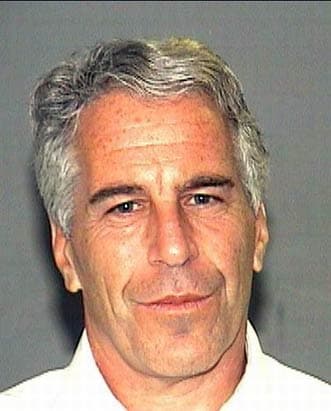
Jeffrey Epstein
PERSON • 4 mentions
American sex offender and financier (1953–2019)

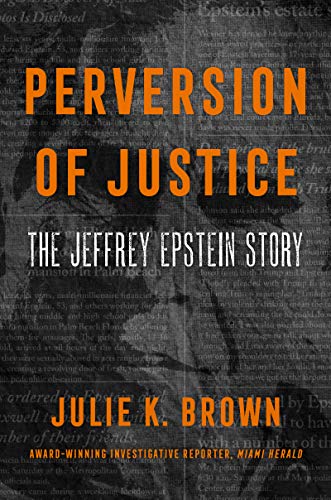
Julie K. Brown
PERSON
American journalist
KA
Karas
PERSON
Surname reference in Epstein-related documents
KK
Kenneth K. Karas
PERSON
Name reference in documents
KU
Kuhlman
PERSON
Name reference in documents
LO
Lockett
PERSON
Surname reference in documents
NT
Nicholas Tartaglione
PERSON • 2 mentions
Former New York City police officer convicted of quadruple murder, was Epstein cellmate at MCC before Epstein death

Rahman
PERSON
Surname reference in Epstein-related documents
RA
Rastelli
PERSON
Name reference in documents
SO
Soriano
PERSON
Surname or name fragment in documents
TR
Trombetta
PERSON
Name reference in documents
TY
Tyree
PERSON
Surname or name fragment in documents
WO
Woodson
PERSON
Surname reference in documents
YO
Youngblood
PERSON
Surname or name fragment in documents

Customs and Border Protection
ORGANIZATION
U.S. Customs and Border Protection
Federal Bureau of Prisons
ORGANIZATION
U.S. federal agency responsible for incarceration of federal inmates
Second Circuit
ORGANIZATION
U.S. Court of Appeals for the Second Circuit
Special Housing Unit
ORGANIZATION
Restricted housing unit within the federal prison system
U.S. Attorney's Office
ORGANIZATION
U.S. federal prosecutors office

North Carolina
LOCATION
State of the United States of America

Oklahoma
LOCATION
State of the United States of America

White Plains
LOCATION
County seat of Westchester County, New York, United States
Statistics
Pages:5
Entities:32
Avg. OCR:0.9%
Sponsored