DOJ-COURT-559
DOJ-COURT-559 is a legal document filed in the United States District Court for the Southern District of Florida in relation to the case of JANE DOE NO. 2 vs. JEFFREY EPSTEIN.
This document is Defendant Jeffrey Epstein's Motion for Modification and Reconsideration of a Magistrate's Order regarding the production of documents by Alfredo Rodriguez. Epstein's attorneys argue that Rodriguez, a former employee, should not be compelled to produce journals, notes, diaries, and writings related to Epstein because Rodriguez allegedly stole the journal from Epstein's home, breaching his fiduciary duty and a confidentiality agreement. The document also references several related cases.
Key Highlights
- •Jeffrey Epstein is the defendant in the case.
- •Alfredo Rodriguez, a former employee of Epstein, is being asked to produce journals and writings related to Epstein.
- •The document argues that Rodriguez's possession of the journals is a result of theft from Epstein's home.
Frequently Asked Questions


Document Information
Bates Range
DOJ-COURT-559
Pages
7
Source
DOJ First Production
Original Filename
559.pdf
Document Content
Page 1 - DOJ-COURT-559_p1
Case 9:08-cv-80119-KAM Document 559 Entered on FLSD Docket 06/04/2010
Page 2 - DOJ-COURT-559_p2
Page 1 of 7 UNITED STATES DISTRICT COURT SOUTHERN DISTRICT OF FLORIDA CASE NO.: 08-CIV-80119-MARRA/JOHNSON JANE DOE NO. 2, Plaintiff, vs. JEFFREY EPSTEIN, Defendant. I --------------- Related cases: 08-80232, 08-08380, 08-80381, 08-80994, 08-80993, 08-80811, 08-80893, 09-80469, 09-80591,09-80656,09-80802,09-81092 I --------------- DEFENDANT'S, MOTION FOR MODIFICATION AND RECONSIDERATION OF THE MAGISTRATE'S ORDER DATED JUNE 1, 2010 (DE 555), WITH INCORPORATED OBJECTIONS AND MEMORANDUM OF LAW Defendant, Jeffrey Epstein (hereinafter "Epstein"), by and through his undersigned attorneys, hereby files his Motion for Modification and Reconsideration of the Magistrate's Order (DE 555) pursuant to Rule 60, Rule 4, Rule 4(c) and Fed. R. Civ. P. 53(e), and other applicable Federal Rules and Local Rules. In support, Epstein states: I. This court entered an order (DE 555) stating that Alfredo Rodriguez ("Rodriguez")(DE 469), must produce, to the extent in his possession, " ... any and all journal, notes, diaries, and writings relating to Jeffrey Epstein including the journal described by Rodriguez to Palm Beach Police that [allegedly] contains the names of girls who visited the residence." (DE 555, p.2) 2. As set forth m Rodriguez's deposition, he was an employee of Epstein. Rodriguez Deposition, Exhibit "A" at p. 12-13. Moreover, as an individual employee, 1 Case 9:08-cv-80119-KAM Document 559 Entered on FLSD Docket 06/04/2010
Page 3 - DOJ-COURT-559_p3
Page 2 of 7 Rodriguez claims he executed a confidentiality agreement with Epstein. Exhibit "A" at p. 135. Furthermore, in his plea agreement, Rodriguez "admitted removing [ a book or journal] from Epstein's home without Epstein's permission .... " Plea Agreement, Exhibit "B" at p.8. In short, if Rodriguez's testimony and Plea Agreement are correct, then he stole the property from Epstein's home, which would be a breach of his fiduciary obligations as an employee, a breach of the Employment Agreement he testified he executed and an invasion of Epstein's privacy rights and potentially his commercially sensitive financial and trade secret information. To the extent Rodriguez's testimony is true, Epstein never gave Rodriguez permission for this "journal" or "book" to be removed. 3. This "book" or "journal" or "papers" could contain the names of Epstein's business associates and other highly confidential commercially sensitive information that would be entirely irrelevant to this action and not reasonably calculated to lead to the discovery of admissible evidence. Accordingly, depending upon what this "book" or "journal" contains, there may be commercially sensitive and trade secret information contained therein including, but not limited to, lists of business associates which could result in irreparable harm to Epstein if disseminated. Lynch v. Silcox, 2001 WL 1200656 (S.D. Fla. 2001). 4. Courts have often enjoined the dissemination of confidential or private information wrongfully obtained from the employer by a (now) ex-employee during the course of his employment, either through a free-standing action for injunctive relief or in conjunction with a tort action for, among other things, breach of fiduciary duty. See, M·, Saini v. International Game Technology, 434 F.Supp.2d 913, 924 (D.Nev. 2006)(court finds that company had shown likelihood of success in proving breach of implied covenant of good faith and fair dealing where former employee's "decision to distribute internal IGT documents to a 2 Case 9:08-cv-80119-KAM Document 559 Entered on FLSD Docket 06/04/2010
Sponsored
Page 4 - DOJ-COURT-559_p4
Page 3 of 7 party adverse to IGT in litigation demonstrates a deliberate attempt to violate the spirit of his confidentiality agreements with IGT;" injunction issued); see also In re Zyprexa Injunction, 474 F.Supp.2d 385, 419 (E.D.N.Y. 2007)(court has power to enjoin dissemination of stolen documents obtained in violation of court's protective order). Even where the employee is not subject to a formal confidentiality agreement, "an employee may still be enjoined from using confidential information where he or she has obtained such information by wrongful means, such as theft or intentional memorization." Tactica Intern., Inc. v. Atlantic Horizon Intern., Inc., 154 F.Supp.2d 586, 608 (S.D.N.Y. 2001); Standard Brands, Inc. v. Zumpe, 264 F.Supp. 254, 262 (D.La. 1967)(internal quotation marks omitted). See A.H. Emery Co. v. Marean Products Corp., 268 F.Supp. 289, 299 (S.D.N.Y. 1967)("A confidential relationship exists between an employee and his employer. It survives the termination of his employment. It does not depend on any express contract. Disclosure by an employee of a trade secret entrusted to him by his employer in the course of his employment is a classic instance of a disclosure which constitutes a breach of confidence and which is therefore actionable. It is not necessary that the employee expressly agree not to disclose it"), ajf'd 389 F.2d 11 (2d Cir. 1968), cert. denied, 393 U.S. 835 (1968). The simple fact is that this court must determine, in camera, what is in the "book" or "journal" such that relevancy, privileges, privacy interests and commercially sensitive and trade secret privileges can be addressed before disclosure. 5. Moreover, the right to privacy encompasses at least two different kinds of interests, the individual interests of disclosing personal matters and the interest in independence in making certain kinds of important decisions. Favalora v. Sidaway, 966 So.2d 895 (Fla. 4 th DCA 2008). The Supreme Court has "consistently held that a person has no legitimate expectation of privacy in infonnation he voluntarily turns over to the third parties." Smith v. 3 Case 9:08-cv-80119-KAM Document 559 Entered on FLSD Docket 06/04/2010
Page 5 - DOJ-COURT-559_p5
Page 4 of 7 Maryland, 442 U.S. 735, 743-44, 99 S.Ct. 2577, 2582 (1979). To the extent this "book" or "journal" exists, Rodriguez admitted that he took same without Epstein's permission. Therefore, Epstein could not have voluntarily given same to him and, as such, Epstein has not waived any objections, privileges and/or privacy interests in the "book" or "journal.". Likewise, Article 1, s. 23, Right of Privacy, provides that every natural person has the right to be let alone and free from governmental intrusion into the person's private life. Colorado v. Bertine, 479 U.S. 367, 387 (1986); State v. Jardines, 9 So.3d I (Fla. 3d DCA 2008)(the Fourth Amendment clearly protects the right of people to be secure in their persons, houses, papers and effects from intrusions); New Jersey v. T.L.O., 469 U.S. 325, 375 (1985)(search of a woman's purse by a school administrator is a serious invasion of her legitimate expectation of privacy). Based upon the foregoing, Epstein should be afforded his due process rights to review this alleged "book" and/or "journal" in an effort to determine what, if any, legal objections and privileges should be asserted before disclosure. 6. As this court is well aware, there are serious 4'\ 5th, 611\ and 14th Amendment implications involved in this case. The fact that Rodriguez claims to have stolen the "book" or "journal" gives this court good reason to, at the very least, hold an in camera proceeding to determine if the confidential information set forth therein should be disclosed. 7. Epstein has not had the opportunity to review what is in this "book" or "journal" to determine whether various legal objections should be made and to determine what, if any, 4'\ S'\ 6'\ and 14th Amendment implications would arise due to its disclosure as well as other legal objections and privileges. See infra. Therefore, an in camera hearing should occur to determine what objections and privileges must be raised before disclosure is made. U.S. v. Zolin, 491 U.S. 554, 575 (1989)(disclosing materials to the district court does not have the legal effect of 4 Case 9:08-cv-80119-KAM Document 559 Entered on FLSD Docket 06/04/2010
Page 6 - DOJ-COURT-559_p6
Page 5 of 7 terminating a privilege thereby allowing parties to disclose documents in camera and make that in camera request - especially when there is a question as to whether those documents were obtained by unlawful means); St. Andrews Park, Inc. v. U.S. Dept. of Army Corps of Engineers, 299 F.Supp.2d 1264 (S.D. Fla. 2003)(court determined that an in camera proceeding was appropriate when it involved a small volume of documents); see also In re Alberto Dugue, 134 B.R. 679 (S.D. Fla. 199l)(in camera inspection afforded adequate protection against disclosure of any privileged documentary material). A trial court departs from the essential requirements of law in ordering production of confidential information without conducting an in camera review to determine whether the assertion of privilege is valid. See Westco, Inc. v. Scott Lewis' Gardening & Trimming, Inc., 26 So. 3d 620, 622 (Fla. 4th DCA 2009). 8. If disclosure is made, this court should then determine what portions of the "book" or "journal" should be produced, redacted and then subject to a heightened confidentiality agreement. Wherefore, Epstein requests that this court enter an order: a. granting the relief requested above inclusive of a modification of the order and/or reconsideration of same for the reasons set out above; b. finding that an in camera hearing should occur to determine if any privileges, objections, privacy interests, redactions and/or discovery objections can be made by Epstein before disclosure is made and granting a reasonable time to do so; c. reversing the Magistrate's Order relative to the carte blanch production of the "journal" and/or "book" (DE 555); d. likewise, if this court rules that the "book" or "journal" should be produced, Epstein respectfully requests that it do so only after an in camera hearing allowing the document to be reviewed and placed on a privilege log outlining why the content of those documents have no relevance and establishing why the danger of disclosure is more prejudicial than probative, and after this court determines what portions of the requested document should be redacted as privileged including, but not limited to, what portions should be redacted due to the confidentiality and privacy interests, trade secret and commercially sensitive financial and business information. 5 Case 9:08-cv-80119-KAM Document 559 Entered on FLSD Docket 06/04/2010
Sponsored
Page 7 - DOJ-COURT-559_p7
Page 6 of 7 Again, the foregoing should only occur after this court ensures that the document (i.e., the 'journal" or "book") produced is the subject of a heightened-confidentiality order where disclosure will result in the disclosing party being held in contempt of court; and e. for such other and further relief as this Court deems just and proper. By: Isl Robert D. Critton Jr. ROBERT D. CRITTON, JR., ESQ. Florida Bar #224162 MICHAEL J. PIKE, ESQ. Florida Bar #617296 Certificate of Service I HEREBY CERTIFY that a true copy of the foregoing was being served this day on all counsel of record identified on the following Service List via electronic mail (EMAIL) on this day of 4th day of June 2010. Respectfully submitted, By: Isl Robert D. Critton, Jr. ROBERT D. CRITTON, JR., ESQ. Florida Bar No. 224162 [email protected] MICHAEL J. PIKE, ESQ. Florida Bar #617296 [email protected] BURMAN, CRITTON, LUTTIER & COLEMAN 303 Banyan Blvd., Suite 400 West Palm Beach, FL 33401 5611842-2820 Phone 561/253-0164 Fax ( Counsel for Defendant Jeffrey Epstein) Certificate of Service Jane Doe No. 2 v. Jeffrey Epstein Case No. 08-CV-80119-MARRA/JOHNSON Stuart S. Mermelstein, Esq. Adam D. Horowitz, Esq. Mermelstein & Horowitz, P.A. 18205 Biscayne Boulevard Suite 2218 6 Brad Edwards, Esq. Farmer, Jaffe, Weissing, Edwards, Fistos & Lehrman, PL 425 N. Andrews Ave. Suite #2 Case 9:08-cv-80119-KAM Document 559 Entered on FLSD Docket 06/04/2010
Entities Mentioned

Adam D. Horowitz
PERSON
American attorney specializing in sexual abuse cases, represented multiple Epstein victims
AD
Alberto Dugue
PERSON
Mexican professional wrestler

Alfredo Rodriguez
PERSON • 2 mentions
Jeffrey Epstein's former butler and house manager (2004-2005), convicted of obstruction of justice for attempting to sell Epstein's contact book, died 2014
BE
Bertine
PERSON
Name reference in documents
Bradley Edwards
PERSON
American attorney who represented Epstein victims, author of Relentless Pursuit
FA
Favalora
PERSON
Roman Catholic archbishop
IG
Isidro Manuel Garcia
PERSON
Person referenced in documents
JG
Jack Goldberger
PERSON
American criminal defense attorney who represented Jeffrey Epstein, partner at Goldberger Weiss P.A. in West Palm Beach, Florida
JA
Jaffe
PERSON
Surname reference in Epstein financial and legal documents
JD
Jane Doe
PERSON
Pseudonym for anonymous victims/witnesses in Epstein legal proceedings
JA
Jardines
PERSON
Name reference in documents
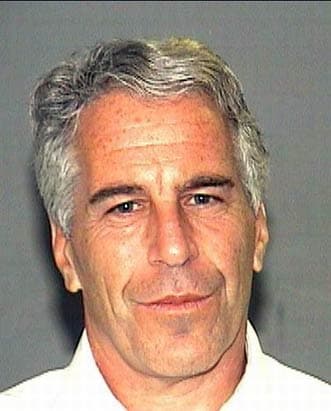
Jeffrey Epstein
PERSON • 3 mentions
American sex offender and financier (1953–2019)
LY
Lynch
PERSON
Ambiguous surname - refers to multiple people in Epstein documents
MF
Maria Farmer
PERSON
American visual artist
MP
Michael J. Pike
PERSON
Person referenced in Epstein-related documents

Paul Cassell
PERSON • 2 mentions
United States federal judge
RC
Robert D. Critton
PERSON • 2 mentions
Individual referenced in Epstein legal documents
SA
Saini
PERSON
Surname reference in documents
SL
Scott Lewis'
PERSON
American baseball player
SI
Sidaway
PERSON
Surname or name fragment in documents
SI
Silcox
PERSON
Name reference in documents
SM
Stuart S. Mermelstein
PERSON
Attorney involved in Jeffrey Epstein legal matters.
TF
Tara A. Finnigan
PERSON
Person referenced in documents
ZO
Zolin
PERSON
Surname or name fragment in documents
Burman Critton Luttier & Coleman LLP
ORGANIZATION
Law firm
Gardening & Trimming, Inc.
ORGANIZATION
Organization referenced in documents
International Game Technology
ORGANIZATION
Organization referenced in documents
Marean Products Corp.
ORGANIZATION
Organization referenced in documents
Mermelstein & Horowitz
ORGANIZATION
Law firm (Mermelstein & Horowitz)
ProHac Vice
ORGANIZATION
Organization referenced in documents
St. Andrews Park, Inc.
ORGANIZATION
Organization referenced in documents
Standard Brands, Inc.
ORGANIZATION
Organization referenced in documents
Zumpe
ORGANIZATION
Organization referenced in documents

Colorado
LOCATION
State of the United States of America

Fort Lauderdale
LOCATION
City in Broward County, Florida, United States

Salt Lake City
LOCATION
City in and county seat of Salt Lake County, Utah, United States and the capital of Utah
Statistics
Pages:7
Entities:36
Sponsored