DOJ-COURT-093
Document DOJ-COURT-093 is a legal document from the Southern District of Florida, consisting of a Plaintiffs’ Memorandum in Opposition to Jeffrey Epstein’s Motion to Compel Answers to First Set of Interrogatories.
This document contains the plaintiffs' response to Jeffrey Epstein's request for detailed information about their sexual history. The plaintiffs, identified as Jane Does 2-7, object to Interrogatory #18, arguing it seeks overly intrusive information about their sexual conduct since the age of 10, including names and contact information of sexual partners. The document outlines their legal opposition to Epstein's motion, suggesting a dispute over the scope of discovery in the case.
Key Highlights
- •The document is a legal memorandum filed by Jane Does 2-7 opposing Jeffrey Epstein's motion to compel answers to interrogatories.
- •Jeffrey Epstein is seeking detailed information on the plaintiffs' sexual history since age 10.
- •The plaintiffs object to the interrogatories as overly intrusive and irrelevant.
Frequently Asked Questions
Books for Further Reading
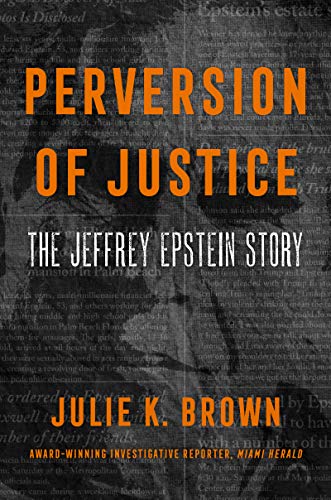
Perversion of Justice
Julie K. Brown
Investigative journalism that broke the case open

Filthy Rich
James Patterson
Bestselling account of Epstein's crimes
Glenn M. Anderson, Lyle Cook, Jack Goldberger, et al., Appellants, v. Frank M. Jordan, as Secretary of State of the State of California. U.S. Supreme ... of Record with Supporting Pleadings
Document Information
Bates Range
DOJ-COURT-093
Pages
9
Source
DOJ First Production
Original Filename
093.pdf
Document Content
Page 1 - DOJ-COURT-093_p1
UNITED STATES DISTRICT COURT SOUTHERN DISTRICT OF FLORIDA JANE DOE NO. 2, CASE NO.: 08-CV-80119-MARRA/JOHNSON Plaintiff, vs. JEFFREY EPSTEIN, Defendant. ____________________________________/ JANE DOE NO. 3, CASE NO.: 08-CV-80232-MARRA/JOHNSON Plaintiff, vs. JEFFREY EPSTEIN, Defendant. ____________________________________/ JANE DOE NO. 4, CASE NO.: 08-CV-80380-MARRA/JOHNSON Plaintiff, vs. JEFFREY EPSTEIN, Defendant. ____________________________________/ JANE DOE NO. 5, CASE NO.: 08-CV-80381-MARRA/JOHNSON Plaintiff, vs. JEFFREY EPSTEIN, Defendant. ____________________________________/ Case 9:08-cv-80119-KAM Document 93 Entered on FLSD Docket 05/06/2009
Page 2 - DOJ-COURT-093_p2
Page 1 of 9 - - 2 JANE DOE NO. 6, CASE NO.: 08-CV-80994-MARRA/JOHNSON Plaintiff, vs. JEFFREY EPSTEIN, Defendant. ____________________________________/ JANE DOE NO. 7, CASE NO.: 08- 80993-CIV-MARRA/JOHNSON Plaintiff, vs. JEFFREY EPSTEIN, Defendant. ____________________________________/ PLAINTIFFS’ MEMORANDUM IN OPPOSITION TO EPSTEIN’S MOTION TO COMPEL ANSWERS TO FIRST SET OF INTERROGATORIES AND FOR AN AWARD OF REASONABLE EXPENSES Plaintiffs, JANE DOES 2-7, by and through their undersigned counsel, hereby file this Memorandum in Opposition to Epstein’s Motion to Compel Plaintiffs to Answer First Set of Interrogatories and for an Award of Reasonable Expenses, and state as follows: I. Introduction Defendant Epstein served an Interrogatory (# 18) seeking to unearth explicit information on every bit of possible sexual conduct and activity in chronological order which each Jane Doe might have engaged in since age 10, including the names and phone numbers of all persons with whom they had sexual contact.1 Plaintiffs properly objected to these interrogatories in that discovery on 1 Plaintiffs also object to Interrogatory nos. 19, 20, and 21, served on each of them, which seek the identities and contact information of any men whom Plaintiffs’ claim committed sexual assault or Case 9:08-cv-80119-KAM Document 93 Entered on FLSD Docket 05/06/2009
Page 3 - DOJ-COURT-093_p3
Page 2 of 9 - - 3 the sexual history of a childhood abuse victim is substantially limited in federal court, “courts should presumptively issue protective orders barring discovery unless the party seeking discovery makes a showing that the evidence sought to be discovered would be relevant under the facts and theories of the particular case and cannot be obtained except through discovery.” See Fed. R. Evid. 412, Advisory Committee Notes to 1994 Amendments, subdivision (c). Defendant has made no such showing in his Motion to Compel to overcome this presumption. Accordingly, Defendant’s Motion to Compel must be denied in its entirety. II. Argument Epstein incorrectly argues that Fed.R.Evid 412 is strictly an evidentiary rule and that Rule 26(b) must be read exclusively to determine whether information about an abuse victim’s sexual history is discoverable. The Rule 412 Advisory Committee Notes, however, instruct that Rule 412 affects not only the admissibility of evidence at trial, but must also “inform the discovery process.” Barta v. City and County of Honolulu, 169 F.R.D. 132 (D. Haw. 1996). The Committee Notes state, in relevant part, as follows: Courts should presumptively issue protective orders barring discovery unless the party seeking discovery makes a showing that the evidence sought to be discovered would be relevant under the battery, or engaged in lewd and lascivious conduct or exhibition, against them. Unlike interrogatory no. 18, which asks for information regarding all men other than Epstein with whom the Plaintiffs have had sexual activity, interrogatory nos. 19-21 are at least limited to criminal conduct. Nonetheless, these interrogatories are overbroad and unnecessarily infringe on the Plaintiffs’ privacy interests, particularly since they seek identity and contact information of men other than Epstein whom Plaintiffs claim committed sexual crimes against them. As discussed infra, discovery on a victim in a case of this nature is tempered by Fed.R.Evid., 412, and, as a result, a party is not entitled to carte blanche discovery on sexual matters involving the victim. There must be a balancing of interests based on the discovery sought. Here, Defendant contends that the information it seeks in interrogatory nos. 19-21 is relevant to Plaintiffs’ damages claims, but fails to state in this regard why the perpetrator’s identity and contact information specifically is relevant and should be discoverable. This discovery should not therefore be allowed. Case 9:08-cv-80119-KAM Document 93 Entered on FLSD Docket 05/06/2009
Sponsored
Page 4 - DOJ-COURT-093_p4
Page 3 of 9 - - 4 facts and theories of the particular case and cannot be obtained except through discovery. Nowhere in Defendant’s Motion is it explained how or why this presumption should be overcome. It is well established under Fed.R.Evid. 412 that a victim’s past sexual behavior is wholly irrelevant to the credibility of her testimony, and that her prior and subsequent sexual activity with third parties has no bearing on the issue of whether she consented to or complied with the sexual acts charged. See United States v. Stone, 472 F.2d 909, 919 (5th Cir. 1973); Virgin Islands v. Jacobs, 634 F.Supp. 933, 936-37 (D. V.I. 1986) (policy of rule disallowing evidence to show character of assault victim); Dept. of Professional Regulation v. Wise, 575 So.2d 713 (Fla. 1st DCA 1991) (holding that evidence of sexual relations with a person other than an accused is not relevant). One commentator has noted that once the identity of persons and similarity of circumstances are removed, “probative value all but disappears.” See Ordover, Admissibility of Patterns of Similar Sexual Conduct: The Unlamented Death of Character for Chastity, 63 Cornell L. Rev. 96, 106 (1977). The discovery at issue is not limited to sexual contact involving similar circumstances, and is therefore lacking in probative value. Defendant fails in his Motion to demonstrate otherwise. Defendant’s argument that Rule 412 is merely an evidentiary rule that should be disregarded in discovery disputes has been routinely rejected in federal courts. See, e.g., Barta v. City and County of Honolulu, 169 F.R.D. 132 (D. Haw. 1996) (granting protective order pursuant to Rule 412 to prevent a sexual battery and harassment victim from having to disclose off-duty sexual contacts with persons other than defendant in discovery); Herron v. Eastern Industries, Inc., 2007 WL 2781211 (N.D. Fla. Sept. 19, 2007); Gibbons v. Food Lion, Inc., 1999 WL 33226474 (M.D. Fla. Feb. 19, 1999); P.J. Herchenroeder v. John Hopkins Univ. Applied Physical Lab, 171 F.RD. 179 (D. Md. 1997) (looking at both Rule 26 and Rule 412 in resolving discovery motion); Sanchez v. Zabihi, 166 F.R.D. 500 (D. N.M. 1996) (explaining that “[a]lthough the present motion arises in the context Case 9:08-cv-80119-KAM Document 93 Entered on FLSD Docket 05/06/2009
Page 5 - DOJ-COURT-093_p5
Page 4 of 9 - - 5 of discovery under Rule 26, the Court must remain mindful of Rule 412 and its implications); Stalnaker v. Kmart Corp., 1996 WL 397563 (D. Kan. 1996) (noting that Rule 412 “is applicable and has significance in deciding certain discovery motions”). As the above-referenced cases make abundantly clear, childhood sexual abuse cases are not garden-variety litigation subject to traditional broad discovery concerning a victim’s sexual history. Rule 412 is designed to protect victims of sexual misconduct from undue embarrassment and intrusion into their private affairs. See Fed R.Evid. 412. The committee notes explain that the Rule is also intended to prevent “sexual stereotyping that is associated with public disclosure of intimate sexual details and the infusion of sexual innuendo into the factfinding process.” Rule 412, Advisory Committee Notes to 1994 Amendments. Common sense dictates that requiring a sexual abuse victim to disclose the intimate details sought by Epstein during the discovery process – which then would presumably lead to additional discovery of the victim’s other sexual partners – would be at least as embarrassing and intrusive during the discovery process as it would be if the victim were questioned about these facts at trial, if not more. Thus, in order to carry out its purpose, Rule 412 “must inform the discovery process” and the Court “must impose certain restriction on discovery to preclude inquiry into areas which will clearly fail to satisfy the balancing test” set forth in Rule 412. See Barta v. City and County of Honolulu, 169 F.R.D. at 135. In Barta, the Court confronted this issue in the context of a discovery motion in a civil case. 169 F.R.D. at 133. A former employee brought a sexual harassment and battery claim against her former employer and individual employees. Id. The defendants asked questions at deposition which delved into the plaintiff’s sexual conduct outside the workplace. Id. at 134. The Court did not allow these questions and wait until trial to determine admissibility. Id. at 135. Instead, the Court sustained the plaintiff’s objections. Id. The Court based its decision on Fed.R.Evid. 412. Id. Case 9:08-cv-80119-KAM Document 93 Entered on FLSD Docket 05/06/2009
Page 6 - DOJ-COURT-093_p6
Page 5 of 9 - - 6 Although noting that Rule 412 controls the admissibility of evidence, the Court explained that it must also apply Rule 412 to “impose certain restrictions on discovery to preclude inquiry into areas which will clearly satisfy the balancing test of 412(b)(2)…” Id. Thus, the Court concluded that the defendants should not be permitted to inquire into the plaintiff’s conduct while she was off-duty, outside the workplace, and which did not involve the same defendants. The same rationale should apply here. The Defendant should not be permitted to seek intimate details of Plaintiff’s sexual conduct throughout her life – particularly if it did not involve similar criminal circumstances such as those involving Epstein. Defendant attached three Florida state court orders to its Motion, two of which are trial court decisions. These cases do not serve as precedent for this Court, and in any event, they are not persuasive. Unlike state courts, federal courts must focus on the interplay between Fed.R.Evid. 412 and Fed.R.Civ.P. 26(b), and in this regard must be concerned with embarrassment to the victim and protection of her privacy. Indeed, it does not appear that an analogous argument was made in any of the state court cases relied upon by Defendant. Furthermore, the discovery in Balas v. Russo, 703 So.2d 1076 (Fla. 3d DCA 1997) was far narrower than that which is at issue here. It was limited to asking plaintiffs for their employment history (which admittedly included prostitution), employment records, electronic recording of the conduct which was the subject of the complaint, and a description of her damages. 703 So.2d 1077-78. At no time were the plaintiffs in Balas asked to disclose their entire sexually history beginning at age 10. Id. Thus, the three state court cases cited in the Motion are not helpful to the Defendant, and should not deflect attention from the burden placed on the party in federal court seeking discovery of a victim’s other sexual contacts. Finally, Defendant’s request for attorney’s fees and costs is completely unwarranted. The present motion and response involve good-faith, timely and well-founded objections by Plaintiffs to Case 9:08-cv-80119-KAM Document 93 Entered on FLSD Docket 05/06/2009
Sponsored
Page 7 - DOJ-COURT-093_p7
Page 6 of 9 - - 7 over-reaching and harassing discovery efforts. Accordingly, Defendant’s request for award of reasonable expenses should be denied. Conclusion Based on the foregoing, Plaintiffs respectfully request that Defendant Epstein’s Motions to Compel Plaintiffs to Answer First Set of Interrogatories and for an Award of Reasonable Expenses be denied in their entirety. Dated: May 6, 2009 Respectfully submitted, By: s/ Adam D. Horowitz Stuart S. Mermelstein (FL Bar No. 947245) [email protected] Adam D. Horowitz (FL Bar No. 376980) [email protected] MERMELSTEIN & HOROWITZ, P.A. Attorneys for Plaintiffs 18205 Biscayne Blvd., Suite 2218 Miami, Florida 33160 Tel: (305) 931-2200 Fax: (305) 931-0877 Case 9:08-cv-80119-KAM Document 93 Entered on FLSD Docket 05/06/2009
Page 8 - DOJ-COURT-093_p8
Page 7 of 9 - - 8 CERTIFICATE OF SERVICE I hereby certify that on May 6, 2009, I electronically filed the foregoing document with the Clerk of the Court using CM/ECF. I also certify that the foregoing document is being served this day to all parties on the attached Service List in the manner specified, either via transmission of Notices of Electronic Filing generated by CM/ECF or in some other authorized manner for those parties who are not authorized to receive electronically Notices of Electronic Filing. /s/ Adam D. Horowitz . Case 9:08-cv-80119-KAM Document 93 Entered on FLSD Docket 05/06/2009
Page 9 - DOJ-COURT-093_p9
Page 8 of 9 - - 9 SERVICE LIST DOE vs. JEFFREY EPSTEIN United States District Court, Southern District of Florida Jack Alan Goldberger, Esq. [email protected] Robert D. Critton, Esq. [email protected] /s/ Adam D. Horowitz Case 9:08-cv-80119-KAM Document 93 Entered on FLSD Docket 05/06/2009
Entities Mentioned
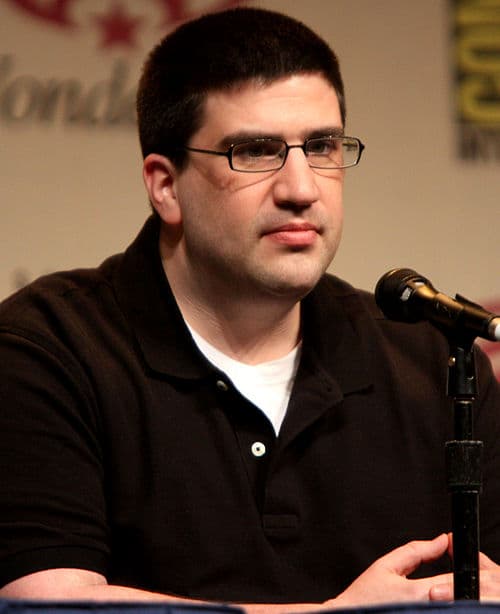
Adam D. Horowitz
PERSON
American attorney specializing in sexual abuse cases, represented multiple Epstein victims
BA
Balas
PERSON
Surname reference in documents
BA
Barta
PERSON
Surname or name fragment in documents
GI
Gibbons
PERSON
Surname reference in documents
HE
Herron
PERSON
Surname reference in documents
JG
Jack Goldberger
PERSON • 2 mentions
American criminal defense attorney who represented Jeffrey Epstein, partner at Goldberger Weiss P.A. in West Palm Beach, Florida
JD
Jane Doe
PERSON
Pseudonym for anonymous victims/witnesses in Epstein legal proceedings

Jeffrey Epstein
PERSON • 3 mentions
American sex offender and financier (1953–2019)
Oliver Stone
PERSON
American film director, screenwriter, and producer (born 1946)
OR
Ordover
PERSON
Surname or name fragment in documents
PH
P.J. Herchenroeder
PERSON
Name reference in documents
RC
Robert D. Critton
PERSON
Individual referenced in Epstein legal documents
RU
Russo
PERSON
Surname reference in Epstein-related documents
SA
Sanchez
PERSON
Surname reference in Epstein documents
ST
Stalnaker
PERSON
Surname reference in documents
SM
Stuart S. Mermelstein
PERSON
Attorney involved in Jeffrey Epstein legal matters.
ZA
Zabihi
PERSON
Researcher
City and County of Honolulu
ORGANIZATION
Organization referenced in documents
Clerk of the Court
ORGANIZATION
U.S. federal court administrative office
D. Haw.
ORGANIZATION
Organization referenced in documents
Eastern Industries, Inc.
ORGANIZATION
Organization referenced in documents
FL Bar
ORGANIZATION
Organization referenced in documents
Jacobs
ORGANIZATION
Entity referenced in documents
Mermelstein & Horowitz
ORGANIZATION
Law firm (Mermelstein & Horowitz)
D. Kan.
LOCATION
Location referenced in documents
Honolulu
LOCATION
City in and county seat of Honolulu County, Hawaii, United States, that is also the capital city of Hawaii
Statistics
Pages:9
Entities:26
Sponsored