DOJ-COURT-085
Document DOJ-COURT-085 is Plaintiff Jane Doe's reply memorandum in support of a motion for a protective order and to quash a subpoena, as well as a motion to consolidate for discovery purposes, in a case against Jeffrey Epstein.
This legal document, filed in the Southern District of Florida, represents the plaintiff's response to the defendant's opposition to the motion to consolidate cases for discovery. The plaintiff argues that consolidating the cases would not cause prejudice or confusion and is supported by legal precedent. The document references case law and procedural rules to support the plaintiff's arguments for consolidation.
Key Highlights
- •Plaintiff is seeking a protective order and to quash a subpoena.
- •The plaintiff is asking the court to consolidate cases for the purpose of discovery.
- •Jeffrey Epstein is named as the defendant in the case.
- •The document cites Rule 42(a), Fed.R.Civ.P., regarding consolidation of cases.
- •The case involves a JANE DOE as the plaintiff
Frequently Asked Questions
Books for Further Reading
Perversion of Justice
Julie K. Brown
Investigative journalism that broke the case open

Filthy Rich
James Patterson
Bestselling account of Epstein's crimes
Glenn M. Anderson, Lyle Cook, Jack Goldberger, et al., Appellants, v. Frank M. Jordan, as Secretary of State of the State of California. U.S. Supreme ... of Record with Supporting Pleadings
Document Information
Bates Range
DOJ-COURT-085
Pages
6
Source
DOJ First Production
Original Filename
085.pdf
Document Content
Page 1 - DOJ-COURT-085_p1
UNITED STATES DISTRICT COURT SOUTHERN DISTRICT OF FLORIDA CASE NO.: 08-CV-80119-MARRA/JOHNSON JANE DOE NO. 2, Plaintiff, vs. JEFFREY EPSTEIN, Defendant. ____________________________________/ PLAINTIFF’S REPLY MEMORANDUM IN SUPPORT OF MOTION FOR PROTECTIVE ORDER AND TO QUASH SUBPOENA, AND MOTION TO CONSOLIDATE FOR PURPOSES OF DISCOVERY Plaintiff, by and through undersigned counsel, files this Reply Memorandum In Support of Motion for Protective Order, and to Quash Subpoena, and Motion to Consolidate for Purposes of Discovery, as follows: I. DEFENDANT FAILS TO SET FORTH ANY PREJUDICE OR CONFUSION THAT WOULD MILITATE AGAINST CONSOLIDATING THESE CASES FOR PURPOSES OF DISCOVERY In response to Plaintiffs’ Motion to Consolidate, Defendant asserts that not all common issues of fact are present and the parties are not identical. These are not reasons to deny consolidation, particularly the limited consolidation for purposes of discovery sought here.1 Rule 42(a), Fed.R.Civ.P., requires only a common question of law or fact, and there need not be an identity of parties. Defendant also asserts without support or explanation that “confusion will result and motions in limine will undoubtedly be filed. . . .” In Ramsay v. Broward County Sheriff’s Office, 303 Fed. Appx. 761, 2008 WL 5237162 (11th Cir. 2008), the Court affirmed the District 1 In a case relied upon by Defendant, Kelly v. Kelly, 911 F.Supp. 66 (N.D.N.Y. 1996), the issue was consolidation for purposes of joint trial, so that case is inapposite here. - 1 - Case 9:08-cv-80119-KAM Document 85 Entered on FLSD Docket 04/27/2009
Page 2 - DOJ-COURT-085_p2
Page 1 of 6 Court’s consolidation of two employment discrimination actions, noting that the party opposing consolidation “has failed to show that the district court abused its discretion by consolidating the two actions insofar as she has introduced no evidence establishing confusion or prejudice.” Id. at *3 & n. 5. The risk of confusion or prejudice is generally more likely to arise when there is consolidation for purposes of trial, which is not being sought in the present cases at this time. See Hendrix v. Raybestos – Manhattan, Inc., 776 F.2d 1492, 1495 (11th Cir. 1985). Here, the common and overlapping motion practice in these cases attests to the efficiencies to be gained by consolidating for purposes of discovery. Additionally, these cases are on the same or similar discovery tracks, so there would be no prejudice or confusion arising from the cases being at different stages of litigation. See Borough of Olyphant v. PPL Corp., 153 Fed. Appx. 80, 2005 WL 2673489 (3d Cir. 2005) (a case cited by Defendant, the Court noted that it has discretion to deny a motion to consolidate “if it would cause delay in one of the cases or if one of the cases is further into discovery than the other case”); see also Ford Motor Credit Co. v. Chiorazzo, 529 F.Supp. 2d 535, 542 (D.N.J. 2008) (denying consolidation of two actions because discovery was nearly complete in one while the other was in its preliminary stages). It is within this Court’s broad discretion to consolidate: “[Rule 42(a)] is a codification of a trial court’s inherent managerial power ‘to control disposition of the causes on its docket with economy of time and effort for itself, for counsel, and for litigants.’ ” Hendrix, 776 F.2d at 1495 (citation omitted). Given the nature of these cases, the common facts alleged and the common issues of law, consolidation for purposes of discovery would be in the interests of judicial economy and efficiency. Defendant fails to set forth anything to the contrary. - 2 - Case 9:08-cv-80119-KAM Document 85 Entered on FLSD Docket 04/27/2009
Page 3 - DOJ-COURT-085_p3
Page 2 of 6 II. THERE SHOULD BE ONLY ONE DEPOSITION FOR EACH PLAINTIFF In response to Plaintiff’s Motion for Protective Order to limit Defendant to a single deposition of each Plaintiff, Defendant fails to set forth any reason why it needs to take two separate depositions of each Plaintiff. Defendant asserts that it has the right to take both party depositions and witness depositions, which Plaintiff does not dispute. Where the same person is both party and witness in related cases, however, it makes eminent sense that there should be only one deposition of that person. The Court’s authority to grant a protective order in this regard falls squarely within Rule 26(c), which allows such an order to be issued to protect a party from annoyance, embarrassment, oppression, or undue burden or expense. The unnecessary burden and harassment that would arise from more than one deposition of a plaintiff/victim in these cases is patent and obvious, particularly since these cases concern sensitive fact issues of sex with minors. In opposition to the Motion, Defendant makes a vague reference to “proper preparation”, but fails to articulate how its preparation will be prejudiced or otherwise adversely affected by a single deposition of each Plaintiff.2 To the contrary, separate depositions would create an artificial, awkward dividing line between which questions are of the deponent as a witness and which are of the deponent as a party, likely giving rise to unnecessary disputes and motion practice. Given the common and overlapping facts in these cases, there is no reason why a party witness cannot be questioned in a single sitting on all facts pertinent to Epstein. A protective order is therefore warranted in these cases so that each Plaintiff has her deposition taken only once. Conclusion Based on the foregoing, and for the reasons set forth in Plaintiff’s Motion for Protective 2 Defendant offers as a “compromise” to limit each Plaintiff to two depositions. This would not sufficiently ameliorate the problem and concern raised in the Motion. Defendant fails to proffer any reason why it is necessary to take two separate depositions of the same witness. - 3 - Case 9:08-cv-80119-KAM Document 85 Entered on FLSD Docket 04/27/2009
Sponsored
Page 4 - DOJ-COURT-085_p4
Page 3 of 6 Order, Motion to Quash Subpoena, and Motion to Consolidate for purposes of discovery, Plaintiff respectfully requests an Order (i) consolidating these cases for purposes of discovery; (ii) limiting the Defendant to a single deposition of each Plaintiff; and (iii) such other and further relief this Court deems just and proper. Dated: April 27, 2009 Respectfully submitted, By: s/ Stuart S. Mermelstein Stuart S. Mermelstein (FL Bar No. 947245) [email protected] Adam D. Horowitz (FL Bar No. 376980) [email protected] MERMELSTEIN & HOROWITZ, P.A. Attorneys for Plaintiff 18205 Biscayne Blvd., Suite 2218 Miami, Florida 33160 Tel: 305-931-2200 Fax: 305-931-0877 - 4 - Case 9:08-cv-80119-KAM Document 85 Entered on FLSD Docket 04/27/2009
Page 5 - DOJ-COURT-085_p5
Page 4 of 6 CERTIFICATE OF SERVICE I hereby certify that on April 27 2009, I electronically filed the foregoing document with the Clerk of the Court using CM/ECF. I also certify that the foregoing document is being served this day to all parties on the attached Service List in the manner specified, either via transmission of Notices of Electronic Filing generated by CM/ECF or in some other authorized manner for those parties who are not authorized to receive electronically Notices of Electronic Filing. s/ Stuart S. Mermelstein - 5 - Case 9:08-cv-80119-KAM Document 85 Entered on FLSD Docket 04/27/2009
Page 6 - DOJ-COURT-085_p6
Page 5 of 6 SERVICE LIST DOE vs. JEFFREY EPSTEIN United States District Court, Southern District of Florida Jack Alan Goldberger, Esq. [email protected] Robert D. Critton, Esq. [email protected] s/ Stuart S. Mermelstein - 6 - Case 9:08-cv-80119-KAM Document 85 Entered on FLSD Docket 04/27/2009
Entities Mentioned

Adam D. Horowitz
PERSON
American attorney specializing in sexual abuse cases, represented multiple Epstein victims
CH
Chiorazzo
PERSON
Name reference in documents
Hendrix
PERSON
Surname reference in documents
JG
Jack Goldberger
PERSON • 2 mentions
American criminal defense attorney who represented Jeffrey Epstein, partner at Goldberger Weiss P.A. in West Palm Beach, Florida
JD
Jane Doe
PERSON
Pseudonym for anonymous victims/witnesses in Epstein legal proceedings

Jeffrey Epstein
PERSON • 2 mentions
American sex offender and financier (1953–2019)
RA
Ramsay
PERSON
Surname reference in documents
RC
Robert D. Critton
PERSON
Individual referenced in Epstein legal documents
SM
Stuart S. Mermelstein
PERSON
Attorney involved in Jeffrey Epstein legal matters.
Borough of Olyphant
ORGANIZATION
Organization referenced in documents
Clerk of the Court
ORGANIZATION
U.S. federal court administrative office
District Court for the Southern District of New York
ORGANIZATION
U.S. District Court for the Southern District of New York
FL Bar
ORGANIZATION
Organization referenced in documents
Ford Motor Credit Co.
ORGANIZATION
Organization referenced in documents
Raybestos
ORGANIZATION
Organization referenced in documents
United States District Court
ORGANIZATION
U.S. federal trial court
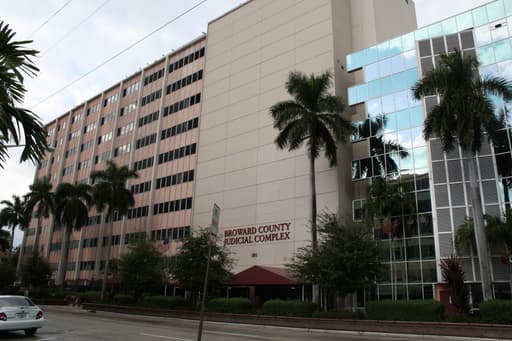
Broward County
LOCATION
County in Florida, United States
Statistics
Pages:6
Entities:17
Sponsored