DOJ-COURT-022
Document DOJ-COURT-022 is a court order from the United States District Court for the Southern District of Florida.
The document is an Order to Show Cause regarding why a default should not be entered against Jeffrey Epstein in a case filed by Jane Doe No. 2, alleging sexual assault and intentional infliction of emotional distress. The court addresses the plaintiff's motion to compel the clerk to enter default against Epstein due to unsuccessful attempts to serve him at his New York City residence.
Key Highlights
- •Order to Show Cause why default should not be entered against Jeffrey Epstein.
- •The case involves allegations of sexual assault and intentional infliction of emotional distress by Jane Doe No. 2 against Jeffrey Epstein.
- •Attempts to serve Jeffrey Epstein at his New York City residence were unsuccessful.
Frequently Asked Questions
Books for Further Reading

Perversion of Justice: The Jeffrey Epstein Story
Julie K. Brown
Investigative journalism that broke the Epstein case open

Filthy Rich: The Jeffrey Epstein Story
James Patterson
Bestselling account of Epstein's crimes and network

Relentless Pursuit: My Fight for the Victims of Jeffrey Epstein
Bradley J. Edwards
Victims' attorney's firsthand account
Document Information
Bates Range
DOJ-COURT-022
Pages
5
Source
DOJ First Production
Original Filename
022.pdf
Document Content
Page 1 - DOJ-COURT-022_p1
1 UNITED STATES DISTRICT COURT SOUTHERN DISTRICT OF FLORIDA NO. 08-80119-CIV-MARRA/JOHNSON JANE DOE NO. 2, Plaintiff, v. JEFFREY EPSTEIN, Defendant. ____________________________________/ ORDER TO SHOW CAUSE WHY DEFAULT SHOULD NOT BE ENTERED AGAINST DEFENDANT JEFFREY EPSTEIN THIS CAUSE comes before the Court on Plaintiff’S Motion to Compel Clerk to Enter Default Against Defendant (DE 9), filed June 11, 2008. The motion is now fully briefed and is ripe for review. The Court has carefully considered the motion and is otherwise fully advised in the premises. Background On February 6, 2008, Plaintiff Jane Doe No. 2 (“Plaintiff”) filed the instant action against Jeffrey Epstein (“Defendant”), alleging claims of sexual assault and intentional infliction of emotional distress. (DE 1.) Plaintiff’s process server attempted to deliver a copy of the summons and complaint to Defendant personally on April 23, April 24, and May 1, 2008, at his residence in New York City. (DE 4.) None of these attempts were successful. On May 7, 2008, the process server left a copy of the summons and complaint with “‘John Smith,’ Assistant & House Staff Employee who refused true name.” (DE 4.) The process server also mailed a copy Case 9:08-cv-80119-KAM Document 22 Entered on FLSD Docket 07/16/2008
Page 2 - DOJ-COURT-022_p2
Page 1 of 5 2 of the summons and complaint to Defendant on May 5, 2008, via first class mail. (DE 4.) The envelope was marked “personal and confidential” and did not indicate that the envelope was from an attorney or related to a legal action. (DE 4.) Discussion Rule 4(e) of the Federal Rules of Civil Procedure states that an individual may be served by “following state law for serving a summons in an action brought in courts of general jurisdiction in the state where the district court is located or where service is made.” Fed. R. Civ. P. 4(e)(1). Alternatively, service may be made by leaving a copy of the summons and complaint at the individual’s place of abode “with someone of suitable age and discretion who resides there.” Fed. R. Civ. P. 4(e)(2)(B). Plaintiff claims that service in this case is valid pursuant to either Fed. R. Civ. P. 4(e)(2)(B) or Florida law. Like the Federal Rules, Florida law requires that process be left at the individual’s usual place of abode “with any person residing therein who is 15 years of age or older.” Fla. Stat. § 48.031(1)(a). The affidavit of service (DE 4) states that the summons and complaint were left with “John Smith” at Defendant’s usual place of abode. From this declaration, the Court cannot determine whether “John Smith” resides at the Manhattan apartment. Further, Defendant has submitted the affidavit of Richard Barnett, who avers that he received copies of the summons and complaint on May 7, 2008, from the process server. (DE 9 Ex. A.) Because Plaintiff has provided no indication to suggest that “John Smith” resides at the apartment, the Court concludes that Plaintiff did not effect valid service on Defendant under Fed. R. Civ. P. 4(e)(2)(B) or Fla. Stat. § 48.031(1)(a). The Court does not believe that Plaintiff’s request for discovery on the issue of service is Case 9:08-cv-80119-KAM Document 22 Entered on FLSD Docket 07/16/2008
Page 3 - DOJ-COURT-022_p3
Page 2 of 5 3 necessary, because service of process was made pursuant to New York law. Under New York law, personal service may be made on an individual by delivering the summons within the state to a person of suitable age and discretion at the actual place of business, dwelling place or usual place of abode of the person to be served and by either mailing the summons to the person to be served at his or her last known residence or by mailing the summons by first class mail to the person to be served at his or her actual place of business in an envelope bearing the legend “personal and confidential” and not indicating on the outside thereof, by return address or otherwise, that the communication is from an attorney or concerns an action against the person to be served, such delivery and mailing to be effected within twenty days of each other. N.Y. C.P.L.R. § 308(2) (McKinney 2008) (emphasis added). New York law does not require the person receiving the summons and complaint at the individual’s place of abode to reside at that location. See, e.g., Boston Safe Deposit and Trust Co. v. Morse, 779 F. Supp. 347, 350 (S.D.N.Y. 1991); Al Fayed v. Barak, 833 N.Y.S. 2d 500, 501 (N.Y. App. Div. 2007). In this case, the affidavit of service states that “John Smith” was a person of suitable age and discretion who accepted a copy of the summons and complaint at Defendant’s actual apartment. (DE 4.) Thus, under New York law, delivery of the summons and complaint to “John Smith” was appropriate. Because the summons and complaint were mailed to Defendant and delivered to his residence within twenty days of each other, Plaintiff took all necessary steps to serve Defendant under New York law. As Defendant recognizes, New York law also requires that proof of service be “filed with the clerk of the court designated in the summons within twenty days of either such delivery or mailing, whichever is effected later.” N.Y. C.P.L.R. § 308(2). Here, Plaintiff is in compliance with this requirement as well: delivery was made on May 7, 2008, and proof of service was filed Case 9:08-cv-80119-KAM Document 22 Entered on FLSD Docket 07/16/2008
Sponsored
Page 4 - DOJ-COURT-022_p4
Page 3 of 5 In Tyler, the court acknowledged that, because service was made in part by mail, the 1 defendant may have the benefit of three extra days to respond per Fed. R. Civ. P. 6(e). Tyler, 120 F.3d at 26. In this case, Plaintiff’s server mailed the summons and complaint on May 5, 2008. Thus, under this scheme, Defendant would have had until May 28, 2008, to respond. Either way, Defendant failed to appear int his case until June 13, 2008. 4 with the Clerk of the Court on May 22, 2008. (DE 4.) Thus, service was deemed complete as of June 2, 2008, under New York law. See N.Y. C.P.L.R. § 308(2) (stating “service shall be complete ten days after” filing of proof of service). Nevertheless, Defendant’s analysis is not entirely correct. In calculating when Defendant’s response was due, the Court turns to Fed. R. Civ. P. 12(a), which states that a defendant must serve an answer within twenty days of being served with the summons and complaint. Fed. R. Civ. P. 12(a)(1)(A)(i). Under this rule, Defendant was required to respond to the Complaint within twenty days from the receipt of the summons; the rule does not suggest a longer period of time is available when substituted service is used to serve a defendant. While Rule 4(e)(1) allows Plaintiff to serve process on Defendant in the method permitted by New York, Rule 4(e)(1) does not alter the twenty day period specified by Rule 12(a). In other words, under Rules 4(e)(1) and 12(a), the Court is not bound by New York’s proof of service filing requirement nor New York’s “completion” date in determining when Defendant’s answer needed to be filed. Beller & Keller v. Tyler, 120 F.3d 21, 25-26 (2d Cir. 1997) (reconciling the deadlines imposed by Rule 12(a) and N.Y. C.P.L.R. § 308). Instead, once Defendant received a copy of the summons and complaint, Defendant had twenty days to respond. Id. (“[A] defendant has twenty days from the receipt of the summons to file an answer . . . . This is so even if . . . the defendant is served pursuant to a state law method of service and the state law provides a longer time in which to answer.”). Thus, Defendant’s response was due on May 27, 2007.1 Case 9:08-cv-80119-KAM Document 22 Entered on FLSD Docket 07/16/2008
Page 5 - DOJ-COURT-022_p5
Page 4 of 5 5 Conclusion Accordingly, Defendant is hereby ORDERED to file a report with the Court showing good cause why default should not be entered for failure to respond to the Complaint in a timely manner within ten (10) days from the date of entry of this Order. Plaintiff may respond to Defendant’s report within the time allotted by the Local Rules. Failure to respond to this Order shall result in an entry of default against Defendant. DONE AND ORDERED in Chambers at West Palm Beach, Palm Beach County, Florida, this 16 day of July, 2008. th ________________________________ KENNETH A. MARRA United States District Judge Copies furnished to: all counsel of record Case 9:08-cv-80119-KAM Document 22 Entered on FLSD Docket 07/16/2008
Entities Mentioned
AF
Al Fayed
PERSON
Name reference in documents

Ehud Barak
PERSON
10th Prime Minister of Israel
HB
Harry Beller
PERSON
Epstein's financial adviser and accountant, managed wire transfers
JD
Jane Doe
PERSON
Pseudonym for anonymous victims/witnesses in Epstein legal proceedings

Jeffrey Epstein
PERSON • 3 mentions
American sex offender and financier (1953–2019)
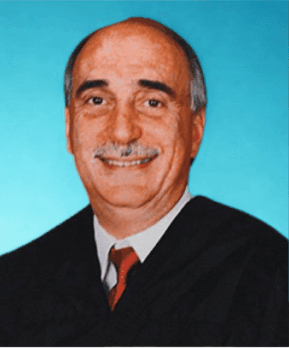
Kenneth Marra
PERSON
American judge
MO
Morse
PERSON
Surname reference in Epstein-related documents
RB
Richard Barnett
PERSON
Individual referenced in Epstein documents
TS
Tyler Shears
PERSON • 2 mentions
Person referenced in documents
Boston Safe Deposit and Trust Co.
ORGANIZATION
Organization referenced in documents

New York City
LOCATION
Most populous city in the United States
Statistics
Pages:5
Entities:11
Sponsored