HOUSE_OVERSIGHT_031988 - HOUSE_OVERSIGHT_031989
Document HOUSE_OVERSIGHT_031988 appears to be an email referencing the documentary film 'Inside Job' (2010), which analyzes the 2008 financial crisis. The email recommends the film, highlighting its critical view of the financial industry and its key figures.
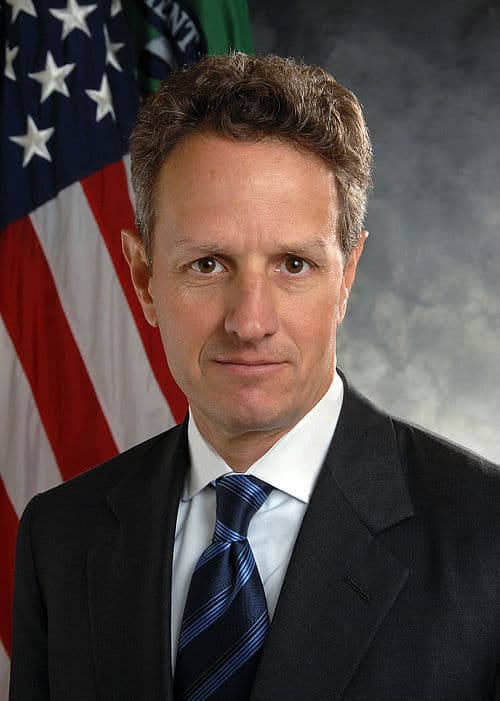
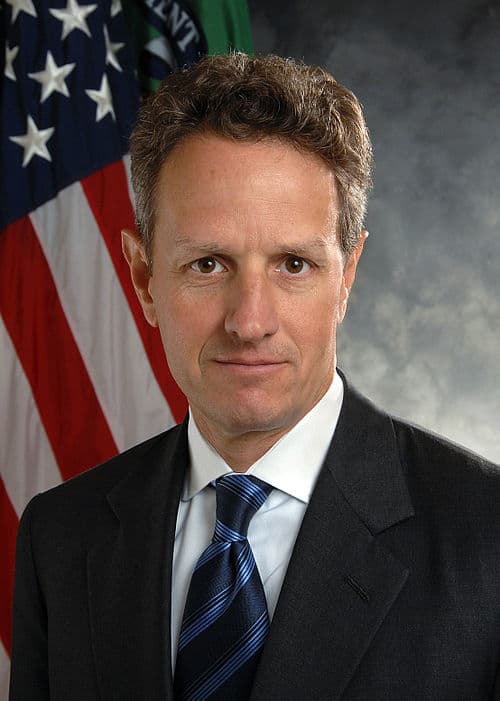
The email discusses 'Inside Job,' a documentary that investigates the causes and consequences of the 2008 financial crisis, including deregulation, risky financial instruments, and the real estate bubble. It mentions figures like Lawrence H. Summers, Alan Greenspan, Ben Bernanke and Timothy Geithner, who are portrayed critically in the film for their roles in the lead-up to the crisis. The email suggests the film delivers a 'scourging moral force' regarding the events and people involved.
Key Highlights
- •The document references the film 'Inside Job' (2010) which analyzes the 2008 financial crisis.
- •Key figures mentioned in connection to the financial crisis include Alan Greenspan, Lawrence Summers, Timothy Geithner and Ben Bernanke.
- •The email suggests the film is critical of the deregulation of the financial services industry and the roles of key individuals in government and finance.
Frequently Asked Questions


Document Information
Bates Range
HOUSE_OVERSIGHT_031988 - HOUSE_OVERSIGHT_031989
Pages
2
Source
House Oversight Committee
Document Content
Page 1 - HOUSE_OVERSIGHT_031988
From: Sent: To: Subject: 2/6/2011 8:26:59 AM [email protected] You should see this movie/documentary Inside Job (2010) NYT Critics' PickThis movie has been designated a Critic's Pick by the film reviewers of The New York Sony Pictures Classics Henry Paulson, Ben Bernanke and Timothy Geithner in the documentary "Inside Who Maimed the Economy, and How without punishment, of an an outrage that has no far largely escaped legal sanction and societal stigma. The outrage that has so far largely escaped legal betrayal of public trust and collective values that Mr. Ferguson chronicles was far more brazen and damaging than the adultery in Nathaniel Hawthorne's novel, which treated Hester more as scapegoat than The gist of this movie, which begins in a mood of calm reflection and grows angrier and more incredulous as it goes on, is unmistakably punitive. The density of information and the complexity of the subject matter make "Inside Job" feel like a classroom lecture at times, but by the end Mr. Ferguson has summoned the scourging moral force of a pulpit-shaking sermon. That he delivers it with rigor, restraint and good humor makes his case all the more devastating. He is hardly alone in making it. Numerous journalists have published books and articles retracing the paths that led the world economy to the precipice two years ago. The deregulation of the financial services industry in the 1980s and '90s; the growing popularity of complex and risky derivatives; the real estate bubble and the explosion of subprime lending - none of these developments were exactly secret. On the contrary, they were celebrated as vindications of the power and wisdom of markets. Accordingly, Mr. Ferguson recycles choice moments of triumphalism, courtesy of Lawrence H. Summers, Alan Greenspan and various cable television ranters and squawkers. as stock indexes soared and profits swelled, there were always at least a few investors, economists and government officials who warned that the frenzied speculation was leading prophets without honor show up in front of Mr. Ferguson's camera, less to gloat than to present, once analyses that were dismissed and ignored by their peers for so Dozens of interviews - along with news clips and arresting aerial shots of New York, Iceland and other disaster areas are folded into a clear and absorbing history, narrated by Matt Damon. The music (an opening song, "Big Time, by Peter Gabriel, and a score by Alex Heffes) and the clean wide-screen cinematography provide an aesthetic polish that is welcome for its own sake and also important to the movie's themes. The handsomely lighted and appointed interiors convey a sense of the rarefied, privileged worlds in which the Wall Street operators and their political enablers flourished, the elegance of the presentation also subliminally bolsters the film's authority. This is not a piece of ragged muckraking or breathless aarguson's previous documentary, It rests its outrage on reason, research and careful argument. The same was true of Mr. "No End in Sight, catastrophic policies carried out in Iraq by President George W. Bush's administration just after the overthrow of saddam Hussein. But whereas that film concentrated on a narrow view of a complex subjectside dead te spong sorthe tantal area, backal the eagan ain raelon and a rar arield as Perhaps unsurprisingly, many of the highest-profile players declined to be interviewed. Mr. Summers footage, and none of his predecessors or successors as Treasury secretary Robert E. Rubin or Henry M. Paulson Jr. or Timothy F. Geithner - submit to Mr. Ferguson's questions. Nor do any of the top executives at Goldman Sachs or the other big banks. Most of the interviewees are, at least from the perspective of the filmmaker, friendly witnesses, adding fuel to the director's comprehensive critique of the way business has been done in the United States and the other advanced capitalist countries Both American political parties for the past two decades-anside Joh" is not simoly another belated settling of are indicted; accounts with Mr. Bush and his advisers, though they are hardly ignored. The scaling back of government oversight and the weakening of checks on speculative activity by banks began under Reagan and during the Clinton administration. And with each administration the market in derivatives expanded, and alarms about the dangers of this type of investment were ignored. Raghuram Rajan, chief economist at the International Monetary Fund, presented a paper in 2005 warning of a "catastrophic meltdown" and was as a "Luddite" Meanwhile, some investment bankers - at Goldman Sachs in particular - were betting against the positions pushing on their customers. An elaborate house of cards had been constructed in which bad consumer loans were bundled into securities, which, were certified as sound by rating agencies paid by he banks and then insured via credit-default swaps. One risky bet was stacked on top of another, retrospect the collapse of the whole edifice, along with the loss of jobs, homes, pensions and political confidence, seems inevitable. HOUSE_OVERSIGHT_031988
Page 2 - HOUSE_OVERSIGHT_031989
How did this happen? Mr. Ferguson is no conspiracy theorist; nor is he inclined toward structural or systemic explanations. Markets are not like tectonic plates, shifting on their own. Visible hands write laws and make deals, and in this case a combination of warped values and groupthink seems to have driven Per ren onomies tere or gase by cons the Feel set on boards of restors and ner ership - Ferguson aims his critique at academia, the masters of the universe club. When he challenges some of these the White House or in professors, in particular those who held positions of responsibility in the Federal Reserve, they are reduced to stammering obfuscation - Markets are complicated! Who could have predicted? I don't see any conflict of interest and occasionally provoked to testiness. Mr. Ferguson, for his part, cannot always contain his incredulity or rein in his sarcasm. from off camera, saying things like, "You can't be But it is hard to imagine a movie more serious, and more urgent, than "Inside Job. „serious!" avenues that might have been explored more thoroughly, in particular the effects of the crisis on ordinary, non-wall-street-connected workers and homeowners. The end of the film raises a disturbing as Mr. Damon exhorts viewers to demand changes in the status quo so that the trends associated with unchecked speculation of the kind that caused the last crisis rising inequality, neglect of productive capacity, endless cycles of boom and bust - might be reversed. This call to arms makes you wonder why anger of the kind so eloquently expressed in "Inside Job" has been so inchoate. And through no fault of its own, the film may leave you dispirited as well as enraged. Its fate is likely to be that of other documentaries: praised in some quarters, nitpicked in others and shrugged off by those who need its message most. is a shame. "Inside Job" is rated PG-13 (Parents strongly cautioned). Some drug and sex references and pervasive obscenity, though not the verbal kind. HOUSE_OVERSIGHT_031989
Entities Mentioned

Alan Greenspan
PERSON • 2 mentions
American economist and financial advisor (born 1926)
AH
Alex Heffes
PERSON
British composer

Ben Bernanke
PERSON
American economist (born 1953)

Bill Clinton
PERSON
President of the United States from 1993 to 2001 (born 1946)
FO
Fontagne
PERSON
French economist
Geithner
PERSON
Surname reference in documents

George W. Bush
PERSON • 2 mentions
President of the United States from 2001 to 2009

Henry M. Paulson Jr.
PERSON
74th United States Secretary of the Treasury
Henry Paulson
PERSON
74th United States Secretary of the Treasury
HE
Hester
PERSON
Surname reference in documents

Jeffrey Epstein
PERSON
American sex offender and financier (1953–2019)

Larry Summers
PERSON
American economist and government official (born 1954)

Matt Damon
PERSON • 2 mentions
American actor (born 1970)
Nathaniel Hawthorne
PERSON
Person referenced in documents

Peter Gabriel
PERSON
British musician

Raghuram Rajan
PERSON
Indian economist and former governor of Reserve Bank of India

Robert E. Rubin
PERSON
American banking executive, 70th US Treasury Secretary

Ronald Reagan
PERSON
President of the United States from 1981 to 1989 and actor (1911–2004)

Saddam Hussein
PERSON • 2 mentions
Iraqi president, army officer and Baathist politician (1937–2006)
TI
Timothy
PERSON
First name reference to multiple individuals in Epstein-related documents
Timothy F. Geithner
PERSON
American central banker and politician
International Monetary Fund
ORGANIZATION
International financial institution

New Yorker
ORGANIZATION
American weekly magazine since 1925

Sony Pictures Classics
ORGANIZATION
Film division of Sony Pictures Entertainment

Iceland
LOCATION
Location referenced in documents

Ireland
LOCATION
Statistics
Pages:2
Entities:26
Avg. OCR:97.5%
Sponsored