HOUSE_OVERSIGHT_014972 - HOUSE_OVERSIGHT_015001
No Subject
Document HOUSE_OVERSIGHT_014972 is a set of government records from the House Oversight Committee.
This 30-page document appears to be an internal report related to global equity volatility insights, specifically concerning potential trading strategies in the US and European markets. It discusses topics such as monetary policy, equity market ranges, and dispersion in the EU bank sector, and mentions specific financial instruments and institutions. The report includes recommendations for investment strategies and risk management.
Key Highlights
- •The document discusses a potential trading strategy involving buying in-the-money down and out puts on the S&P.
- •It recommends a strategy for long EU banks dispersion.
- •Merrill Lynch and Bank of America are mentioned as organizations involved in the creation or distribution of this report.
Frequently Asked Questions
Related Links
Books for Further Reading

Perversion of Justice: The Jeffrey Epstein Story
Julie K. Brown
Investigative journalism that broke the Epstein case open

Filthy Rich: The Jeffrey Epstein Story
James Patterson
Bestselling account of Epstein's crimes and network

Relentless Pursuit: My Fight for the Victims of Jeffrey Epstein
Bradley J. Edwards
Victims' attorney's firsthand account
Document Information
Bates Range
HOUSE_OVERSIGHT_014972 - HOUSE_OVERSIGHT_015001
Pages
30
Source
House Oversight Committee
Date
June 20, 2017
Original Filename
GEVI 6.20.2017.pdf
File Size
2.09 MB
Document Content
Page 1 - HOUSE_OVERSIGHT_014972
Unauthorized redistribution of this report is prohibited. This report is intended for [email protected] Global Equity Volatility Insights Want a cheap call on EU equity? Monetise correlation through EU bank dispersion US Extract alpha from summer SPX range as policy and positioning “collar” equities With the Federal Reserve last week appearing more emboldened to normalize monetary policy, risk asset bears have come out in force. While we agree that a changing Fed reaction function is likely not supportive of substantial equity upside, we think the “Yellen put” still exists, albeit with a lower strike. Hence, we see monetary policy as providing a near-term “collar” (long put/short call) on a US equity market already prone to getting trapped in record-tight trading ranges. Further impetus for a summer range- trade should come from (i) fiscal policy, as gridlock caps equity upside but policy hope floors the downside, and (ii) positioning, where the risk of continued “fragility events” (potentially exacerbated by stretched quant fund/short vol positioning) meets cashed-up investors still accustomed to buying dips. As a risk-limited range trade, we like buying in-the-money down and out puts on the S&P. For example, an SPX Sep 2475 put that knocks out at 2300 (6% OTM) indicatively costs 7Obps (spot ref 2451), a 60% discount to the 2475 / 2300 put spread. Europe Long EU banks dispersion: Buy Dec17 call on a basket, sell worst-of call We recommend positioning for greater dispersion in EU bank sector returns via buying a Dec17 105% call on an equally-weighted basket of Santander, BNP, ING, Intesa and Deutsche Bank, part-financed by selling a worst-of call on the same basket for 1.8% (net) indic., as: 1) improving macro/earnings, sensitivity to rates and regulatory headwinds are likely to lead to greater differentiation within banks, 2) the entry point is attractive given historically low implied vol (13 8y+ percentile) and high implied correlation (81% bid vs latest 6M realised correl of 66%), 3) historical risk-reward at current pricing is attractive (avg. P&L of +8.4% when positive vs -1.8% when negative), and 4) the trade can be considered as a cheap call on EU equities as it has a similar payoff profile but with greater benefit relative to its cost. Asia Buy depressed China vs. US risks through corridor variance spreads As global central banks have taken on more hawkish tones, the uncertainty surrounding policy tightening will be more positive for EM volatility than for DM volatility. Additionally, our strategists have a more bearish outlook for the Chinese banking sector (which makes up a majority of the HSCEI index) amid rapidly rising leverage, complex shadow banking, and excessive home price inflation. Since we believe the global synchronized monetary tightening will impact HSCEI volatility more than SPX volatility, we recommend owning HSCEI-SPX 70/110% corridor variance at 5 vol points, a 3 vol point discount to a vanilla variance spread. The entry point is attractive as the HSCEI- SPX 18-month variance swap spread has fallen back to the lower-end of its 5-year trading range, the trade has a positive carry, and it benefits during China risk-off events. >> Employed by a non-US affiliate of MLPF&S and is not registered/qualified as a research analyst under the FINRA rules. Refer to "Other Important Disclosures" for information on certain BofA Merrill Lynch entities that take responsibility for this report in particular jurisdictions. BofA Merrill Lynch does and seeks to do business with issuers covered in its research reports. As a result, investors should be aware that the firm may have a conflict of interest that could affect the objectivity of this report. Investors should consider this report as only a single factor in making their investment decision. Refer to important disclosures on page 28 to 29. Analyst Certification on page 27. 11756528 Timestamp: 20 June 2017 01:18AM EDT Bankof America Merrill Lynch 20) une 2017 Equity Derivatives Glob. al BofA Analytics = DATA DRIVEN = Global Equity Derivatives Rsch MLPI F&S Anshul Gupta >> Equi MLI Nitin Saksena Equi MLP Willi Equi ‘y-Linked Analys UK) y-Linked Analys F&S am Chan, CFA >> y-Linked Analys Merrill Lynch (Hong Kong) Abhi Equi MLI Benj Equi MLP nandan Deb >> ‘y-Linked Analys UK) amin Bowler ‘y-Linked Analys F&S [email protected] Jason Galazidis >> Equi MLI Clov Equi MLI Chin Equi MLP Michael Youngworth Equi MLP Nikolay Angeloff Equi MLP y-Linked Analys UK) is Couasnon >> y-Linked Analys UK) tan Kotecha y-Linked Analys F&S ‘y-Linked Analys F&S y-Linked Analys F&S See Team Page for List of Analysts Table 1: 3M volatility (weekly changes) Implied Realized S&P500 9.8 (-0.2) 7.1 (-0.2) ESTX50 3.4 (0.3) 1.5 (0.2) FTSE 10.0 (-0.4) 9.7 (0.2) DAX 2.6 (0.3) 0.7 (0.5) NKY 13.8 (-0.2) 12.3 (-0.2) HSI 24 (0.1) 0.1 (0.2) KOSPI 2.2 (0.3) 0.5 (0.1) EEM US 5.6 (0.5) 11.8 (-1.1) TOP40 6.9 (1.2) 1.1 (0.3) RDX 25.9 (0.9) 20.6 (-1.1) IBOV 22,9 (-1.7) 25.5 (-0.7) ISE30 20.2 (0.4) 3.5 (0.1) Source: BofA Merrill Lynch Global Research H OUSE_OVERSIGHT_014972
Page 2 - HOUSE_OVERSIGHT_014973
BofAML GFSI™ X-Asset Risk Landscape Stress now below normal for all asset classes The indicator was little changed last week, finishing at -0.23. ¢ Stress is now in benign territory across all five asset classes: Stress in across all asset classes (except equity) declined last week. Notably, rates stress turned negative (benign territory) and stresses across all five asset classes are now negative. ¢ Stress in Equity skew rose as ESTX50 and (to a lesser extent) S&P500 skew steepened; indeed the gain in ESTX50 skew was the greatest across GFSI sub- components (Chart 2) and also historically significant (Chart 5). ¢ Commodity-related stresses fell the most across asset classes (Chart 3), led by declines in Crude and Gold vol (Chart 2}, reversing some of the gains after geopolitical tensions in the Middle East rose in recent weeks. Chart 1: Latest* stress across GFSI sub-components 2.0 420 Bo 154m = @ Sf Red shaded area highlights components in fi Green shaded area highlights components in 2 1.0 so @ Bearish territory “—* Skew Bullish territory @ 05 Flow a 00 - 2 05 @ 40 -2.0 : mes errarg ea ar aa Basn> ee ec @ oc eB raxzsese SEO SEES DEBS EBSBRSEEHSHE EES SSS SSS ESSSSESsREsesHRsEES Ww 2? D woueduwu a SS On, Px Ow Weow ~ ee» ep pk fp Bet dO oe ow a aoann wn =n a nw” a) oO wn ° HAE SES SSV2MBPBEBS A2HESEHRESL CP NDHDBKL WY EEFEEXT ES ERC SBSBEEDS O2>T8EEBe@o0s5 22a FGOrsgsseogee SONORA S ERA SSF u ze se' FF e07 ao EX xX GB TtDAHHA PG Loe st EReaertoaoer 208 DF —>SB &—Sega2eoB (oa a Cc Az n oO 2 [o) a w > Oo <x” aS$<setZnnuer>xxRPo SSnl2@SRBSBeFESpoeeeseotarexegPprEEEZSE S6S BE mesStrseBaBRELE Sf§rtaat se sa E 62 Au sr tS Seu aZto a o 8 ze a > “@ co ne) a0° zp OF 2 =u = 23s > o Bas — -- = s ro) = os > =. > o”€g uo n nw = fo} 2 = of ere ce & @ Ww Aa fou iin Ss ian (= x= z >= 8 = co oo ue a 38 6 82° = iS) a > Source: BofA Merrill Lynch Global Research. *Latest as of 16-Jun-17. Chart 2: Change** in stress across GFSI sub-components 08 12 . 2 4 Gas Risk £ NN o> Skew 6045 s5Sn = oe Flow o o @ 00 T T T T a a oe oe a i i Ee Ee Be Be Be T a T 1 2 rrrrriyy oO 2.04 =] Xi N = oe F978 oO es 08 ; ; ; [a saars QOeg 3S so>e “ou a sooxek seanpevoeaars @ [a SST ESRBBSTSHBABESS ESE, ES Esa SSS ST ESEBRESELSSRESBESESS HAtxvFeaer- De sar -GdeFfefPteuwseVoeetuexy er fuser r2eFKFSGHwUEL SEG ENDNDH ESE HR BSPREZTEL HD EHR EBHEED SO ExsSBRZREBRE GS Cy 2 @ BSSz-oo0oooFtABeBALRALZTOoO SBS ESOC LR F777, Fz rsegerPBTtrFzreasgeE >< mA TT YTStOs DOG ~? ia Cem tT Sseostuv aoc aes aSr>sags CPA REE EVE @ ZzSoeQc05 FP and 5SB2e2ae° PPE E AP a BER BA ° Mx nDS FER 5 E2RB 5 B =a=as2se 8 PEELS BSR EEL CEH s 25>xeFEQernVS um 2FO0nHt oGEt AAFPs RS SFtTSESHZASBAX* BPEGVEHe PSF seaQESS £ 6 WeOm ao = =Ooos Cet £828 eR 2°SFtB°-B D io) =e ro) = 6 Qo eer sun ekaoe ao 2 >t =i te > eget A28Bss = O WW a oO ee =e gan ao 8 2 = 8 foe) Source: BofA Merrill Lynch Global Research. **Latest as of 16-Jun-17. Change vs 1 week prior (9-Jun-17). The GFSI Risk Allocator (using Bull, Bear & Neutral weights of 2, 0, 1} suggested a 17.4% overweight position on 16-Jun (vs 13.0% OW as of 9-Jun}. The percentages of Bullish, Bearish and Neutral GFSI components (as used in the Risk Allocator) as of 16-Jun were 34.8%, 17.4% and 47.8% respectively. ; a ; Bankof America 2 Global Equity Volatility Insights | 20 June 2017 zi guinty yf lnsighies | 20.) Merrill Lynch HOUSE_OVERSIGHT_014973
Page 3 - HOUSE_OVERSIGHT_014974
Chart 3: Stress in commodities fell the most last week (driven by a drop Chart 4: EM and the US are the least stressed GFSI regions globally in crude oil vol) while stress in equities rose marginally (led by equity 0.02 skew) 0.05 0.02 02 0.00 — ‘ -0.05 0.0 -0.10 5% -0.15 ~ -0.20 -0.4 -0.25 06 -0.30 ~ 0.35 -0.8 -0.40 40 EM Europe Japan US Equities Credit Rates FX Commodities mLatest stress (16-Jun-17) | @ Change in stress mLatest stress (16-Jun-17) @ Change in stress Source: BofA Merrill Lynch Global Research. Iwk change (9-Jun-17 to 16-Jun-17). Source: BofA Merrill Lynch Global Research. 1wk change (9-Jun-17 to 16-Jun-17). Chart 5: Top 10 movers in stress (1-week abs chg %-ile vs history*) Chart 6: Global volatility & credit spread stress in the GFSI me Stress fall m Latest stress (16-Jun-17) = Change in stress gam Stress rise _ 100% 792% 3 0.01 0.01 o : 2 90% 83% 82% 82% 81% 80% 799 79% 77% 0.2 = 80% 67% -0.4 > - J 9 m GONG 1.0 ‘am 50% -1.2 irs} a cs] S 2 a Ss fom = § 2 § 5 $a Fx 5 238 1.4 6 5 8 5 632,93 & 5BPe 2 5 2 3S 8 3B 8 Q <2) > 2 oY EBVBwAA aEs = = = > = a 2 2 > & co) co) ee o) a 6 2X >2P aM FZ ope >< 2 = 8 2 Pa > mo SHU LfOsnr 5 PELOS = uw a) 5 > a= a=] — ° a a 3 a oOo se8 = = > {o) & fo) i nn 5 5 ums uw # ar = 3 a co) <x ce) = co) Source: BofA Merrill Lynch Global Research. * %-ile of weekly mave in stress vs all historical weekly Source: BofA Merrill Lynch Global Research. 1wk change (9-Jun-17 to 16-Jun-17). moves (earliest 3-Jan-00). Bar colours represent rise (red) or fall (green) in stress. 1wk change (9-Jun- 17 to 16-Jun-17). Bankof America = . dee toes z Global Equity Volatility Insights | 20 June 2017 Merrill Lynch quity plnstents | 28) a HOUSE_OVERSIGHT_014974
Sponsored
Page 4 - HOUSE_OVERSIGHT_014975
Volatility in the US Risk-limited alpha in a “collared” market: SPX ITM KO puts US equities vulnerable...to a summer range-trade The Federal Reserve last week appeared more emboldened to normalize monetary policy, not only raising interest rates by 25bps but also reiterating its intention to hike four more times by the end of 2018 and stating that it “expects to begin implementing a balance sheet normalization program this year” - all despite recent softness in inflation data. Breakeven rates of inflation narrowed following the Fed communications due to tighter monetary conditions in the face of slowing US economic data, and risk asset bears responded in force, suggesting that Janet Yellen had “broken up” with investors and that it would be prudent to sell “before it’s too late”. We agree that the changing reaction function of the Fed is likely not supportive of further substantial US equity upside and may be viewed as the Fed now providing a short call option on the S&P 500. However, in our view, it is premature to conclude from last week’s developments that the “Yellen put” is dead. We see its strike as declining but would not underestimate Yellen’s dovish inclinations in a shock or the capacity for the Fed to still remain credibly on hold as long as the US economy is not “running hot”. In short, we see monetary policy as now providing a “collar” (long put / short call} on a US equity market that has already shown a propensity over the past year for getting trapped in record tight trading ranges.' Other factors may also conspire to create a summer range-trade for US equities, namely (i) fiscal policy, where gridlock likely caps equity upside but lingering policy hope floors the downside, and (ii) positioning, where the risk of continued “fragility events” (potentially exacerbated by stretched quant fund/short vol positioning) meets cashed-up investors still accustomed to buying dips. Tug of war between fragile market/stretched positioning and cashed-up dip-buyers As we have noted recently, US equities have displayed a historically unusual tendency to jump rapidly from calm to stress and back (“fragility”), with the recent Tech sell-off and rebound the latest example. For example, in the past year, the S&P 500 has seen 5sigma declines (3 in total—Brexit, Sep-16, May-17) occur 20x more frequently than over the prior 90 years or so. The increased frequency of these “fragility events” is in part due to vol failing to remain high post a spike as equity market participants continue to aggressively “buy the dip” and in the process reset vol lower. Historically low vol alongside consistently upward trending equity markets and low cross asset correlations could be creating stretched positioning across markets. For example, upward trending equities on historically low vol may be pushing CTA equity positioning to near record levels (Chart 7). Risk parity portfolios could be increasing their leverage due to low vol as well as low cross asset correlation (Chart 8). And lastly, inverse VIX ETPs have seen increased open interest as performance has swelled on the back of continued declines in vol and attractive term structure risk premia (Chart 9). Should vol spike again alongside a reversal in equity price momentum and a rise in cross asset correlations, then unwinds from these strategies could exacerbate market fragility. However, this must be weighed against an investor base that has plenty of cash on hand (Chart 10) and their potentially fickle but still-intact tendency to view any equity market dip as an alpha opportunity. ' For example, the Dow Jones Industrial Average traded in its tightest trading range in over 110 years in Jan-17; this followed a record in the S&P 500 ending Sep-16 for the longest stretch of trading within a range of 1.77% since 1928. Bankof America 4 Global Equity Volatility Insights | 20 June 2017 Merrill Lynch HOUSE_OVERSIGHT_014975
Page 5 - HOUSE_OVERSIGHT_014976
Chart 7: A combination of upward trending global equity markets and very low volatility have conspired to push trend following (CTA) equity positioning to near record levels. Consequently, the beta of CTA strategies to global equities is also at extreme levels 1.00 0.75 0.50 0.25 0.00 -0.25 -0.50 -0.75 -1.00 wo Ww co ico} > oO fom @ wm > fom & @ = cop) Jul-15 Nov-15 Jan-16 Mar-16 Jul-16 Nov-16 Jan-17 Mar-17 May-17 wo Ww to & & 370 S=> 5S mmm MSCI World (Ratio of trend strength to volatility) (LHS) ——— BofAML Model CTA Global Equity Allocation (RHS) Source: BofA Merrill Lynch Global Research. Based on daily data form 2-Jan-2015 to 16-Jun-2017. CTA = Commodity Trading Advisor Chart 8: Owing to low cross asset vol and strong diversification, the volatility of risk-balanced multi-asset portfolios has fallen to historically low levels. Consequently, leverage levels across multi-asset & other portfolios that target fixed vol have likely hit their caps 24% 3.0X 20% 2.9X 16% 2.0X 12% 1.5x 8% 1.0x 4% 0.5x 0% 0.0x Noor tH OMOH ANNM OAK TER SNK R DHODOADBHAHAASDS LHS BAADBARBAAAASSSSSS mmm Model Risk Parity Leverage (Vol Target: 10% & Max Leverage: 3x) (RHS) Unlevered BofAML Model Risk Parity Volatility (LHS) Source: BofA Merrill Lynch Global Research. Based on daily data from 3-Jan-72 through 16-Jun-17. Equity, fixed income, and commodity components within the hypothetical risk parity investment are represented by the S&P500, 10-Year US Treasury Bonds, and the S&P GSCI Index, respectively. Risk parity allocations are determined and rebalanced monthly using prior 12-month realized volatility and correlations. It is important to note that not all CTA, risk parity, or vol control strategies operate similarly and there is model risk in estimating the exact size of these trading flows. Chart 9: The vega outstanding in inverse VIX ETNs has also reached a record high at ~$125mn vega 350 ee levered long === Levered long 300 ee |nverse === Net vega across VIX ETPs 250 200 150 100 VIX ETP open interest ($mn vega) -150 2012 2013 2014 2015 2016 2017 Source: BofA Merrill Lynch Global Research. Daily data from 13-Feb-12 through 16-Jun1 7. Chart 10: Global FMS average cash balances (%) remain elevated, suggesting dry powder for investors still conditioned to buy equity dips I 6.0% Backtest | Actual 2400 2200 5.5% \ 2000 I I ans | 1800 1600 4.5% 1400 4.0% 1200 3.5% 1000 . 800 3.0% 600 ‘01 ‘02 ‘03 '04 '05 '06 ‘07 ‘08 09 10 11 12 '13 14 15 16 “17 FMS avg cash balance (%) — S&P 500 (RHS) Source: BofA Merrill Lynch Global Fund Manager Survey, Bloomberg. As a reminder, the FMS Cash Rule works as follows: when average cash balance rises above 4.5% a contrarian buy signal is generated for equities. When the cash balance falls below 3.5% a contrarian sell signal is generated. Extract risk-limited alpha from SPX range via cheap in-the-money knockout puts As a risk-limited range trade, we like owning down-and-out puts on SPX that are already in-the-money. For example, the SPX Sep 2475 put with a 2300 knock-out (continuous observation) indicatively costs 7Obps (spot ref 2451) and offers a 60% discount to the vanilla 2475/2300 put spread, which is itself historically cheap (Chart 12). If SPX stays above the 2300 barrier at all points in time before expiry, the structure is equivalent to a 2475 put option. If the barrier is instead breached, the maximum loss will be equal to the (low) upfront premium. The 2300 barrier is about 6% out-of-the- money, hence “allows” for the elusive 5% correction not seen since Brexit (on a closing basis). However, investors can mitigate the risk of breaching the barrier by either moving it farther down (e.g., a 2245 barrier would indicatively raise the cost from 0.7% to 1%}, or by only observing it on a close-to-close basis (in turn sacrificing part of the discount). Bankof America Merrill Lynch Global Equity Volatility Insights | 20 June 2017 5 HOUSE_OVERSIGHT_014976
Page 6 - HOUSE_OVERSIGHT_014977
The trade prices attractively today due to exceptionally steep SPX put skew, which is near its highs established since 2004 (Chart 11). With steep SPX put skew, the market is implicitly pricing in a high probability that the option will knock-out during its life, i-e., that relatively large drawdowns are more likely. As detailed above, however, we see many reasons why the most likely near-term scenario for US equities is to remain range-bound. The structure is short 11% delta at inception and has the same vega sensitivity as the equivalent put spread (short 6bps). Chart 11: SPX put skew is near the all-time highs reached since 2002. Chart 12: The price of SPX put spreads is already near the lows reached Steep skew helps cheapen knockout puts as the market is implying a since 2002. In particular, the price of a 3m 50d-25d put spread is relatively high probability of the barrier being breached ~1.02%, in the 0.15 %-ile since Nov-02 7.5% 9% 7.0% 8% 6.5% 7% 6.0% 6% 5.5% 5% 5.0% 4% 4.5% 3% 4.0% 2% 3.5% 1% 3.0% 0% EE SBSB Bee eae EE Sssesssgsysgereer2rese ———SPX 3m 90-100 put skew 9 === 16-Jun-17 ——=SPX 3m 50d - 25d put spread = === 16-Jun-17 Source: BofA Merrill Lynch Global Research. Data from Jan-04 to 16-Jun-17. The 90 and 100 strikes Source: BofA Merrill Lynch Global Research. Data from Nov-02 to 16-Jun-17. are based on the SPX forward. aici Bankof America 6 Global Equity Volatility Insights | 20 June 2017 Merrill Lynch HOUSE_OVERSIGHT_014977
Sponsored
Page 7 - HOUSE_OVERSIGHT_014978
Notable trends and dislocations (US) The Fed turns more hawkish, though vol remains subdued Last week, unsurprisingly the Fed opted to hike benchmark rates another 25bps. However, the market was more focused on the FOMC’s unexpectedly hawkish message, which indicated that it is willing to normalize policy despite weaker-than-desired inflation. Qur economists now think the Fed will announce balance sheet normalization in September and will hike rates again in December. A more hawkish Fed could result in higher real rates and a stronger USD, which ultimately should benefit our Growth to Value rotation trade of long XLF calls versus short QQQ calls (see Chart 15). The S&P 500 was more-or-less flat week-over-week as it gained only 6bps. The tech selloff continued, however, and the Nasdaq-100 dropped 105bps. Similarly, the Russell 2000 also dropped 105bps. Despite concerns on the Fed, the VIX fell 0.32 vol points to 10.38, and SPX 1m ATM implied vol declined 0.3 vol points to 7.6%. Chart 13: The Nasdaq has set a new record for consecutive days without a 5% peak-to-trough drawdown 160 «2 136 140 120 100 Bo 80 60 40 Be 20 SSeS 0 16-Jun-17 14-Jul-86 27-Feb-97 21-Jun-71 22-Nov-93 20-Aug-15 19-Nov-91 3-Nov-16 29-Sep-80 29-Mar-94 5-Feb-99 4-Oct-95 8-Dec-80 14-Apr-87 3-Mar-80 14-Mar-00 22-Jul-99 21-Sep-78 19-Apr-99 28-Jan-00 15-Oct-99 Source: BofA Merrill Lynch Global Research. Data from 1-Feb-71 to 16-Jun-17. Drawdowns measured from prior peaks and using close-to-close data. Chart 14: On 16-Jun, the SPX had its 11™ consecutive session of moves not exceeding 0.5% in either direction on a close-to-close basis. This is the 4" time this year that such a streak has surpassed 10 days 50 10 40 8 30 6 20 4 10 2 0 , 0 ‘64 '65 52 17 ‘59 ‘62 '63 '67 '95 '51 ‘53 ‘66 ‘68 '72 '93 16 Max # of days without an up or down move > 0.5% (LHS) m# times SPX has gone for 10 days w/o a 0.5% move (RHS) Source: BofA Merrill Lynch Global Research, Bloomberg. Data from Jan-1928 to 16-Jun-2017. On June 9, the Nasdaq dropped nearly 2% as investors unwound crowded positions, resulting in a sudden selloff from a period of relative calm. However, despite the volatility among tech names during the first week of June, the Nasdaq (CCMP} has not seen a 5% drawdown from a prior peak (using closing data} in 150 days. This is the longest such streak in the Nasdaq’s history. Prior to today, the longest periods of similar calm occurred during July ’83 and July ’86, when the index did not record a 5% drawdown from a peak in 136 and 135 days respectively. Last week the S&P 500 recorded its 11" session without a move larger than 0.5% in either direction. As a result, 10d realized vol stood at 3.31% as of 16-Jun. This is already the fourth time this year that SPX has gone more than 10 consecutive days without a move greater than +/- 0.5%. This has historically happened only in ’64, ’65 and ’52. The longest such stretch this year lasted 15 consecutive trading sessions and ended on 16-May. For comparison, in ’64 SPX had 8 stretches without such a move with the longest stretch spanning 43 days. Bankof America Merrill Lynch Global Equity Volatility Insights | 20 June 2017 7 HOUSE_OVERSIGHT_014978
Page 8 - HOUSE_OVERSIGHT_014979
Chart 15: Buying an XLF 1m ATM call financed by selling a QQQ 1m call is Last week, we highlighted that investors who want to rotate out tel attractive way for investors to rotate out of Growth and into of Growth strategies into Value strategies should take advantage of elevated tech vol by buying XLF 1m ATM calls 43 financed by selling QQQ 1m ATM calls. After last week’s FOMC meeting, the case for such a trade grows even stronger as the 14 market thinks the Fed has become more hawkish, driving up 09 real rates and the USD. Amid this backdrop, one could see , outperformance of Value names over Growth names, which tend 07 to have higher amounts of offshore revenues that would come under pressure by a stronger dollar. ae 2013 2014 2015 2016 2017 Additionally, the trade remains attractive at current levels as pricing has only been better 1% of the time in 5 years. Today, ——+# of 1m XLF calls one 1m QQQ call buys 1.03 XLF calls could be bought for each QQQ call sold, whereas ——Current (99th %-ile) over the past 5 years, the average number of XLF calls that could be purchased was only 0.80. == Average Source: BofA Merrill Lynch Global Research. Data from 9-Jun-12 to 16-Jun-17. Table 2: Current S&P500 volatility and correlation measures relative to the prior two year of historical daily data 1-week change Over 2-year historical period 46Jun17 9Jun17 Change au Minimum 25% Median 75% @ Maximum 1-month ATM implied volatility 16% 19% -0.3% 1.3% 11% 9.8% 11.7% 14.5% 31.8% 1-year ATM implied volatility 14.0% 14.0% 0.0% 17% 13.4% 15.3% 16.2% 17.3% 22.5% 1-week intraday realized volatility 18% 13% 0.5% 19.6% 5.2% 8.3% 10.6% 14.0% 53.7% 1-year minus 1-month term structure 6.5% 6.1% 04% 99.2% -12.0% 2.1% 44% 5.4% 10% 3-month 90 minus 110 skew 8.5% 8.3% 0.2% 16.1% 71% 9.4% 11.3% 11.8% 13.8% 1-year top 50 implied correlation 45 44 45.10 0.35 8.1% 42.03 49 37 54.22 57.14 65.55 3-month top 50 realized correlation 21.30 24.08 -218 16.8% 12.57 27.15 37.28 48.45 60.41 VIX 1-month ATMf implied vol 81.9% 80.0% 1.9% 39.9% 61.2% 18.2% 85.0% 95.2% 162.2% VIX 1-month 110 minus 90 skew 27.1% 26.9% 0.2% 88.6% 9.3% 18.6% 21.5% 23.8% 30.3% Source: BofA Merrill Lynch Global Research deg oes Bankof America 8 Global Equity Volatility Insights | 20 June 2017 Merrill Lynch HOUSE_OVERSIGHT_014979
Page 9 - HOUSE_OVERSIGHT_014980
Volatility in Europe Buy EU banks dispersion: (+) basket call, (-) worst-of calls Trade: Long Dec17 105% call on an equally weighted basket of SAN, BNP, ING, ISP & DBK*, short Dec17 ATM worst-of call on the same basket for 1.8% indic. (correl bid: 81%). * We pick the top 5 stocks with the largest market cap within the SX7E (EU banks sector index) corresponding to 5 different countries We have previously highlighted our preference for vol dispersion trades both in the US and the EU — with the most recent recommendation being sector dispersion opportunities within the EU. In a similar vein, we suggest positioning for greater dispersion within EU banks via buying a call on a basket of Santander, BNP Paribas, ING, Intesa and Deutsche Bank part-financed by selling a worst-of call on the same basket as: ¢ Improving macro/earnings, sensitivity to rates and regulatory headwinds likely to lead to greater differentiation within banks: An improving macro backdrop in Europe & ongoing improvement in EPS revisions (see Style Cycle) paint a bullish picture for EU banks as they are seen as leveraged macro plays within the EU. However, we believe there is a potential for greater differentiation within banks as our bank analysts have argued before (here and here} that: (i) some banks stand to benefit more than others based on their earnings power should the uptick in the earnings cycle continue, (ii) banks’ gearing to interest rate cycles, and therefore likely impact from a more hawkish ECB, varies between different banks and (iii) French and Benelux banks are likely to be most impacted under potential Basel IV regulations. + Entry point is attractive given historically low implied vols: The structure benefits from its long vol bias as average 6M implied vol on the basket of 5 European banks is historically low (13% %-ile since Jan-08, Chart 16). ¢ High implied correlation beneficial for structure’s short correlation bias: Chart 17 shows the average pairwise 6M and 3M realised correlations between the 5 EU banks, which are historically low. Despite this recent drop in realised correlations, implied correlation is priced higher, thus providing an interesting entry point for the (short-correlation) trade. Bankof America <> ; dee Ios Merrill Lynch Global Equity Volatility Insights | 20 June 2017 9 HOUSE_OVERSIGHT_014980
Sponsored
Page 10 - HOUSE_OVERSIGHT_014981
Chart 16: SAN, BNP, ING, ISP and DBK average 6M ATMf implied vol is Chart 17: Despite the recent drop in realized correlation, implied trading historically low (13" percentile since 2008) correlation is priced near the high end of the reaiised range for the basket of EU banks Basket of SAN, BNP, ING, ISP & DBK 5 100% 90% 80% 80% 70% 60% 60% 40% 13th percentile 50% 40% 20% 2 fox oO = N o st ve) @ ye 30% ss 8 & &§ B & &B & & ssssssaggeyrgezees = = = FF = FF FF FF ESF Ss <@ ¢ ¢ ¢ ¢ @ & @ G&G @GCe Gc Ge E SSSSSBSSSSSSSSSSS 6M avg realised vol ———=6M avg implied vol = Last IV (16-Jun-17) 3M realised correl ————6M realised correl = Dec17 implied correl Source: BofA Merrill Lynch Global Research. Data: 2-Jan-08 to 16-Jun-17 Source: BofA Merrill Lynch Global Research. Data: 2-Jan-08 to 16-Jun-17 - Attractive risk-reward profile at current pricing: As highlighted in Exhibit 1, historically the trade held to expiry, at current pricing, would have generated an average P&L of 8.4% when positive and -1.8% when negative. The risk-reward looks even more attractive in extreme market outcomes as the max P&L of the trade which is greater than 75% compares to the max loss of only 5.7%. The trade also provides an effective way to gain long exposure to EU equities with limited risks, as evident from the call-like payoff in Exhibit 1 (vs the ESTX50). It is worth noting that, by construction, the maximum loss of the trade is 6.8% with the most likely loss limited to the upfront premium of 1.8%. We also note that the trade payoff profile is superior to a SX5E Dec17 ATM call when sized such that: (i) the call premium is the same as the upfront premium for the dispersion trade (=1.8%, blue line), as well as (ii) when the call premium is the same as the theoretical maximum loss for the trade (=6.8%, orange line). Exhibit 1: Hypothetical back-test of long Dec17 105% call on a basket of SAN, BNP, ING, ISP & DBK, short Dec17 ATM worst-of call on the same basket (upfront premium = 1.8%) 80% ESTX50 6M returns Trade P&L (long basket call, short worst-of} 80% P&L Q, 5 Avg P&L when positive: 8.4% 70% 60% Avg P&L when negative: -1.8% 60% 9g, 40% 50% 40% 20% 30% 20% 0% 10% 20% ty 0% H “10% | SyS5E 4.7x Dect7 ~ATM call 40% rt . SX5E returns Se 7 nN me sy BBP he BD RWBorHT Ne ts Dm -20% oO Oo 2 oO oO 2 oO fon) o ° i 7 i 7 S&S § &§ &§ & & &§ &§ &§ &§ &§ &§ &§ & & & & & -60% -40% -20% 0% 20% 40% 60% Source: BofA Merrill Lynch Global Research. Data: 3-Jan-00 to 16-Jun-17. Back-testing is hypothetical in nature & reflects application of the strategy prior to its introduction. It is not actual performance & is not intended to be indicative of future performance. The two call payoff diagrams shown in the chart correspond to SX5E Dec17 3575 strike call sized such that upfront premium = 1.8% (0.46x notional, blue line, equal to the upfront premium for the trade) and 6.8% (1.7x notional, orange line, equal to potential max loss of the trade) deg oes Bankof America 10 Global Equity Volatility Insights | 20 June 2017 Merrill Lynch HOUSE_OVERSIGHT_014981
Page 11 - HOUSE_OVERSIGHT_014982
Notable trends and dislocations (Europe) European equities ended the week lower mainly due to a tech-driven sell-off on 12-Jun during which the SX8P (European tech sector) witnessed its largest 1-day decline since the UK’s EU referendum. Nevertheless, implied vols across European indices remained mostly unchanged near 2 year lows. ¢ European intra-sector correlation continues to decline while inter-sector correl has hit a floor: The average EU intra-sector 3m correlation is near a 10- year low currently. In contrast, the average 3m inter-sector correlation reached a 10-year low in Mar-17 driven by post US election reflation trades but is now rising off its lows likely driven by an unwind of reflation trades. - §SX7E implied-realised correlation near 5-year highs: SX7E 6m implied correlation fell since Mar-17 but the implied-realised correlation spread remains in the 88" 5-year percentile driven by even lower realised correlation. * _ESTX50 3M put skew is near 5 year highs, in stark contrast to SXEP (European Oil & Gas equity) put skew which is close to 5 year lows. * The overall seasonality in ESTX50 realised volatility since 1987 has been one of relatively lower vol during the summer months vs. autumn. In particular, May stands out as the lowest vol month across most 10 year horizons, and this also appears to be the case so far this year. EU Intra-sector correl continues to decline while inter-sector correl is supported The average European intra-sector 3m correlation is near a 10-year low, partly driven by divergence within the personal & household goods, utilities, real-estate, autos and insurance sectors (Chart 18 and Table 3). Interestingly, the average 3m inter-sector correlation reached a 10-year low on 14-Mar-17 (as the 8-Nov-16 US election led to the outperformance of sectors sensitive to inflation) but inter-sector correlation now seems supported likely driven by the unwind of reflation trades (Chart 18). Bankof America <> ariective Merrill Lynch Global Equity Volatility Insights | 20 June 2017 11 HOUSE_OVERSIGHT_014982
Page 12 - HOUSE_OVERSIGHT_014983
Chart 18: European intra-sector realised correlation is near a 10-year Table 3: Personal & household goods, utilities, real-estate, autos and low, which suggests that we are currently in a stock pickers insurance are the top 5 sectors with the lowest 10-yr percentile of intra- environment sector 3m realised correlation Average SXXP 3m inter-sector correlation* ; Intra-sector 3M correl Average SXXP 3m intra-sector correlation Sectarticher -Seclorname Level Tyr vile 100% 4th 10-yr SxQP Pers. & Hous. Goods 17% percentile SX6P Utilities 24% 80% SX86P Real estate 40% SXAP Autos 41% 60% SXIP Insurance 32% SXRP Retail 19% 40% SXTP Travel 26% SXFP Financials 28% 20% . SX4P Chemicals 28% 3rd 10-yr percentile SXNP Industrials 30% 0% SXPP Basic res. 50% KC ODO DROOoOKr NN Mt tNM OOR SXDP Health care 24% See cae emaeeaaaan se i SXMP Media 27% Sfos Pos Pes Pos PW 6s SXOP Construction 39% Source: BofA Merrill Lynch Global Research. 3m correlations calculated using daily returns and SXKP Telcos 32% assuming current weights. Data from 16-Mar-07 to 16-Jun-17. *Average correlation between each of SXEP Oil & Gas 42% the 19 SXXP sector indices and the other SXXP sector indices. **Average of the 19 intra-sector SX7P Banks 41% 2 correlations (in Euro) where the 19 sector indices are the indices which make up the SXXP index. SX3P Food & bev 31% 25% Note that the average intra-sector correlation calculated using returns in local currencies is also near Sx8P Tech 35% 35% Z nd @ : ai Ugearlond2” Miynpercentiley Source: BofA Merrill Lynch Global Research. 3m correlations calculated using daily Euro returns and current weights. Data from 16-Mar-07 to 16-Jun-17. SX7E implied-realised correlation near 5 year high, driven by stock-level divergence SX7E 6m implied correlation has fallen since Mar-17 but the implied-realised correlation spread remains in the 88" 5 year percentile (Chart 19). Notably, the low SX7E 6m realised correlation in 2017 was mostly driven by company-specific rather than region- specific divergence (Chart 20). deg oes Bankof America 12 Global Equity Volatility Insights | 20 June 2017 Merrill Lynch HOUSE_OVERSIGHT_014983
Sponsored
Page 13 - HOUSE_OVERSIGHT_014984
Chart 19: The SX7E 6m implied-realised correlation spread has been high throughout 2017 and remains in the 88 5-year percentile Chart 20: The decline in SX7E 6M realised correlation appears to be mainly due to company-specific rather than region-specific divergence 6m realised correlation 6m implied correlation implied-realised spread 100% 80% 60% 40% 20% 0% -20% Jun-12 Dec-12 Jun-13 Dec-13 Jun-14 Dec-14 Jun-15 Dec-15 Jun-16 Dec-16 Source: BofA Merrill Lynch Global Research. Data: 16-Jan-12 to 16-Jun-17. Implied and realised correlations are calculated using current weights. Chart 21: ESTX50 3M put skew is near 5yr highs, in stark contrast to SXEP (European Oil & Gas equity) put skew which is close to 5yr lows 6.5% 55% 100th percentile __ 45% 3.5% 2.5% = a = 2nd percentile 1.5% Jun12 Jun13 Jun14 Jun15 Jun16 Junt7 SX5E 3M 90-100 put skew SXEP 3M 90-100 put skew Source: BofA Merrill Lynch Global Research. Data: 16-Jun-12 to 16-Jun-17. 90% 50% 40% 10% 30% 20% 50% 10% 30% 0% 12 13 14 15 16 47 Spread (rhs) Average inter-regional SX7E 6M realised correlation** SX7E 6M realised correl* Source: BofA Merrill Lynch Global Research. Data: 16-Jan-12 to 16-Jun-17. *Calculated based on current weights of French, German, Italian and Spanish banks with enough price history. **We construct theoretical portfolios consisting of SX7E names from a given country (France, Germany, Italy and Spain) and compute the average pairwise correlation of their daily returns ESTX50 put 3M 90-100 (%fwd) put skew has re-steepened to near 5 year highs following the flattening which ensued after the first round of the French presidential elections (23-Apr). The recent ESTX50 skew dynamics are in stark contrast to what has been witnessed in the SXEP (European Oil & Gas equity), where the 3M 90-100 volatility spread has been trending lower and is currently near-flattest in 5 years. Bankof America Merrill Lynch Global Equity Volatility Insights | 20 June 2017 13 HOUSE_OVERSIGHT_014984
Page 14 - HOUSE_OVERSIGHT_014985
Chart 22: May has typically been the month with the least amount of The overall seasonality in ESTX50 realised volatility since 1987 ESTX50 realised volatility. This has also been true in 2017 thus far (ESTX50 inception) has been one of relatively lower vol during - 12% uf i a the summer months vs. autumn. In particular, May stands out as = 40% | mmmn'97 to'07 the lowest vol month across most 10 year horizons, and this @ == (Overall trend (87 to '17) also appears to be the case so far this year. We note that Apr- SZ g% ——2017 YTD 17 vol stands out mainly due to the 4% ESTX50 move on the 3 Monday following the first round of the French presidential Be 5% elections. 2 B 4% = “” 2% a £ 2 0% < -2% Jan Feb Mar Apr May Jun Jul Aug Sep Oct Nov Dec Source: BofA Merrill Lynch Global Research. Data: 1-Jan-87 to 16-Jun-17. Chart 23: ESTX50 1M 100-110 call skew is near-flattest since 2008 ESTX50 short-dated (1M) 100-110 (%fwd) call skew has 12% 7 ____§X5E 1M 100-110 (%fwd) call skew = ———Current flattened considerably since pre-French election (23-Apr) levels ; and currently stands near 9 year+ lows. Consequently, limited sie upside structures (¢@.g., call spreads) price attractively both from 8% an ATMf volatility and skew basis. 6% 4% 2% 0% -2% 08 ='09 #10 #11 #12 °#«13 0 «14 ~=«'15 «160 M7 Source: BofA Merrill Lynch Global Research. Data: 2-Jan-08 to 16-Jun-17. Table 4: Volatility measures of major equity indices in the EMEA region (data as of 16-Jun-17) Equity 3Mth ATM implied volatility 10D realised volatility {2Mth-3Mth ATM i-vol spread 3Mth 90-110 skew index Weekly Weekly Weekly Weekly Weekly Current change 2Yrpercentile Current change 2Yrpercentile Current change 2Yrpercentile Current change 2Yrpercentile return ESTX50 13.4% 0.3% 2% 9.6% 2.0% 17% 3.4% -0,2% 99% 8.4% 0.9% 72% -1.2% FTSE 10.0% 0.4% 1% 8.6% 1.1% 24% 3.6% 0.2% 100% 6.2% 0.2% 9% 0.8% DAX 12.6% 0.3% 1% 12.7% 2.9% 29% 3.9% -0,2% 100% 8.5% 0.7% 67% 0.5% CAC 13.3% 0.3% 3% 10.3% 2.0% 21% 2.6% -0.1% 100% 8.6% 1.2% 77% 0.7% SMI 11.4% 0.1% 3% 12.2% 3.3% 44% 2.4% -0.1% 96% 6.5% 0.1% 27% 1.3% RDXUSD 25.9% 0.9% 29% 16.2% -1.2% 17% 0.9% -0.4% 58% 5.2% 0.4% 27% -3.7% TOP40 16.9% 13% 17% 10.6% 0.2% 15% 1.7% -0,5% 47% 8.0% 0.4% 36% -3.0% ISE30 20.2% 0.4% 6% 10.1% -1.4% 5% 3.1% -0,3% 81% 6.9% 0.19% 74% 0.8% Source: BofA Merrill Lynch Global Research 14 — Global Equity Volatility Insights | 20 June 2017 ome orale HOUSE_OVERSIGHT_014985
Page 15 - HOUSE_OVERSIGHT_014986
European volatility: Sector snapshot Table 5: Volatility measures and indicative option prices for major European sector indices (data as of 16-Jun-17) Bearish — <<<< ---------------------eecnnnenccnnencecnennncnnnnes >>>> Bullish 3Mth ATMf implied 3Mth 90%-110% risk Equity volatility Real vol* 3Mth 95%-85% put spread 3Mth 100%-110% call spread** reversal** index _ Current Current Current price Weekly Max price Weekly Max price™* Weekly Weekly 2Yr (%of change 2Yr payout (%of change 2Yr payout (%of change 2Yr Weekly Current change %-ile Current spot) (bps) %-ile ratio spot) (bps) %-ile ratio spot) (bps) %-ile — return SX3P (Fd&Bv) 0.7% -04% 2% 0.1% 0.6% = 2% 16.4 2.1% -8 7% 48 -0.2% 5 80% 13% SX6P (Utils) 22% 0.0% 4% 0.9% 0.8% 2 4% 128 24% 5% 42 -0.3% 0 95% -0.1% SX7E (Banks) 22.7% 0.3% 2% 8.6% 9% 2 3% 54 3.6% 2 9% 28 -0.5% 0 52% — -3.0% $X7P (Banks) 85% -12% 2% 3.1% 5% -10 3% 68 3.2% =15 5% 3.2 -0.4% 10 86% —-1.9% SXAP {Auto} 67% -12% 1% 1.7% 3% -12 1% 78 3.0% -13 % 33 -0.4% 6 68% -0./% SXDP (Health) 3.0% -08% 1% 8.7% 0.9% 9 2% 115 2.5% -12 3% 40 -0.3% 4 71% 0.0% SXEP (Oil&Gas) 5.4% 0.0% 3% 1.8% 2% 0 3% 85 2.8% 2 2% 3.6 -0.2% -2 97% — -1.3% SXIP (Insur} 4.0% -09% 1% 9.4% 0% -10 1% 10.0 2.7% -11 % 37 -0.4% 6 83% 1.0% SXKP (Telecom) 54% 03% 3% 1.1% 1% 3 3% 88 2.8% 5 5% 3.6 -0.3% 3 83% —-1.3% SXNP (Indust) 63% 01% 13% 0.9% 2% 23% 8.1 2.8% 10% 36 0.0% 0 100% — -0.3% SXPP (Basic) 23.8% -0.7% 3% 7.8% 2.0% -/ 3% 5.1 3.5% 0 4% 29 -0.3% -/ 53% — -4.8% SXQP (Prsnl&HH Gds) 0.2% 0.0% 1% 7.2% 0.5% -] 2% 185 2.0% -] % 49 -0.3% 1 76% 0.3% SXRP (Retail) 3.2% 0.4% 10% 2.8% 0.9% 8 10% = 113 2.5% 14 10% 40 -0.1% -10 = 78% = -3.3% SXTP (Trvl&Lsre) 44% 0.0% 7% 1.6% 0% 7% 9.9 2./% 0 8% 37 -0.3% 1 41% 05% Source: BofA Merrill Lynch Global Research *Real vol = EWMA (Exponentially Weighted Moving Average) volatility, which measures historical price volatility but assigns greater importance to recent returns. Sigma(t)*2 = 0.94*Sigma(t- 1)*2+(1-0.94)*r(t}*2, where r(t) is the return on day t. “Indicative mid prices; strikes as % of forward ***Negative values indicate that the bullish risk reversal takes in a credit. Bankof America <> ariective Merrill Lynch Global Equity Volatility Insights | 20 June 2017 15 HOUSE_OVERSIGHT_014986
Sponsored
Page 16 - HOUSE_OVERSIGHT_014987
Volatility in Asia Long HSCEI-SPX volatility spread via corridor variance Global synchronized monetary tightening is positive for EM vol Emerging markets have been the biggest beneficiaries of the central bank-fueled abundance of liquidity. However, we think the tide may be turning as last week, the Fed, ECB, and BOE all delivered policy announcements with hawkish tones. How far they really go to tighten policy when economic data is weakening still remains unknown. However, we think the uncertainty surrounding tightening will be more positive for EM volatility than for DM volatility. Chinese banks: Rapid increase in leverage is a big concern The HSCEI currently has a 70% weight in the financial sector. Recently, BofAML analyst Winnie Wu turned very bearish on the sector as (1) leverage has rapidly increased—debt to GDP rose by 18% in 2016 and may go above 300% by 2019, (2) shadow banking has become too big, too complicated, and too levered to easily regulate—even at the highest quality bank, China Merchants, off-balance sheet wealth management products (WMP) have grown to 40% the size of on-balance sheet assets from just 18% two years ago, and (3) excessive home price inflation—low and middle-income households are late to the party and a correction in prices could have a systemic effect as property assets have been used as collateral in WMPs. SPX: The Fed is now “collaring” the market Since the global financial crisis the Fed has been well known for providing a put option by its willingness to step in during periods of market stress. However, post the Fed meeting last week, it appears the central bank has decided to cap its monetary support as some FOMC members seem worried that financial conditions are too loose. Effectively, the market is now “collared” (more so for the SPX compared to EM) as the downside is protected by the Fed put (though with a lower strike price) while the upside is capped by log-jammed fiscal policy and positioning, where the risk of quant funds selling record equity positions meets cashed-up investors still accustomed to buying- the-dip. The depressed implied China vs. US risks should reverse With the steep drop in global risk premium, the HSCEI-SPX 18-month variance swap spread has fallen back to the lower-end of its 5-year trading range. Since we believe the global synchronized monetary tightening will impact HSCE! volatility more than SPX volatility, we recommend owning HSCEI-SPX 70/110% corridor variance at 5 vol points, a 3 vol point discount to vanilla variance spreads. Investors will be exposed to the realized vol spread between HSCEI and SPX as long as HSCEI stays within 70-110% of its initial level. Pricing of corridor variance is cheaper than vanilla variance as investors can avoid paying for the rich HSCEI convexity below the 70% barrier. The trade has a positive carry and benefits during China risk-off events. Note that the potential HSCEI index enhancement will reduce the financial weightings in HSCEI from 70% to 50% and lower realized volatility by 1.8 vol points. However, the enhancement will be implemented in stages. It will probably start in Dec-17 at the earliest and will not be fully implemented by the end of 2018, in our view. Indicative pricing (As of 19-Jun-17) Buy HSCEI-SPX Dec-18 70/110% corridor variance swap: 5 vol points deg oes Bankof America 16 Global Equity Volatility Insights | 20 June 2017 Merrill Lynch HOUSE_OVERSIGHT_014987
Page 17 - HOUSE_OVERSIGHT_014988
Chart 24: The HSCEI-SPX Dec- 18 (18-month) variance swap spread is Chart 25: The long term HSCEI-SPX realized vol spread has been higher back to the lower-end of its 5-year trading range than the current implied corridor variance spread (5%) 98% of the time since 2007 20% 30% 18% 16% 25% 14% 20% 12% ; 10% 1 8% 10% 6% 5 4% a 2th 0% Mm owomomoewerer nnrnrnnwn srwm woo oOo Mm NAN MOMMA TA TOM HD OO ONN SSSSeSseSReS FFE ZBRSEES seeeeeeeeeeeebesg sd OS SO SOO eee 7 EoO>?-S 2 eH = see 7 o er =, a> S HSCEI - SPX 18-month realized vol ee ATISTIGS apnea — — Dec18 Variance Implied: 8% Source: BofA Merrill Lynch Global Research Data as of 2-Jan-12 to 16-Jun-17 weeeee Dect8 70/110% Corridor Variance Implied: 5% 18-month constant maturity variance swap spread is used as a proxy of Dec18 variance swap spread Source: BofA Merrill Lynch Global Research Data as of 2-Jul-O7 to 16-Jun-17 Chart 26: Historical payoff of buying HSCEI-SPX Dec-18 70/110% Table 6: The HSCEI-SPX Dec-18 70/110% corridor variance trade corridor variance spread; higher payoffs during 2011-2012 and 2015 has a positive carry with realized vol across most tenors higher sell-offs than the current implied corridor variance swap spread HSCEI SPX Spread 1M realized vol 12.1% 4.6% 75% 0, Ao 3M realized vol 13.7% 6.8% 6.9% 250,000 6M realized vol 14.0% 6.8% 7.2% 200,000 12M realized vol 16.6% 9.7% 6.9% 1 fe} 0, fe} 450,000 18M realized vol 20.8% 11.99% 8.8% 100,000 HSCEI - SPX Dec18 70/110% corridor variance offer: 5.0% 50,000 Source: BofA Merrill Lynch Global Research -50,000 mand toe} Lo?) Q — N oO s+ iw ico} SSS 3 53 53353553 8 == HSCEI-SPX Dec’18 70/1 10% corridor historical payoff (10k vega) Source: BofA Merrill Lynch Global Research Data as of 2-Jul-O7 to 16-Jun-17 orice a Global Equity Volatility Insights | 20 June 2017-17 HOUSE_OVERSIGHT_014988
Page 18 - HOUSE_OVERSIGHT_014989
Notable trends and dislocations (Asia) Most regions in Asia reported modest declines last week, led by Hong Kong’s HSCEI, which lost 2.0% week-over-week. Much of the decline came on Thursday following the US Fed’s decision to hike rates 25bps. Also in China, the People’s Bank of China (PBOC) injected 410bn yuan (about $60bn) into the financial system via reverse-repos, the largest cash boost since January. The central bank said the funds are meant to ease concern amid a seasonal funding squeeze. The biggest contributors to the index’s loss were financials names, including China Life Insurance (2628 HK), which fell 5.7%, Ping An Insurance Group Co of China Ltd (2318 HK}, which dropped 3.7%, Bank of China Ltd (3988 Hk), which declined 1.8%, and China Merchants Bank Co Ltd (3968 Hk), which fell 5.7%. We saw a similar decline from Hong Kong’s HSI index, which lost 1.6% percent last week. After the HSCEI and HSI, last week’s biggest losers were Korea’s KOSPI and India’s NIFTY, which each returned -0.8% week-over-week. In Japan, the Nikkei fell 0.3%. On Friday, the Bank of Japan (BoJ) left its monetary policy unchanged—it will continue to control the yield curve via its negative benchmark rate and its asset purchasing program. The final region to report a loss last week was Taiwan’s TWSE, which lost 0.4%. On the other hand, the only region to see a gain last week was Australia, which saw its ASX 200 benchmark increase 1.7% week-over-week. The biggest contributors to the gain were Commonwealth Bank of Australia (CBA AU}, which gained 3.4%, Westpac Banking Corp (WBC AU), which increased 1.9%, and CSL Ltd (CSL AU), which added 2.9%. 10 day realized vol picked up in Asia last week, up 2.0 vol points to 9.6% « Asian 3m ATM volatility declined on average 0.1 vol point to 12.3% last week, while 10 day realized vol increased on average 2.0 vol points to 9.6%. Notably, the HSI's realized vol increased 5.4 vol points, the biggest increase in the region. On the other hand, the NKY was the only index to see a decline in 10 day realized vol—it dropped 4.3 vol points week-over-week to 7.2%. ¢ On average, term structures among Asian indices steepened by 0.2 vol points to 4.2% last week. The TWSE 12M-1M term structure steepened the most, increasing 1.0 vol point to 2.9%. On the other hand, Hong Kong’s HS! saw the only flattening as its term structure flattened 0.1 vol point to 4.9%. e Asian 3M 90-110% skews widened 0.5 vol points on average to 3.8%. Taiwan’s TWSE widened the most, increasing 2.3 vol points to -0.2%. Table 7: Volatility measures of major Asian indices (data as of 16-Jun-17) 3Mth ATM Implied Volatility 10D Realized Volatility {2Mth-1Mth ATM Vol Spread 3Mth 90-110 Skew Spread Equity Market Weekly 4Yr Weekly 4Yr Weekly 4Yr Weekly 4Yr Weekly Current change percentile Current change percentile Current change percentile Current change percentile return HSI 124% 0.2% 2.1% 10.2% 54% 20.6% 49% 0.1% 97.8% 3.3% 0.9% 414% -1.6% HSCEI 15.0% 0.4% 0.0% 107% 48% 78% 5.4% 0.2% 98.1% 14% 0.5% 36.5% -2.0% NKY 13.8% 0.2% 0.1% 1.2% 43% 1.8% 5.8% 0.5% 99.9% 5.8% 0.0% 13.9% -0.3% KOSPI 200 = 12.2% 0.2% 19.7% W1% 11% 53.1% 40% 0.2% 17.0% 3.8% 0.3% 43.7% -0.8% ASX 200 11.8% 0.2% 177% 157% 51% 171% 2.1% 0.0% 59.5% 6.4% 0.1% 22.5% 1.7% NIFTY 10.7% 0.2% 2.2% 48% 1.0% 0.4% 40% 0.0% 16.1% 5.9% -0.1% 64.1% -0.8% TWSE 10.5% -0.6% 1.2% 78% 1.0% 20.3% 2.9% 1.0% 112% 0.2% 2.3% 3.9% 0.4% Source: BofA Merrill Lynch Global Research Bankof America 18 Global Equity Volatility Insights | 20 June 2017 Merrill Lynch HOUSE_OVERSIGHT_014989
Sponsored
Page 19 - HOUSE_OVERSIGHT_014990
Chart 27: Both HSCEI and NKY term structures are near record steeps; we favor calendar puts to hedge downside risks 15% 10% 5% 0% -5% 2 2 OO TT NN OO TT OO Oo Oo SSSSESSESSESESE8S8 35 ———NKY 3M-12M ATM Vol = ===HSCEI 3M-12M ATM Vol Source: BofA Merrill Lynch Global Research Data as of 2-Jan-09 to 16-Jun-17 Chart 28: The Nikkei/Topix ratio and its volatility is capped with the Bo)’s ongoing yield curve control ; O06 3 2.9 04 3 5 27 02 § g 12.5 0 > a& 12.3 02 3 > 04 2 a 12.1 9 = 18 06 & c os @ 17 { o 11.5 1.2 NNN OO MO DS Tt OO ODO Oo Oo LE c<ct SBE aQoaesz oH ER WE SE SSSERSR2RFSEPES ——=NKY/TPX Ratio === 10Y JGB Yield Source: BofA Merrill Lynch Global Research Data from 2-Jan-12 to 16-Jun-17 AS51 3M ATM IV over HSCEI is at its 4-year high Table 4 lists Asian index pairs with the highest IV ratio vs their 4-year histories. For instance, the ratio of AS51 3M ATM IV over HSCEI is at its 4-year high. Calendar puts are attractively priced given the steep term structure With the continuous low realized volatility environment, both NKY and HSCEI 3-month minus 12-month term structures steepened to -3.7 vol points, which are near multi-year lows. As our Strategists think the Fed now appears concerned about surging asset prices, investors should consider downside hedges. Calendar puts, i.e. buying short-dated ATM puts and selling long-dated OTM puts, are attractively priced given the steep term structure. Currently, we still have an open trade on NKY calendar puts (buy Jul-17 19,500 puts vs sell Dec-17 17,500 puts) to hedge downside risks. The Bo)’s ongoing yield curve control has capped the Nikkel/Topix ratio and its volatility Japanese government bond (JGB) yield has been on a downward trend over the last few years and has negatively impacted bank earnings. As the Topix has higher weightings in banks than the Nikkei, the NKY/TPX ratio has been grinding higher. However, the NKY/TPX ratio appears to have flattened out since the Bo}’s commitment to maintain the 10-year JGB yield at around 0% in September 2016. With global central banks increasingly advocating tighter monetary policies, the market may start to speculate Bo)’s exit strategy and this may reverse NKY/TPX’s upward trend. With TPX vol trading below NKY vol, buying TPX calls funded by NKY calls may perform well in such a scenario. Bankof America Merrill Lynch Global Equity Volatility Insights | 20 June 2017 19 HOUSE_OVERSIGHT_014990
Page 20 - HOUSE_OVERSIGHT_014991
Chart 29: The ratio of AS51 3M ATM IV over HSCEL is at its 4-yr high Table 8: Index pairs‘ with the highest implied vol ratio vs their histories (Daily data from 1-Oct-12 through 16-Jun-17) (data as of 16-Jun-17) m= AS51 BMATM Vol «= == HSCEIATMvol = Vol ratio Index A Index B AIB Implied Ratio 4-yr A5Y% 0.90 (Implied vol} — (Implied Vol} Vol ratio —_ percentile ° ‘ 3M ATM AS5 8% HSCEI (15.0% 0.79 100% 40% 6M ATM KOSPI2 (13.2%) HSCEI (17.1% 0.77 98% 359% 2M ATM KOSPI2 (14.6%) NIFTY (14.0%) 1.04 98% ‘0 SB 30% 3M 25d-Put AS51 (13.8% HSCEI (16.3% 0.85 99% 2 2 6M 25d-Put KOSPI2 (14.4%) HSCEI (18.7% 077 98% 2 25% & 2M 25d-Put = KOSPI2 (16.0%) HSCEI (20.5% 0.78 99% E 20% 3M 25d-Call AS51 (10.9% HSCEI (15.0% 0.73 99% 15% 6M 25d-Call KOSPI2 (12.8%) NKY (14.4%) 0.89 98% 40% 2M 25d-Call KOSPI2 (14.2%) NIFTY (12.2%) 1.16 98% ° Source: BofA Merrill Lynch Global Research 5% * Index universe includes the ASX200, HSCEI, HSI, KOSPI2, NIFTY, NKY, TWSE, SPX and SX5E a a oo a a a ee mid level implied vol ise] iss} o oO D o ise] D o ise] D o ise] oO > Sao 7 SYN FT EH FEY FOS Source: BofA Merrill Lynch Global Research 20 Global Equity Volatility Insights | 20 June 2017 Bankof America Merrill Lynch HOUSE_OVERSIGHT_014991
Page 21 - HOUSE_OVERSIGHT_014992
Summary of Open Trades (19-Jun-17) Price data for open level reflects the price on open date and does not necessarily reflect the price at which the trade could be executed at the date of this report. Our trades are structured to be executed on the open date and are not necessarily appropriate to execute as formulated beyond that date. Table 9: Summary of open trades as of 19-Jun-17 Trade Description Long SX5E vs short SPX Dec18 var swap Long NKY vs short SPX Dec18 var swap Long SX5E vs short SPX Dec18 put vs put Buy a 1Y ATM worst-of call on SPX & TLT Buy SPX>UKX Jun17 ATM outperformance call, conditioned on SPX lower at maturity (q{USD) Buy UKX Jun17 6650 put, sell SPX Jun17 1850 put Buy an SX5E Sep-17 95% put conditional on EUR 10Y CMS > 1.1% or < 0.3% in Mar-17 Buy 2823 HK Jun-17 90/110 strangle Buy ESTX50 Dect? 90% put contingent on EURGBP < 0.82 by Jun? expiry Buy SPX>UKX Jun17 5% outperformance call (qUSD) Long XLF vs SX7E Juni? ATM outperf call, contingent on SX7E higher at Jun expiry (qEUR) Buy NKY Jun17 110% Call Buy TPINSU Jun17 110-125% Call Spread Buy TPNBNK Jun17 110-125% Call Spread Buy 2823 HK Junt7 90/1 10% strangle Buy HSCEI Jun17 105-120% call spread contingent on $KRW >1200 Buy NKY-SPX Dec19 70/110% corridor variance Buy NKY Jun17-Jun18 18,500 strike FVA Long Russell 2000 vs. short S&P 500 Dec-18 var spread Buy 1x Jun? 64 call on Aug17 Brent futures, sell 1x SXEP Jun17 330 call Buy SPX 6m ATM call contingent on GLD 5% higher in 3m Long NKY - SPX Dec-18 corridor var replication Buy NDX Top20 volatility dispersion Long 1.8x vega on 1y single stock vols of UK Brexit exposed names, Short 1x vega on 1y FTSE index vol SPX Sep-17 95% puts conditional on the Syr CMS rate above 2.4% at maturity Buy Buy-Rated MSCI A-shares stocks & hedge with puts Buy A-shares with highest MSCI impact & hedge with put Own Japan stock vol via gamma weighted vol dispersion Buy CNOOC Jul-17 95% puts vs. sell HSCEI 95% puts Buy CH Merchant Bk Jul-17 18.5/17 put spread vs 22 call Buy SX5E Dec17 3800 calls contingent on EURUSD > 1.1 at expiry Buy 1.5x KOSPI2 285 puts vs. short 1x $KRW 1160 call Buy EEM Aug17 39.5 put and sell EEM Aug17 37 put Buy Dec17 105% call on an equally weighted basket of SX7E, SXAP, SXPP & SXEP, sell Dec17 ATM worst-of call on the same Buy NKY Jul-17 19500 puts vs. short Dec-17 17500 puts Short GILD $55-$62.5-$67.5 put spread collar Long 1x EEM 3m 97.5% put vs. short ~0.09x units each of 3m 97.5% puts on FXI, EWY, EWZ, EPI, EWT, RSX, EZA, and EWW Buy Tencent Jul1? 250/300 strangle Buy A-shares (2823 HK) Jul17 105% call Buy 1x contract of ESTX50 Jun17 3525, sell 4x contracts of V2X Aug future Buy SX5E Dec17 3450-3700 bullish risk reversal vs short IBOXX HY TRS with equal notional sizing Open Date 5-Jul-16 5-Jul-16 5-Jul-16 18-Jul-16 17-Oct-16 17-Oct-16 14-Nov-16 21-Nov-16 2-Dec-16 ie} -Dec-16 2-Dec-16 02-Dec-16 02-Dec-16 02-Dec-16 02-Dec-16 02-Dec-16 02-Dec-16 02-Dec-16 5-Dec-16 9-Jan-17 23-Jan-17 3-Feb-17 27-Feb-17 4-Mar-17 4-Mar-17 23-Mar-17 23-Mar-17 0-Apr-17 24-Apr-17 24-Apr-17 8-May-17 8-May-17 15-May- 15-May- 15-May- 16-May- 1.5% 22-May-17 22-May-17 22-May-17 30-May-17 Open Level 6.1 vols 5.7 vols 0.00% 0.9% 2.0% 2.6% 2.1% 5.55% 1.63% 2.05% 1.20% 1.83% 3.30% 3.20% 5.90% 1.20% 1.50% 21.5% 3.9pts 00% % 4.00% 7.0% 32.3vols % 44% 44% 5.8% 0.77% 0.10% 3% 0.3% 6% 6% 0.0% 5% 0.0% 2.45% 15% 00% A1% Expected Trade Term Dec-18 expiry year Jun-17 expiry Jun- > 7 expiry Sep-17 expiry -17 expiry Dec-17 expiry -17 expiry Jun-17 expiry Jun-17 expiry 7 expiry 7 expiry 7 expiry 7 expiry Dec-19 expiry 7 expiry vun- vun- vun- vun- vun- Dec-18 expiry Jun-17 expiry Jul-17 expiry Dec-18 expiry Jan-18 expiry 4-Mar-18 Sep-17, expiry Jun-17 expiry 7 expiry Mar18 expiry Jul17 expiry Jult7 expiry Dec? expiry Jult7 expiry Aug17, expiry vun- Dec? expiry Jult7 expiry Sep-17 expiry 3m Jul-17 expiry Jul-17 expiry Jun-17 expiry Dec-17 expiry Rationale Investors should re-assess attractiveness of popular and {typically} technically motivated longer- dated RV vol trades, given environment of structurally higher political & economic risks and increasingly limited policy options Cheap equity upside in a bond / equity melt-up Risks of a hard Brexit rising and (weak) currency tailwind likely to prove short-lived; position cheaply for FTSE 100 (UKX) underperformance Remain long equities and cheapen hedges by conditioning on rates China risk premium rising but A-shares vol still at all-time lows Equity-FX correlation is not priced for a spillover of populism into the EU, which could cause EUR 0 fall against an already weakened GBP as equities fall UKX is heavily exposed to EU (50% revenues) and should underperform SPX if GBP tailwind ades. Volatility & correlation suit well for outperformance Cheapen long XLF upside to near 8y lows via selling upside on structurally challenged European banks & relatively more bearish outlook for US rates vs EU USDJPY and NKY the biggest beneficiaries of a Trump win Banks and Insurance are the most leveraged sector Banks and Insurance are the most leveraged sector China risk premium rising but A-shares vol still at all-time lows Own contrarian EM upside at low cost & limited risk QE uncertainty and USDJPY vol support NKY vs SPX realized vol What if QE hits its limit? Long NKY vol outright which is cheap to carry With fiscal stimulus and potential tax cuts, small caps revert to old normal generating higher vol on upside and downside relative to large caps Vol and price technicals are attractive. BofAML commodity strategists oil target is $70/bbl but this is already priced in SXEP levels according to BofAML Oil & Gas equity analysts Position for a near-term wobble followed by yet another equity melt up Cheaply access positive carry QE failure hedge Position for a pick-up in single stock realised vol on the 10 names (within FTSE’s top 30} where post EU referendum realised vol was the highest relative to current 1y ATMf vol. The 10 names are: Barclays, Aviva, Prudential, BT, Glencore, Tesco, CRH, BA, Standard Chartered & HSBC. Hedge portfolios against a buy-the-dip failure should a faster rate cycle ultimately jeopardize it he MSCI inclusion theme; Hedge with 2823 HK Jun17 95% put Market may trade on the MSCI inclusion theme; Hedge with 2823 HK Jun17 95% put Historically attractive to own TOPIX Top 10 corridor gamma weighted volatility dispersion Hedge a rollover in China GDP and screen for cyclicals that could face pressure Hedge a rollover in China GDP and screen for cyclicals that could face pressure Benefit from low vol, flat correl, likely hawkish ECB & (FX un-hedged) inflows into EU equities Leverage inexpensive equity vs. FX vols to own cheap tail protection Buy inexpensive EM equity puts on near-record performance gap to commodities Monetise low vol & high implied correl to position for greater sector dispersion in EU: long basket call, short worst-of call Own inexpensive NKY hedges into FOMC; Term structure is too steep is under-pricing risks Buy out-of-favour and inexpensive biotech upside by levering depressed vol & skew Market may trade on Buy EEM puts financed by a basket of EM puts to lever near record low correl Hedge a potential China tech bubble; Tencent potentially volatile after a 45% rally YTD Hedge the upside into MSCI announcement on 20-Jun Fundamental case to be long EU equities remains intact but stretched bullish positioning could lead to near-term consolidation BofAML Equity & Credit strategists highlight they favour equities over HY credit as div yields have surpassed HY credit yield & equities o er more gearing to rising PMI's, earnings and FCF Bankof America Merrill Lynch Global Equity Volatility Insights | 20 June 2017 21 HOUSE_OVERSIGHT_014992
Sponsored
Page 22 - HOUSE_OVERSIGHT_014993
Table 9: Summary of open trades as of 19-Jun-17 Open Open __ Expected Date Level Trade Term 6.9% (FB), 1.2% (AMZN), 9.4% (NFLX), 6.2% (GOOGL) Trade Description Rationale Buy 6m ATM calls on FB, AMZN, NFLX and GOOGL 30-May-17 Stock replace FANG stocks Buy a 6m outperformance call on FANG stocks vs. SPX conditional on SPX> ae . . . 30-May-17 3.4% 6m Lever extremely depressed FANG volatility and low correlation to buy upside current levels at expiry Buy HSI Sep17 90% put, sell ASX200 Sep-17 90% put 30-May-17 0.15% Sep-17 expiry HSI is unlikely to outperform if AS51 drops more than 10%; HSI vol below AS51 vol Buy 14-Sep-17 best-of 95% put on NKY/KOSPI2/HSI 05-Jun-17 0.80% Sep-17 expiry Buy best-of puts to hedge a reversal in rally with the low vol and correlation environment Buy SPX Top50 volatility dispersion 05-Jun-17 16.6% — Jun-18 expiry Position for a potential bubble in Tech Buy XLF 24 call, sell QQQ 139 call 12-Jun-17 0.01% — Jul-17 expiry Rotate out of Growth into Value Buy NKY-KOSPI2 Dec-17 90/110 strangle spreads 12-Jun-17 3.50% Dec-17 expiry We think the technically depressed NKY-KOSPI2 volatility spread will normalize Buy NKY Sep17 19000-17500 put spread 12-Jun-17 0.93% Sep-17 expiry NKY put spread may offer even better value in hedging against a "mini TARP moment" Source: BofA Merrill Lynch Global Research. Prices reflective of most recently available data which may be delayed in some cases. “Trade Value” represents current valuation of trades initiated on the “Open Date”. Bankof America 22 Global Equity Volatility Insights | 20 June 2017 Merrill Lynch HOUSE_OVERSIGHT_014993
Page 23 - HOUSE_OVERSIGHT_014994
Summary of Closed Trades (19-Jun-17) Table 10: Summary of closed trades as of 19-Jun-17 Trade Description Buy NKY Aug-16 105%-110% call spreads & sell 90% puts Replace FB long positions via Oct-16 ATM calls Replace AMZN long positions via Oct-16 ATM calls Buy AAPL Oct-16 ATM protective puts Buy 1.5x 5-Aug-16 2950-3000 strangles by selling 1x 19- Aug-16 2950-3000 strangles Sell NKY Aug16 15500 puts, Buy Sep16 15500-14500 put spreads Buy TLS 25-Aug16 95% puts Buy Newcrest 25-Aug-16 105/115% call spreads Buy CSL 25-Aug-16 95% puts Buy BHP 25-Aug-16 105/115% call spreads Buy HSCEI Aug16 9400 call, Short Oct16 10000 call Buy Tencent (700 HK} Sep16 105% call Sell 1x SX7E 1M 25d call to fully finance 1.85x SX5E 1M 25d calls Buy CMB (3968 HK} Sep16 105-115% call spread Buy ICBC (1398 HK) Sep16 105-115% call spread Buy BOC (3988 HK) Sep16 105-115% call spread Buy XLF Sep 24 strike call Buy XLU Sep 51 strike pu Buy a 6M ATM worst-of {XLF call, XLU put} Buy 0.85x SX5E Sep16 3000-3100 strangle, sell 1x SX5E Dec16 3000-3100 strangle Long 0.5x V2X Oct16 future, short 0.5x V2X Jan-17 future Sell VSTOXX Sep 21 puts VIX Sep 17/22 1x2 call ratios (short 2x} + 0.75x SPY Sep23 210 puts Buy NKY Oct 95/105 strangle outright Buy NKY Oct 95/105 strangle daily delta-hedging Long 3M 25d EFA put vs short 3M 25d UKX put Replace T long position via 3M ATM calls Replace LOW long position via 3M ATM calls Replace RTN long position via 3M ATM calls Replace CRM long position via 3M ATM calls Replace NEE long position via 3M ATM calls Overlay long WBA long position with 3M ATM calls Buy HKEx (388 HK) 1x2 105%-115% call ratio Buy NKY Oct16 17500 call, Sell 0.65x NKY Sep 17250 call Short VIX Oct 15 put vs. long VIX Nov 19/26 call spread Long 2x SPX Oct31 2125 puts vs. short 1x SPX Mar-17 1975 put DAX +2.31x Dec16/-1x Dect? put calendars Buy SX5E Dec16 2950/2750 put spread Buy 1.5x SX5E Dec16 3100 call, sell 1x SXSE Mar17 3100 call for an upfront credit of 56bps Buy a 6M ATM worst-of call on XLP & GLD Buy a 6M ATM worst-of {SPX put, GLD call} Buy GLD 124/130 Dec-16 call spread Buy GLD 116/124/130 Dec-16 call spread collar Buy TLT 123/132/137 Dec-16 call spread collar Buy Oct16 110%f calls on VIE FP, Al FP, IBE SQ, STAN LN 18-Jul- and MUV2 GY Buy an Oct16 110%F call on an equally weighted basket {quanto EUR) Buy 0.895x V2X Oct 21 puts, sell 1x VIX Oct 16 puts Sell SX7E Dec16 115 call Open Date 11-Jul- 25-Jul- 25-Jul- 25-Jul- ADD DD 25-Jul-16 25-Jul-16 18-Jul-16 18-Jul-16 18-Jul-16 18-Jul-16 1-Aug-16 15-Aug-16 25-Jul-16 5-Jul-16 5-Jul-16 5-Jul-16 25-Jul-16 25-Jul-16 25-Jul-16 15-Aug-16 11-Jul-16 30-Aug-16 15-Aug-16 ror 30-Aug- 30-Aug- 5-Jul-16 9-Jul- 9-Jul- 9-Jul- 9-Jul- 9-Jul- 9-Jul- 5-Aug-16 8-Aug- AWAD DD a a -Aug-16 6-Sep-16 30-Aug16 6-Sep-16 24-Oct-16 11-Jul- 11-Jul- 8-Nov- 8-Nov- 8-Nov- 18-Jul-16 19-Sep-16 6-Sep-16 Open Level 0.26% 5.9% 55% 4.6% 0.00% 0.24% 1.05% 2.64% 1.09% 2.22% 0.00% 1.70% 0.0% 2.32% 2.12% 2.10% 14% 1.3% 1.35% -5.07% 0.05 vols 1.20 vols $0.85 2.28% 2.28% 0.00% 2.12% 3.90% 3.16% 4.16% 2.32% 4.04% 0.60% 0.70% $0.45 0.0% 0.00% 1.48% -0.56% 1.05% 1.60% 0.9% 0.65% 0.67% 2.31% 0.81% 0.0 -0.88% Close Level 1.73% 6.1% 6.3% 1.2% -1.12% 0.28% 2.95% 1.18% 1.18% 0.77% 0.67% 2.10% 0.0% 6.12% 9.0% 6.28% 2.3% 2.6% 3.0% -5.73% -0.95 vols 1.77 vols $0.45 0.44% 0.56% 0.00% 0.04% 0.00% 0.41% 0.19% 0.08% 1.20% 0.00% 0% $0.88 -0.34% -2.60% 0.00% 1.62% 0.0% 0.0% 0.0% 1A -5.03% 3.30% 0.00% $1.3 -1.09% Close Date 25-Jul-16 1-Aug-16 1-Aug-16 1-Aug-16 5-Aug-16 Aug-16 expiry & Sep-16 expiry 15-Aug-16 15-Aug- 22-Aug- 22-Aug- 22-Aug- 22-Aug- ADA DD 25-Aug-16 30-Aug-16 30-Aug-16 30-Aug-16 6-Sep-16 6-Sep-16 6-Sep-16 Sep-16 expiry 19-Sep-16 Sep-16 expiry Sep VIX expiry 27-Sep-16 27-Sep-16 3 months 3 months 3 months 3 months 3 months 3 months 3 months 29-Sep-16 14-Oct-16 14-Oct-16 14-Oct-16 Dec-16 expiry Dec-16 expiry Dec-16 expiry 6 months 6 months Dec-16 Dec-16 Dec-16 Oct-16 expiry Oct-16 expiry Oct-16 expiry 24-Oct-16 Rationale Close position as the hurdle to surprise on the upside is high following a 5.8% NKY rally Close position as Facebook rallied on better-than expected Q2 results Close position as Amazon rallied on better-than expected Q2 results Remove protection as worries around disappointing Q4 guidance faded post earnings The BoJ, Fed & EU bank stress tests could move mkts sharply in the near term Unwinding before the Aug16 expiry; The NKY Sep put spread has carried well Telstra has announced earnings and the stock has corrected 5% over the period NCM has stayed unchanged over the period despite better than expected earnings CSL fell 5.4% over the period with weak earnings announcement BHP rose 3.6% over the period but the option remains out of the money Close position as the HSCEI rallies 5.2% and we are approaching the Aug16 expiry Tencent jumped post better than expected earnings SX7E 1M 25d call / SX5E 1M 25d call price ratio is in the 100" 2-yr percentile Close position and BofA ML turned neutral in EM in the short-term Close position and BofA ML turned neutral in EM in the short-term Close position and BofA ML turned neutral in EM in the short-term Close positions from trades that have benefited thus far from the rally in Financials and weakness in Utilities; monetize view that Fed will not hike in September Take advantage of low near term vol and a steep term structure Unwind Oct/Jan spread and maintain Nov/Jan spread given clarity around the Italian referendum date Global macro event risk likely to keep V2X supported going into Sep expiry Trade provided hedging benefits during the sudden Sep market shock & has expired Take a loss post an disappointing market reaction on the BoJ announcement Take a loss post an disappointing market reaction on the BoJ announcement Trade expired on 3-Oct Our analysts no longer expect impactful catalysts in the near term; stock replacement strategies proved useful in cushioning downside losses during the abrupt Sep-16 sell-off vs. long equity positions. HKEx failed to rally above the first call strike and expired worthless NKY Oct-16 call expired out of the money Close position as the Oct VIX future stayed well-supported as is typically the case in the weeks leading up to the US presidential election Provided hedging benefits in the sudden equity shock in early Sep-16; now being unwound to mitigate decay DAX outperformance & low short dated DAX vol make put calendars attractive A catalyst-strewn fall and a remarkably low volatility summer suggests that there could be headwinds to continued market upside on low volatility Monetise steep SX5E vol curve for tactical EU upside with an upfront credit Take a loss as safe-haven assets post a weak performance in H2-16 with fears over Trump's surprise victory easing and stock markets rallying Add exposure via inexpensive upside on single names where positioning appears particularly bearish and stocks have underperformed vs. their sectors Near term catalysts & curve differentials favour tactical long V2X, short VIX puts Close short SX7E call (part of SX5E put spread, short SX7E call trade) to limit potential risk from a “Yes” in the Italian referendum Bankof America Merrill Lynch Global Equity Volatility Insights | 20 June 2017 = 23 HOUSE_OVERSIGHT_014994
Page 24 - HOUSE_OVERSIGHT_014995
Table 10: Summary of closed trades as of 19-Jun-17 Open Trade Description Date Buy HSI Oct-16 102% call, Sell HSP 105% call 19-Sep-16 Short 1x USO 3M 25d put, long 2.1x SXEP 3M 25d call 8-Aug-16 Sell Dec16 SXDP 635 puts, buy 0.6x Dec16 SX7E 110 calls 7-Nov-16 Long 0.5x V2X Nov16 future, short 0.5x V2X Jan-17 future 11-Jul-16 Buy NIFTY Nov16 95/105 strangle outright 6-Sep-16 Buy H-shares w/ SZ-A & buy HSCEI Dec'16 put 22-Aug-16 Buy HK small-cap & buy HSCEI Dec16 put 22-Aug-16 Buy 1.32x EFA US a 25d put, sell 1x SX5E 3M 25d put for 20-Aug-16 near 0 upfront premium Buy 2.6x SX5E 3M ite call, sell 1x SX5E 3M 90% put for 20-Aug-16 near 0 upfront premium Sell 1M 95%f SX5E put and buy 1M 105%f SX5E call 31-Oct-16 Buy KOSPI2 Dec16 95% put, sell SKRW 97.4% put 17-Oct-16 Buy HSCEI Dec16 95% put, sell 2822 HK 94.8% put 12-Sep-16 Buy HSCEI Dec-16 105-115% call spread 27-Sep-16 Buy CH Banks Dec-16 105-115% call spread 27-Sep-16 Buy Best-of TWSE,KOSPI2,HSCEI Dec16 95% put 10-Oct-16 Buy HSCEI Dec16 9800 call with a 10600 knock-out 7-Nov-16 Sell Samsung Jan17 90% put, buy KOSPI2 96% put 17-Oct-16 Buy an XOP Jan-17 45 call 22-Aug-16 Buy an XLE Jan-17 ATM call with 115% knock-in 22-Aug-16 Biya XLE over SPX euked ATM outperformance call 20-Aug-16 contingent on SPX up at expiry Buy XLP Jan-17 52 / 49 put spread 9-Sep-16 Buy a 6M ATM best-of put on SPX & TLT 8-Jul-16 Buy LLY Jan-17 80/90 1x2 CS 17-Oct-16 Buy LLY Jan-17 80/85 CS with 90 KI on upper leg 71-Oct-16 Buy ZTS Jan-17 46/50 bullish risk reversal 71-Oct-16 Buy ZTS Jan-17 46/50/55 call spread collar 17-Oct-16 Buy an EWZ Jan-17 40 call 24-Oct-16 Buy TPINSU 105-120% call spread, short 85% put 4-Nov-16 Buy TPNBNK 105-120% call spread, short 85% put 4-Nov-16 Buy HSBC Jan-17 105% call, Sell HSP 105% call 4-Nov-16 Buy SX5E +Dec19/-Dec'18 div future spread 4-Oct-16 Own Nifty Mar17 call to position for budget surprise 23-Jan-17 Buy HSI Feb17 23600 call 9-Jan-17 Buy AMP AU 23-Feb-17 95% puts 30-Jan-17 Buy SUN AU 23-Feb-17 95% puts 30-Jan-17 Buy 1x V2X Feb17 19 calls, sell 0.85x V2X Mar17 futures 17-Jan-17 Buy CBA AU 23-Feb-17 95% puts 30-Jan-17 Overwrite WES AU 23-Feb-17 103% calls 30-Jan-17 Long V2X Apr future, short V2X May future 9-Jan-17 Buy 1x ESTX50 Dec17 3250 calls, sell 1.23x EURJPY Dec- 17 115 puts 5-Dec- 16 Buy NKY Dec17 19500 call, short Mar17 18000 call 3-Oct-16 Buy NKY Mar17-Dect7 17000 strike FVA 3-Oct-16 Buy TPNBNK Mar17 1x1.5 180/170 put ratio 9-Jan-17 Buy ESTX50 17-Mar-17 3350-3450 strangle 6-Mar-17 Buy Volkswagen 2017 dividend future 47-Jan-17 Buy Mar17 UKX 6700 put cont. on GBPUSD<1.20 10-Oct-16 Buy Mar17 UKX<6700 / GBPUSD<1.20 dual digital 10-Oct-16 Mar17 UKX 6700 buy qUSD put, sell 0.9x vanilla put 10-Oct-16 Buy 6M ATM worst-of {XLF call, XLU put} 19-Sep-16 Buy an SPX Mar-17 97.5% put contingent on USO>105% at 3_oct.16 expiry Buy a USO Mar-17 105% call contingent on SPX<97.5% at 3_Oct.16 expiry Buy a Mar-17 SPX<97.5%, USO>105% dual digital Buy an IWM Mar-17 ATM call conditional on EEM<95% at expiry Buy an XLI Mar-17 ATM call conditional on EEM<95% at expiry 44-Nov-17 Buy GLD Mar-17 116 call, sell Jun-17 127 call 23-Jan-17 3-Oct-16 14-Nov-17 Open Level 0.60% 0.00% 0.00% 0.20 vols 1.63% 1.90% 1.90% 0.04% -0.04% -0.40% 0.00% 0.00% 1.82% 2.05% 0.90% 1.00% 0.00% 14% 2.5% 2.3% A% 0.8% 8% 2.4% 2.6% A% 3.1% 13% 85% 0.52% €7.0 0.67% 0.48% 1.85% 1.39% -16.1v 0.76% -0.87% 0.45 0.00% 0.58% 20.2% 0.60% 0.80% €1.3 0.81% 9.1% 0.44% 38% 08% 10% 1.80% 15% 0.89% % Close Level 0.00% 0.00% 1.23% -1.19 vols 6.36% 8.72% 6.76% 0.00% 0.00% 0.00% 0.00% 0.00% 0.00% 0.00% 0.00% 0.00% 0.00% 0.00% 0.0% 3.4% 0.00% 0.00% 0.00% 0.00% 14% 14% 0.00% 4.50% 10.60% 4.98% €4.2 2.15% 1.09% 0.27% 0.08% -14.32v 0.00% -1.20% 4.59 3.20% -1.82% 21.6% 0.00% 0.00% €2.0 0.0% 0.0% 0.0% 0% 0% 0% 0% 0% 0% 0.31% Close Date 28-Oct-16 4-Nov-16 11-Nov-16 Nov-16 expiry 21-Nov-16 5-Dec-16 5-Dec-16 22-Nov-16 22-Nov-16 1-Dec-16 8-Dec-16 29-Dec- 29-Dec- 29-Dec- 29-Dec- 29-Dec- 12-Jan-17 20-Jan-17 20-Jan-17 AAA 20-Jan-17 Jan-17 expiry 6 months Jan-17 expiry Jan-17 expiry Jan-17 expiry Jan-17 expiry Jan-17 expiry 3-Jan-17 3-Jan-17 26-Jan-17 6-Feb-17 6-Feb-17 13-Feb-17 13-Feb-17 13-Feb-17 Feb-17 expiry 21-Feb-17 21-Feb-17 24-Feb-17 24-Feb-17 3-Mar-17 3-Mar-17 0-Mar-17 71-Mar-17 4-Mar-17 71-Mar-17 7-Mar-17 71-Mar-17 7-Mar-17 7-Mar-17 71-Mar-17 71-Mar-17 71-Mar-17 71-Mar-17 71-Mar-17 Rationale HSP has under-performed HSI by 1.8% but both options expire out-of-the money The number of long SXEP calls per short USO put is historically high. Leverage commodity and equity strategists’ views on oil and the Oil & Gas sector Tactical option trade ahead of US elections Hedge further Brexit fallout, Italian bank & referendum risk. Close position as NIFTY has fallen 11.4% and we are approaching the expiry Close position as the Shenzhen HK connect has launched on 5-Dec-16 Close position as the Shenzhen HK connect has launched on 5-Dec-16 Own EFA puts vs ESTX50 puts to benefit from any increase in quantitative failure risk in Japan and post-Brexit uncertainty Low vol, high skew combo makes ESTX40 levered riskies attractive Generate income in range-bound markets, benefiting from high ESTX50 skew Both legs expire out-of-the money at expiry Both legs expire out-of-the money HSCEI call spread expires out-of-the money Chinese Banks call spread expires out-of-the money The best performing index (KOSPI2) fell less than 5% over the period HSCEI knock-out call expires out-of-the money Both legs expire out-of-the money. The relative value trade has a zero profit & loss Call expired out-of-the money at expiry Call expires in-the-money but the barrier was not breached at expiry Energy equity outperformed the overall equity market while both were up by the time the outperformance call expired Both legs expire out-of-the money Put expired out-of-the money as the S&P500 ended Both legs expire out-of-the money Both legs expire out-of-the money Both legs expire in-of-the money The 46 call and 50 call expire in-the-money Call expired out-of-the money at expiry Option expired and Topix Insurance rose 9.5% over the period Option expired and Topix Banks rose 15.6% over the period Option expired; HSBC out-performed HSP on the upside Close position given sudden SX5E rally and Dec18 div future will lose equity beta Nifty was up 4.9% over the period on the back of a positive budget announcement Close position. HSI was up 4.9% over the period Unwind the put option post the earnings result Unwind the put option post the earnings result Unwind as the Feb17 call expired Unwind the put option post the earnings result Unwind the put option post the earnings result The Apr future has already richened significantly vs. the May future. Prefer V2X May long May call spread, short Apr put as a French election hedge instead. Unwind ahead of French elections as political uncertainty can weigh on the EUR Unwind the option before the Mar-17 expiry Unwind the option before the Mar-17 expiry Option expired out-of-the money as the TPNBNK remained range-bounded Expired out-of-the-money Volkswagen announced a dividend of €2.05 on 14-Mar-17 UKX rallied making the hedges expire out-of-the-money While XLF has rallied ~30% since inception, XLU is higher by 4% and the XLU put is the worst performing option, expiring OTM The structure offered a deep discount for an SPX hedge and expires OTM as markets have rallied strongly The trade expires OTM due to the SPX rally and a sell off in oil over the past two weeks The trade expires OTM due to the SPX rally and a sell off in oil over the past two weeks EEM has rallied 15% over the period together with IWM EEM has rallied 15% over the period together with XLI While GLD rallied strongly earlier in the life of the trade, it recently retreated at the time of expiry with GLD 87bps above the lower strike, the short call is worth 56bps 24 Global Equity Volatility Insights | 20 June 2017 BankofAmerica Merrill Lynch HOUSE_OVERSIGHT_014995
Sponsored
Page 25 - HOUSE_OVERSIGHT_014996
Table 10: Summary of closed trades as of 19-Jun-17 Open Trade Description Date Long 2x SPX Aug-17 2200 puts, short 1x SPX Aug-17 2350 94 _Feh.17 put Own Nifty Mar17 strangle heading into 5 events 23-Jan-17 Long XLF Jun17 24 call, short SX7E Jun17 120 call 2-Dec-16 Buy Tencent Mar-17 105% calls 27-Feb-17 Buy HSCEI Mar17 105% call contingent SPX <2200 24-Oct-16 Buy HSCEI Mar17 9600 put vs short Sep 17 8200 put 47-Jan-17 Buy HSCEI Mar-17 1x1.5 10800-11200 call ratio 21-Feb-17 Long SXSE Apr? 3300 call, short SXSE Dec17 3450 call 30-Jan-17 Short 1x SX5E May17 3350 calls, long 2x SX5E May17 21-Feb-17 3450 calls Buy an SPX Apr-17 95% put conditional on US 10Y CMS> 44-Nov-16 2.5% at maturity Long SPX Apr17 2300 call, short SPX Dec17 2400 call 30-Jan-17 Long VIX May 16 / 22 call spread vs. short VIX Apr 13 put 21-Feb-17 Short SPX 21-Apr-17 vs. long 28-Apr-17 2325 straddle pair 6-Mar-17 Buy SXSE 28-Apr-17 3600 call 3-Apr-17 Buy Unicom Apr17 105-115% call spread 21-Feb-17 Buy Sands China Apr17 105-115% call spread 21-Feb-17 Buy Galaxy Apr17 105-115% call spread 21-Feb-17 Buy SX5E Dec19 2500 put, sell SXSE Dec18 2500 put 27-Sep-16 Buy KOSPI2 May17 103% calls 13-Mar-17 Buy KOSPI2 May17 97/103% strangle 13-Mar-17 Buy NKY Jun17 20750 call, sell 1-1.3x 18750-17750 put ratio 06-Mar-17 Long V2X May 26-32.5 call spread and short Apr 22 put 24 -Feb-17 Buy 1x contract of SX5E May17 3550 call, sell 5x contracts of V2X May17 16 puts 3-Apr-17 Long GLD May 123 call vs. short May 130 call 24 -Feb-17 Buy 1.5x EFA Jun1? 103% calll, sell 1x EFA May17 ATM call g nigp-47 Buy SPX Top50 volatility dispersion 27-Feb-16 Long HSI vs. SPX May-17 90% put switch 06-Feb-17 Buy the Nifty May17 95/105% strangle outright 20-Mar-17 Long HSBC May-17 65/70 call spread 3-Apr-17 Buy NKY Jun17 110% Call 02-Dec-16 Buy TPINSU Jun17 110-125% Call Spread 02-Dec-16 Buy TPNBNK Jun17 110-125% Call Spread 02-Dec-16 Buy NKY Jun17-Jun18 18,500 strike FVA 02-Dec-16 Buy an EWZ Jun-17 40 call conditional on SPX<2200 at 24-Oct-16 expiry Buy SPX Jun17 95% put contingent on US 5Y CMS > 2.15 5-Dec-16 Buy 1x Jun-17 ATM XLF call, sell 1.8x Jun-17 ATM worst-of 5-Dec-16 calls on XLP and XLU Buy Jun-17 ATM R2K- value outperf call over EEM, 3-Dec-16 contingent on EEM >95% Buy QQQ Jun17 132 call , sell XLF Jun17 25 call 20-Mar-17 Open Level 0.10% 1.50% 0.74% 1.15% 1.20% -0.05% 0.57% -0.60% 0.00% 0.78% -0.80% $0.35 0.50% 0.26% 1.65% 2.00% 2.10% 3.97% 0.63% 1.38% 0.00% €0.20 0.0% 0.8% -0.15% 14.7% 0.07% 1.20% 0.95% 1.83% 3.30% 3.20% 21.5% 1.70% 1.04% 2.10% 2.30% 0.57% Close Level 0.01% 3.96% -5.88% 2.31% 0.00% -0.78% 0.00% -0.18% 0.60% 0% -0.71% 0.75 06% 0% 4.25% 6.97% 0.0% 9% 5.37% 5.37% 0.00% €0.00 -1.63% 0.00% -0.20% 11.5% 0.00% 0.00% 4.33% 0.00% 0.00% 0.00% 19.1% 0% 0% -12.90% 0% 4.73% Close Date 17-Mar- 20-Mar- 27-Mar- 27-Mar- 30-Mar- 30-Mar- 30-Mar- 21-Apr- 24-Apr- 21-Apr- 21-Apr- 19-Apr- 21-Apr- 28-Apr- 27-Apr- 27-Apr- 7 7 a 27-Apr- i i | 7 7 7 7 7 8-May-17 8-May-17 8-May-17 15-May- 19-May- 19-May- 19-May- 19-May- 30-May- 29-May- 25-May- 29-May- Aa ON NNN N ANS 9-Jun-17 9-Jun-17 9-Jun-17 9-Jun-17 9-Jun- 9-Jun- 9-Jun- 9-Jun- 9-Jun- 7 7 Rationale SPX has traded range bound since inception of the trade, still the carry has been minimal, close out or roll the position nwind the option post the state election event and Close position The call vs call relative value trade is now riskier given the potential reversal in US reflation trades and the potential for European equities to rally in a French election market-favourable outcome. Unwind the position for the Tencent earnings Option expired; HSCEI was up 5.1% but the SPX ended above 2200 Unwind post Mar-17 expiry; the short Sep 17 put helped reduce the hedging cost Option expired; HSCEI stayed flat and failed to rally above the 10800 call strike Apr17 option expired so we unwind the entire trade as planned Unwind before May expiry following the large 4% SX5E move on 24-Apr, given lack of near term catalysts In Nov-16, we recommended remaining long equities with cheap hedges. The hedge expires out of the money, while SPX has returned 8.7% for the period The reflation trade has slowed down and the market is in a holding pattern. The long Apr-17 call expires in-the-money, and the short Dec-17 call still has time value The call spread still has value due to elevated vol and vol-of-vol and we collect the premium on the expired short OTM put The trade benefited from the rise in post-event volatility relative to pre-event volatility The option expired Single stock option expired in-the-money despite a 1.4% decline in the HSCEI Single stock option expired in-the-money despite a 1.4% decline in the HSCEI Single stock option expired in-the-money despite a 1.4% decline in the HSCEI SX5E has rallied 23.3% since we entered the trade and European political risk abated for now Option expired; KOSPI2 rallied 8.37% over the period Option expired; KOSPI2 rallied 8.37% over the period Closing the trade post French election; option strikes remain far from the spot level Expired Expired The hedge expired out-of-the-money as S&P 500 remained supported EFA rallied strongly leading into the second round of the French elections but subsequently stalled Expired Option expired; Both HSI and SPX puts expire out-of-the-money Option expired; Nifty failed to move more than the straddle huddle (5%) Option expired; HSBC is up 6.75% on the back of a strong seasonal rally Closing the trade on expiry; Japan market rallied but options remain out of the money Closing the trade on expiry; Japan market rallied but options remain out of the money Closing the trade on expiry; Japan market rallied but options remain out of the money Closing the trade on Jun17 expiry; Global volatility collapsed in 1H2017 Recent political turmoil in Brazil surrounding Temer's presidency caused a slide in the Brazilian equity market and the BRL In Dec-16, we recommended remaining long equities overlayed with cheap hedges. The hedge expires out of the money, while SPX has returned 10.2% for the period Following the US election and the initial move in rates, XLF rallied and subsequently stalled. In the same period, the defensive sectors played the catch-up trade Concerns over US tax reform implementation caused small-caps to underperform relative to other equity markets, including EM The trade captured the recent Tech sector outperformance in a period when Financials lagged driven by lower rates Source: BofA Merrill Lynch Global Research. Prices reflective of most recently available data which may be delayed in some cases. “Trade Value” represents current valuation of trades initiated on the “Open Date”. Bankof America Merrill Lynch Global Equity Volatility Insights | 20 June 2017. 25 HOUSE_OVERSIGHT_014996
Page 26 - HOUSE_OVERSIGHT_014997
Volatility in Numbers (16-Jun-17) Table 11: Statistics on implied, realised, skew and term structure for 3-month and 12-month vols (developed markets) 3-month {2-month S&P500 ESTX50 FTSE DAX NKY HSI KOSPI S&P500 ESTX50 FTSE DAX NKY HSI KOSPI Implied 9.8% 13.4% 10.0% 12.6% 13.8% 12.4% 12.2% 14.0% 16.8% 13.6% 16.6% 17.2% 15.8% 14.6% %atile (2yr) 1.2% 1.6% 0.6% 0.8% 0.4% 4.1% 19.9% 7.7% 5.6% 9.5% 5.5% 1.8% 63% 24.9% Week Change -0.2% 0.3% -0.4% 0.3% -0.2% 0.1% 0.3% 0.1% 0.1% -0.19% 0.1% -0.4% 0.0% 0.1% ‘iMthChange 0.2% ~=——_0.0% 0.0% -0.4% -0.5% -0.3% -0.2% 0.1% 0.3% 0.6% 0.1% 0.2% 0.2% 0./% Realised 70% = -'114% = 9.6% = 10.7% = 12.2% = 10.2% =) 107% 95% 133% 12.2% 15.1% 19.6% = 13.5% 11.4% %etile (2yr) 11.5% 15.5% 15.6% 9.4% 0.6% 0.8% 21.1% 0.0% 0.0% 0.0% 0.0% 10.8% 1.4% 20.7% Week Change -0.2% 0.2% 0.2% 0.4% -0.3% 0.1% -0.1% -0.1% -3.2% -0.3% -0.4% — -0.2% 0.1% — -0.1% 1MthChange ss 04% -0.1% 0.19% 0.1% -0.2% -0.5% 0.1% 0.0% -3.8% 0.7% -10% 04% -05% 0.0% Imp-real spread 2.7% 20% 04% 19% ~~ «16% 23% = 15% ~~ 45% = 3.5% =) 14% = 15% @ -2.3% @ 23% @ 3.19 Spread %tile (2yr) 57.9% 55.7% 45.1% 57.2% 67.8% 71.3% 58.6% 91.5% 100.0% 85.2% 99.2% 61.6% 89.2% 70.8% Week Change -0.1% 0.1% -0.5% -0.2% 0.0% 0.1% 0.4% 0.1% 3.3% 0.2% 0.4% 0.2% 0.1% 0.2% ‘(Mth Change -0.6% 0.1% -0.1% -0.5% -0.2% 0.2% -0.2% 0.2% 4.1% 1.3% 1.2% 0.6% 0.7% 0.7% 90-110skew 85% 84% 62% | 85% 58% 33% = 38% %etile (2yr) 16.1% 71.8% 8.8% 66.7% 47.9% 17.8% 14.2% Week Change 0.2% 0.9% 0.2% 0.7% 0.0% 0.9% 0.8% Mth Change 0.5% 24% 1.2% 1.6% 0.2% 0.9% 0.9% 10-day realised 12M - 3M term vol spread S&P500 ESTX50 FTSE DAX NKY HSI KOSPI S&P500 ESTX50 FTSE DAX NKY HSI KOSPI Current Level 3.2% 9.4% 8.3% 12.1% 7.1% 9.9% 10.6% 43% 3.4% 3.6% 3.9% 3.5% 3.4% 24% %atile (2yr) 1.0% 16.3% 21.7% 26.3% 0.8% 15.5% 46.7% 99.8% 98.9% 99.6% 99.6% 98.9% 96.9% 79.5% 1Week Change -1.5% 2.1% 1.2% 2.5% -4.1% 46% 0.9% 0.3% -0.2% 0.2% -0.2% 0.2% -0.1% 0.2% 1Mth Change -0.4% 0.9% 0.4% 5.2% -5.8% 0.1% -~6.2% 0.3% 0.3% 0.6% 0.5% 0.7% 0.4% 0.9% Cash index Current Level 2,433.15 3,543.88 7,463.54 12,752.73 19,943.26 25,2649 306.79 1Wk Change 0.06% -1.18% -0.85% = -0.49% -0.35% -1.55% -0,84% 1Mth Change 1.35% -2.69% -0.78% — -0.40% 0.12% 1.15% 2.38% Source: BofA Merrill Lynch Global Research Table 12: Statistics on implied, realised, skew and term structure for 3-month and 12-month vols (emerging markets) 3-month {2-month EEM US IBOV RDXUSD TOP40 EEM US IBOV RDXUSD TOP40 Implied 15.6% 22.9% 25.9% 16.9% 19.2% 24.3% 26.7% 18.5% %atile (2yr) 5.0% 31.7% 28.7% 15.6% 8.9% 39.2% 26.7% 9.2% Wk Change 0.5% -1.7% 0.9% 1.2% 0.2% -0.2% 0.5% 0.8% Mth Change 0.5% 1.8% 2.6% 1.9% 1.4% 2.0% 1.4% 0.5% Realised 18% 253% 205% 10% 716% 225% 204% 14.9% %atile (2yr) 0.2% 58.8% 20.8% 3.2% 8.5% 5.7% 0.0% 2.8% Wk Change -1.2% -0.6% -1.1% 0.3% -0.2% -0.4% -0.4% 0.1% Mth Change -1.2% 6.6% 0.0% -0.6% -0.2% 1.5% -0.9% -0.2% Imp-realspread (ati 24% i AM—<“<té«<“CS HC(‘O;OC;*CNCSMSO*#*#*#*#*~#~«*‘éSfm)””CHtC<“<i‘éia GC Spread %tile (2yr) 85.5% 11.7% 71.7% 95.0% 65.5% 74.9% 99.0% 74.9% Wk Change 1.8% -1.1% 2.0% 1.0% 0.5% 0.1% 1.0% 0.7% (MthChange 1.7% 4.8% 2.7% 2.5% 1.6% 0.5% 2.3% 0.7% 90-110 skew 70% —iH—iS MH BEE %tile (2yr) 32.8% 68.4% 26.2% 35.4% Wk Change 0.7% 0.8% 04% 0.4% Mth Change 0.9% 0.4% 0.6% 1.3% 10-day realised 12M - 3M term vol spread EEM US IBOV RDXUSD TOP40 EEM US IBOV RDXUSD TOP40 Current Level 8.1% 8.8% 17.0% 12.2% 3.6% 1.4% 0.9% 1.7% %atile (2yr) 4.0% 0.2% 17.8% 26.3% 97.5% 80.5% 57.7% 46.2% 1Wk Change -0.5% -4.3% -2.2% 0.8% -0.3% 1.5% -0.4% -0.5% 1Mth Change -3.9% -8.1% 2.7% 5.3% 1.0% 0.2% -1.2% -1.4% Cash index Current Level 41.22 61,626.41 1,136.99 44512.15 1Wk Change -0.94% -0.94% -3./0% 2.37% 1Mth Change -1.10% -10.28% -11.99% -6.15% Source: BofA Merrill Lynch Global Research Bankof America 26 Global Equity Volatility Insights | 20 June 2017 Merrill Lynch HOUSE_OVERSIGHT_014997
Page 27 - HOUSE_OVERSIGHT_014998
Options Risk Statement Potential Risk at Expiry & Options Limited Duration Risk Unlike owning or shorting a stock, employing any listed options strategy is by definition governed by a finite duration. The most severe risks associated with general options trading are total loss of capital invested and delivery/assignment risk, all of which can occur in a short period. Investor suitability The use of standardized options and other related derivatives instruments are considered unsuitable for many investors. Investors considering such strategies are encouraged to become familiar with the "Characteristics and Risks of Standardized Options" (an OCC authored white paper on options risks). U.S. investors should consult with a FINRA Registered Options Principal. For detailed information regarding the risks involved with investing in listed options: http://Awww.theocc.com/about/publications/character-risks.jsp Analyst Certification |, Benjamin Bowler, hereby certify that the views expressed in this research report accurately reflect my personal views about the subject securities and issuers. | also certify that no part of my compensation was, is, or will be, directly or indirectly, related to the specific recommendations or view expressed in this research report. Special Disclosures BofA Merrill Lynch is currently acting as Financial Adviser to Glencore PLC in connection with its proposed acquisition in consortium with Qatar Investment Authority, of a 19.5% stake on Rosneft PJSC, which was announced 10th December 2016. BofA Merrill Lynch is currently acting as financial adviser to Intesa Sanpaolo Group, Banco Santander SA, Warburg Pincus LLC and General Atlantic LLC in connection with the proposed sale of their entire stake in Allfunds Bank to Hellman & Friedman and GIC, which was announced on 7 March 2017. Bankof America <> ariective Merrill Lynch Global Equity Volatility Insights | 20 June 2017 27 HOUSE_OVERSIGHT_014998
Sponsored
Page 28 - HOUSE_OVERSIGHT_014999
Disclosures Important Disclos ures Price charts for One or more anal F&S orana issuer is or was, within the F&S or an affiliate has recei ander. issuer is or was, within the e US, retail sales and/or dis F&S or an affiliate has received F&S or an affiliate expects to re ibas, Deutsche Bank, ING Group, LPF&S together with its affiliates ownership position on he report: BNP Paribas The issuer is or was, wi ntesa, Santander. BofA Merrill Corporation, inc ved , Deutsche Bi hin the last ysts responsible for covering iliate was a manager of a pub compensa compensa ceive or in ntesa, San ander, ank, ING Group. Other Important Disclosures Prices are indicative and for information purposes only. Except as otherwise stated in the report, for the purpose of any recommendation in relation to: (i) an equity security, the price referenced is the publicly traded price of the security as of close of business on the day prior to the date of the report or, if the report is published during intraday trading, the price referenced is indicative of the traded price as of the date and time of the report; or (ii) a debt security (including equity preferred and CDS), prices are indicative as of the date and time of the report and are from various sources including Bank of America Merrill Lynch trading desks. The date and time of completion of the production of any recommendation in this report shall be the date and time of dissemination of this report as recorded in the report timestamp. he securities referenced in this research report are available at http://pricecharts.baml.com, or call 1-800-M he securities in this report owns options on the financial instrument ic offering of securities of this issuer within the last 12 months: BNP Paribas ast 12 months, an investment banking client of MLPF&S and/or one or more of its affiliates ion from the issuer for non-investment banking services or ast 12 months, a non-securities business client of MLPF&S and/or one or more of its affiliat ribution of this report may be made only in states where these securities are exempt from registra ion for investment banking services from this issuer wit ends to seek compensation for investment banking serv beneficially owns one percent or more of the common stock of this he last day of the previous month. Reports issued before the 9th day of amont 2 months, a securities business client (non-investment banking) o Lynch Research Personnel (including the analyst(s) responsible for this report) receive com ERRILL to have them mailed. , Santander. products within the pas es: BNP hin ices he past 12 months: BN from this issuer or ana P Paribas, Deutsc filiate of the issu h reflect the ownership position at the end o MLPF&S and/or one or more of its affiliates: pensation based upon, among other factors, : BNP Paribas, Deutsche Bank, ING Group, Intesa, Santander. 12 months: BNP Paribas, Deutsche Bank, ING Group, Intesa, Paribas, Deutsche Bank, ING Group, Intesa, Santander. ion or have been qualified for sale: BNP Paribas, Intesa. he Bank, ING Group, Intesa, Santander. er within the next three months: BNP issuer. If this report was issued on or after the 9th day of the month, it reflects the the second month preceding the date of BNP Paribas, Deutsche Bank, ING Group, he overall profitability of Bank of America uding profits derived from investment banking. The analyst(s) responsible for this report may also receive compensation based upon, among other factors, the overall profitability of the Bank’s sales and trading businesses relating to the class of securities or financial instruments for which such analyst is responsible. Officers of MLPF&S or one or more BofA Merrill Lynch Global Research "BofA Merrill Lynch" includes Mer 0 ri its affiliates (other than research analysts) may have a financial interest in securities of the issuer(s) or in related investments. policies relating to conflicts of interest are described at http://go.bofa.com/coi. | Lynch, Pierce, Fenner & Smith Incorporated ("MLPF&S’) and its affiliates. Investors should contact their BofA Merrill Lynch representative or Merrill Lynch Global Wealth Management financial advisor if they have questions concerning this report. "BofA Merrill Lynch” and "Merrill Lynch” are each global brands for BofA Merrill Lynch Global Research. Information relating to Non-US affiliates of BofA Merrill Lynch and Distribution of Affiliate Research Reports: LPF&S distributes, or may in the fi South Africa ( PRA}; Merrill Lynch (Australia): Pacific) Limited, regulated by th Singapore (MAS); Merrill Lynch CV, Casa de Bolsa, regulated by japan): Merri Financial Supervisory Service; regulated by the Securities and Excl Lynch Israel Limited, regulated by Is DIFC): Merril Comisidn Nacional del Mercado De errill Lynch Kingdom of Saudi Ara This researe FCA and the retail clients imited regu h Pl (as defined in the rules ation by the FCA and P by HKSFC is issued and distributed i Singapore) (Company Registration 064 874 531), AFS License 412901 ‘Wholesale’ clients as d Authorised Deposit-Tal report in Brazil and its pre Frankfurt Branch (BAMLI Frankfurt) This research report has been prepa responsibility for research reports o security discussed in the report sho! local distribu erril Va bia Company, regu report: has been approved for publication and is dis RA) by MLI (UK) and Bank of America Merrill Lynch | the FCA and the PRA) by RA - details about Lynch (Japan), a registered securities dea investors and/or accredited investors pared and issued by Merrill Lynch U rael Securities Aut ores; Merrill Lyn 0 hee er under the wan by Merri n Tai ea (BANA Australia} and efined by s./61G of the Corporation ing Institution under the Banking Act 1959 nor regu Brazil) in accordance with DIFC) are done so in accordance wit distributes this report in Germany and jon is by Merrill Lynch red and issued by MLP its non-US affiliates d uld do so through MLPI xten Financial I Lynch (Ti ch as defined under the jos F 06872E and 198602883D respec Lynch Equi 2001. Wi erril is Ac ures Co ne, regu ure distribute, research reports 0 Pty) Ltd., regulated by The Financial Service Board; MLI (U Lynch Equities (Australia) Limite e Hong Kong Securities and Fu Canada): Merrill Lynch Canada he Comisién Nacional Bancaria y de Va ne n Lynch Japan Securities Co., Ltd, regulated by the Financi errill Lynch (Taiwan): Merrill Lynch Securities (Taiwan) Ltd., regul hange Board of India; Merri hority; Lynch International (DIFC Branch), regulated by t ch (Brazi ated by Lynch Capi errill of our regu struments alwan)}; is issued and Financia F&S and/or one or more o istributed to F&S and not such ributed in the Uni ntern K): Merrill Lynch In d, regulated by the A mmission (HKSFC); ated by the Investm ores; Merrill Lynch al Services Agency; of America Merrill al Market Authori ed K ational Limited, w Ly y. Lynch Interna ation by and Excl the dist dvisers Regu ively). MLIBL| ies (Austral he exception o ated by rib A ati h | a he requiremen regulated h S sno F&S clients int foreign afi LPI the following non-US affi ernati Merri Argent ndonesia): PT Merrill Lyn errill Lynch (Russia}: O00 Dubai }: Bank he errill Financial Services Authority ingdom (UK) to professional clients and eligible counterparties hich are authorized tional Bank Limi FCA and PRA are availab| hange Act in Japan; is issued Band Merrill Lynch (S ia) Limited (ABN 65 006 276 795), AFS License 235132 (MLEA) distribu affiliates involved in preparing this research report is an ion or distribution of this the DFSA. Research re he Australian Prudential Regulation Authority. pplicable regulations. Merrill Lynch (DIFC) is au by BaFin. lates in the nal, regulate oO ustral | ndustry Regu na}: Merrill Lynch (Seou ent | atory Organization of Canada; Merrill Lynch (Mexico Lynch Argentina SA, regulated by Comisién Nacional ): Merrill Lynch International Incorporated (Seoul Br: ated by the Securities and Futures Bureau; DSP Merrill Lynch (Ind ch Sekuritas Indonesia, regulated by Otoritas Lynch Securities, Moscow, regulated by the Central Bank DFSA); Merrill Lynch (Spain): Merrill Lynch Capital nch Banco Multiplo SA., regulated by Comissdo de erril as each i by tl ed, London he PRA and regulated by the Branch, which is authorized by the Cen ral Bank and distributed in H errill Lynch (India}; International Bank L ingapore) are regula long Kong by Merrill Lynch (H and is issued and distribu imited (Merchant Bank} (ML ed by MAS. Bank of America e uted in In ons) by dia by DSP errill Lynch its jo approval is required for pu horized and regulated by s of the DFSA conduct of business rules. Bank of America Merrill Ly BANA Australia, neither MLEA nor any 0 nea n-US affiliates. MLPF&S is the distributor of this research report in he US. Any US person receiving this research report and wishing to ef iliates. Hong Kong recipients of this research report should contact Merrill respect of any matters relating to dealing in securities or provision of specific advice on securities or any other matters arising from, or in connection with, this re this research report should contact with, this research report. errill Lynch International Bank Limited Merchant Ban US (short name: legal name, regulator): Merrill Lynch (Sou d by the Financial Conduct Authority (FCA) and the Prudential Regulation Authority ian Securities and Investments Commission; Merrill Lynch (Hong Kong}: Merrill Lynch (Asia Lynch (Singapore): Merrill Lynch (Singapore) Pte Ltd, regulated by the asa Keuangan (OJ}K); Merri of the Russian arkets Espana, S.ASV,, Valores Mobiliarios; e from us on request; has been considered and distri ed in Singapore h Africa}: Me joneta }: Merrill Lyne de Valores; anch) regulated by ia}: DSP Merri ry Au Federa regu Merrill Lynch 5 defined int of Ireland and subje KSA Comp he rules of FCA and the PRA, and is distributed in the UK to rill Lynch hority of h Mexico, SA de errill Lynch he | Lynch Limited, ll Lynch (Israel}: ion; Merril errill Lynch by any, ated he ct to buted in Japan Kong) which is ong BL! NA, B) and blica h International Limi he US and accepts ful ect any transaction Lynch (Asia Pacific} to ins errill Lynch Australian Branch (ARBN his report in Austra by Merrill regulated itutional ia only to ports ed, in any Limited in port. Singapore recipients of ) and/or Merrill Lynch (Singapore) Pte Ltd in respect of any matters arising from, or in connection 28 Global Equity Volatility Insights | 20 June 2017 BankofAmerica Merrill Lynch HOUSE_OVERSIGHT_014999
Page 29 - HOUSE_OVERSIGHT_015000
General Investment Related Disclosures: Taiwan Readers: Neither the information nor any opinion expressed herein constitutes an offer or a solicitation of an offer to transact in any securities or other financial instrument. No part of this report may be used or reproduced or quoted in any manner whatsoever in Taiwan by the press or any other person without the express written consent of BofA Merrill Lynch. This research report provides general information only, and has been prepared for, and is intended for general cistri er or an invitation to make an offer, to buy or sell any securities or other financial instru options, futures, warrants, and contracts for differences). This report is not intended to provide personal investmen expressed constitutes an of bution to, BofA Merri advice and it does n Il Lynch clients. Neither the information nor any opinion ment or any derivative related to such securities or instruments (e.g., ot take into account the specific investment objectives, financial situation and the particular needs of, and is not directed to, any specific person(s). This report and its content do not constitute, and should not be considered to constitute, investment advice for purposes of ERISA, the US tax code, the Investment Advisers Act or otherwise. Investors should seek fina ing investment strategies discussed or recommended in this report and should unders instruments and implemen decision to purchase or subscri document issued in connec deposits or other obligations o among others, market risk, coun instruments may be difficult to income from such securities and lose their entire principal inves This report may contain a short- short-term price impact on the reflects both a longer term total be more or less positive than as Futures and options are not appropria disclosure documents. Investme BofA Merrill Lynch is aware that action may executing any short idea contained in he implemen his report. Foreign currency rates of exchange may adversely affect including ADRs, effectively assume currency risk. UK Readers: The protections provided located outside of the United Kingdom. BofA errill Lyne h Global Researc| MLPF&S or one of its affiliates is a regular issuer of traded financial instru time, hold a BofA Merrill w rading position (long or short) in the securities and financial Lynch, through business units other than Bo ith, and reach different conclusions from, the information presented in methods of the persons who prepared them, and BofA Merrill Lynch is un recipient of this report. In the event that the recipient received this report pursuant to a contract therewith MLPF&S may be deemed beyond the delivery of this report (unless otherwise agreed specifically in transactions, including transactions i nany securities mentioned in this re Copyright and General Information regarding Research Reports: Copyright 20 retransmitted or disclosed, in whole simultaneously to internal review of this research report consti (including any investmen Materials p BofA Merrill Lynch Global Research and certain business groups. As a resul research reports. To the extent this report discusses any legal proceeding or issue should consult their own any BofA Merrill Lynch entity and/or its directors, officers and employees may be on public information. Facts and views presented in this material that rela professionals in other busi This re securities. None of MLPF&S, any of i Global report containing such rating, recommendation or investment thesis. Any information relating to the tax s seek tax advice based on tl The information herein (o may contain links to third- contained on such third-party websites is not part o any affiliation with BofA Merrill Lynch. Access to any submitting any personal information to them. BofA Certain outstanding repor' recent research report rela In some cases, an issuer may be classified as Restric its security and/or financial or in part, or in any form or manner, without and client websites and other portals by BofA he value, price or income of any security or financial ins by the U.K. regulatory regime, including the Financial Services Scheme, co not a h policies relating to conflicts of interes instrum port. I Lynch , BofA and that statements h, are not insured by America, N.A). Investments in general and, derivati lyst or event impacting erent from and do relative to other stocks within i such strategies do not o seek advice rega ents discussed in this report. ‘A Merrill Lynch Global Research, may have issued and may in the future issue trading ideas or recommenda his report. Such ideas or recommendations reflect the different time der no obligation to ensure that such other trading ideas or recommendations are brought between the recipient and MLPF&S for the provision of research services for a separate fee, o be acting as an investment adviser, such status relates, if at all, solely to the person with whom MLPF&S writing by MLPF&S). MLPF&S is and continues to act solely as a broker-dealer in connection 7 Bank of America Corporation. All rights reserved. iQmethod, iQmethod 2.0, iQprofile, iQtoolkit, iQworks are service marks of Ban iQcustom@, iQdatabase@ are registered service marks of Bank of America Corporation. This research report is prepared for the use of BofA Merri he express written consent of BofA Merrill Lynch. BofA Merri errill Lynch and are not publicly-available materials. Any unautl utes your agreement not to redistribute, retransmi recommendations, estimates or price targets) without repared by BofA Merrill Lynch Global Research personnel are based on information known to, professionals in other business areas of BofA Merri , or disclose to others the contents, opinions, co public i , including investment banking personnel. BofA Merrill errill e to any such ness areas of BofA Merrill Lynch in connection with the legal proceedings or matters relevant to such proceedings. port has been prepared independently of any issuer of securities mentioned herein and not in connection with any proposed offering of securities or as agent of s affiliates or their research analysts has any authority whatsoever to make any representation or warranty on behalf of the issuer(s}. Bo Research policy prohibits research personnel from disclosing a recommendation, investment rating, or Investment thesis for review by an issuer prior to the pub plaintiffs, defendants, co-defendants or co-plaintiffs wi proceedings have not been reviewed by, discuss atus of financial instruments discussed herein is not intended to provide tax advice or to be used by anyone to provide tax advice. heir particular circumstances from an independent tax professional. her than disclosure information relating to BofA Merrill Lynch and its affiliates) was obtained from various sources and we do not guarantee its accuracy. This report party websites. BofA Merrill Lynch is not responsible for the content of any third-party website or any linked content contained in a third-par' this report and is not incorporated by reference into this report. The inclusion of a link in this report does not im third-party website is at your own risk, and you should always review the terms and privacy policies at third-party websi errill Lynch is not responsible for such terms and privacy policies and expressly disclaims any liability for them. s may contain discussions and/or investment opinions relating to securities, financial instruments and/or issuers that are no longer curren ing to an issuer prior to making an investment decision. ed or may be Under Review or Extended Review. In each case, investors should consider any investment opinion instruments) to be suspended or withdrawn and should not rely on the analyses and investment opinion(s) pertaining to such issuer (or i rument mentioned in this report. Investors in such secuti pply in general to business coordinated by BofA Merrill are described at http://go.bofa.com/coi. ments linked to securities that may have been recommended in this report. MLPF&S or one of its Lynch does not disclose certain client relationshi s, it has not been prepared as nor is it intended to express any legal conclusion, opinion or advice. Investors egal advisers as to issues of law relating to the subject matter of this report. BofA Merrill Lynch Global Research personnel’s knowledge of legal proceedings in which ncial advice regarding the appropriateness of investing in financial regarding future prospects may not be realized. Any be for securities in any offering must be based solely on existing public information on such security or the information in the prospectus or other offering ion with such offering, and not on this report. Securities and other financial instruments discussed in this report, or recommended, offered or sold by Merrill Lync any insured depository institution (including, Bank o the Federal Deposit Insurance Corporation and are not ves, In particular, involve numerous risks, including, erparty default risk and liquidity risk. No security, financial instrument or derivative is suitable for all investors. In some cases, securities and other financial value or sell and reliable information about the value or risks related to the securi other financial instruments, if any, may fluctuate and that price or value of such ment. Past performance is not necessarily a guide to y or financial instrument may be difficult to obtain. Investors should note that securities and instruments may rise or fall and, in some cases, investors may uture performance. Levels and basis for taxation may change. erm trading idea or recommendation, which highlights a specific near-term catal equity securities of the issuer. Short-term trading ideas and recommendations are dif return expectation and attractiveness for investmen ock's fundamental equity rating. e for all investors. Such financial instruments may expire worthless. Before investing in futures or options, clients must receive the a nt strategies explained in this report may not be appropriate at all times. Costs 0 ation of the ideas expressed in this report may depend upon an in be limited by regulations prohibiting or restricting "shortselling’ in many jurisdictions. Investors are urged the issuer or the market that is anticipated to have a not affect a stock's fundamental equity rating, which s Coverage Cluster. Short-term trading ideas and recommendations may ppropriate risk include commission or margin expenses. vestor's ability to "short" securities or other financial instruments and that such ding the applicability of such regulations prior to ies and instruments, Lynch entities affiliates may, at any ions that are inconsistent rames, assumptions, views and analytical 0 the attention of any and in connection ly and does not extend with the execution of any has contracted direct of America Corporation. iQanalytics@, | Lynch clients and may not be redistributed, Lynch Global Research reports are distributed horized use or disclosure is prohibited. Receipt and nclusion, or information contained in this report first obtaining expressed permission from an authorized officer of BofA Merrill Lynch. nformation. Facts and views presented in this material have not been reviewed by, and may not reflect has established information barriers between h, or compensation received from, such issuers in Lynch ps wit hor involving issuers mentioned in this report is based ed with, and may not reflect information known to, any issuer of any A Merrill Lynch ication of a research nvestors are urged to bsite. Content endorsement by or es before y we ply any . Always refer to the most relating to such issuer (or s securities and/or financial instruments) nor should the analyses or opinion(s} be considered a solicitation of any kind. Sales persons and financial advisors affiliated with MLPF&S or any of its affiliates may not solicit purchases of securities or financial instrumen s that are Restricted or Under Review and may only solicit securities under Extended Review in accordance with irm policies. Neither BofA Merrill Lynch nor any officer or employee of BofA Merrill Lynch accepts any liability whatsoever for any direct, indirect or consequential damages or losses arising from any use of this report or its contents. Bankof America Merrill Lynch Global Equity Volatility Insights | 20 June 2017 29 HOUSE_OVERSIGHT_015000
Page 30 - HOUSE_OVERSIGHT_015001
Research Analysts Benjamin Bowler Equity-Linked Analyst MLPF&S +1 415 676 3595 [email protected] Abhinandan Deb >> Equity-Linked Analyst MLI (UK) +44 20 7995 7148 [email protected] Anshul Gupta >> Equity-Linked Analyst MLI (UK) +44 20 7996 7062 aguptal [email protected] William Chan, CFA >> Equity-Linked Analyst Merrill Lynch (Hong Kong) +852 3508 3921 [email protected] Nitin Saksena Equity-Linked Analyst MLPF&S +1 646 855 5480 [email protected] Clovis Couasnon >> Equity-Linked Analyst MLI (UK) +44 20 7995 0303 [email protected] Jason Galazidis >> Equity-Linked Analyst MLI (UK) +44 20 7996 5713 [email protected] Chintan Kotecha Equity-Linked Analyst MLPF&S +1 646 855 5478 [email protected] Stefano Pascale Equity-Linked Analyst MLPF&S +1 646 855 2631 [email protected] >> Employed by a non-US affiliate of MLPF&S and is not registered/qualified as a research analyst under the FINRA rules. Refer to “Other Important Disclosures’ for information on certain BofA Merrill Lynch entities that take responsibility for this report in particular jurisdictions. eg ios Bankof America 30 Global Equity Volatility Insights | 20 June 2017 Merrill Lynch HOUSE_OVERSIGHT_015001
Entities Mentioned
AC
am Chan
PERSON
Name reference in documents

amin Bowler
PERSON
Name reference in documents

Anshul Gupta
PERSON
Indian cricketer

Benjamin Bowler
PERSON
Biblical character
CC
Clovis Couasnon
PERSON
Name reference in documents

Donald Trump
PERSON
President of the United States (2017–2021, 2025–present)
DB
Doug Band
PERSON
American presidential advisor
IC
is Couasnon
PERSON
Name reference in documents
Janet Yellen
PERSON • 2 mentions
78th United States Secretary of the Treasury
JG
Jason Galazidis
PERSON
Name reference in documents

Jeff Sessions
PERSON
American politician and lawyer (born 1946)
Marc Rich
PERSON
American commodities trader (1934–2013)

Michael Bloomberg
PERSON
American businessman and politician; 108th Mayor of New York City

Michael Youngworth
PERSON
Name reference in documents
MI
Miynpercentiley
PERSON
Name reference in documents
ND
nandan Deb
PERSON
Name reference in documents

Nikolay Angeloff
PERSON
Name reference in documents
TK
tan Kotecha
PERSON
Name reference in documents

Temer
PERSON
Surname or name fragment in documents

William Chan
PERSON
Hong Kong singer

Winnie Wu
PERSON
Name reference in documents

Xi Jinping
PERSON
General Secretary of the Chinese Communist Party since 2012
3M 25d EFA
ORGANIZATION
Organization referenced in documents
3M 25d UKX
ORGANIZATION
Organization referenced in documents
3M ATM
ORGANIZATION
Organization referenced in documents
6M ATM
ORGANIZATION
Organization referenced in documents
Affiliate
ORGANIZATION
Organization referenced in documents
aici Bankof America
ORGANIZATION
Organization referenced in documents
Al FP
ORGANIZATION
Organization referenced in documents
Allfunds Bank
ORGANIZATION
Organization referenced in documents
America Corporation
ORGANIZATION
Organization referenced in documents
America, N.A
ORGANIZATION
Organization referenced in documents
AMP AU
ORGANIZATION
Organization referenced in documents

Analys
ORGANIZATION
Peer-reviewed scientific journal
AS Santander
ORGANIZATION
Organization referenced in documents
Australian Branch
ORGANIZATION
Organization referenced in documents
Australian Prudential Regulation Authority
ORGANIZATION
Regulatory body for the Australian financial sector

Aviva
ORGANIZATION
British insurance company
BaFin
ORGANIZATION
German Federal Financial Supervisory Authority
Banco Santander SA
ORGANIZATION
Banking company
Bank Limi
ORGANIZATION
Organization referenced in documents
Bank o the Federal Deposit Insurance Corporation
ORGANIZATION
Organization referenced in documents

Bank of America
ORGANIZATION • 2 mentions
American multinational banking and financial services corporation
Bank of America Corporation
ORGANIZATION
American multinational banking and financial services corporation
Bank of China Ltd
ORGANIZATION
Organization referenced in documents
Banking Corp
ORGANIZATION
Organization referenced in documents
bia Company
ORGANIZATION
1970 musical comedy by Stephen Sondheim

BNP Paribas
ORGANIZATION
French bank and financial services company
BofA Merrill
ORGANIZATION
Organization referenced in documents

BofA Merrill Lynch
ORGANIZATION
American investing and wealth management division of Bank of America
BofA Merrill Lynch Global Credit Research
ORGANIZATION
Organization referenced in documents
BofA Merrill Lynch Global Fund Manager
ORGANIZATION
Organization referenced in documents
BofA Merrill Lynch Global Research
ORGANIZATION
Organization referenced in documents

BofA ML
ORGANIZATION
Organization referenced in documents
BofAML Equity & Credit
ORGANIZATION
Organization referenced in documents
BT Global
ORGANIZATION
Communications and IT services company
CBA AU
ORGANIZATION
Organization referenced in documents

Central Bank
ORGANIZATION
Public institution that manages a state's currency, money supply, and interest rates
Certain
ORGANIZATION
Organization referenced in documents
CH Banks
ORGANIZATION
Organization referenced in documents
CH Merchant Bk
ORGANIZATION
Organization referenced in documents
China Life Insurance
ORGANIZATION
Organization referenced in documents
China Merchants
ORGANIZATION
Organization referenced in documents
China Merchants Bank Co Ltd
ORGANIZATION
Organization referenced in documents
Comisidn Nacional del Mercado
ORGANIZATION
Organization referenced in documents
Comisién Nacional
ORGANIZATION
Organization referenced in documents
Comissdo de
ORGANIZATION
Organization referenced in documents
Commonwealth Bank of Australia
ORGANIZATION
Commonwealth Bank of Australia
CSL AU
ORGANIZATION
Organization referenced in documents
Deutsc
ORGANIZATION
Organization referenced in documents
Deutsche Bi
ORGANIZATION
Organization referenced in documents
EFA US
ORGANIZATION
Organization referenced in documents
Entergy
ORGANIZATION
Organization referenced in documents
Equity Derivatives
ORGANIZATION
Organization referenced in documents
Equity-Linked Analyst
ORGANIZATION
Organization referenced in documents
EU banks
ORGANIZATION
Organization referenced in documents
European Oil & Gas equity
ORGANIZATION
Organization referenced in documents
Expiry & Options Limited Duration
ORGANIZATION
Organization referenced in documents

Financial Services Authority
ORGANIZATION
Former quasi-judicial body in the UK

Galaxy
ORGANIZATION
Organization referenced in documents
General Atlantic LLC
ORGANIZATION
Organization referenced in documents

Glencore
ORGANIZATION
Metals and minerals, and energy products company
Glencore PLC
ORGANIZATION
Organization referenced in documents
Global Equity Derivatives Rsch
ORGANIZATION
Organization referenced in documents

Global Research
ORGANIZATION
Organization referenced in documents

Google
ORGANIZATION
American multinational technology company, a subsidiary of Alphabet Inc.
Growth
ORGANIZATION
Organization referenced in documents
H-shares
ORGANIZATION
Organization referenced in documents
HealthCap
ORGANIZATION
Organization referenced in documents
Hellman & Friedman and
ORGANIZATION
Organization referenced in documents
HSCEI-SPX
ORGANIZATION
Organization referenced in documents
HSCEl
ORGANIZATION
Organization referenced in documents
I Lynch
ORGANIZATION
Organization referenced in documents
ILynch
ORGANIZATION
Organization referenced in documents
ING Group
ORGANIZATION
Dutch multinational banking and financial services corporation
International Bank L
ORGANIZATION
Organization referenced in documents
Intesa Sanpaolo Group
ORGANIZATION
Organization referenced in documents

Investm
ORGANIZATION
Commitment of resources to achieve later benefits
Investmen
ORGANIZATION
Commitment of resources to achieve later benefits
KC ODO
ORGANIZATION
Organization referenced in documents
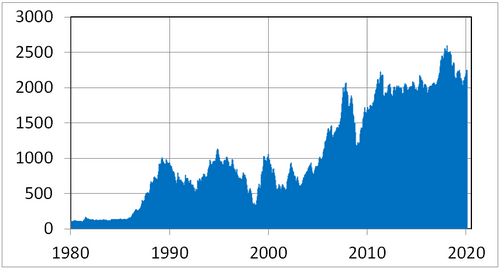
KOSPI2
ORGANIZATION
Organization referenced in documents
KOSPI2,HSCEI
ORGANIZATION
Organization referenced in documents
KSA Comp
ORGANIZATION
Organization referenced in documents
Lynch Argentina SA
ORGANIZATION
Organization referenced in documents
Lynch Equi
ORGANIZATION
Organization referenced in documents
Lynch Interna
ORGANIZATION
Organization referenced in documents
Lynch International
ORGANIZATION
Organization referenced in documents
Lynch Research Personnel
ORGANIZATION
Organization referenced in documents
Lynch Securities
ORGANIZATION
Organization referenced in documents
Lynch, Pierce, Fenner & Smith Incorporated
ORGANIZATION
Organization referenced in documents
Merchant Bank
ORGANIZATION
Deals in commercial loans and investment

Merri
ORGANIZATION
Commune in Orne, France
Merrill Lynch
ORGANIZATION • 4 mentions
American investing and wealth management division of Bank of America
Merrill Lynch (Asia Pacific) Limited
ORGANIZATION
Organization referenced in documents
Merrill Lynch (Singapore) Pte Ltd
ORGANIZATION
Organization referenced in documents
Merrill Lynch Canada
ORGANIZATION
Organization referenced in documents
Merrill Lynch Capital
ORGANIZATION
Organization referenced in documents
Merrill Lynch Global Equity Volatility Insights
ORGANIZATION
Organization referenced in documents

Merrill Lynch Global Wealth Management
ORGANIZATION
Investment management and financial planning service
Merrill Lynch Interna
ORGANIZATION
Organization referenced in documents
Merrill Lynch International Incorporated
ORGANIZATION
Organization referenced in documents
Merrill Lynch Securities (Taiwan) Ltd.
ORGANIZATION
Organization referenced in documents

Mission
ORGANIZATION
Organization referenced in documents
MLPI xten
ORGANIZATION
Organization referenced in documents
MUV2 GY
ORGANIZATION
Organization referenced in documents

Nasdaq
ORGANIZATION
American fully electronic stock exchange

Newcrest
ORGANIZATION
Australian based mining company
Otoritas
ORGANIZATION
Organization referenced in documents

Ping An Insurance Group Co of China Ltd
ORGANIZATION
Organization referenced in documents
Prsnl&HH Gds
ORGANIZATION
Organization referenced in documents
Prudential
ORGANIZATION
British multinational life insurance and financial services company

Rationale
ORGANIZATION
British singer
regul hange Board of India
ORGANIZATION
Organization referenced in documents

Report
ORGANIZATION
Informational, formal, and detailed text
Rosneft PJSC
ORGANIZATION
Organization referenced in documents
SA de
ORGANIZATION
Organization referenced in documents
Saksena
ORGANIZATION
Organization referenced in documents

Sands China
ORGANIZATION
Integrated resort developer and operator in Macau
SPX Dec18
ORGANIZATION
Organization referenced in documents
Standard Chartered
ORGANIZATION
British financial company
SXAP Autos
ORGANIZATION
Organization referenced in documents
SXFP Financials
ORGANIZATION
Organization referenced in documents
SXIP Insurance
ORGANIZATION
Organization referenced in documents
SXKP Telcos
ORGANIZATION
Organization referenced in documents
SXMP Media
ORGANIZATION
Organization referenced in documents
SXNP Industrials
ORGANIZATION
Organization referenced in documents
SXOP Construction
ORGANIZATION
Organization referenced in documents
SXRP Retail
ORGANIZATION
Organization referenced in documents
SXTP Travel
ORGANIZATION
Organization referenced in documents

SZ-A
ORGANIZATION
Organization referenced in documents

Telstra
ORGANIZATION
Telecommunications company predominantly serving Australian customers

Tencent
ORGANIZATION
Chinese multinational investment holding conglomerate

Tesco
ORGANIZATION
British multinational retailer
the Bank of Japan
ORGANIZATION
Organization referenced in documents
the Cen
ORGANIZATION
Organization referenced in documents
The Financial Service Board
ORGANIZATION
Organization referenced in documents
the Financial Supervisory Service
ORGANIZATION
Organization referenced in documents
the People’s Bank of China
ORGANIZATION
Organization referenced in documents
the S&P 500
ORGANIZATION
Organization referenced in documents
the Securities and Excl Lynch Israel Limited
ORGANIZATION
Organization referenced in documents
the Securities and Futures Bureau
ORGANIZATION
Organization referenced in documents
Topix Banks
ORGANIZATION
American singer (born 1988)
Topix Insurance
ORGANIZATION
Organization referenced in documents

Unicom
ORGANIZATION
Or Universal Communications, air-ground communication facility
US Treasury Bonds
ORGANIZATION
Organization referenced in documents
Utilities
ORGANIZATION
Utility company or services
Utils
ORGANIZATION
Organization referenced in documents

Valores Mobiliarios
ORGANIZATION
Organization referenced in documents

Volkswagen
ORGANIZATION
German automotive brand; manufacturing subsidiary of Volkswagen Group
Warburg Pincus LLC
ORGANIZATION
Organization referenced in documents
WBC AU
ORGANIZATION
Organization referenced in documents
Westpac
ORGANIZATION
Organization referenced in documents
Wi erril is Ac
ORGANIZATION
Organization referenced in documents

Austria
LOCATION
Country in Central Europe
Benelux
LOCATION
Politico-economic union between Belgium, the Netherlands and Luxembourg

Frankfurt
LOCATION
City in Hesse, Germany

Hong Kong
LOCATION
City and special administrative region of China

Mexico
LOCATION
Country in North America

Seoul
LOCATION
Capital and largest city of South Korea

Singapore
LOCATION
Sovereign island country and city-state in maritime Southeast Asia

United Kingdom
LOCATION
Country in north-west Europe

United States
LOCATION
Country located primarily in North America
Statistics
Pages:30
Entities:182
Avg. OCR:87.8%
Sponsored