Back to Network


















7
Shared Docs
7
Same-Page
7 / 7
Mentions
Document Mentions (7 shared documents)
2 mentions1 same-page
Page ?Same page
policy EFTA00678377 Nawaf Obaid October 24, 2013 -- Last week, Saudi Arabia's Foreign Ministry announced that the kingdom would not join the •. Security Council until the council "reformed so it can effectively and practically perform its duties and discharge its responsibilities in maintaining internation
was a sense of superiority vis-à-vis the Arab world. The collapse of the Soviet Union awakened "neo-Ottoman" Turkish ambitions in the Caucasus and Central Asia, and revolution in the Middle East seemed to offer the heirs (if not orphans) of a long-dead empire an opportunity to avenge its loss. If a lazy an
2 mentions1 same-page
Page ?Same page
ident Bashar al-Assad to step down -- even if that formulation is ultimately edited out of the final draft of the resolution pending before the •. Security Council -- it is time to start making plans for the various contingencies that may erupt on "the day after." Most Western policymakers, at least in their p
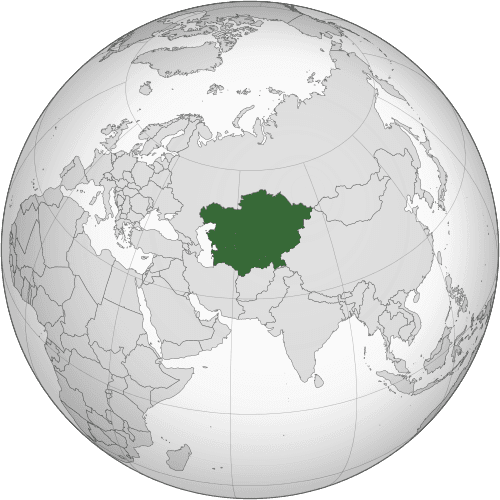
in dominant. As a result, Beijing is developing a robust portfolio of fossil fuel resources from a variety of locations, including the Middle East, Central Asia and the South China Sea, in an effort to reduce its vulnerability from any one source. Middle East oil must transit through the Strait of Malacca,
2 mentions1 same-page
Page ?Same page
ations "appear to have decided that, to better advance their own interests, they need to knock Washington down a peg or two." Especially on the UN Security Council, the two authoritarian powers will continue taking positions that reflect their interest in curtailing American influence and thwarting what they e
state-backed Chinese think tank_ [10]questioned Japan's claim to Okinawa [10].) Indeed, far beyond Manchuria, possible sparks already abound: from Central Asia, where booming trade with China threatens to erode Moscow's traditional sphere of influence, to the South China Sea, where Russia has worked closel
Sponsored
2 mentions1 same-page
Page ?Same page
rst administration of Prime Minister Benjamin Netanyahu. The United States at first resisted U.N. pressure to stop construction there, vetoing two Security Council resolutions condemning building there. In recent years, Washington's stance has toughened. When in 2010 the Israeli government announced plans to
headquarters of the United States Central Command, which oversees a vast area of responsibility extending from the Middle East to North Africa and Central Asia. CENTCOM forces are deployed in combat roles in Afghanistan as well as at smaller bases in Kuwait, Bahrain, the United Arab Emirates and Oman. No
2 mentions1 same-page
Page ?Same page
The administration's priority is to hold together an international consensus against Russia, including even China, its longtime supporter on the UN Security Council. While Obama's long-term approach takes shape, though, a quiet debate has roiled his administration over how far to go in the short term. EFTA0068
w still sees extremism in Afghanistan as a threat to Muslim regions of Russia like Chechnya, and to the Muslim-populated former Soviet republics of Central Asia. China similarly worries that upheaval in Afghanistan could exacerbate Islamic extremism in Xinjiang; India thinks the same could happen in Kashmir
2 mentions1 same-page
Page ?Same page
first administration of Prime Minister Benjamin Netanyahu. The United States at first resisted •. pressure to stop construction there, vetoing two Security Council resolutions condemning building there. In recent years, Washington's stance has toughened. When in 2010 the Israeli government announced plans to b
headquarters of the United States Central Command, which oversees a vast area of responsibility extending from the Middle East to North Africa and Central Asia. CENTCOM forces are deployed in combat roles in Afghanistan as well as at smaller bases in Kuwait, Bahrain, the United Arab Emirates and Oman. No
Sponsored
2 mentions1 same-page
Page ?Same page
ia will keep the Soviet-era naval base in Tartus on Syria's Mediterranean coast. While the disagreement on Libya led to Russia's abstention in the Security Council and was soon forgotten, the spat over Syria will poison Moscow's relationship with Washington, its European allies and Sunni Arab states. The Obam
place where enemy offensive operations against the Islamic Republic originate will be the target of a reciprocal attack." Look at a map: Africa and Central Asia are wide open places. What happens on the day after? Israelis estimate that between Hamas in Gaza, Hezbollah in Lebanon, Syria and Iran itself, the
Sponsored
Mutual Connections (572)
Entities connected to both Security Council and Central Asia
Barack Obama
PERSON33 w/ Security·34 w/ Central
United States
LOCATION29 w/ Security·32 w/ Central
Jeffrey Epstein
PERSON32 w/ Security·29 w/ Central
Bashar al-Assad
PERSON29 w/ Security·29 w/ Central
George W. Bush
PERSON24 w/ Security·33 w/ Central
Lebanon
LOCATION27 w/ Security·25 w/ Central
Terje Rod-Larsen
PERSON23 w/ Security·29 w/ Central
Bill Clinton
PERSON31 w/ Security·17 w/ Central
Tehran
LOCATION20 w/ Security·24 w/ Central
Benjamin Netanyahu
PERSON23 w/ Security·21 w/ Central
Yemen
LOCATION28 w/ Security·15 w/ Central
Vladimir Putin
PERSON16 w/ Security·27 w/ Central
Marc Rich
PERSON17 w/ Security·24 w/ Central
Middle East
LOCATION13 w/ Security·22 w/ Central
Tunisia
LOCATION16 w/ Security·18 w/ Central
Damascus
LOCATION17 w/ Security·16 w/ Central
LB
Leon Black
PERSON20 w/ Security·12 w/ Central
Jerusalem
LOCATION15 w/ Security·16 w/ Central
Hillary Clinton
PERSON14 w/ Security·16 w/ Central
Kremlin
ORGANIZATION10 w/ Security·19 w/ Central