Back to Network




















5
Shared Docs
5
Same-Page
6 / 5
Mentions
Document Mentions (5 shared documents)
3 mentions1 same-page
Page ?Same page
as held his fire in the face of great slaughte=, and truth be known, congressional and popular opinion have given him a p=ss. America has wearied of Middle Eastern wars. Syrian rebels sure that the Ame=ican cavalry would turn up after this or that massacre have been bitterly =isappointed. It's the tragic luck
ave the opp=site effect, enabling Egypt to pursue its goals of consolidating the military's authority at home and e=hancing its influence throughout the Middle East. Egyptian and Israeli leade=s must recognize that the ongoing struggle to secure the Sinai Peninsula =96 which the treaty established as a demilita
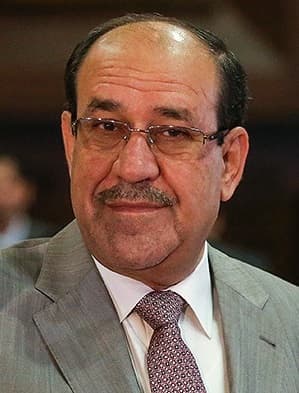
l against an Alawite minority, has been a boon t= the Sunnis of Iraq. The Sunnis have bottomless grievances against the gov=rnment of Prime Minister Nouri al-Maliki. To them, Maliki, who spent a qua=ter-century exiled in Syria and Iran, is an agent of the Iranian theocracy. So even though the regime in S=ria di
2 mentions1 same-page
Page ?Same page
tterflies and pollen off Bt-corn is killing monarch butterfly larvae. So it is not a surprise that 75% of the monarch butterflies are gone from the Midwest as they have migrated to Mexico. Animals is the same. And trees don't exist in industrial agriculture. Because with chemicals and largest scaled mon
ty. Washington has urged the country's factions to work together toward forging a new government that would see the country's Shiite Prime Minister Nouri al-Maliki step aside. "A united Iraq is a stronger Iraq," State Department spokeswoman Jen Psaki told reporters last week. But Iraq's parliament failed to re
2 mentions1 same-page
Page ?Same page
ble middle class. The gap between rich and poor will persist as a source of popular dissatisfaction. To make matters worse, by 2030 more than half the Middle East's population will still be under 34. This persistent "youth bulge" will challenge even efficient regimes, as demands for jobs, social services and u
ruption and their own dwindling perks. Only in Iraq, untouched by the Arab Spring, does the strongman of yesteryear in the person of Prime Minister Nouri al-Maliki seem to live on, though in a much more constrained form. So what are the consequences of an Arab world bereft of powerful authoritarians? Four sta
Sponsored
2 mentions1 same-page
Page ?Same page
olding chaos in their midst, why should the United States, some 7000 miles from Iraq spill its blood and treasure in another futile quest to remake the Middle East for them? A futile quest that has over the last decade chewed up the minds and bodies of 56,000 brave American soldiers, including some 4,700 kille
er or later, honest liberals will have to admit that Obama's Iraq policy has been a disaster. Since the president took office, Iraqi Prime Minister Nouri al-Maliki has grown ever more tyrannical and ever more sectarian, driving his country's Sunnis toward revolt. Since Obama took office, Iraq watchers—includin
2 mentions1 same-page
Page ?Same page
r those who didn=92t understand prior to the American invasion of Iraq about this boiling c=uldron of tribal hate that played so important a role in Middle Eastern se=urity, the evidence grew stronger throughout the war. AI-Qaeda and its affiliated organizations have killed untold thou=ands of Shiites in the pa
http://topics.wsj.com/person/O/Obama/4328> administration. The U.S. is weighing more direct military assis=ance to the government of Iraqi President Nouri al-Maliki, the White House said Thursday, and officials hinted that =id might include airstrikes on militants who have edged to within a half-h=ur's drive of
Sponsored
Mutual Connections (151)
Entities connected to both Middle East and Nouri al-Maliki
Jeffrey Epstein
PERSON240 w/ Middle·3 w/ Nouri
Barack Obama
PERSON211 w/ Middle·13 w/ Nouri
United States
LOCATION201 w/ Middle·9 w/ Nouri
George W. Bush
PERSON171 w/ Middle·9 w/ Nouri
Bill Clinton
PERSON146 w/ Middle·6 w/ Nouri
Marc Rich
PERSON136 w/ Middle·8 w/ Nouri
Lebanon
LOCATION124 w/ Middle·8 w/ Nouri
Joe Biden
PERSON118 w/ Middle·8 w/ Nouri
Bashar al-Assad
PERSON114 w/ Middle·11 w/ Nouri
Benjamin Netanyahu
PERSON115 w/ Middle·9 w/ Nouri
Tehran
LOCATION111 w/ Middle·11 w/ Nouri
Department of Justice
ORGANIZATION115 w/ Middle·3 w/ Nouri
Julie K. Brown
PERSON104 w/ Middle·2 w/ Nouri
Vladimir Putin
PERSON100 w/ Middle·4 w/ Nouri
Virginia Giuffre
PERSON101 w/ Middle·2 w/ Nouri
Prince Charles
PERSON94 w/ Middle·4 w/ Nouri
Samantha Power
PERSON95 w/ Middle·2 w/ Nouri
Hillary Clinton
PERSON90 w/ Middle·5 w/ Nouri
Yemen
LOCATION88 w/ Middle·6 w/ Nouri
Jerusalem
LOCATION88 w/ Middle·2 w/ Nouri