Back to Network



















10
Shared Docs
10
Same-Page
12 / 10
Mentions
Document Mentions (10 shared documents)
3 mentions1 same-page
Page ?Same page
mise to make their country more prosperous and stable. However, everything will depend on how prepared the free world is to help new democracies in the Middle East survive and prosper. Small Islamic groups, organized and armed with religious zeal, could hijack power from the moderates. This would lead to a dis
eace and order in Libya, Syria was very much like a domestic incident for Turkey. As part of its neo-Ottoman drive to enhance its influence in the Middle Eastern territory of the former Ottoman Empire the ruling Justice and development Party, or AKP, government of Turkey has long waived visa requirement in t
hase, the Ottoman Empire sought to dominate the eastern Mediterranean as well as both its northern and southern coasts. One thrust went through the Balkans toward central Europe. The other was toward Egypt. Inevitably, this required that the Ottomans secure the Levant. For the British, the focus on th
3 mentions1 same-page
Page ?Same page
that Israel's intransigence on settlements, and the U.S. government's failure to do anything about it, was undermining U.S. influence elsewhere in the Middle East. But nothing really changes, and Netanyahu and his allies are well aware of this. In 2010, they humiliated Vice-President Joseph Biden by unveiling
as dead wrong. So, it turns out, was the Brotherhood itself. As Shadi Hamid writes in "Temptations of Power: Islamists and Illiberal Democracy in a New Middle East," the Islamist group had learned to thrive under decades of autocratic repression and was hopelessly unprepared to rule Egypt. But following the ov
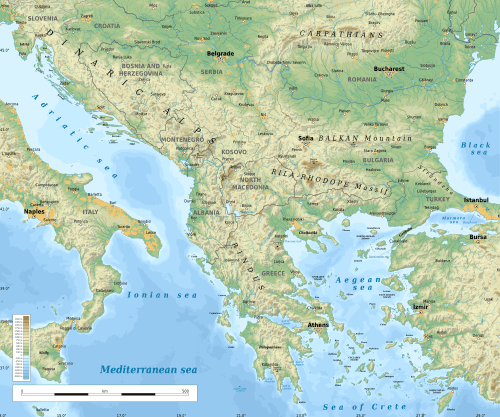
the disengagement failed. The Clinton administration tried to outsource Yugoslavia to the Europeans in the 1990s and was ultimately pulled into the Balkans. George W. Bush tried to conduct foreign policy around and over the heads of "Old Europe"; the experience was not a success. President Obama has si
2 mentions1 same-page
Page ?Same page
nt Jimmy Carter and in every administration since (except George W. Bush's), Dennis Ross has played a bigger role in setting American policy toward the Middle East than perhaps any other official who didn't occupy the Oval Office. Most recently, Ross was special assistant to President Obama and the National Se
s wide in Kurdistan, to Syria via the opposition forces, Lebanon in the future and Tunisia, not to mention Turkish presence in Central Asia and the Balkans. Moreover, it will not be easy to compete with the role that the Gulf Cooperation Council states have started to play after they learned how to use
Sponsored
2 mentions1 same-page
Page ?Same page
tterflies and pollen off Bt-corn is killing monarch butterfly larvae. So it is not a surprise that 75% of the monarch butterflies are gone from the Midwest as they have migrated to Mexico. Animals is the same. And trees don't exist in industrial agriculture. Because with chemicals and largest scaled mon
quietly tweak this or that aspect of the facts on the ground. As a result, it is pointless for another American to die in that miserable place. The Balkans, said Bismarck, wasn't worth the bones of a single Pomeranian grenadier. All the less so Mesopotamia. The New Map of the Middle East Why we should
2 mentions1 same-page
Page ?Same page
r backs covered in coming regional crises. The Israelis see the Obama administration's "pivot to Asia" as a mere cover story for abandoning them to the Middle East's tough security environment. Defense Minister Ya'alon even went as far as to publicly assess that President EFTA00662706 Obama's "image in the wor
nd that Serbia be seriously punished for killing its heir apparently could have been satisfied. Russian concerns that its Orthodox brethren in the Balkans could remain independent would have been addressed. Germany would have had no need, or pretext, to respond to mobilizations in Russia and France, s
2 mentions1 same-page
Page ?Same page
arily and politically, and there are many sensitive and complex issues we have yet to deal with. One of these issues is our relationship with other Middle Eastern states. The president hasn't mentioned the word "Israel" in any of his speeches, EFTA00701617 yet official contacts with Israel — regarding both
benefit of time. George H.W. Bush, for instance, is increasingly considered a skilled foreign policy president, even though he left office with the Balkans descending into the abyss and Saddam Hussein clinging to power — two "failures" that many thought would forever taint his legacy. With foreign pol
Sponsored
2 mentions1 same-page
Page ?Same page
tably begun to try to convert their financial power into political influence. They have launched an offensive against secular and/or Shia states in the Middle East. Their main target is Iran, which is growing stronger despite sanctions, and which can become even stronger in case of its nuclearization. These se
ith the horrors of military conflict. (It's indeed inconceivable that war would now break out between two European countries, except perhaps in the Balkans.) But the loyalty of Europeans still resides foremost with the countries of their birth. The idea of the nation-state is deeply rooted throughout t
2 mentions1 same-page
Page ?Same page
aff and command posts in the region would respond to various real-world situations. Over the years, it has been used to prepare for various wars in the Middle East. According to the defense Web site GlobalSecurity.org, military planners during the cold war used Internal Look to prepare for a move by the Soviet
e a power-sharing deal with the opposition, as a precondition for ending sanctions and ending the associated punitive military campaign. A broader Balkans-like campaign to help depose Assad. In this option, air strikes would also target the heavy weapons that the Syrian army is using to shell cities;
2 mentions1 same-page
Page ?Same page
asbah in Tunis and Martyrs' Square in Tripoli will, like the Havels of the Middle East, come to power as politicians. We haven't heard the last of the Middle East's millennial generation. Juan Cole is director of the Center for Middle Eastern and North African Studies at the University of Michigan and the aut
nts: the turmoil of the Arab spring is to its south, an ascendant Islamist and neo-Ottoman Turkey are to the east, and the ethnic powder keg in the Balkans lie to the North, capped by EFTA_R1_02204492 EFTA02720836 understandably unsympathetic European Union creditors. Only Greece's NATO membership-a
Sponsored
2 mentions1 same-page
Page ?Same page
diplomats continued to press a collective response. For decades they had EFTA00684260 no common foreign policy toward any region of the world but the Middle East. But instead of finding pragmatic solutions, they settled for airy joint resolutions; after having agreed on most subtle wordings, the diplomats in
furter Rundschau, which had been accusing Americans of "camouflaged neocolonialism," suddenly fretted that the "problems in the Middle East, in the Balkans or in Asia" could not be solved "without U.S. assistance and a president who enjoys respect." The irony was not lost on some observers. A French pu
Sponsored
Mutual Connections (734)
Entities connected to both Middle East and Balkans
Jeffrey Epstein
PERSON240 w/ Middle·15 w/ Balkans
Barack Obama
PERSON211 w/ Middle·18 w/ Balkans
United States
LOCATION201 w/ Middle·22 w/ Balkans
George W. Bush
PERSON171 w/ Middle·21 w/ Balkans
Bill Clinton
PERSON146 w/ Middle·16 w/ Balkans
Marc Rich
PERSON136 w/ Middle·14 w/ Balkans
Donald Trump
PERSON138 w/ Middle·11 w/ Balkans
Lebanon
LOCATION124 w/ Middle·15 w/ Balkans
Joe Biden
PERSON118 w/ Middle·16 w/ Balkans
Department of Justice
ORGANIZATION115 w/ Middle·15 w/ Balkans
Bashar al-Assad
PERSON114 w/ Middle·14 w/ Balkans
Benjamin Netanyahu
PERSON115 w/ Middle·12 w/ Balkans
LB
Leon Black
PERSON113 w/ Middle·13 w/ Balkans
Tehran
LOCATION111 w/ Middle·14 w/ Balkans
Prince Andrew
PERSON114 w/ Middle·9 w/ Balkans
Julie K. Brown
PERSON104 w/ Middle·8 w/ Balkans
Virginia Giuffre
PERSON101 w/ Middle·9 w/ Balkans
Vladimir Putin
PERSON100 w/ Middle·9 w/ Balkans
Bloomberg L.P.
ORGANIZATION100 w/ Middle·5 w/ Balkans
Samantha Power
PERSON95 w/ Middle·8 w/ Balkans