Back to Network



















5
Shared Docs
5
Same-Page
8 / 5
Mentions
Document Mentions (5 shared documents)
3 mentions1 same-page
Page ?Same page
monstrated a willingness to adopt legislation and then enforce it, other countries followed suit first in Eurasia but subsequently in Africa, Asia, the Middle East and Latin America. Governments that adopt such laws seldom if ever shut down the civil society sector entirely. Instead, they deal with NGOs selec
ts, and blue-chip law firms were earning fees paid by a majority of the world's autocracies, dictatorships, and illiberal regimes. Some, especially Middle Eastern monarchies, are American allies. But others are hostile to democracy and regard the United States—and often the EU—as adversaries. The lobbyists a
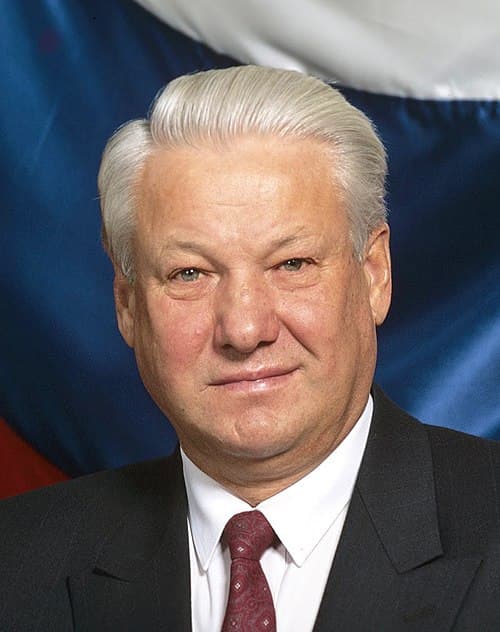
bjective and independent, Russian television and Russian media generally were no- table for their liveliness and diversity during the presidency of Boris Yeltsin. All did not sing out of the same hymnal, and most influential outlets reflected a variety of opinions about government policies, including the Kr
3 mentions1 same-page
Page ?Same page
that Israel's intransigence on settlements, and the U.S. government's failure to do anything about it, was undermining U.S. influence elsewhere in the Middle East. But nothing really changes, and Netanyahu and his allies are well aware of this. In 2010, they humiliated Vice-President Joseph Biden by unveiling
as dead wrong. So, it turns out, was the Brotherhood itself. As Shadi Hamid writes in "Temptations of Power: Islamists and Illiberal Democracy in a New Middle East," the Islamist group had learned to thrive under decades of autocratic repression and was hopelessly unprepared to rule Egypt. But following the ov
lagrantly ignored German wishes and interests. This is how we treated Russia in the 1990s. The West provided economic aid to the "Weimar Russia" of Boris Yeltsin much as the Young and the Dawes plans helped Germany relaunch its economy in the 1920s. But in the 1990s as in the 1920s the West was uninterested
3 mentions1 same-page
Page ?Same page
d with potentially cataclysmic consequences nobody dares imagine. This Friday, the shock came in Syria, where President Bashar al-Assad runs one of the Middle East's most repressive regimes. Across the country, protesters have grown ever more emboldened in recent weeks, and on Friday they poured into the street
t Ford referred to in justifying his own decision to pardon Nixon. Otherwise, Mubarak's fate could become just one more chapter in the long saga of Middle Eastern leaders who rise and fall because of the whims of fortune. Nikolas K Gvosdev is the former editor of the National Interest, and a frequent foreign
be too destabilizing for the country. When Vladimir Putin became president of Russia, he offered an even more extensive pardon to his predecessor, Boris Yeltsin, as well as to Yeltsin's family, citing similar considerations. Perhaps an even more relevant example to the Egyptian case was the fate of South A
Sponsored
2 mentions1 same-page
Page ?Same page
to have failed, Israel would go it alone and launch military operations against the Iranian nuclear project, sucking in the U.S. and risking a wide Middle Eastern conflagration.The American assurances were designed to staunch Israeli fears and give diplomacy and sanctions more time. But as Obama has waffled
f state James Baker, worked hard to negotiate a peaceful dissolution of the Soviet empire, and it found reluctant partners in Mikhail Gorbachev and Boris Yeltsin. In the following decade, U.S. policy was less wise and balanced, and Russia also provided a less judicious counterpart. No doubt, Russian power a
2 mentions1 same-page
Page ?Same page
ether Israel, in the course of its 65-year history, has any great achievements to its credit, or whether it has ever enhanced America's position in the Middle East, are not questions of any real interest to him. What he wants above all is to see his own country make amends for America's past support of Zionist
in Wall in 1989 the democratisation of the old Soviet Union seemed inevitable. In the 1990s Russia took a few drunken steps in that direction under Boris Yeltsin. But at the end of 1999 he resigned and handed power to Vladimir Putin, a former KGB operative who has since been both prime minister and president
Sponsored
Mutual Connections (216)
Entities connected to both Middle East and Boris Yeltsin
Jeffrey Epstein
PERSON240 w/ Middle·2 w/ Boris
Barack Obama
PERSON211 w/ Middle·8 w/ Boris
United States
LOCATION201 w/ Middle·6 w/ Boris
George W. Bush
PERSON171 w/ Middle·6 w/ Boris
Bill Clinton
PERSON146 w/ Middle·7 w/ Boris
Marc Rich
PERSON136 w/ Middle·4 w/ Boris
Donald Trump
PERSON138 w/ Middle·2 w/ Boris
Lebanon
LOCATION124 w/ Middle·2 w/ Boris
Joe Biden
PERSON118 w/ Middle·3 w/ Boris
Department of Justice
ORGANIZATION115 w/ Middle·4 w/ Boris
Bashar al-Assad
PERSON114 w/ Middle·5 w/ Boris
LB
Leon Black
PERSON113 w/ Middle·5 w/ Boris
Benjamin Netanyahu
PERSON115 w/ Middle·3 w/ Boris
Prince Andrew
PERSON114 w/ Middle·2 w/ Boris
Vladimir Putin
PERSON100 w/ Middle·7 w/ Boris
Julie K. Brown
PERSON104 w/ Middle·2 w/ Boris
Samantha Power
PERSON95 w/ Middle·5 w/ Boris
Hillary Clinton
PERSON90 w/ Middle·3 w/ Boris
Jerusalem
LOCATION88 w/ Middle·4 w/ Boris
Yemen
LOCATION88 w/ Middle·3 w/ Boris