Back to Network


















5
Shared Docs
4
Same-Page
5 / 5
Mentions
Document Mentions (5 shared documents)
2 mentions1 same-page
Page ?Same page
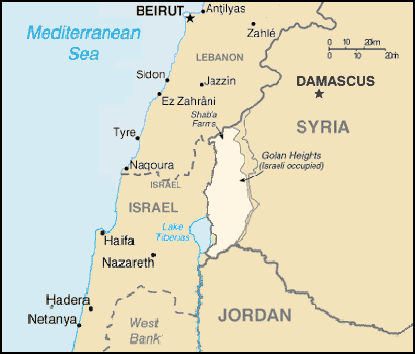
is somehow part of its campaign of resistance, the group may try to draw Israel into sporadic and contained exchanges along the Lebanese or Syrian (Golan) borders. With a focus on Lebanon's Sunnis and Shiites, David Schenker explains that while the two constituencies have shown remarkable restraint s
Henry Kissinger to renegotiate, reconsider and even abrogate various provisions of his contemplated agreements. Two presidents, Lyndon Johnson and Richard Nixon, complained bitterly of such meddling, and yet, America is better off because of those efforts. The White House might be tempted to fire back at it
2 mentions1 same-page
Page ?Same page
surmount the blame that the Golan Heights were lost to Israel in the Six-Day War on his watch, when he was defense minister. Unable to recover the Golan, he did the next best thing: he all but came into possession of Lebanon, practically erasing the border between the two countries. He went into Leb
very long, and would have left behind a deep, almost ineradicable anti-Americanism. This kind of so-called "realpolitik" is the path U.S. President Richard Nixon's administration took after the Greek military coup in 1967, and nearly a half-century later the Greeks have still not forgiven the United States.
2 mentions1 same-page
Page ?Same page
ld necessarily be a clean break in those relationships: an end to the Syrian alliance with Hezbollah and Iran. Otherwise Israel would be giving the Golan, in effect, to Iran—a suicidal act. No Israeli government would do it, which suggests that negotiations with Assad would have no purpose. Assad ma
g uttered by her predecessor Henry Kissinger. It is now 40 years since Kissinger went on his secret mission to China, to pave the way for President Richard Nixon's historic visit the following year. Since then he has visited the country more than 50 times. And if there is one thing he has learned, it is this
Sponsored
2 mentions1 same-page
Page ?Same page
em but divided over what to do with its newfound gains. Israel withdrew from the Sinai in 1982 and from Gaza in 2007, and no one is discussing the Golan these days due to Syria's internal crisis. But the future of Jerusalem and the West Bank remains a matter of intense international -- including Ame
d two full terms. John F. Kennedy was assassinated. Lyndon Johnson, overwhelmed by the war in Vietnam, had declined to run for reelection in 1968. Richard Nixon resigned less than seventeen months into his second term. Gerald Ford (who was never elected) and Jimmy Carter were defeated. By the nineteen- eigh
Page HOUSE_OVERSIGHT_031837
ould necessarily be a clean break in those relationships: an end to the Syrian alliance with Hezbollah and Iran. Otherwise Israel would be giving the Golan, in effect, to Iran—a suicidal act. No Israeli government would do it, which suggests that negotiations with Assad would have no purpose. Assad may i
Page: HOUSE_OVERSIGHT_031837 →Page HOUSE_OVERSIGHT_031854
ideological crusade," the United States would do better, Kissinger suggests, to work with China to build a new "Pacific Community." Four decades ago, Richard Nixon grasped sooner than most the huge potential of China. "Well," he mused, "you can just stop and think of what could happen if anybody with a decent sy
Page: HOUSE_OVERSIGHT_031854 →Sponsored
Mutual Connections (536)
Entities connected to both Golan and Richard Nixon
Cynthia Nixon
PERSON6 w/ Golan·136 w/ Richard
Bill Clinton
PERSON31 w/ Golan·95 w/ Richard
George W. Bush
PERSON22 w/ Golan·92 w/ Richard
Barack Obama
PERSON15 w/ Golan·89 w/ Richard
Jeffrey Epstein
PERSON22 w/ Golan·78 w/ Richard
United States
LOCATION14 w/ Golan·61 w/ Richard
Donald Trump
PERSON5 w/ Golan·67 w/ Richard
Prince Andrew
PERSON21 w/ Golan·48 w/ Richard
Joe Biden
PERSON7 w/ Golan·59 w/ Richard
Hillary Clinton
PERSON11 w/ Golan·53 w/ Richard
Ronald Reagan
PERSON11 w/ Golan·50 w/ Richard
Marc Rich
PERSON11 w/ Golan·48 w/ Richard
John F. Kennedy
PERSON12 w/ Golan·45 w/ Richard
Department of Justice
ORGANIZATION3 w/ Golan·52 w/ Richard
LB
Leon Black
PERSON8 w/ Golan·42 w/ Richard
Bashar al-Assad
PERSON18 w/ Golan·32 w/ Richard
Vladimir Putin
PERSON6 w/ Golan·43 w/ Richard
Benjamin Netanyahu
PERSON15 w/ Golan·33 w/ Richard
Julie K. Brown
PERSON4 w/ Golan·43 w/ Richard
Virginia Giuffre
PERSON6 w/ Golan·40 w/ Richard