Back to Network








10
Shared Docs
7
Same-Page
10 / 10
Mentions
Document Mentions (10 shared documents)
2 mentions1 same-page
Page ?Same page
s to `counter the Zionist project [the state of Israel] in its different aspects' — a position unlikely to change before an Israeli withdrawal from the Golan Heights. The group has also traditionally supported Hamas." Any Syrian regime (Islamist or secular, democratic or authoritarian) will lose legitimacy if it
s Prophet"? Or, alternatively, will we look back and see photos of Saudi anti-riot vehicles cruising across the causeway to support the crushing of Bahrain's "Arab spring" moment as the most consequential image of the past 18 months? The reality is that that the "Arab spring" -- a misnomer of olympian
2 mentions1 same-page
Page ?Same page
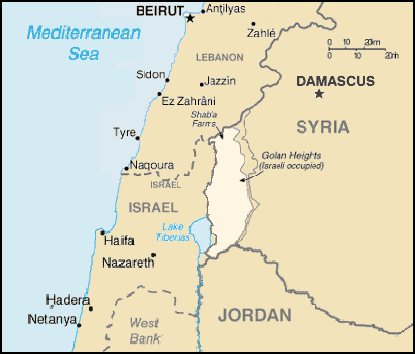
ng to a stable regime, hurting the Iranian axis and as an opening to change in Lebanon. Others, most notably the prime minister, refused to concede the Golan Heights. This camp now claims, quite rightly, that there is no sense in making a deal like that with a regime whose stability is strongly in question. In
it would be a strong blow to Iran. Up to now, Iran has mainly benefitted from the recent developments in the region. Mubarak's fall, the events in Bahrain, and the pressure on Saudi Arabia worked to strengthen the axis of opposition and also drew international attention away from Tehran's nuclear prog
2 mentions1 same-page
Page ?Same page
ound its entire perimeter — from Gaza in the south to the "blue line" separating Lebanon from Israel in the north. The construction of a barrier in the Golan Heights has been announced. The separation barrier in the West Bank is too a material reflection of Israel's EFTA00636709 new focus on defensive operatio
buted to Iran's nuclear policy decision making. EFTA00636712 2. The broad anger directed at the U.S. by the governments of Saudi Arabia, Kuwait, Bahrain, the United Arab Emirates, Jordan and Egypt. Though these governments pay lip service to the Palestinian cause, the source of their current anger w
Sponsored
2 mentions1 same-page
Page ?Same page
highest of praise, they said he had changed Syria from a plaything in the region to a player. EFTA00660807 He could never surmount the blame that the Golan Heights were lost to Israel in the Six-Day War on his watch, when he was defense minister. Unable to recover the Golan, he did the next best thing: he all
ing. Armed gangs roam in Libya, Salafists win votes in Egypt, and minorities like the Egyptian Copts live in fear -- as does the Shiite majority in Bahrain. The whole "experiment" seems to some critics to be a foolish, if idealistic project that promises to do nothing but wreak havoc in the Middle East
2 mentions1 same-page
Page ?Same page
uous control) to EFTA_R1_02029175 EFTA02689634 27 the north, Israel's territory never stretched as far as Damascus, although it frequently held the Golan Heights. Israel extended many times to both sides of the Jordan but never deep into the Jordanian Desert. It never extended southeast into the Arabian Peni
ip. Despite significant pressure from the Obama administration to remain on the sidelines, Saudi leaders sent troops into Manama in March to defend Bahrain's monarchy and quell the unrest that has shaken that country since February. For more than 60 years, Saudi Arabia has been bound by an unwritten b
2 mentions1 same-page
Page ?Same page
essful, it proffers doubtful leverage in his tug of war with Tel Aviv. Although Syria is an independent state, in 44 years it hasn't managed to pry the Golan Heights away from Israel; a Palestinian state is unlikely to do better with the 60 percent of the West Bank that remains under full Israeli control. Legall
de is built Shiite/Sunni antipathy; and upon both is loaded national competition for regional influence. Their tensions recently came to a head in Bahrain, when the majority Shi'ite population arose to protest felt discrimination by King Isa Al-Khalifa and his Sunni elite advisors. Fearing that the me
Sponsored
2 mentions1 same-page
Page ?Same page
ht at last be ready for real, not just cold peace. Mr. Mubarak was not. Nor is Mr. Assad of Syria, who has refused every Israeli offer to hand back the Golan Heights. If you rule at the head of a tiny Alawite minority, why take the Heights and give away a conflict that keeps you in power? Peace at home— justice,
anner" on Palestine, Mr. Scowcroft warned, the Saudis might really sour on their great protector from across the sea. So when they sent troops into Bahrain, were they heading for Jerusalem by way of Manama? EFTA_R1_01351099 EFTA02360433 3 Shoddy political theories—ideologies, really—never die becau
Page HOUSE_OVERSIGHT_018087
nd of resource depletion and fear of state HOUSE_OVERSIGHT_018086 --- PAGE BREAK --- 3 failure. Sectarian tensions were the key to the trouble in Bahrain, where a Sunni monarchy rules over a restive Shia majority. Islamists, the bogeymen of the west and the enemies of all autocratic Arab regimes, have
Page: HOUSE_OVERSIGHT_018087 →Page HOUSE_OVERSIGHT_018091
their future and for the future of their children, and a regime that has thrived off a conflict in which it has never fired a single shot to liberate the Golan Heights from Israeli occupation, regardless of its political posturing. All this leads to the question of whether Netanyahu's new position is based on some
Page: HOUSE_OVERSIGHT_018091 →Page HOUSE_OVERSIGHT_024960
o aggressively pursue a secure withdrawal option. The second group that will have to pay retail for stability is the Arab monarchies — Saudi Arabia, Bahrain, Kuwait, Jordan, Morocco. These governments have for decades bought stability with reform wholesale — by offering faux reforms, like reshuffling cabi
Page: HOUSE_OVERSIGHT_024960 →Page HOUSE_OVERSIGHT_024967
East environment shaped by Israel’s overwhelming victory over the Arabs in the 1967 war, its seizure of extensive Arab territories including Syria’s Golan Heights and its subsequent close alliance with the United States, which put in place a sort of dual US- Israeli regional hegemony from which Syria and its al
Page: HOUSE_OVERSIGHT_024967 →Sponsored
Page HOUSE_OVERSIGHT_031845
ship. Despite significant pressure from the Obama administration to remain on the sidelines, Saudi leaders sent troops into Manama in March to defend Bahrain's monarchy and quell the unrest that has shaken that country since February. For more than 60 years, Saudi Arabia has been bound by an unwritten barg
Page: HOUSE_OVERSIGHT_031845 →Page HOUSE_OVERSIGHT_031860
trol) to HOUSE_OVERSIGHT_031859 --- PAGE BREAK --- 27 the north, Israel's territory never stretched as far as Damascus, although it frequently held the Golan Heights. Israel extended many times to both sides of the Jordan but never deep into the Jordanian Desert. It never extended southeast into the Arabian Penins
Page: HOUSE_OVERSIGHT_031860 →Sponsored
Mutual Connections (721)
Entities connected to both the Golan Heights and Bahrain
Jeffrey Epstein
PERSON7 w/ the·140 w/ Bahrain
Barack Obama
PERSON26 w/ the·105 w/ Bahrain
United States
LOCATION20 w/ the·98 w/ Bahrain
George W. Bush
PERSON26 w/ the·92 w/ Bahrain
Bill Clinton
PERSON24 w/ the·83 w/ Bahrain
Lebanon
LOCATION26 w/ the·79 w/ Bahrain
Bashar al-Assad
PERSON29 w/ the·75 w/ Bahrain
Yemen
LOCATION17 w/ the·85 w/ Bahrain
Benjamin Netanyahu
PERSON27 w/ the·72 w/ Bahrain
Tehran
LOCATION20 w/ the·76 w/ Bahrain
Cairo
LOCATION15 w/ the·69 w/ Bahrain
Terje Rod-Larsen
PERSON10 w/ the·72 w/ Bahrain
Middle East
LOCATION15 w/ the·65 w/ Bahrain
Hosni Mubarak
PERSON23 w/ the·57 w/ Bahrain
Marc Rich
PERSON10 w/ the·68 w/ Bahrain
Donald Trump
PERSON6 w/ the·70 w/ Bahrain
Damascus
LOCATION23 w/ the·51 w/ Bahrain
Kuwait
LOCATION9 w/ the·64 w/ Bahrain
John F. Kennedy
PERSON15 w/ the·58 w/ Bahrain
Hillary Clinton
PERSON15 w/ the·57 w/ Bahrain