Back to Network



9
Shared Docs
8
Same-Page
9 / 9
Mentions
Document Mentions (9 shared documents)
2 mentions1 same-page
Page ?Same page
bumper crop of pumpkins, squash, and wine grapes from a small community gar- den. Nothing unusual there. perhaps—except that the women were from Morocco. Afghanistan, Somalia. arid the former Yugoslavia. The -intercultural garden" in Kassel is one of about 100 in Germany, but the only one run en
p of Bosnian women in Gottingen, waiting out the Balkan conflict, told social workers how much they missed the famous plum and apple orchards of Bosnia's Drina Valley. There has been adversity along the way. A garden in Berlin had to be placed under police protection alter it was targeted by ne
2 mentions1 same-page
Page ?Same page
ast China's Great Leap Backward Niall Ferguson Article 5. NYT To Save Israel, Boycott the Settlements Peter Beinart Article 6. The Economist Morocco's reforms Article 7. NYT Your Brain on Fiction Annie Murphy Paul Antelc I. The National Interest Israel's Gift to Iran Marvin G. Weinbaum EFT
enthusiastically with President Bush when he invaded Iraq. But public opinion puts a thumb on the scale. The U.S. used force to stop a genocide in Bosnia, but did not in Rwanda or Darfur — one critical difference being that Americans (and American TV screens) were paying attention to the European sla
2 mentions1 same-page
Page ?Same page
P Assurances SA Alshaya Group Telefenica Latinoamerica The Dashwood Group USA United Kingdom Canada USA Switzerland Turkey Greece Finland Morocco USA Canada United Kingdom USA France United Kingdom Chile USA Russian Federation Italy United Kingdom Kuwait Kuwait United Arab Emirate
ess Chevron Corporation USA Development Anthony F. Pryor Chairman Halcrow Group Ltd United Kingdom Zoran Puljic Director Mozaik Foundation Bosnia and Herzegovina Dmitriy A. Chairman of the Board OAO TMK Russian Federation Pumpyanskiy World Economic Forum Annual Meeting EFTA_R1_02011023
Sponsored
2 mentions1 same-page
Page ?Same page
ch seems a rather mild description for revolutions in Egypt and Tunisia, civil wars in Syria and Libya, and the destabilisation of Arab states from Morocco to Saudi Arabia. In fact, it is precisely the "changes in the surrounding neighbourhood" that make it a bad idea to waste precious energy on a pea
ve military has become a constant source of frustration to civilian leaders. Irritated by the Pentagon's hesitation to put "boots on the ground" in Bosnia, then- Secretary of State Madeline Albright famously demanded of Secretary of Defense Colin Powell, "What good is this marvellous military force if
2 mentions1 same-page
Page ?Same page
ch seems a rather mild description for revolutions in Egypt and Tunisia, civil wars in Syria and Libya, and the destabilisation of Arab states from Morocco to Saudi Arabia. In fact, it is precisely the "changes in the surrounding neighbourhood" that make it a bad idea to waste precious energy on a pea
ve military has become a constant source of frustration to civilian leaders. Irritated by the Pentagon's hesitation to put "boots on the ground" in Bosnia, then- Secretary of State Madeline Albright famously demanded of Secretary of Defense Colin Powell, "What good is this marvellous military force if
2 mentions1 same-page
Page ?Same page
Niall Ferguson Article 5. NYT EFTA_R1_00224911 EFTA01840318 To Save Israel, Boycott the Settlements Peter Beinart Article 6. The Economist Morocco's reforms Article 7. NYT Your Brain on Fiction Annie Murphy Paul Article I. The National Interest Israel's Gift to Iran Marvin G. Weinbaum M
enthusiastically with President Bush when he invaded Iraq. But public opinion puts a thumb on the scale. The U.S. used force to stop a genocide in Bosnia, but did not in Rwanda or Darfur — one critical difference being that Americans (and American TV screens) were paying attention to the European sl
Sponsored
2 mentions1 same-page
Page ?Same page
Islamists, Washington is now scrambling to come to terms with -- and even befriend -- these new political actors, whether in Egypt, Tunisia, Syria, Morocco and elsewhere. Unlike Qatar's earlier mediations, this switch to activist policies inevitably makes enemies as well as friends. Not the least of Q
f relations among brothers claiming the Ottoman throne. In the meantime, Israel has cultivated closer ties with Balkan countries such as Bulgaria, Bosnia and Herzegovina and Greece. It has also put in more effort to strengthen ties with Latin America, sub-Saharan Africa, India and China. And sittin
2 mentions1 same-page
Page ?Same page
restricting political and personal life than the larger and more modern Islamist parties that have won electoral pluralities in Egypt, Tunisia and Morocco since October. For most Arabs, the rallying cry is justice, both economic and political. For Salafis, it is also about a virtue that is inflexible
ization and President George W. Bush's doctrine of preemption are two sides of the same coin. This latter school of thought gave Americans Somalia, Bosnia, and Kosovo during the 1990s and Afghanistan and Iraq in the 2000s. While the nation's military took an "acquisition holiday" during the 1990s, the
Page ?
gardens thrive. Says Behoumi, a 31-year-old from Morocco, “Without the beauty of the garden | could not su
Page HOUSE_OVERSIGHT_019444
group of Bosnian women in Gottingen, waiting out the Balkan conflict, told social workers how much they missed the farnous plum and apple orchards of Bosnia’s Drina Valley. There has been adversity along the way. A garden in Berlin had to be placed under police protection after it was targeted by neo-Naz
Page: HOUSE_OVERSIGHT_019444 →Sponsored
Mutual Connections (771)
Entities connected to both Morocco and Bosnia
Jeffrey Epstein
PERSON537 w/ Morocco·16 w/ Bosnia
George W. Bush
PERSON95 w/ Morocco·33 w/ Bosnia
Marc Rich
PERSON90 w/ Morocco·25 w/ Bosnia
Bill Clinton
PERSON85 w/ Morocco·27 w/ Bosnia
United States
LOCATION73 w/ Morocco·29 w/ Bosnia
Barack Obama
PERSON67 w/ Morocco·25 w/ Bosnia
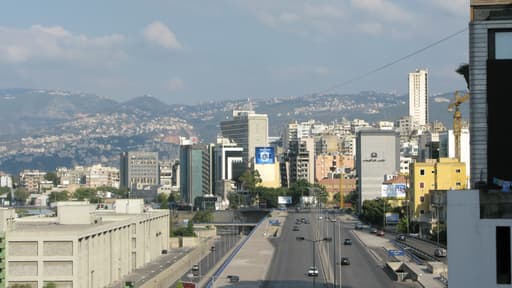
Lebanon
LOCATION64 w/ Morocco·25 w/ Bosnia
Tunisia
LOCATION67 w/ Morocco·14 w/ Bosnia
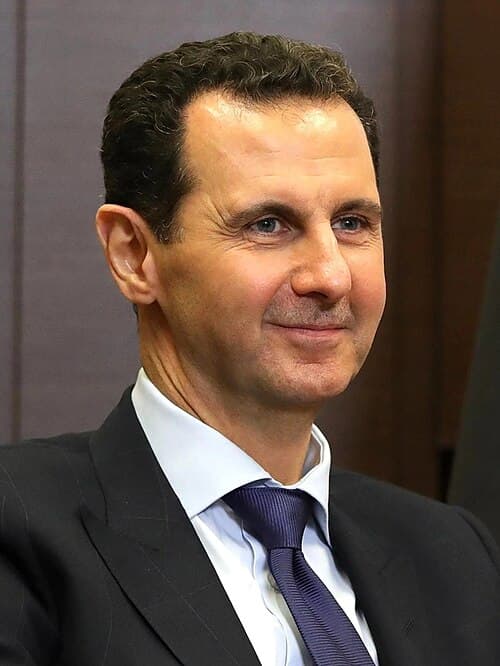
Bashar al-Assad
PERSON57 w/ Morocco·23 w/ Bosnia
Yemen
LOCATION57 w/ Morocco·18 w/ Bosnia
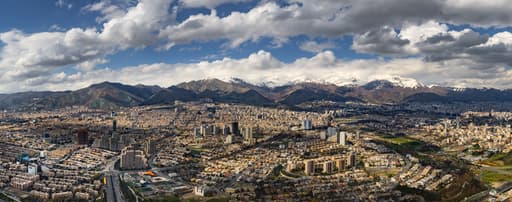
Tehran
LOCATION51 w/ Morocco·24 w/ Bosnia
Bahrain
LOCATION56 w/ Morocco·14 w/ Bosnia
John F. Kennedy
PERSON56 w/ Morocco·10 w/ Bosnia
Samantha Power
PERSON53 w/ Morocco·12 w/ Bosnia
LB
Leon Black
PERSON53 w/ Morocco·9 w/ Bosnia
Benjamin Netanyahu
PERSON42 w/ Morocco·18 w/ Bosnia
Donald Trump
PERSON50 w/ Morocco·10 w/ Bosnia
Prince Andrew
PERSON47 w/ Morocco·12 w/ Bosnia
Middle East
LOCATION41 w/ Morocco·17 w/ Bosnia
Cairo
LOCATION44 w/ Morocco·12 w/ Bosnia