Back to Network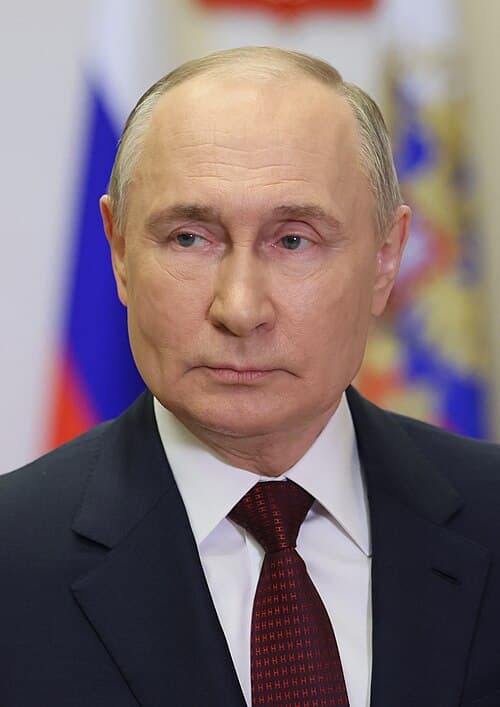













8
Shared Docs
7
Same-Page
8 / 8
Mentions
Document Mentions (8 shared documents)
2 mentions1 same-page
Page ?Same page
ll sample of similar claims or conjec- tures that have made their way into Russian news cov- erage, especially in the wake of Moscow's occupation of Crimea and invasion of eastem Ukraine. They stand as a reminder that under Vladimir Putin, the Russian media environment has been transformed from one ma
and Methods of Modern Authoritarians 7. Military invasions: Russian forces poured into Georgia through its two breakaway territories, Abkhazia and South Ossetia, during a brief con- flict in 2008. In 2014, Russian troops occupied Crimea, oversaw a stage-managed referendum on annexation there, and unofficial
2 mentions1 same-page
Page ?Same page
a pro-Russian government was toppled and Ukraine was slipping from his grasp. After the Olympics ended, he acted swiftly, sending his forces into Crimea. It was a blunder. In taking over Crimea, Putin has lost Ukraine. Since 1991, Russia has influenced Ukraine through pro-Russian politicians who we
l. In a rare break with Russia on the U.N. Security Council, China refused to condone Russia's moves in Crimea. Moscow's annexation of Abkhazia and South Ossetia from Georgia was recognized by Nicaragm, Venezuela and two island nations in the South Pacific. That might be as many as will recognize the annexa
2 mentions1 same-page
Page ?Same page
anteed Ukraine's territorial integrity in return for the state giving up its nuclear weapons, the US did not act forcefully to stop Russia annexing Crimea. In each case, there have been different motivations and political considerations. But taken together, these events, and others, have contributed t
rd-headed realists have argued that even if Ukraine shrinks with the loss of several autonomous republics (as Georgia did in 2008 when Abkhazia and South Ossetia seceded), the impact on American interests would be limited. They also argue that since it is now clear that no one (other than Russia) is prepared
Sponsored
2 mentions1 same-page
Page ?Same page
a new one: the Ukrainian crisis, which threatens American policies throughout the Middle East. The West's standoff with Russia over its seizure of Crimea, analysts and former administration officials said, could complicate American efforts to curb Iran's nuclear program, resolve Syria's civil war and
How Ukraine will Shape the Future of the Middle East Dennis Ross March 2, 2014 -- Vladimir Putin has done it again. Transnistria, Abkhazia, and South Ossetia, and now Crimea; wherever there are potentially ethnic Russian areas in former Soviet republics that are not prepared to toe the Russian line, ther
2 mentions1 same-page
Page ?Same page
ext of helping a "fraternal" ally in Kabul; to Parkhomenko, Putin's decision to couch his military action as the "protection" of Russians living in Crimea is an equally transparent pretext. The same goes for the decorous way in which Putin, on Saturday, "requested" the Russian legislature's authorizat
Some compared the arrival of Russian troops in Simferopol to the way that the Kremlin, in 2008, took advantage of Georgia's reckless bid to retake South Ossetia and then muscled its tiny neighbor, eventually waging a war that ended with Russia taking control of South Ossetia and Abkhazia. In a recent Lette
2 mentions1 same-page
Page ?Same page
s true legacy. On Friday, Ukraine's ambassador to the United Nations, Yuriy Sergeyev, said that Russian troops had taken control of two airports in Crimea and that the Russian Navy was blocking the Ukrainian Coast Guard. Moscow denied that it had sent troops in. But the fact is, Russia was outrageous
de by that promise is unclear. In 2008, he sent Russian forces into neighboring Georgia, ostensibly to protect the secessionist Georgian enclave of South Ossetia; the real goal was to weaken the pro-Western government in Tbilisi. Russia and the West both have legitimate interests in Ukraine and its future.
Sponsored
2 mentions1 same-page
Page ?Same page
government is seen as without legitimacy by Moscow the door is open for playing the card of Russian majorities in the east of the country and/or in Crimea. It could be done in several ways. Rumours about suppression of Russians could be spread—there have already been such rumours on the internet, but
in Putin's equation the military risks would be EFTA00684330 negligible. Nothing happened in 2008 when Russia sent its military into Georgia and South Ossetia. In fact Georgia-South Ossetia 2008 might serve—with some modifications-as a blueprint. The main risks would be economic sanctions imposed by the W
HOUSE_OVERSIGHT_019233 - HOUSE_OVERSIGHT_019296
FH_Authoritarians_Report_2017.indd
2 mentions
Page HOUSE_OVERSIGHT_019249
all sample of similar claims or conjec- tures that have made their way into Russian news cov- erage, especially in the wake of Moscow's occupation of Crimea and invasion of eastern Ukraine. They stand as areminder that under Vladimir Putin, the Russian media environment has been transformed from one marke
Page: HOUSE_OVERSIGHT_019249 →Page HOUSE_OVERSIGHT_019282
, and Methods of Modern Authoritarians 7. Military invasions: Russian forces poured into Georgia through its two breakaway territories, Abkhazia and South Ossetia, during a brief con- flict in 2008. In 2014, Russian troops occupied Crimea, oversaw a stage-managed referendum on annexation there, and unofficially
Page: HOUSE_OVERSIGHT_019282 →Sponsored
Mutual Connections (407)
Entities connected to both Crimea and South Ossetia
Vladimir Putin
PERSON46 w/ Crimea·9 w/ South
Barack Obama
PERSON41 w/ Crimea·9 w/ South
George W. Bush
PERSON38 w/ Crimea·6 w/ South
LB
Leon Black
PERSON38 w/ Crimea·5 w/ South
Jeffrey Epstein
PERSON36 w/ Crimea·4 w/ South
United States
LOCATION30 w/ Crimea·8 w/ South
Marc Rich
PERSON28 w/ Crimea·5 w/ South
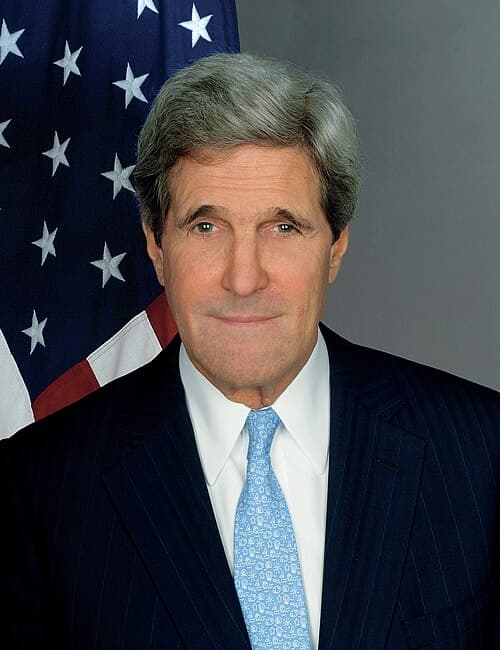
John Kerry
PERSON26 w/ Crimea·5 w/ South
Kremlin
ORGANIZATION26 w/ Crimea·5 w/ South
Bill Clinton
PERSON25 w/ Crimea·3 w/ South
Benjamin Netanyahu
PERSON21 w/ Crimea·6 w/ South
Bashar al-Assad
PERSON20 w/ Crimea·7 w/ South
Donald Trump
PERSON25 w/ Crimea·2 w/ South
Department of Justice
ORGANIZATION22 w/ Crimea·4 w/ South
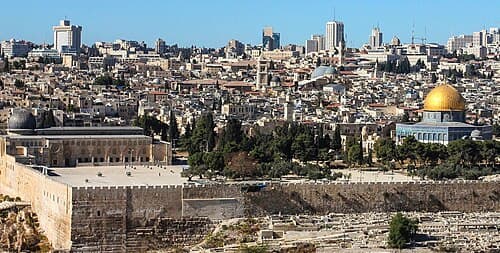
Jerusalem
LOCATION20 w/ Crimea·6 w/ South
Bloomberg L.P.
ORGANIZATION22 w/ Crimea·2 w/ South
Ronald Reagan
PERSON18 w/ Crimea·5 w/ South
Middle East
LOCATION16 w/ Crimea·7 w/ South
Prince Andrew
PERSON20 w/ Crimea·3 w/ South
Prince Charles
PERSON19 w/ Crimea·2 w/ South