Back to Network



















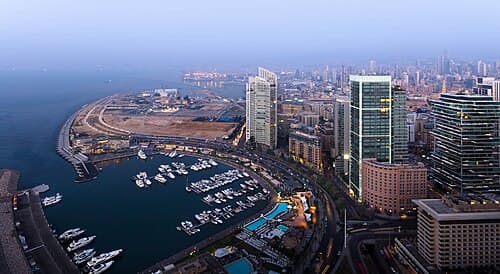
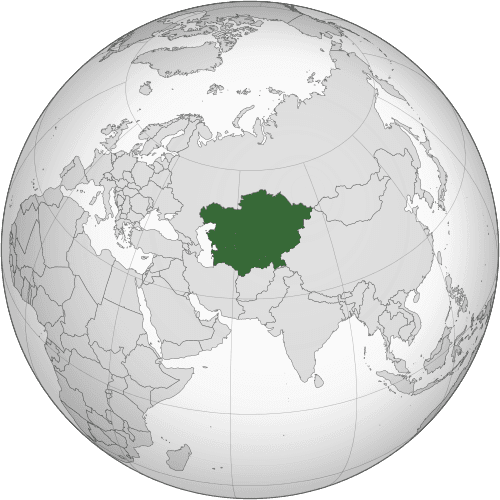
5
Shared Docs
5
Same-Page
5 / 5
Mentions
Document Mentions (5 shared documents)
2 mentions1 same-page
Page ?Same page
rity Sunni population takes power, the minority groups that did well under the Assad dynasty will be targeted. The troubling slogan, "Christians to Beirut, Alawis to the coffin" that has been heard from time to time at opposition rallies is not particularly reassuring. Nor can either group take comfor
in dominant. As a result, Beijing is developing a robust portfolio of fossil fuel resources from a variety of locations, including the Middle East, Central Asia and the South China Sea, in an effort to reduce its vulnerability from any one source. Middle East oil must transit through the Strait of Malacca,
2 mentions1 same-page
Page ?Same page
. Lebanon has not yet begun looking for natural gas offshore, but it has agreed on, though not ratified, a maritime line with the island of Cyprus. Beirut has also reportedly sent the UN a map illustrating its view of where the Israel-Lebanon maritime border lies. Israel is now doing the same. Over t
ga-Ural areas was also not excluded. The proliferation of the Arab "virus" would be the Kremlin's worst nightmare. Fear Of Revolution Spreading To Central Asia Russia's second source of anxiety lies in the possibility that Arab revolutions might spread to Central Asia. Russian elites regard this area as p
2 mentions1 same-page
Page ?Same page
ity Sunni population takes power, the minority groups that did well under the Assad dynasty will be targeted. The troubling slogan, "Christians to Beirut, Alawis to the coffin" that has been heard from time to time at opposition rallies is not particularly reassuring. Nor can either group take comfor
n dominant. As a result, Beijing is developing a robust portfolio of fossil fuel resources from a variety of locations, including the Middle East, Central Asia and the South China Sea, in an effort to reduce its vulnerability from any one source. Middle East oil must transit through the Strait of Malacca,
Sponsored
2 mentions1 same-page
Page ?Same page
ist attacks against civilians. EFTA_R1_02207721 EFTA02722644 Hezbollah first gained notoriety in 1983 after bombing the United States Embassy in Beirut — an attack that killed 63 people. Shortly thereafter, Hezbollah bombed the American and French Marine Barracks in Beirut, killing 241 Americans an
an, Iran and Mongolia holding "observer" status. Today Turkey—along with Belarus and Sri Lanka—rates as a "dialogue partner." Certainly Russia and Central Asia are important markets for Turkish construction, food and tourism industries. Its trade in the region grew to $62 billion in 2012. But the marketpla
2 mentions1 same-page
Page ?Same page
rio thus is a Balkanized Syria, with an Al Qaeda safe haven, huge displaced populations, and an occasional stream of car bombings from Damascus to Beirut. As for Iran, while the administration thinks it has bought six months of "wait and see," the reality is that, when the clock stops ticking, the W
Russia deals with this issue. For these jihadists are seeking theatres of war not only in the North Caucasus, but also across the Middle East and Central Asia. Today, they can be found in Afghanistan and Syria. Tomorrow, they could be anywhere. Andrew Foxall is Director of the Russia Studies Centre at the
Sponsored
Mutual Connections (682)
Entities connected to both Beirut and Central Asia
Jeffrey Epstein
PERSON87 w/ Beirut·29 w/ Central
Lebanon
LOCATION77 w/ Beirut·25 w/ Central
Barack Obama
PERSON62 w/ Beirut·34 w/ Central
United States
LOCATION52 w/ Beirut·32 w/ Central
George W. Bush
PERSON50 w/ Beirut·33 w/ Central
Bashar al-Assad
PERSON48 w/ Beirut·29 w/ Central
Tehran
LOCATION44 w/ Beirut·24 w/ Central
Benjamin Netanyahu
PERSON47 w/ Beirut·21 w/ Central
Vladimir Putin
PERSON37 w/ Beirut·27 w/ Central
Damascus
LOCATION44 w/ Beirut·16 w/ Central
Marc Rich
PERSON34 w/ Beirut·24 w/ Central
Bill Clinton
PERSON41 w/ Beirut·17 w/ Central
Terje Rod-Larsen
PERSON28 w/ Beirut·29 w/ Central
Middle East
LOCATION34 w/ Beirut·22 w/ Central
Cairo
LOCATION41 w/ Beirut·10 w/ Central
Department of Justice
ORGANIZATION35 w/ Beirut·15 w/ Central
Donald Trump
PERSON35 w/ Beirut·14 w/ Central
Jerusalem
LOCATION32 w/ Beirut·16 w/ Central
Prince Andrew
PERSON33 w/ Beirut·13 w/ Central
Joe Biden
PERSON33 w/ Beirut·13 w/ Central