Back to Network




















3
Shared Docs
3
Same-Page
5 / 3
Mentions
Document Mentions (3 shared documents)
3 mentions1 same-page
Page ?Same page
e new national-security adviser, and Condoleezza Rice, the new Secretary of State—rise, especially on
ffairs. After the election, Cheney saw the influence of his principal ideological opponents—Stephen Hadley, the new national-security adviser, and Condoleezza Rice, the new Secretary of State—rise, especially on issues such as Syria, North Korea, and the Administration's policy on torture. Cheney's recent memo
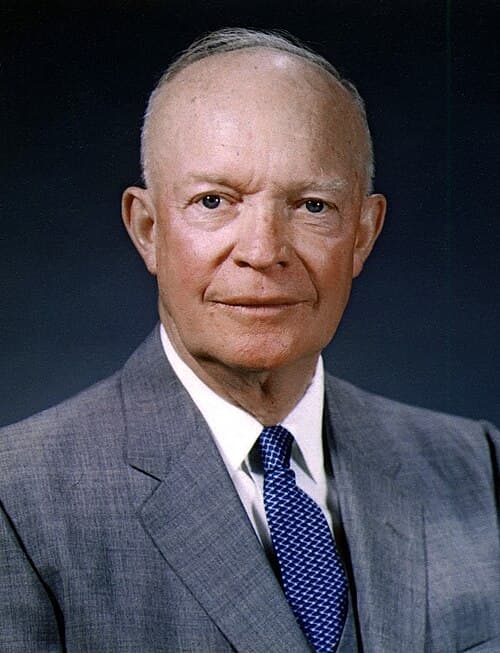
office. It was an unusual moment in the history of the Presidency, and the experience of recent incumbents offered no guidance. No President since Dwight D. Eisenhower had served two full terms. John F. Kennedy was assassinated. Lyndon Johnson, overwhelmed by the war in Vietnam, had declined to run for reelection
3 mentions1 same-page
Page ?Same page
ervatives like Paul D. Wolfowitz pressed a doctrine of preventive war and put it into effect in Iraq. Eventually, more pragmatic conservatives like Condoleezza Rice pulled the president back toward diplomacy. Over the last four years, Republicans tried to paper over their divisions. In the 2008 and 2010 electi
has derided Mr. Obama's handling of foreign policy (notably on Iran and Israel) with overheated rhetoric but only vague hints at alternatives. Ms. Rice (whose rhetorical jab at Mr. Obama's "leading from behind" was a big applause line) and Mr. McCain (whose calls for aiding the Syrian opposition dr
visions over foreign policy were typically between a realist wing and a more fervent nationalist wing; realism usually won. In the 1950s, President Dwight D. Eisenhower, an internationalist, prevailed over Senator Robert A. Taft and his isolationist followers. Later, President Richard M. Nixon's engagement with Chi
2 mentions1 same-page
Page ?Same page
She has had far less success convincing Russia and China to reverse their position on Syria. But if the election in November goes to Obama -- whom Rice supported in 2008 over Hillary Clinton, despite having worked for her husband through all eight years of his administration -- she's likely to rema
s rarely easy. According to "The Presidents Club," by Nancy Gibbs and Michael Duffy, Lyndon Johnson sometimes drafted the popular former President Dwight D. Eisenhower into his publicity schemes, which frustrated Ike, who complained to aides about being used. After Johnson left office, Richard Nixon cultivated him
Sponsored
Mutual Connections (124)
Entities connected to both Condoleezza Rice and Dwight D. Eisenhower
Jeffrey Epstein
PERSON4,473 w/ Condoleezza·7 w/ Dwight
Marc Rich
PERSON964 w/ Condoleezza·4 w/ Dwight
George W. Bush
PERSON508 w/ Condoleezza·11 w/ Dwight
John F. Kennedy
PERSON317 w/ Condoleezza·3 w/ Dwight
United States
LOCATION296 w/ Condoleezza·5 w/ Dwight
Prince Charles
PERSON253 w/ Condoleezza·2 w/ Dwight
Prince Andrew
PERSON244 w/ Condoleezza·4 w/ Dwight
Joe Biden
PERSON200 w/ Condoleezza·4 w/ Dwight
Donald Trump
PERSON194 w/ Condoleezza·2 w/ Dwight
Alan Dershowitz
PERSON188 w/ Condoleezza·4 w/ Dwight
Bill Clinton
PERSON177 w/ Condoleezza·9 w/ Dwight
Vicky Ward
PERSON182 w/ Condoleezza·2 w/ Dwight
Samantha Power
PERSON182 w/ Condoleezza·2 w/ Dwight
Barack Obama
PERSON158 w/ Condoleezza·10 w/ Dwight
Michael Jackson
PERSON156 w/ Condoleezza·3 w/ Dwight
Mao Zedong
PERSON150 w/ Condoleezza·7 w/ Dwight
George Mitchell
PERSON153 w/ Condoleezza·2 w/ Dwight
Virginia Giuffre
PERSON132 w/ Condoleezza·2 w/ Dwight
Paul Ryan
PERSON125 w/ Condoleezza·3 w/ Dwight
Robert Gates
PERSON109 w/ Condoleezza·2 w/ Dwight