Back to Network















10
Shared Docs
9
Same-Page
16 / 10
Mentions
Document Mentions (10 shared documents)
3 mentions1 same-page
Page ?Same page
economic slowdown has begun to emerge. By creating nationalism and then ignoring it, leaders in Beijing open themselves up to charges of weakness. Mao and Deng, secure in their own command, could brush it off, but Beijing's new technocrats are far less secure within China's immature civil-military
Since Deng Xiaoping's opening up and reform, the Chinese government and people have been consumed with two missions, undoing the damage wrought by Mao Zedong and making money. But as new generations emerge that have no firsthand recollection of Mao's deprivations, this will not be enough. As Abraham Masl
n focused on the EFTA00701625 problems of the past, wasting its energy on East Asia, Europe and the Middle East, and missed the obvious crisis in South Asia. Despite repeated acts of terrorism sponsored by Pakistan against India, somehow the administration failed to heed its own intelligence predicting
3 mentions1 same-page
Page ?Same page
, it is known as the "century of humiliation": the period starting with Britain's victory in the First Opium War in 1842 and lasting at least until Mao Zedong's declaration of the People's Republic in 1949. Beginning in the 1850s, Russians seized advantage of Chinese disarray to pressure the Qing's northern
st communist states led to a set of border clashes, the most explosive of which occurred along an Amur River tributary in 1969. Five years earlier, Mao had infuriated Moscow when he told visiting Japanese reporters that much of the Russian Far East was stolen land; now, he instructed Chinese premi
of the country, its EFTA_R1_00441193 EFTA01964445 vulnerabilities and the determination of a number of groups emanating from the Middle East and South Asia to inflict catastrophic damage on the United States. Reducing U.S. dependence on Arab hydrocarbons: B In 2011, the U.S. imported 45% of the liquid
3 mentions1 same-page
Page ?Same page
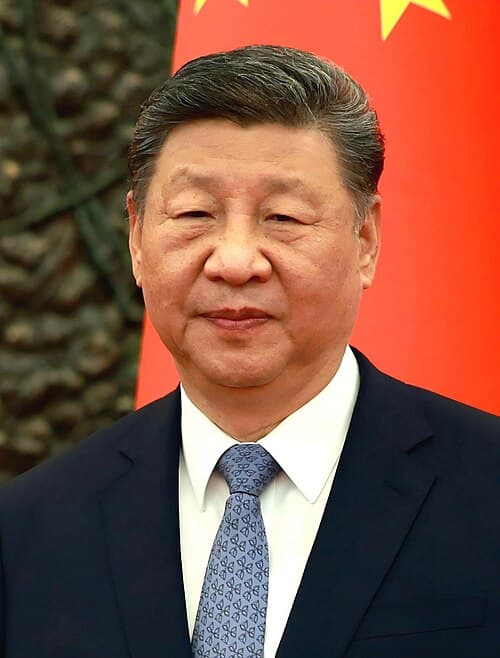
t-large of the American Interest. Article 6. The Economist China's leaders: Changing guard Nov 17th 2012 -- FOR the first time since the death of Mao Zedong in 1976, =hina's most important reins of power have been handed over at the same t=me to a single man: Xi linping (pictured, centre, above). The dec
pt the military =ost for a couple of years after leaving the Politburo, ostensibly to ensur= a smooth transition. Not since Hua Guofeng took over on Mao's death hav= both jobs been transferred simultaneously. Hua turned out to be little more than a transitional figure. Few people exp=ct Mr Xi to be
n, France, Russia, China, India, Pakistan, Israel and Nor=h Korea. More will likely emerge. The author presents detailed case studies on East Asia, South Asia and the =iddle East to bolster his argument that the multipolar nuclear world is al=eady changing the military strategies of regional powers in sign
Sponsored
3 mentions1 same-page
Page ?Same page
nct, become at once a tool of prosperity and survival. If you walk for a few minutes to the south of Tinanmen Square in Beijing, leaving the tomb of Mao Zedong behind you, there’s a small lane that runs back into a warren of anonymous, white-walled buildings. The streets are unusually clean; the surveillance
n. Huang was, in a sense, heir to the Warring States diplomat Su Qin, whom Master Nan had encouraged me to study. Huang had penetrated the madness of Mao’s revolutionary era to see the possibility of a different order, one he’d brought to vivid life after Deng Xiaoping ascended to the Chinese leadershi
attack her. Assyrian imperial arrangements overmastered a dozen smaller states from the 9 to 7 centuries BCE. The Dehli Sultinate managed hegemony in South Asia from 12 to 14 centuries. The Mughals owned nearly two 185 HOUSE_OVERSIGHT_018417 hundred years of dominance starting in the 16" century. The Roman
3 mentions1 same-page
Page ?Same page
e enemy's railway traffic and rendered most of its military airfields useless — with little apparent result. This reputedly led the Chinese leader, Mao Zedong, to doubt the impact of air power on ground combat, and Chinese warplanes EFTA00585504 25 played little part in his country's successful Korean
t result. This reputedly led the Chinese leader, Mao Zedong, to doubt the impact of air power on grou
, and welfare organizations in Punjab and beyond. LeT is regarded by many Western counterterrorism experts as the most effective terrorist group in South Asia and even beyond. Its potential for international terrorism is greatly increased by the fact that much of the Pakistani diaspora in Britain comes fr
2 mentions1 same-page
Page ?Same page
certain frisson that attaches to the loathing of Jews and of Israel by the chic folk who express it and cotton to it, like those who carried around Mao's "Little Red Book" in a previous generation or wore a Che Guevara sweatshirt long after everyone knew he was a murderer. In the last few months an
nter at a mall in Riyadh, 21-year Abdul Rahman Saeed -- like Nada, a Saudi in a national labor market overwhelmed by the flood of cheap labor from South Asia -- sells mobile phones. In between chats with customers about phone accessories, he despairs of ever pulling a job with enough salary to many the l
Sponsored
2 mentions1 same-page
Page ?Same page
i as many as Italy and Sichuan as many as Germany. China's powerful men EFTA00711965 have achieved much. While millions were still starving under Mao Zedong, China is now the world's second-largest economy. Europe, immersed in both a debt crisis and a crisis of meaning, is not only mesmerized by
Obama won't cut it. Brian Katulis, a senior fellow at the Center for American Progress, studies United States foreign policy in the Middle East and South Asia. Artick 4. Foreign Policy EFTA00711953 10 things_you don't know about Africa's booming economy Susan Lund, Arend Van Wamelen August 31, 2012
2 mentions1 same-page
Page ?Same page
demonstrators in Cairo, Sanaa, Benghazi, Hama and Tunis are not calling for Al-Qaeda's caliphate. Al-Qaeda is not Nazi Germany, Stalin's Russia or Mao's China. Today it is under unprecedented stress from the strategy Obama has developed. We should be vigilant but not panic. We don't need torture
inks to many of the jihadists in the syndicate, as described by Shahzad in his book "Inside Al-Qaeda and the Taliban Beyond Bin Laden and 9/11." A South Asia war would ease the pressure on Al-Qaeda's core team in Pakistan and vastly complicate, if not imperil, NATO's logistics in Afghanistan, benefiting
2 mentions1 same-page
Page ?Same page
certain frisson that attaches to the loathing of Jews and of Israel by the chic folk who express it and cotton to it, like those who carried around Mao's "Little Red Book" in a previous generation or wore a Che Guevara sweatshirt long after everyone knew he was a murderer. In the last few months an
nter at a mall in Riyadh, 21-year Abdul Rahman Saeed -- like Nada, a Saudi in a national labor market overwhelmed by the flood of cheap labor from South Asia -- sells mobile phones. In between chats with customers about phone accessories, he despairs of ever pulling a job with enough salary to marry the
Sponsored
Page HOUSE_OVERSIGHT_012082
c expansion. Although this migration may continue a while longer, EM investors should understand the reality that the economic growth case outside of South Asia and Southeast Asia is mostly limited to productivity gains. India has the best demographic profile of any major emerging market as shown GLOBAL FORE
Page: HOUSE_OVERSIGHT_012082 →Page HOUSE_OVERSIGHT_012084
on ever. Do Not Bet Against the House At around the time that America celebrated its Bicentennial, China reached a historic turning point. Chairman Mao passed away in September 1976, and a month later, the arrest of the Gang of Four marked the end of the decade-long Cultural Revolution. Deng Xiaoping
Page: HOUSE_OVERSIGHT_012084 →ntennial, China reached a historic turning point. Chairman Mao passed away in September 1976, and a month later,
Page: HOUSE_OVERSIGHT_012084 →Sponsored
Mutual Connections (831)
Entities connected to both Mao Zedong and South Asia
George W. Bush
PERSON393 w/ Mao·26 w/ South
Ghislaine Maxwell
PERSON339 w/ Mao·5 w/ South
Jeffrey Epstein
PERSON289 w/ Mao·24 w/ South
Joi Ito
PERSON279 w/ Mao·3 w/ South
United States
LOCATION148 w/ Mao·34 w/ South
Condoleezza Rice
PERSON150 w/ Mao·6 w/ South
Alan Dershowitz
PERSON147 w/ Mao·4 w/ South
Vicky Ward
PERSON135 w/ Mao·4 w/ South
Xi Jinping
PERSON123 w/ Mao·12 w/ South
DB
Doug Band
PERSON127 w/ Mao·5 w/ South
Joe Biden
PERSON109 w/ Mao·17 w/ South
Marc Rich
PERSON100 w/ Mao·24 w/ South
New York City
LOCATION113 w/ Mao·2 w/ South
MF
Maria Farmer
PERSON101 w/ Mao·8 w/ South
CW
Courtney Wild
PERSON99 w/ Mao·6 w/ South
LB
Leon Black
PERSON91 w/ Mao·13 w/ South
Bill Clinton
PERSON84 w/ Mao·19 w/ South
Prince Andrew
PERSON79 w/ Mao·13 w/ South
Donald Trump
PERSON64 w/ Mao·21 w/ South
Samantha Power
PERSON68 w/ Mao·15 w/ South