Back to Network



















5
Shared Docs
5
Same-Page
6 / 5
Mentions
Document Mentions (5 shared documents)
3 mentions1 same-page
Page ?Same page
hat liberal Democrats were capable stewards of American foreign policy. The bad memories of the Lyndon Johnson and EFTA_R1_00441461 EFTA01964622 Jimmy Carter presidencies would at last be laid to rest; with the public still unhappy with George W. Bush's foreign policy troubles, Democrats would enjoy a lo
dent Obama now faces a moment similar to the one President Carter faced when the Soviets invaded Afghanistan. The
ab Spring still an appropriate moniker for describing the series of uprisings that started with the overthrow of Tunisian president Zine el Abidine Ben Ali and then spread eastward to engulf Libya, Egypt, Syria and Yemen? Or given how the region has evolved over the past couple of EFTA_R1_00441474 EF
2 mentions1 same-page
Page ?Same page
en So Soft on Bashar Assad? Martin Peretz March 29, 2011 - I don't know where to begin. So let me start with Bashar Al Assad—whose father, Hafez, Jimmy Carter wrote he had higher regard for than any other leader in the Middle East. Barack Obama never said anything quite that hagiographic about the son. Bu
le happy. Unlike in Egypt and Tunisia, Syrians see Assad as part of the solution in their country, and not, like Hosni Mubarak and Zein al-Abidine Ben Ali, as part of the problem. He is young, closer to their age than both presidents had been to young Egyptians and Tunisians, and has not been around f
2 mentions1 same-page
Page ?Same page
is dangerous business to predict events in the Middle East, especially in times of regional crisis. It's hard to block out flashbacks of President Jimmy Carter's 1977 New Year's Eve statement that Iran under the shah was an island of stability in a troubled region - only months before that stability was sh
there was now the cult of the rulers, the unbounded power of Saddam Hussein and Muammar el-Qaddafi and Hafez al-Assad in Syria and Zine el-Abidine Ben Ali in Tunisia. The traditional restraints on power had been swept away, and no new social contract between ruler and ruled had emerged. Fear was now
Sponsored
2 mentions1 same-page
Page ?Same page
ere is no viable imitation in the Arab world. Zbigniew Brzezinski, one of America's leading strategists, was national security advisor to President Jimmy Carter. His just published book is "Strategic Vision: America and the Crisis of Global Power." EFTA_R1_00234101 EFTA01845155
re demanding to be rid of him. The senior commanders of the armed forces cast him aside, and he joined his fellow despot, Tunisia's Zine el-Abidine Ben Ali, who had fallen a month earlier. From Cairo, the awakening became a pan-Arab affair, catching fire in Yemen and Bahrain. As a monarchy, the latter
2 mentions1 same-page
Page ?Same page
is dangerous business to predict events in the Middle East, especially in times of regional crisis. It's hard to block out flashbacks of President Jimmy Carter's 1977 New Year's Eve statement that Iran under the shah was an island of stability in a troubled region - only months before that stability was sh
there was now the cult of the rulers, the unbounded power of Saddam Hussein and Muammar el-Qaddafi and Hafez al-Assad in Syria and Zine el-Abidine Ben Ali in Tunisia. The traditional restraints on power had been swept away, and no new social contract between ruler and ruled had emerged. Fear was now
Sponsored
Mutual Connections (177)
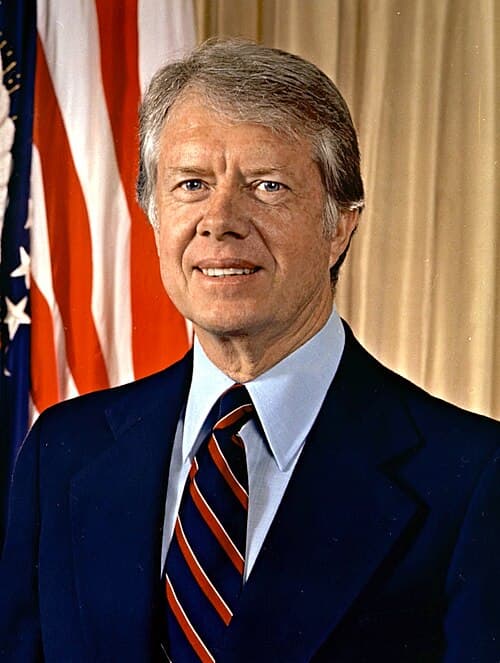
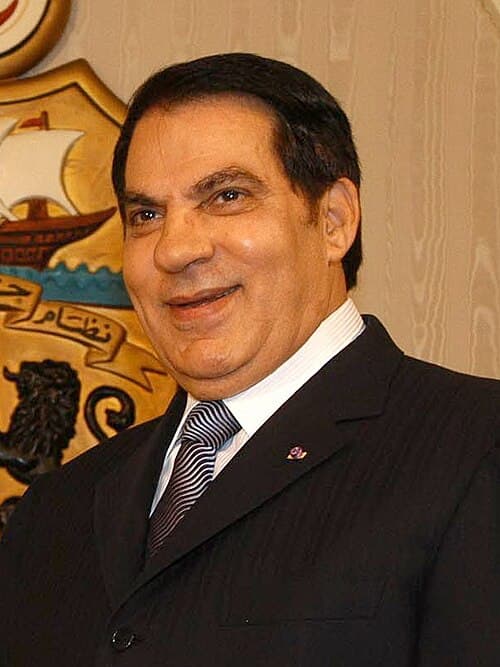
Entities connected to both Jimmy Carter and Ben Ali
Barack Obama
PERSON41 w/ Jimmy·19 w/ Ben
George W. Bush
PERSON44 w/ Jimmy·14 w/ Ben
Bill Clinton
PERSON42 w/ Jimmy·11 w/ Ben
Marc Rich
PERSON35 w/ Jimmy·9 w/ Ben
United States
LOCATION31 w/ Jimmy·10 w/ Ben
Benjamin Netanyahu
PERSON30 w/ Jimmy·10 w/ Ben
Hosni Mubarak
PERSON19 w/ Jimmy·20 w/ Ben
Bashar al-Assad
PERSON18 w/ Jimmy·20 w/ Ben
Hillary Clinton
PERSON29 w/ Jimmy·8 w/ Ben
Jeffrey Epstein
PERSON31 w/ Jimmy·3 w/ Ben
Lebanon
LOCATION20 w/ Jimmy·13 w/ Ben
Cairo
LOCATION21 w/ Jimmy·12 w/ Ben
Tunisia
LOCATION12 w/ Jimmy·20 w/ Ben
Joe Biden
PERSON28 w/ Jimmy·2 w/ Ben
John F. Kennedy
PERSON26 w/ Jimmy·4 w/ Ben
Tehran
LOCATION18 w/ Jimmy·12 w/ Ben
Ronald Reagan
PERSON23 w/ Jimmy·6 w/ Ben
Yemen
LOCATION13 w/ Jimmy·16 w/ Ben
Middle East
LOCATION17 w/ Jimmy·12 w/ Ben
Donald Trump
PERSON26 w/ Jimmy·2 w/ Ben